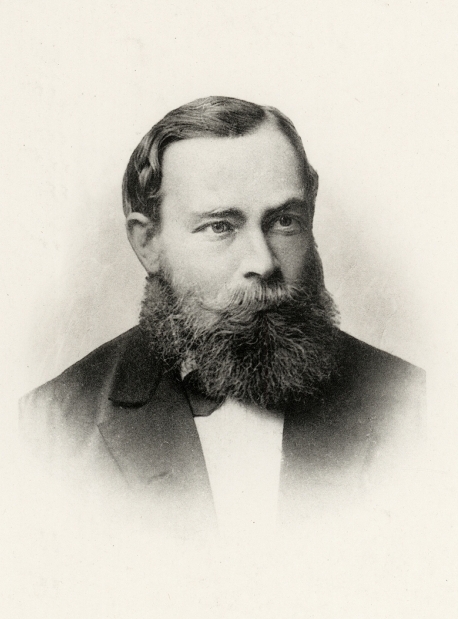
Analytic philosophy
Philosophy as clarity through logical and linguistic analysis; dominant in the English-speaking world.
Key ideas
Analytic philosophy is a broad school of thought or style in contemporary Western philosophy, especially anglophone philosophy, with an emphasis on analysis, clear prose, rigorous arguments, formal logic, mathematics, and the natural sciences (with less emphasis on the humanities). It is further characterized by the linguistic turn, or a concern with language and meaning.
Analytic philosophy is often contrasted with continental philosophy, a catch-all term for other methods prominent in continental Europe, most notably existentialism, phenomenology, and Hegelianism. The distinction has also been drawn between "analytic" being academic or technical philosophy and "continental" being literary philosophy.
The proliferation of analytic philosophy began around the turn of the twentieth century and has been dominant since the second half of the century. Central figures in its history include Gottlob Frege, G. E. Moore, Bertrand Russell, and Ludwig Wittgenstein. Other important figures include the logical positivists (particularly Rudolf Carnap) and the proponents of ordinary language philosophy.
Wilfrid Sellars, W. V. O. Quine, Saul Kripke, David Lewis, and others, led a decline of logical positivism and a subsequent revival in metaphysics. Analytic philosophy has also developed several new branches of philosophy and logic, notably philosophy of language, mathematics, and science, and modern predicate and mathematical logic.
History
The history of analytic philosophy (taken in the narrower sense of "20th-/21st-century analytic philosophy") is usually thought to begin with the rejection of British idealism, a neo-Hegelian movement. But important precursors include the work of Gottlob Frege in formal logic and the philosophy of language, as well as the Austrian tradition associated with Bernard Bolzano, Franz Brentano, Alexius Meinong, and the early Edmund Husserl.
Austrian philosophy as a precursor
Analytic philosophy was significantly influenced by Austrian realism in the former state of Austria-Hungary, so much so that Michael Dummett has remarked it is better characterized as Anglo-Austrian rather than the usual Anglo-American.
Brentano
In Psychology from an Empirical Standpoint (1874), University of Vienna philosopher and psychologist Franz Brentano gave to philosophy the problem of intentionality, or aboutness. For Brentano, all mental events or acts of consciousness had a real, non-mental intentional object, which the thinking is directed at or "about". Intentionality is "the mark of the mental." Intentionality is to be distinguished from intention or intension.
Every mental phenomenon is characterized by what the Scholastics of the Middle Ages called the intentional (or mental) inexistence of an object, and what we might call, though not wholly unambiguously, reference to a content, direction towards an object (which is not to be understood here as meaning a thing), or immanent objectivity. Every mental phenomenon includes something as object within itself, although they do not all do so in the same way. In presentation something is presented, in judgement something is affirmed or denied, in love loved, in hate hated, in desire desired and so on. This intentional in-existence is characteristic exclusively of mental phenomena. No physical phenomenon exhibits anything like it. We could, therefore, define mental phenomena by saying that they are those phenomena which contain an object intentionally within themselves.The School of Brentano included Edmund Husserl and Alexius Meinong. Meinong founded the Graz School, and is known for his unique ontology of real, nonexistent objects; a solution to the problem of empty names. This view is known as Meinongianism, or pejoratively as Meinong's jungle. According to Meinong, objects like flying pigs or golden mountains are real and have being, even though they do not exist. The Polish Lwów–Warsaw school, founded by Kazimierz Twardowski, was also influenced by Brentano. Twardowski emphasized "small philosophy", or the detailed, systematic analysis of specific problems. Twardowski was further influenced by the Bohemian logical realist Bernard Bolzano.
Frege
Gottlob Frege was a German geometry professor at the University of Jena, logician, and philosopher who is understood as the father of analytic philosophy. He advocated logicism, the project of reducing arithmetic to pure logic, supporting Leibniz and opposing Kant in the philosophy of mathematics.
Logic
Frege developed modern, mathematical and predicate logic with quantifiers in his book Begriffsschrift (English: Concept-script, 1879). Frege unified the two strains of ancient logic: Aristotelian and Stoic; allowing for a much greater range of sentences to be parsed into logical form. An example of this is the problem of multiple generality.
Number
Neo-Kantianism dominated the late nineteenth century in German philosophy. Husserl's book Philosophie der Arithmetik (1891) argued the concept of a cardinal number derived from mental acts of grouping objects and counting them. In contrast to this "psychologism", Frege, in The Foundations of Arithmetic (1884) and The Basic Laws of Arithmetic (German: Grundgesetze der Arithmetik, 1893–1903), argued that mathematics and logic have their own public objects, independent of one's private judgments or mental states. Following Frege, the logicists tended to advocate a kind of mathematical Platonism.
The modern study of set theory was initiated by the German mathematicians Richard Dedekind and Georg Cantor. Italian mathematician Giuseppe Peano simplified Dedekind's work to systematize mathematics with Peano arithmetic. Frege extended this work in an attempt to reduce arithmetic to logic, developing naive set theory and a set-theoretic definition of natural numbers.
Language
Frege also proved influential in the philosophy of language. Dummett traces the linguistic turn to Frege's Foundations of Arithmetic and his context principle. Frege writes "never ... ask for the meaning of a word in isolation, but only in the context of a proposition." As Dummett explains, in order to answer a Kantian question, "How are numbers given to us, granted that we have no idea or intuition of them?", Frege finds the solution in defining "the sense of a proposition in which a number word occurs." Thus a problem, traditionally solved along idealist lines, is instead solved along linguistic ones.
= Sense and reference =
Frege's paper "On Sense and Reference" (1892) is seminal, containing Frege's puzzles about identity and advancing a mediated reference theory. Frege points out the reference of "the Morning Star" and "the Evening Star" is the same: both refer to the planet Venus. Therefore, substituting one term for the other doesn't change the truth value (salva veritate). However, they differ in what Frege calls cognitive value or the mode of presentation. One has to distinguish between two notions of meaning: the reference of a term and the sense of a term. As Frege points out, "the Morning Star is the Morning Star" is uninformative, but "the Morning Star is the Evening Star" is informative; thus, the two expressions must differ in a way other than reference.
A related puzzle is also known as Frege's puzzle, concerning intensional contexts and propositional attitude reports. Consider the statement "The ancients believed the morning star is the evening star." This statement might be false. However, the statement "The ancients believed the morning star is the morning star" is obviously true. Here again, the morning star and the evening star have different meanings, despite having the same reference.
In Frege's paper "On Concept and Object" (1892) he distinguishes between a concept which is the reference of a predicate, and an object which is the reference of a proper name.
= Thought =
The paper "The Thought: A Logical Inquiry" (1918) reflects Frege's anti-idealism. He argues for a Platonist account of propositions or thoughts. Frege claims propositions are intangible, like ideas; yet publicly available, like an object. In addition to the physical, public "first realm" of objects and the private, mental "second realm" of ideas, Frege posits a "third realm" of Platonic propositions, such as the Pythagorean theorem.
Revolt against British idealism
British philosophy in the nineteenth century saw a revival of logic started by Richard Whately, in reaction to the anti-logical aspects of British empiricism. The major figure of this period is mathematician George Boole. Other figures include Scottish metaphysician William Hamilton, mathematician and laws namesake Augustus De Morgan, economist William Stanley Jevons, diagram namesake John Venn, Alice's Adventures in Wonderland author Lewis Carroll, Scottish mathematician Hugh MacColl, and American pragmatist Charles Sanders Peirce.
However, British philosophy in the late nineteenth century was dominated by British idealism, a neo-Hegelian movement, as taught by philosophers such as F. H. Bradley and T. H. Green. Bradley's work Appearance and Reality (1893) exemplified the school.
Analytic philosophy in the narrower sense of twentieth-century anglophone philosophy is usually thought to begin with Cambridge philosophers Bertrand Russell and G. E. Moore's rejection of Hegelianism for being obscure; or the "revolt against idealism." Russell summed up Moore's common sense influence:
"G. E. Moore...took the lead in rebellion, and I followed, with a sense of emancipation. Bradley had argued that everything common sense believes in is mere appearance; we reverted to the opposite extreme, and that everything is real that common sense, uninfluenced by philosophy or theology, supposes real. With a sense of escaping from prison, we allowed ourselves to think that grass is green, that the sun and stars would exist if no one was aware of them, and also that there is a pluralistic timeless world of Platonic ideas."
Russell and Moore contributed to the philosophy of perception with a naïve realism and sense-data theory. In America, George Santayana and the New Realists opposed idealism and its egocentric predicament.
Logical atomism
An important aspect of Hegelianism and British idealism was logical holism—the belief that aspects of the world can be known only by knowing the whole world. This is closely related to the doctrine of internal relations, the belief that relations between items are internal relations, or essential properties the items have by nature. Russell and Moore in response promulgated logical atomism and the doctrine of external relations—the belief that the world consists of independent facts.
Russell
In 1901, Russell famously discovered the paradox in Basic Law V (also known as unrestricted comprehension), which undermined Frege's set theory. However, Russell was still a logicist, and in The Principles of Mathematics (1903), he also argued for Meinongianism.
Theory of descriptions
During his early career, Russell adopted Frege's predicate logic as his primary philosophical method, thinking it could expose the underlying structure of philosophical problems. This was done most famously in his theory of definite descriptions in "On Denoting", published in Mind in 1905. The essay has been called a "paradigm of philosophy."
In this essay, Russell responds to both Meinong and Frege. Russell uses his analysis of descriptions to solve ascriptions of nonexistence, such as with "the present King of France". He argues all proper names (aside from demonstratives like this or that) are disguised definite descriptions; for example, "Walter Scott" can be replaced with "the author of Waverley". This position came to be called descriptivism.
Russell presents his own version of Frege's second puzzle. "If a is identical with b, whatever is true of the one is true of the other, and either may be substituted for the other without altering the truth or falsehood of that proposition. Now George IV wished to know whether Scott was the author of Waverley; and in fact Scott was the author of Waverley. Hence we may substitute “Scott” for “the author of Waverley” and thereby prove that George IV wished to know whether Scott was Scott. Yet an interest in the law of identity can hardly be attributed to the first gentleman of Europe.”
The essay also illustrates the concept of scope ambiguity by showing how denying "The present King of France is bald" can mean either "There is no King of France" or "The present King of France is not bald". Russell quips "Hegelians, who love a synthesis, will probably conclude that he wears a wig." For Russell, there was knowledge by description and, from sense-data theory, knowledge by acquaintance.
Principia Mathematica
Russell's book written with Alfred North Whitehead, Principia Mathematica (1910–1913), was the seminal text of classical logic and of the logicist project, and encouraged many philosophers to renew their interest in symbolic logic. It used a notation from Peano, and a theory of types to avoid the pitfalls of Russell's paradox. Whitehead developed process metaphysics in Process and Reality (1929).
Ideal language
Russell claimed the problems of philosophy can be solved by showing the simple constituents of complex notions. Logical form would be made clear by syntax. For example, the English word is has three distinct meanings, which predicate logic can express as follows:
For the sentence 'the cat is asleep', the is of predication means that "x is P" (denoted as P(x)).
For the sentence 'there is a cat', the is of existence means that "there is an x" (∃x).
For the sentence 'three is half of six', the is of identity means that "x is the same as y" (x=y).
From about 1910 to 1930, analytic philosophers emphasized creating an ideal language for philosophical analysis, which would be free from the ambiguities of ordinary language that, in their opinion, often led philosophers astray.
Early Wittgenstein
Russell's student Ludwig Wittgenstein developed a comprehensive system of logical atomism, with a picture theory of meaning, in his Tractatus Logico-Philosophicus (German: Logisch-Philosophische Abhandlung, 1921), sometimes known as simply the Tractatus. Wittgenstein thought he had solved all the problems of philosophy with the Tractatus.
The book starts, "The world is all that is the case." Wittgenstein claims the universe is the totality of actual states of affairs and that these states of affairs can be expressed and mirrored by the language of first-order predicate logic. Thus, a picture of the universe can be constructed by expressing facts in the form of atomic propositions and linking them using logical operators.
The Tractatus introduced philosophers to the terms tautology, truth conditions, and to the truth table method. Wittgenstein believed tautologies or logical truths say nothing, but show the logical structure of the world, and has been labeled a mystic who believed in the ineffable by some readers. The Tractatus further ultimately concludes that all of its propositions are meaningless, illustrated with a ladder one must toss away after climbing up it. The book ends, "Whereof one cannot speak, thereof one must be silent."
Logical positivism
During the late 1920s to 1940s, two groups of philosophers known as the Vienna Circle and the Berlin Circle developed Russell and Wittgenstein's philosophy into a doctrine known as "logical positivism" (or "logical empiricism"). The Vienna Circle (previously the Ernst Mach Society) was led by Moritz Schlick and included Rudolf Carnap and Otto Neurath. The Berlin Circle was led by Hans Reichenbach and included Carl Hempel and mathematician David Hilbert. There was also the Dutch signific circle, which included L. E. J. Brouwer, founder of intuitionistic logic.
Logical positivists used formal logical methods to develop an empiricist account of knowledge. They adopted the verification principle, according to which every meaningful statement is either analytic or synthetic. The truths of logic and mathematics were tautologies, and those of science were verifiable empirical claims. These two constituted the entire universe of meaningful judgments; anything else was nonsense. Thus the principle rejected statements of metaphysics, theology, ethics, and aesthetics as cognitively meaningless.
The logical positivists saw their verificationism as a recapitulation of a quote by David Hume, the closing lines from An Enquiry Concerning Human Understanding (1748):
If we take in our hand any volume; of divinity or school metaphysics, for instance; let us ask, Does it contain any abstract reasoning concerning quantity or number? No. Does it contain any experimental reasoning concerning matter of fact and existence? No. Commit it then to the flames: for it can contain nothing but sophistry and illusion.
This led the logical positivists to reject many traditional problems of philosophy. They typically considered philosophy to have a minimal function, concerning the clarification of thoughts, rather than having a distinct subject matter of its own.
Epistemology was still discussed. Schlick was a foundationalist, believing knowledge was like a pyramid, built on prior layers of knowledge except for the first layer. Neurath was an anti-foundationalist, coherentist who famously gave the analogy of reconstructing a ship while on the open sea.
Friedrich Waismann introduced the concept of open texture to describe the universal possibility of vagueness in empirical statements. Waismann never finished a book titled Logik, Sprache, Philosophie intended to present the ideas of logical positivism to a wider audience.
Carnap and Reichenbach started the journal Erkenntnis. Carnap advocated solving problems by "semantic ascent", talking about language instead of its objects. Carnap also distinguished between trivial internal questions and meaningless external questions. He is best known for works like Der logische Aufbau der Welt (translated as The Logical Structure of the World, 1967) and The Elimination of Metaphysics Through Logical Analysis of Language (1959).
Several logical positivists were Jewish, such as Neurath, Waismann, Hans Hahn, and Reichenbach. Others, like Carnap, were gentiles but socialists or pacifists. With the coming to power of Adolf Hitler and Nazism in 1933, many members of the Vienna and Berlin Circles fled to Britain and the United States, which helped to reinforce the dominance of logical positivism and analytic philosophy in anglophone countries.
In 1936, Schlick was murdered in Vienna by his former student, Hans Nelböck. The same year, A. J. Ayer's work Language, Truth and Logic introduced the English speaking world to logical positivism.
Ordinary language
After World War II, analytic philosophy became interested in ordinary language philosophy, in contrast to ideal language philosophy. Rather than rely on logical constructions, philosophers emphasized the use of natural language. There were two strains of ordinary language philosophy: the later Wittgenstein and Oxford philosophies.
Later Wittgenstein
Wittgenstein's later philosophy, from the posthumous Philosophical Investigations (1953), differed dramatically from his early work of the Tractatus. Philosophers refer to them like two different philosophers: "early Wittgenstein" and "later Wittgenstein". One notion found in both early and later Wittgenstein is that "Philosophy is a battle against the bewitchment of our intelligence by means of language." Philosophers had been misusing language and asking meaningless questions, and it was Wittgenstein's job "to show the fly the way out of the fly bottle."
= Ramsey =
Adapted from the Wikipedia article Analytic philosophy, available under CC BY-SA 4.0.
Connections
Founded by
1Members
99 Bertrand Russell1872 – 1970
 Ludwig Wittgenstein1889 – 1951
 Karl Popper1902 – 1994
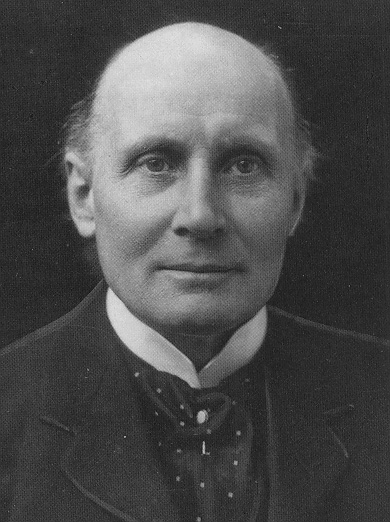 Alfred North Whitehead1861 – 1947
- Gottlob Frege1848 – 1925
 John Rawls1921 – 2002
Show 93 moreShow less
 Isaiah Berlin1909 – 1997
- Iris Murdoch1919 – 1999
 Thomas Kuhn1922 – 1996
 Peter Singerborn 1946
 Daniel Dennett1942 – 2024
 Rudolf Carnap1891 – 1970
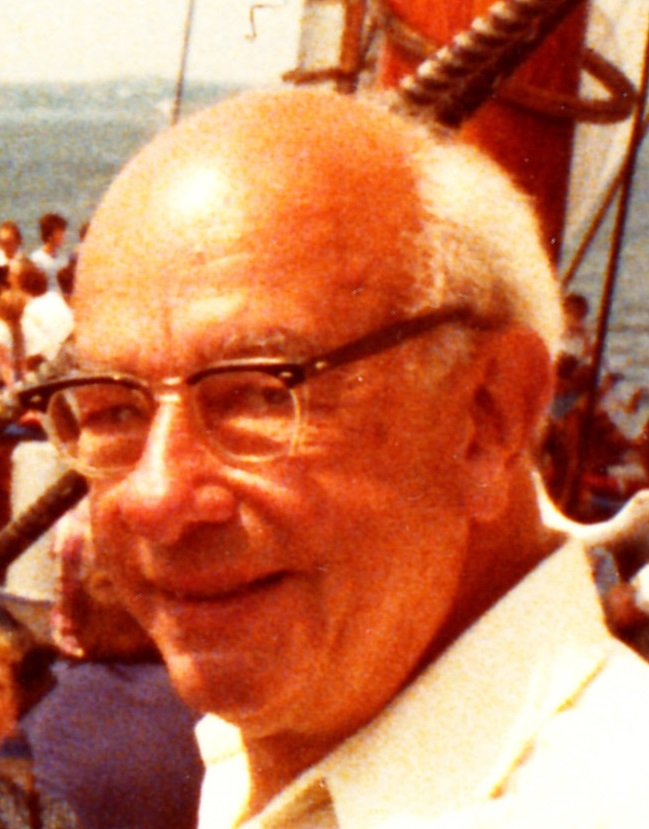 W. V. O. Quine1908 – 2000
 Robert Nozick1938 – 2002
 G. E. Moore1873 – 1958
 Roger Scruton1944 – 2020
 A. J. Ayer1910 – 1989
 Imre Lakatos1922 – 1974
 Moritz Schlick1882 – 1936
 Paul Feyerabend1924 – 1994
 Richard Rorty1931 – 2007
 John Searle1932 – 2025
 Hilary Putnam1926 – 2016
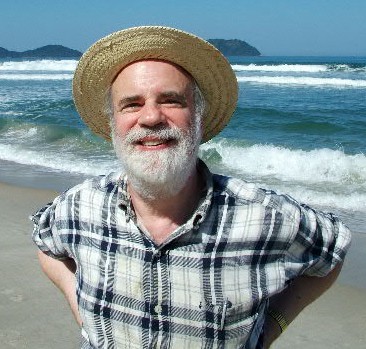 Saul Kripke1940 – 2022
 Martha Nussbaumborn 1947
- John Langshaw Austin1911 – 1960
- Gilbert Ryle1900 – 1976
 Thomas Nagelborn 1937
 Alasdair MacIntyre1929 – 2025
- G. E. M. Anscombe1919 – 2001
 Jan Łukasiewicz1878 – 1956
 Otto Neurath1882 – 1945
 Luciano Floridiborn 1964
 Ernest Gellner1925 – 1995
 Ronald Dworkin1931 – 2013
 Tom Regan1938 – 2017
 Charles Taylorborn 1931
- Frank P. Ramsey1903 – 1930
 Hans Reichenbach1891 – 1953
 David Chalmersborn 1966
- Philippa Foot1920 – 2010
 Alvin Plantingaborn 1932
 Carl Gustav Hempel1905 – 1997
 Nick Bostromborn 1973
 Jerry Fodor1935 – 2017
 Mario Bunge1919 – 2020
 Michael Dummett1925 – 2011
 Michael Walzerborn 1935
- Paul Grice1913 – 1988
- Donald Davidson1917 – 2003
 Michael Sandelborn 1953
 John N. Grayborn 1948
- Bernard Williams1929 – 2003
 H. L. A. Hart1907 – 1992
 Jaakko Hintikka1929 – 2015
- Nelson Goodman1906 – 1998
- P. F. Strawson1919 – 2006
 William Lane Craigborn 1949
 Derek Parfit1942 – 2017
 Georg Henrik von Wright1916 – 2003
 Antony Flew1923 – 2010
 R. M. Hare1919 – 2002
 David Lewis1941 – 2001
 Mary Midgley1919 – 2018
 Patricia Churchlandborn 1943
 Arthur Coleman Danto1924 – 2013
 Ian Hacking1936 – 2023
- J. L. Mackie1917 – 1981
- Ernest Nagel1901 – 1985
- Judith Jarvis Thomson1929 – 2020
 Richard Swinburneborn 1934
- Stephen Toulmin1922 – 2009
 Hans Albert1921 – 2023
 Jon Elsterborn 1940
 Michael Ruse1940 – 2024
 Simon Blackburnborn 1944
 Susan Haack1945 – 2026
 Wilfrid Sellars1912 – 1989
 Edmund Gettier1927 – 2021
- Herbert Feigl1902 – 1988
- Clarence Irving Lewis1883 – 1964
 William David Ross1877 – 1971
 Ruth Barcan Marcus1921 – 2012
 C. D. Broad1887 – 1971
 Roderick Chisholm1916 – 1999
 Leon Chwistek1884 – 1944
 Frank Jacksonborn 1943
- Susan Stebbing1885 – 1943
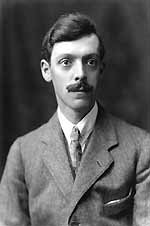 John Anderson1893 – 1962
 Arthur Prior1914 – 1969
- Charles L. Stevenson1908 – 1979
- Wesley C. Salmon1925 – 2001
- Harold Arthur Prichard1871 – 1947
- Henry Habberley Price1899 – 1984
 D. C. Williams1899 – 1983
- John Niemeyer Findlay1903 – 1987
- Ernst Mally1879 – 1944
- Richard Sylvan1935 – 1996
- Martha Nussbaumborn 1947
Includes
1Criticized by
1Places
1
You might also explore
Logical positivismModern European1920 – 1960Only empirically verifiable or logically true statements are meaningful; metaphysics is nonsense. Kantianism★Modern European1781 – presentKant's critical philosophy and its heirs: the mind structures experience; morality is grounded in rational autonomy.
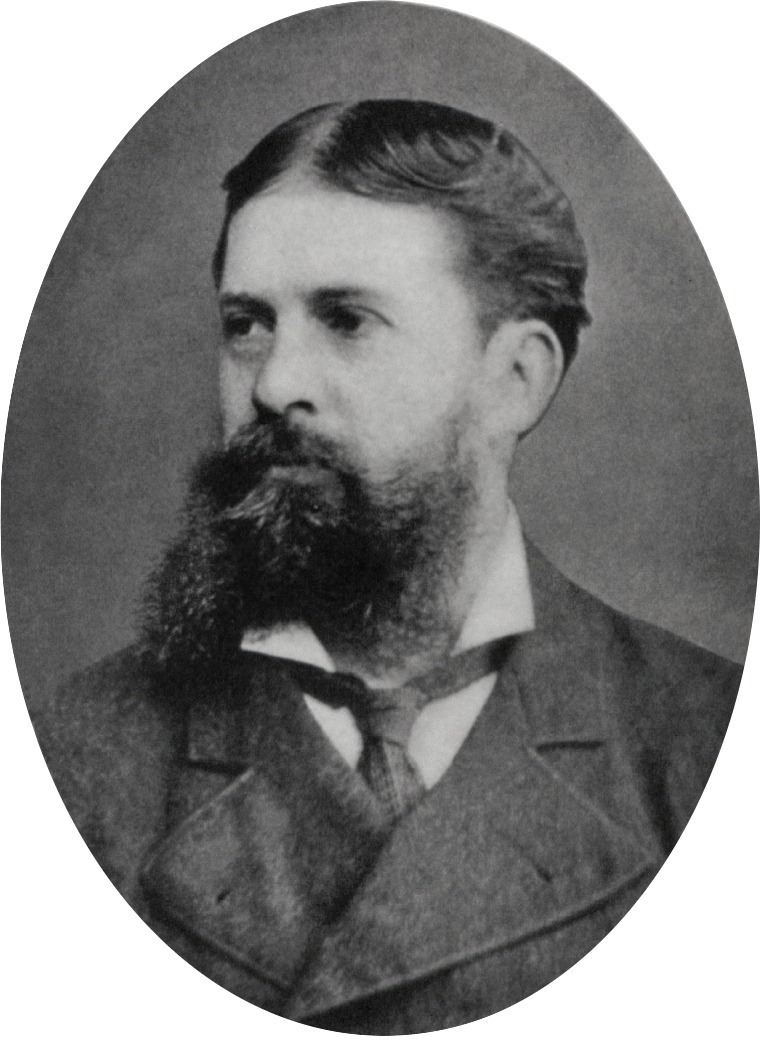 PragmatismAmericas1870 – presentThe meaning and truth of ideas lie in their practical consequences.UtilitarianismModern European1780 – presentThe right act is the one that produces the greatest happiness for the greatest number.
 AristotelianismGreek & Roman335 BCE – presentAristotle's system: substance, the four causes, logic and virtue ethics — dominant for two thousand years.
 PhenomenologyModern European1900 – presentDescribe experience exactly as it is lived, "back to the things themselves".