
Nick Bostrom
Niklas Boström is a Swedish philosopher known for his work on existential risk, the anthropic principle, human enhancement ethics, whole brain emulation, risks from artificial intelligence, and the reversal test. He was the founding director of the Future of Humanity Institute at the University of Oxford from 2005 unti
Niklas Boström (born 10 March 1973) is a Swedish philosopher known for his work on existential risk, the anthropic principle, human enhancement ethics, whole brain emulation, risks from artificial intelligence, and the reversal test. He was the founding director of the Future of Humanity Institute at the University of Oxford from 2005 until it closed in 2024, and is currently principal researcher at the Macrostrategy Research Initiative, a nonprofit he founded.
Bostrom is the author of Anthropic Bias: Observation Selection Effects in Science and Philosophy (2002), Superintelligence: Paths, Dangers, Strategies (2014) and Deep Utopia: Life and Meaning in a Solved World (2024). In 2008 and 2009, he co-edited two books titled Global Catastrophic Risks and Human Enhancement.
Bostrom believes that advances in artificial intelligence (AI) may lead to superintelligence, which he defines as "any intellect that greatly exceeds the cognitive performance of humans in virtually all domains of interest". He views this as a major source of opportunities and existential risks.
Early life and education
Born as Niklas Boström in 1973 in Helsingborg, Sweden, he disliked school at a young age and spent his last year of high school learning from home. He was interested in a wide variety of academic areas, including anthropology, art, literature, and science.
He received a B.A. degree from the University of Gothenburg in 1994. He then earned an M.A. degree in philosophy and physics from Stockholm University and an MSc degree in computational neuroscience from King's College London in 1996. During his time at Stockholm University, he researched the relationship between language and reality by studying the analytic philosopher W. V. Quine. He also did some turns on London's stand-up comedy circuit.
In 2000, he was awarded a PhD degree in philosophy from the London School of Economics under the supervision of Colin Howson and Craig Callender. His thesis was titled Observational selection effects and probability. He held a teaching position at Yale University from 2000 to 2002, and was a British Academy Postdoctoral Fellow at the University of Oxford from 2002 to 2005.
Existential risk
Bostrom's research concerns the future of humanity and long-term outcomes. He discusses existential risk, which he defines as one in which an "adverse outcome would either annihilate Earth-originating intelligent life or permanently and drastically curtail its potential". Bostrom is mostly concerned about anthropogenic risks, which are risks arising from human activities, particularly from new technologies such as advanced artificial intelligence, molecular nanotechnology, or synthetic biology.
In 2005, Bostrom founded the Future of Humanity Institute which, until its shutdown in 2024, researched the far future of human civilization. He is also an adviser to the Centre for the Study of Existential Risk.
In the 2008 essay collection, Global Catastrophic Risks, editors Bostrom and Milan M. Ćirković characterize the relationship between existential risk and the broader class of global catastrophic risks, and link existential risk to observer selection effects and the Fermi paradox.
Vulnerable world hypothesis
In a paper called "The Vulnerable World Hypothesis", Bostrom suggests that there may be some technologies that destroy human civilization by default when discovered. Bostrom proposes a framework for classifying and dealing with these vulnerabilities. He also gives counterfactual thought experiments of how such vulnerabilities could have historically occurred, e.g. if nuclear weapons had been easier to develop or had ignited the atmosphere (as Edward Teller had feared).
Digital sentience
Bostrom supports the substrate independence principle, the idea that consciousness can emerge on various types of physical substrates, not only in "carbon-based biological neural networks" like the human brain. He considers that "sentience is a matter of degree" and that digital minds can in theory be engineered to have a much higher rate and intensity of subjective experience than humans, using less resources. Such highly sentient machines, which he calls "super-beneficiaries", would be extremely efficient at achieving happiness. He recommends finding "paths that will enable digital minds and biological minds to coexist, in a mutually beneficial way where all of these different forms can flourish and thrive".
Anthropic reasoning
Bostrom has published numerous articles on anthropic reasoning, as well as the book Anthropic Bias: Observation Selection Effects in Science and Philosophy. In the book, he criticizes previous formulations of the anthropic principle, including those of Brandon Carter, John Leslie, John Barrow, and Frank Tipler.
Bostrom believes that the mishandling of indexical information is a common flaw in many areas of inquiry (including cosmology, philosophy, evolution theory, game theory, and quantum physics). He argues that an anthropic theory is needed to deal with these. He introduces the self-sampling assumption (SSA) and analyzes the self-indication assumption (SIA), shows how they lead to different conclusions in a number of cases, and identifies how each is affected by paradoxes or counterintuitive implications in certain thought experiments. He argues against SIA and proposes refining SSA into the strong self-sampling assumption (SSSA), which replaces "observers" in the SSA definition with "observer-moments".
In later work, he proposed with Milan M. Ćirković and Anders Sandberg the phenomenon of anthropic shadow, an observation selection effect that prevents observers from observing certain kinds of catastrophes in their recent geological and evolutionary past. They suggest that events that lie in the anthropic shadow are likely to be underestimated unless statistical corrections are made.
Simulation argument
Bostrom's simulation argument posits that at least one of the following statements is very likely to be true:
The fraction of human-level civilizations that reach a posthuman stage is very close to zero;
The fraction of posthuman civilizations that are interested in running ancestor-simulations is very close to zero;
The fraction of all people with our kind of experiences that are living in a simulation is very close to one.
Ethics of human enhancement
Bostrom is favorably disposed toward "human enhancement", or "self-improvement and human perfectibility through the ethical application of science", as well as a critic of bio-conservative views.
In 1998, Bostrom co-founded (with David Pearce) the World Transhumanist Association (which has since changed its name to Humanity+). In 2004, he co-founded (with James Hughes) the Institute for Ethics and Emerging Technologies, although he is no longer involved with either of these organisations.
In 2005, Bostrom published the short story "The Fable of the Dragon-Tyrant" in the Journal of Medical Ethics. A shorter version was published in 2012 in Philosophy Now. The fable personifies death as a dragon that demands a tribute of thousands of people every day. The story explores how status quo bias and learned helplessness can prevent people from taking action to defeat aging even when the means to do so are at their disposal. YouTuber CGP Grey created an animated version of the story.
With philosopher Toby Ord, he proposed the reversal test in 2006. Given humans' irrational status quo bias, how can one distinguish between valid criticisms of proposed changes in a human trait and criticisms merely motivated by resistance to change? The reversal test attempts to do this by asking whether it would be a good thing if the trait was altered in the opposite direction.
Bostrom's work also considers potential dysgenic effects in human populations but he thinks genetic engineering can provide a solution and that "In any case, the time-scale for human natural genetic evolution seems much too grand for such developments to have any significant effect before other developments will have made the issue moot".
Technology strategy
Bostrom has suggested that technology policy aimed at reducing existential risk should seek to influence the order in which various technological capabilities are attained, proposing the principle of differential technological development. This principle states that we ought to retard the development of dangerous technologies, particularly ones that raise the level of existential risk, and accelerate the development of beneficial technologies, particularly those that protect against the existential risks posed by nature or by other technologies.
In 2011, Bostrom founded the Oxford Martin Program on the Impacts of Future Technology.
Bostrom's theory of the unilateralist's curse has been cited as a reason for the scientific community to avoid controversial dangerous research such as reanimating pathogens.
Superintelligence: Paths, Dangers, Strategies
In 2014, Bostrom published Superintelligence: Paths, Dangers, Strategies, which became a New York Times Best Seller.
The book argues that superintelligence is possible and explores different types of superintelligences, their cognition, the associated risks. He also presents technical and strategic considerations on how to make it safe.
= Characteristics of a superintelligence =
Bostrom explores multiple possible paths to superintelligence, including whole brain emulation and human intelligence enhancement, but focuses on artificial general intelligence, explaining that electronic devices have many advantages over biological brains.
Adapted from the Wikipedia article Nick Bostrom, available under CC BY-SA 4.0.
Connections
You might also explore
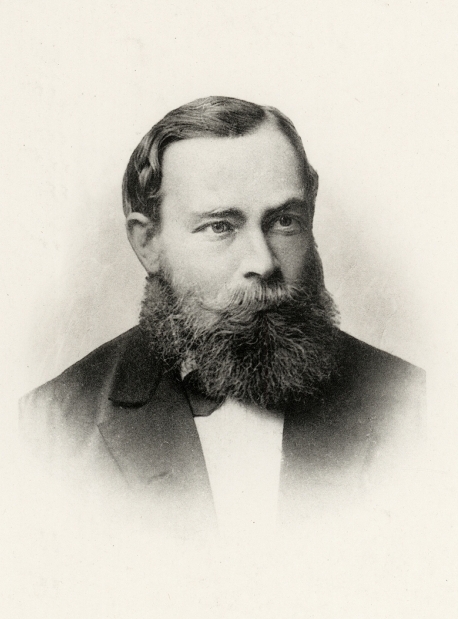 Gottlob FregeModern European1848 – 1925Inventor of modern logic and the sense–reference distinction; grandfather of analytic philosophy.
 Ludwig Wittgenstein★Modern European1889 – 1951Austrian-British philosopher who wrote two revolutionary philosophies: the picture theory of the Tractatus and the…
 Peter SingerAmericasborn 1946Utilitarian ethicist of animal liberation and effective altruism.
 Bertrand Russell★Modern European1872 – 1970Logician, pacifist and public intellectual; co-founded analytic philosophy and discovered Russell's paradox.
 Arthur Schopenhauer★Modern European1788 – 1860Pessimist who saw the world as blind Will and found relief in art, compassion and Indian philosophy.
 Karl Popper★Modern European1902 – 1994Philosopher of science for whom theories must be falsifiable; defender of the open society.