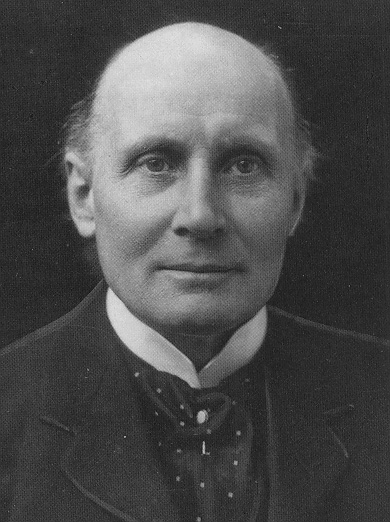
Alfred North Whitehead
Alfred North Whitehead was an English mathematician and philosopher. He created the philosophical school known as process philosophy, which has been applied in a wide variety of disciplines, including ecology, theology, education, physics, biology, economics and psychology.
Alfred North Whitehead (15 February 1861 – 30 December 1947) was an English mathematician and philosopher. He created the philosophical school known as process philosophy, which has been applied in a wide variety of disciplines, including ecology, theology, education, physics, biology, economics and psychology.
In his early career Whitehead wrote primarily on mathematics, logic and physics. He wrote the three-volume Principia Mathematica (1910–1913), with his former student Bertrand Russell. Principia Mathematica is considered one of the twentieth century's most important works in mathematical logic, and placed 23rd in a list of the top 100 English-language nonfiction books of the twentieth century by Modern Library.
Beginning in the late 1910s and early 1920s, Whitehead gradually turned his attention from mathematics to philosophy of science, and finally to metaphysics. He developed a comprehensive metaphysical system which radically departed from most of Western philosophy. Whitehead argued that reality consists of processes rather than material objects, and that processes are best defined by their relations with other processes, thus rejecting the theory that reality is fundamentally constructed by bits of matter that exist independently of one another. Whitehead's philosophical works – particularly Process and Reality – are regarded as the foundational texts of process philosophy.
Whitehead's process philosophy argues that "there is urgency in coming to see the world as a web of interrelated processes of which we are integral parts, so that all of our choices and actions have consequences for the world around us." For this reason, one of the most promising applications of Whitehead's thought in the 21st century has been in the area of ecological civilisation and environmental ethics pioneered by John B. Cobb.
Early and education
Alfred North Whitehead was born in Ramsgate, Kent, England, in 1861. His father, Alfred Whitehead, became an Anglican minister after being headmaster of Chatham House Academy, a school for boys previously headed by Alfred's father, Thomas Whitehead. Whitehead himself recalled both of them as being very successful schoolmasters, with his grandfather being the more "remarkable" man.
Whitehead's mother was Maria Sarah Buckmaster. Her maternal great-grandmother was Jane North (1776–1847), whose maiden surname was given to Whitehead, and several other members of his family over time. His mother, Maria Buckmaster had eleven siblings. The son of her brother Thomas, Walter Selby Buckmaster, was twice an Olympics silver medal winner for Polo (1900, 1908) for Britain, and is said to be "one of the finest polo players England has ever produced". Whitehead does not appear to have been close to his mother, although he and Evelyn (full name: Evelyn Ada Maud Rice Willoughby Wade), whom he married in 1890, are recorded in the English Census of 1891 as living with Alfred's mother and father. Lowe notes that there appears to have been mutual dislike between Whitehead's wife, Evelyn, and his mother, Maria.
Griffin relates how Bertrand Russell, a colleague and collaborator of Whitehead, was a very close friend of Whitehead and of his wife, Evelyn. Griffin retells Russell's story of how, one evening in 1901, "they found Evelyn Whitehead in the middle of what appeared to be a dangerous and acutely painful angina attack. ... [but] It seems that she suffered from a psychosomatic disorder ... [and] the danger was illusory." Griffin posits that Russell exaggerated the drama of her illness, and that both Evelyn and Russell were habitually given to melodrama. Intensity of emotion was encouraged by their avant-garde associates in the turbulent Bloomsbury Group which "discussed aesthetic and philosophical questions in a spirit of agnosticism and were strongly influenced by G.E. Moore's Principia Ethica (1903) and by A. N. Whitehead's and Bertrand Russell's Principia Mathematica (1910–13), in the light of which they searched for definitions of the good, the true, and the beautiful".
Alfred's brother Henry became Bishop of Madras and wrote the closely observed ethnographic account Village Gods of South-India (Calcutta: Association Press, 1921).
Whitehead was educated at Sherborne, a prominent English public school, where he excelled in sports and mathematics and was head prefect of his class.
In 1880, he began attending Trinity College, Cambridge, and studied mathematics. His academic advisor was Edward Routh. He earned his B.A. from Trinity in 1884, writing his dissertation on James Clerk Maxwell's A Treatise on Electricity and Magnetism, and graduated as fourth wrangler.
Academic career
Elected a fellow of Trinity in 1884, Whitehead would teach and write on mathematics and physics at the college until 1910, spending the 1890s writing his Treatise on Universal Algebra (1898), and the 1900s collaborating with his former pupil, Bertrand Russell, on the first edition of Principia Mathematica. He was a Cambridge Apostle.
In 1910, Whitehead resigned his senior lectureship in mathematics at Trinity and moved to London without first obtaining another job. After being unemployed for a year, he accepted a position as lecturer in applied mathematics and mechanics at University College London but was passed over a year later for the Goldsmid Chair of Applied Mathematics and Mechanics, a position for which he had hoped to be seriously considered.
In 1914, Whitehead accepted a position as professor of applied mathematics at the newly chartered Imperial College London, where his old friend Andrew Forsyth had recently been appointed chief professor of mathematics.
In 1918, Whitehead's academic responsibilities began to seriously expand as he accepted a number of high administrative positions within the University of London system (of which Imperial College London was a member at the time). He was elected dean of the Faculty of Science at the University of London in late 1918 (a post he held for four years), a member of the University of London's Senate in 1919, and chairman of the Senate's Academic (leadership) Council in 1920, a post which he held until he departed for America in 1924. Whitehead was able to exert his newfound influence to successfully lobby for a new history of science department, help establish a Bachelor of Science degree (previously only Bachelor of Arts degrees had been offered), and make the school more accessible to less wealthy students.
Toward the end of his time in England, Whitehead turned his attention to philosophy. Though he had no advanced training in philosophy, his philosophical work soon became highly regarded. After publishing The Concept of Nature in 1920, he served as president of the Aristotelian Society from 1922 to 1923.
Move to the United States, 1924
In 1924, Henry Osborn Taylor invited the 63-year-old Whitehead to join the faculty at Harvard University as a professor of philosophy. The Whiteheads would spend the rest of their lives in the United States.
During his time at Harvard, Whitehead produced some of his most important philosophical contributions. In 1925, he wrote Science and the Modern World, which was immediately hailed as an alternative to the Cartesian dualism then prevalent in popular science. He was elected to the American Academy of Arts and Sciences that same year. He was elected to the American Philosophical Society in 1926. Lectures from 1927 to 1928 were published in 1929 as a book named Process and Reality, which has been compared to Immanuel Kant's Critique of Pure Reason.
Alfred retired from Harvard in 1937.
Personal life
In 1890, Whitehead married Evelyn Wade, an Irishwoman raised in France; they had a daughter, Jessie, and two sons, Thomas and Eric. Thomas followed his father to Harvard in 1931, to teach at the Business School. Eric died in action at the age of 19, while serving in the Royal Flying Corps during World War I.
From 1910, the Whiteheads had a cottage in the village of Lockeridge, near Marlborough, Wiltshire; from there he completed Principia Mathematica.
The Whiteheads remained in the United States after moving to Harvard in 1924. Following his retirement the couple remained in Cambridge, Massachusetts. Whitehead died 30 December 1947. His widow passed away in Cambridge in 1961.
Mathematics and logic
In addition to numerous articles on mathematics, Whitehead wrote three major books on the subject: A Treatise on Universal Algebra (1898), Principia Mathematica (co-written with Bertrand Russell and published in three volumes between 1910 and 1913), and An Introduction to Mathematics (1911). The former two books were aimed exclusively at professional mathematicians, while the latter book was intended for a larger audience, covering the history of mathematics and its philosophical foundations. Principia Mathematica in particular is regarded as one of the most important works in mathematical logic of the 20th century.
In addition to his legacy as a co-writer of Principia Mathematica, Whitehead's theory of "extensive abstraction" is considered foundational for the branch of ontology and computer science known as "mereotopology," a theory describing spatial relations among wholes, parts, parts of parts, and the boundaries between parts.
A Treatise on Universal Algebra
In A Treatise on Universal Algebra (1898), the term universal algebra had essentially the same meaning that it has today: the study of algebraic structures themselves, rather than examples ("models") of algebraic structures. Whitehead credits William Rowan Hamilton and Augustus De Morgan as originators of the subject matter, and James Joseph Sylvester with coining the term itself.
At the time, structures such as Lie algebras and hyperbolic quaternions drew attention to the need to expand algebraic structures beyond the associatively multiplicative class. In a review Alexander Macfarlane wrote: "The main idea of the work is not unification of the several methods, nor generalization of ordinary algebra so as to include them, but rather the comparative study of their several structures." In a separate review, G. B. Mathews wrote, "It possesses a unity of design which is really remarkable, considering the variety of its themes."
A Treatise on Universal Algebra sought to examine Hermann Grassmann's theory of extension ("Ausdehnungslehre"), Boole's algebra of logic, and Hamilton's quaternions (this last number system was to be taken up in Volume II, which was never finished due to Whitehead's work on Principia Mathematica). Whitehead wrote in the preface:
Such algebras have an intrinsic value for separate detailed study; also they are worthy of comparative study, for the sake of the light thereby thrown on the general theory of symbolic reasoning, and on algebraic symbolism in particular... The idea of a generalized conception of space has been made prominent, in the belief that the properties and operations involved in it can be made to form a uniform method of interpretation of the various algebras.
Whitehead, however, had no results of a general nature. His hope of "form[ing] a uniform method of interpretation of the various algebras" presumably would have been developed in Volume II, had Whitehead completed it. Further work on the subject was minimal until the early 1930s when Garrett Birkhoff and Øystein Ore began publishing on universal algebras.
Principia Mathematica
Principia Mathematica (1910–1913) is Whitehead's most famous mathematical work. Written with former student Bertrand Russell, Principia Mathematica is considered one of the twentieth century's most important works in mathematics and placed 23rd in a list of the top 100 English-language nonfiction books of the twentieth century by Modern Library.
Principia Mathematica's purpose was to describe a set of axioms and inference rules in symbolic logic from which all mathematical truths could in principle be proven. Whitehead and Russell were working on such a foundational level of mathematics and logic that it took them until page 86 of Volume II to prove that 1+1=2, a proof humorously accompanied by the comment, "The above proposition is occasionally useful."
Whitehead and Russell had thought originally that Principia Mathematica would take a year to complete; it ended up taking them ten years. When it came time for publication, the three-volume work was so long (more than 2,000 pages) and its audience so narrow (professional mathematicians) that it was initially published at a loss of 600 pounds, 300 of which was paid by Cambridge University Press, 200 by the Royal Society of London, and 50 apiece by Whitehead and Russell themselves. Despite the initial loss, today there is likely no major academic library in the world that does not hold a copy of Principia Mathematica.
Principia Mathematica's legacy is mixed. It is generally accepted that Kurt Gödel's incompleteness theorem of 1931 definitively demonstrated that, for any set of axioms and inference rules proposed to encapsulate mathematics, there would in fact be some truths of mathematics that could not be deduced from them, and hence that Principia Mathematica could never achieve its aims. However, Gödel could not have come to this conclusion without Whitehead and Russell's book. In this way, Principia Mathematica's legacy might be described as its key role in disproving the possibility of achieving its own stated goals. But beyond this somewhat ironic legacy, the book popularised modern mathematical logic and drew important connections between logic, epistemology and metaphysics.
An Introduction to Mathematics
Unlike Whitehead's previous two books on mathematics, An Introduction to Mathematics (1911) was not aimed exclusively at professional mathematicians but was intended for a larger audience. The book covered the nature of mathematics, its unity and internal structure, and its applicability to nature. Whitehead wrote in the opening chapter:
The object of the following Chapters is not to teach mathematics, but to enable students from the very beginning of their course to know what the science is about, and why it is necessarily the foundation of exact thought as applied to natural phenomena.
The book can be seen as an attempt to understand the growth in unity and interconnection of mathematics as a whole, as well as an examination of the mutual influence of mathematics and philosophy, language, and physics. Although the book is little-read, in some ways it prefigures certain points of Whitehead's later work in philosophy and metaphysics.
Philosophy
Whitehead did not begin his career as a philosopher. In fact, he never had any formal training in philosophy beyond his undergraduate education. Early in his life, he showed great interest in and respect for philosophy and metaphysics, but it is evident that he considered himself a rank amateur. In one letter to his friend and former student Bertrand Russell, after discussing whether science aimed to be explanatory or merely descriptive, he wrote: "This further question lands us in the ocean of metaphysic, onto which my profound ignorance of that science forbids me to enter." Ironically, in later life, Whitehead would become one of the 20th century's foremost metaphysicians.
However, interest in metaphysics – the philosophical investigation of the nature of the universe and existence – had become unfashionable by the time Whitehead began writing in earnest about it in the 1920s. The ever-more impressive accomplishments of empirical science had led to a general consensus in academia that the development of comprehensive metaphysical systems was a waste of time because they were not subject to empirical testing.
Whitehead was unimpressed by this objection. In the notes of one of his students for a 1927 class, Whitehead was quoted as saying: "Every scientific man in order to preserve his reputation has to say he dislikes metaphysics. What he means is he dislikes having his metaphysics criticized." In Whitehead's view, scientists and philosophers make metaphysical assumptions about how the universe works all the time, but such assumptions are not easily seen precisely because they remain unexamined and unquestioned. While Whitehead acknowledged that "philosophers can never hope finally to formulate these metaphysical first principles", he argued that people need to continually reimagine their basic assumptions about how the universe works if philosophy and science are to make any real progress, even if that progress remains permanently asymptotic. For this reason, Whitehead regarded metaphysical investigations as essential to both good science and good philosophy.
Perhaps foremost among what Whitehead considered faulty metaphysical assumptions was the Cartesian idea that reality is fundamentally constructed of bits of matter that exist totally independently of one another, which he rejected in favour of an event-based or "process" ontology in which events are primary and are fundamentally interrelated and dependent on one another. He also argued that the most basic elements of reality can all be regarded as experiential, indeed that everything is constituted by its experience. He used the term "experience" very broadly so that even inanimate processes such as electron collisions are said to manifest some degree of experience. In this, he went against Descartes' separation of two different kinds of real existence, either exclusively material or else exclusively mental. Whitehead referred to his metaphysical system as the "philosophy of organism," but it would become known more widely as "process philosophy."
Whitehead's philosophy was highly original, and soon garnered interest in philosophical circles. After publishing The Concept of Nature in 1920, he served as president of the Aristotelian Society from 1922 to 1923, and Henri Bergson was quoted as saying that Whitehead was "the best philosopher writing in English." So impressive and different was Whitehead's philosophy that in 1924 he was invited to join the faculty at Harvard University as a professor of philosophy at 63 years of age.
This is not to say that Whitehead's thought was widely accepted or even well understood. His philosophical work is generally considered to be among the most difficult to understand in all of the Western canon. Even professional philosophers struggled to follow Whitehead's writings. One famous story illustrating the level of difficulty of Whitehead's philosophy centres around the delivery of Whitehead's Gifford lectures in 1927–28 – following Arthur Eddington's lectures of the year previous – which Whitehead would later publish as Process and Reality:
Eddington was a marvellous popular lecturer who had enthralled an audience of 600 for his entire course. The same audience turned up to Whitehead's first lecture but it was completely unintelligible, not merely to the world at large but to the elect. My father remarked to me afterwards that if he had not known Whitehead well he would have suspected that it was an imposter making it up as he went along... The audience at subsequent lectures was only about half a dozen in all.
It may not be inappropriate to speculate that some fair portion of the respect generally shown to Whitehead by his philosophical peers at the time arose from their sheer bafflement. The Chicago theologian Shailer Mathews once remarked of Whitehead's 1926 book Religion in the Making: "It is infuriating, and I must say embarrassing as well, to read page after page of relatively familiar words without understanding a single sentence."
Adapted from the Wikipedia article Alfred North Whitehead, available under CC BY-SA 4.0.
Connections
Influenced
7

Ideas & arguments
6Contributed to
1
You might also explore
 Ludwig Wittgenstein★Modern European1889 – 1951Austrian-British philosopher who wrote two revolutionary philosophies: the picture theory of the Tractatus and the…
 Baruch Spinoza★Jewish1632 – 1677Lens-grinder of Amsterdam who identified God with Nature and wrote an Ethics in geometrical order.
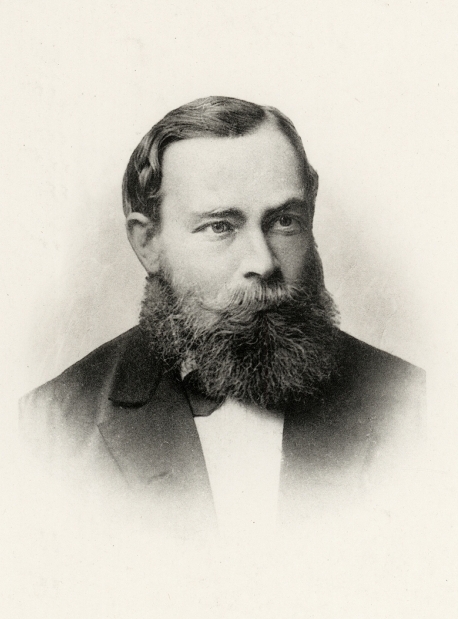 Gottlob FregeModern European1848 – 1925Inventor of modern logic and the sense–reference distinction; grandfather of analytic philosophy.
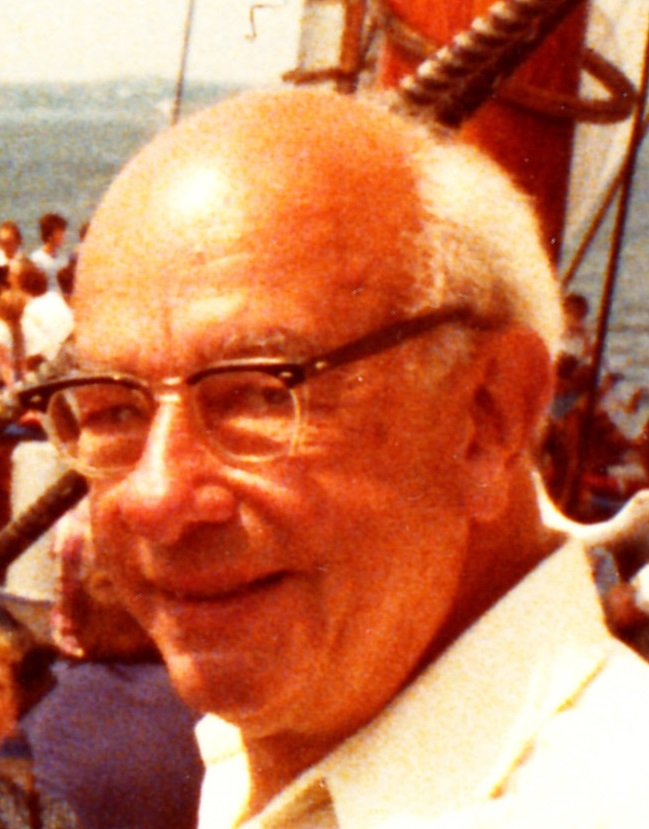 W. V. O. QuineAmericas1908 – 2000Naturalist who rejected the analytic–synthetic distinction.
 G. E. MooreModern European1873 – 1958George Edward Moore was an English philosopher who, alongside Bertrand Russell, Ludwig Wittgenstein and earlier Gottlob…
 Saul KripkeAmericas1940 – 2022Saul Aaron Kripke was an American philosopher and logician. He was a distinguished professor of philosophy at the…