
Ludwig Wittgenstein
Austrian-British philosopher who wrote two revolutionary philosophies: the picture theory of the Tractatus and the language games of the Investigations.
Key ideas
Ludwig Wittgenstein came from one of Vienna's richest families, studied engineering, then arrived in Cambridge in 1911 to work with Bertrand Russell, who soon felt he had little left to teach him.
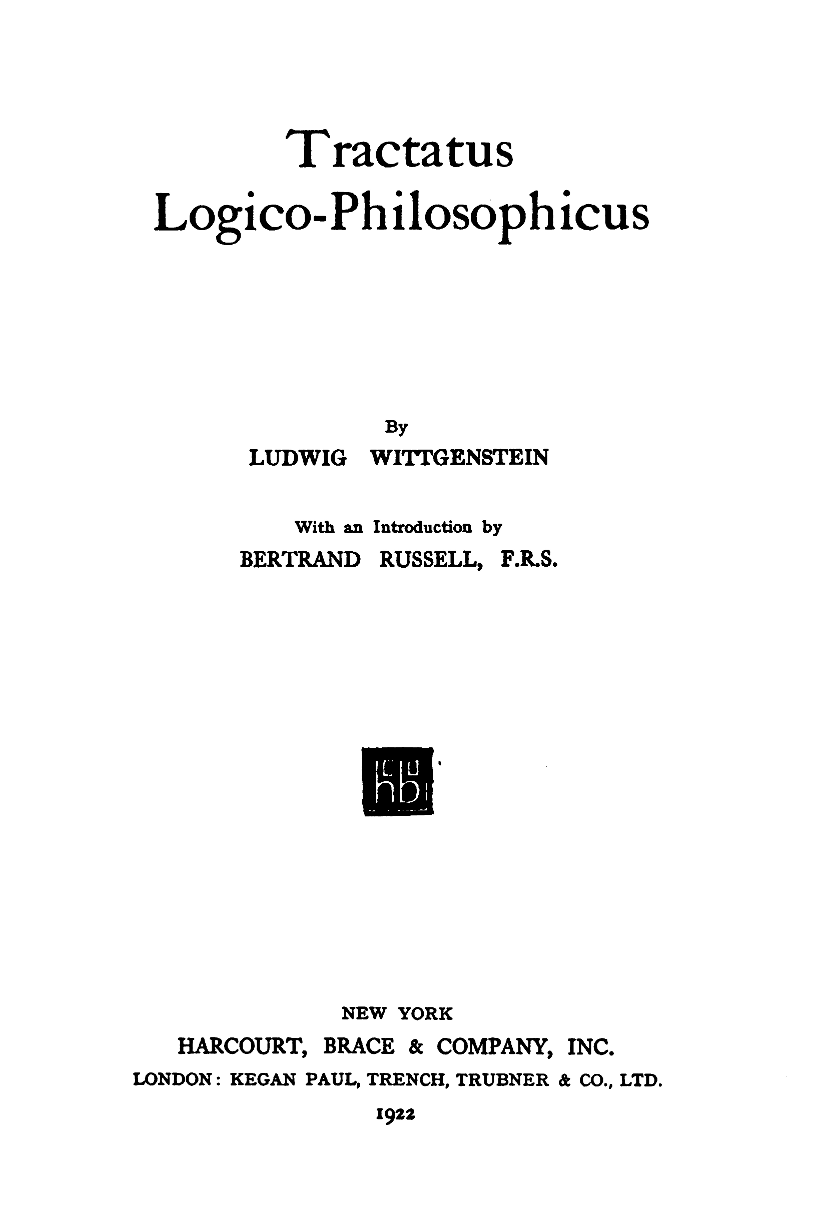
His first book, the Tractatus Logico-Philosophicus (1921), argues that language pictures reality: meaningful propositions share a logical form with the facts they represent. Ethics, aesthetics and the meaning of life cannot be said, only shown — and so the book ends: "Whereof one cannot speak, thereof one must be silent." Believing he had solved philosophy's problems, Wittgenstein left to become a schoolteacher in rural Austria.
He returned to Cambridge in 1929 and gradually rejected his earlier view. The posthumous Philosophical Investigations (1953) treats meaning not as picturing but as use within "language games" embedded in forms of life. Philosophical problems arise "when language goes on holiday", and philosophy's task is therapeutic: to show the fly the way out of the fly-bottle. His private language argument and his remarks on rule-following remain among the most debated passages in 20th-century philosophy.
Ludwig Josef Johann Wittgenstein ( VIT-gən-s(h)tyne; Austrian German: [ˈluːdvɪk ˈjoːsɛf ˈjoːhan ˈvɪtɡn̩ʃtaɪn]; 26 April 1889 – 29 April 1951) was an Austro-British philosopher who worked in logic, philosophy of mathematics, philosophy of mind, and philosophy of language.
Wittgenstein was born in Vienna into one of Europe's richest families. From 1911 to 1913, he studied at the University of Cambridge under Bertrand Russell and interacted closely with John Maynard Keynes and G. E. Moore, among others. During this time, he inherited a fortune, part of which he donated to various poets and artists and the rest of which he gave to his siblings. He also began what would become his first important philosophical work. However, at the start of World War I, he left academia to enlist in the Austro-Hungarian Army. After a series of personal adversities—including the death of his older brother by suicide (the third of his older brothers to die by suicide during his lifetime), the death of his close friend and perhaps lover David Pinsent, and his imprisonment in an Italian prisoner of war camp—he became depressed. He worked as a schoolteacher around Vienna. Despite these setbacks, his philosophical work was published in the Tractatus Logico-Philosophicus in 1921, followed by an English translation in 1922 with help from Frank P. Ramsey, to considerable discussion and acclaim.
At the encouragement of Russell, Keynes, and Ramsey, Wittgenstein returned to Cambridge, where he taught from 1930 to 1947, giving lectures on philosophy, often permeated by his original research. During World War II, he left academia again to work at the Guy's Hospital in London and at the Royal Victoria Infirmary in Newcastle upon Tyne. Wittgenstein would not publish another philosophical work during his lifetime, but following his death in 1951, his voluminous manuscripts were edited and published posthumously. The first and best-known of this posthumous series is the 1953 book Philosophical Investigations.
Wittgenstein's philosophy is often divided into an early period, exemplified by the Tractatus, and a later period, articulated primarily in the Philosophical Investigations. The early Wittgenstein was concerned with the logical relationship between propositions and the world, and he believed that by providing an account of the logic underlying this relationship, he had solved all philosophical problems. The later Wittgenstein rejected many of the assumptions of the Tractatus, arguing that the meaning of words is best understood as their use within a given language game.
Wittgenstein was well regarded among academics during his lifetime, and was decorated for his courage during World War I. However, he encountered controversy during his time as a primary school teacher in rural Austria in the 1920s for his use of violent corporal punishment on girls and boys (see the Haidbauer incident). His work (both early and later) has been described as controversial and sparked a number of different reactions. Later philosophers and commentators have generally agreed that he is one of the most important figures in 20th-century philosophy.
The Wittgensteins
According to a family tree prepared in Jerusalem after World War II, Wittgenstein's paternal great-great-grandfather was Moses Meier, an Ashkenazi Jewish land agent who lived with his wife, Brendel Simon, in Bad Laasphe in the Principality of Wittgenstein, Westphalia. In July 1808, Napoleon issued a decree that everyone, including Jews, must adopt an inheritable family surname, so Meier's son, also Moses, took the name of his employers, the Sayn-Wittgensteins, and became Moses Meier Wittgenstein. His son, Hermann Christian Wittgenstein — who took the middle name "Christian" to distance himself from his Jewish background — married Fanny Figdor, also Jewish, who converted to Protestantism just before they married, and the couple founded a successful business trading in wool in Leipzig. Ludwig's grandmother Fanny was a first cousin of the violinist Joseph Joachim.
They had 11 children – among them Wittgenstein's father. Karl Otto Clemens Wittgenstein (1847–1913) became an industrial tycoon, and by the late 1880s was one of the richest men in Europe, with an effective monopoly on Austria's steel cartel. Thanks to Karl, the Wittgensteins became the second wealthiest family in the Austro-Hungarian Empire, only the Rothschilds being wealthier. Karl Wittgenstein was viewed as the Austrian equivalent of Andrew Carnegie, with whom he was friends, and was one of the wealthiest men in the world by the 1890s. As a result of his decision in 1898 to invest substantially in the Netherlands and in Switzerland as well as overseas, particularly in the US, the family was to an extent shielded from the hyperinflation that hit Austria in 1922. However, their wealth diminished due to post-1918 hyperinflation and subsequently during the Great Depression, although even as late as 1938 they owned 13 mansions in Vienna alone.
Early life
Wittgenstein was raised Catholic, though ethnically was mostly Jewish. His mother was Leopoldine Maria Josefa Kalmus, known among friends as "Poldi". Her father was a Bohemian Jew, and her mother was an Austrian-Slovene Catholic—she was Wittgenstein's only non-Jewish grandparent. Poldi was an aunt of the Nobel Prize laureate Friedrich Hayek on his maternal side. Wittgenstein was born at 8:30 pm on 26 April 1889 in the "Villa Wittgenstein" at what became Neuwaldegger Straße 38 in the suburban parish Neuwaldegg outside Vienna.
Karl and Poldi had nine children in all—four girls: Hermine, Margaret (Gretl), Helene, and a fourth daughter Dora who died as a baby; and five boys: Johannes (Hans), Kurt, Rudolf (Rudi), Paul—who became a concert pianist despite losing an arm in World War I—and Ludwig, who was the youngest of the family.
Wittgenstein and his siblings were brought up in the Roman Catholic faith of their mother. The family was at the centre of Vienna's cultural life; Bruno Walter described the life at the Wittgensteins' palace as an "all-pervading atmosphere of humanity and culture". Karl was a leading patron of the arts, commissioning works by Auguste Rodin and financing the city's exhibition hall and art gallery, the Secession Building. Gustav Klimt painted a portrait of Wittgenstein's sister Margaret for her wedding, and Johannes Brahms and Gustav Mahler gave regular concerts in the family's numerous music rooms. According to John King, Wittgenstein "was always immaculately neat and tidy, small of stature and with piercing blue eyes under a shock of curly hair".
Wittgenstein, who valued precision and discipline, never considered contemporary classical music acceptable. He said to his friend Drury in 1930: Music came to a full stop with Brahms; and even in Brahms I can begin to hear the noise of machinery. Ludwig Wittgenstein himself had absolute pitch, and his devotion to music remained vitally important to him throughout his life; he made frequent use of musical examples and metaphors in his philosophical writings, and he was unusually adept at whistling lengthy and detailed musical passages. He was known as an amazing whistler, a talent he developed as a boy while his brothers played instruments as children. Wittgenstein would give tips to other whistlers if they were off tune. He learnt to play the clarinet in his 30s. A fragment of music (three bars) composed by Wittgenstein was discovered in one of his 1931 notebooks by Michael Nedo, director of the Wittgenstein Institute in Cambridge.
Family temperament and brothers' suicides
Ray Monk writes that Karl's aim was to turn his sons into captains of industry; they were not sent to school lest they acquire bad habits but were educated at home to prepare them for work in Karl's industrial empire. Three of the five brothers later committed suicide. Psychiatrist Michael Fitzgerald argues that Karl was a harsh perfectionist who lacked empathy, and that Wittgenstein's mother was anxious and insecure, unable to stand up to her husband. Johannes Brahms said of the family, whom he visited regularly: They seemed to act towards one another as if they were at court.The family appeared to have a strong streak of depression running through it. Anthony Gottlieb tells a story about Paul practising on one of the pianos in the Wittgensteins' main family mansion, when he suddenly shouted at Ludwig in the next room:I cannot play when you are in the house, as I feel your skepticism seeping towards me from under the door!
The family palace housed seven grand pianos and each of the siblings pursued music "with an enthusiasm that, at times, bordered on the pathological". The eldest brother, Hans, was hailed as a musical prodigy. At the age of four, writes Alexander Waugh, Hans could identify the Doppler effect in a passing siren as a quarter-tone drop in pitch, and at five started crying "Wrong! Wrong!" when two brass bands in a carnival played the same tune in different keys. But he died in mysterious circumstances in May 1902, when he ran away to the US and disappeared from a boat in Chesapeake Bay, most likely having committed suicide.
Two years later, aged 22 and studying chemistry at the Berlin Academy, the third eldest brother, Rudi, committed suicide in a Berlin bar. He had asked the pianist to play Thomas Koschat's "Verlassen, verlassen, verlassen bin ich" ("Forsaken, forsaken, forsaken am I"), before mixing himself a drink of milk and potassium cyanide. He had left several suicide notes, one to his parents that said he was grieving over the death of a friend, and another that referred to his "perverted disposition". It was reported at the time that he had sought advice from the Scientific-Humanitarian Committee, an organization that was campaigning against Paragraph 175 of the German Criminal Code, which prohibited homosexual sex. His father forbade the family from ever mentioning his name again. (Ludwig also may have been a closeted homosexual, who separated sexual intercourse from love, despising all forms of the former.) The second eldest brother, Kurt, an officer and company director, shot himself on 27 October 1918, just before the end of World War I, when the Austrian troops he was commanding refused to obey his orders and deserted en masse. Hermine had said Kurt seemed to carry "the germ of disgust for life within himself". Later, Ludwig wrote:I ought to have ... become a star in the sky. Instead of which I have remained stuck on earth.
Realschule in Linz
Insistent that they be entirely home-schooled by tutors like their siblings, Karl Wittgenstein had prevented his youngest sons Paul and Ludwig from attending secondary school. After the 1902 disappearance (and presumed suicide) of Hans and the ensuing tensions at home, he finally relented. Unlike Paul, Wittgenstein failed the entrance examination to the more academic Gymnasium in Wiener Neustadt. He only barely managed, after extra tutoring, to pass the exam for the more technically oriented Imperial and Royal Realschule in Linz, a small state secondary school of some 300 pupils. In 1903, when he was 14, he began his three years of formal schooling there, lodging nearby during the term with the family of Josef Strigl, a teacher at the local gymnasium, the family giving him the nickname Luki.
Adolf Hitler was a fellow pupil and of the same age but was never in the same class, because he had been made to repeat his 1900/1901 first year. Placed two grades above Hitler, it is thought Wittgenstein was also moved forward a year. Hitler left Linz in 1904 to spend the 1904/1905 academic year at the Realschule in Steyr. As Ray Monk and Hans Sluga note, there is no evidence the two ever had anything to do with each other during the year that they overlapped, 1903–1904. Wittgenstein's brother Rudi died by suicide on 2 May 1904, and this resulted in his missing many classes during the remainder of the academic year and the one that followed.
Historian Brigitte Hamann writes that he stood out from the other boys, because he spoke an unusually pure form of High German with a stutter, dressed elegantly, and was sensitive and unsociable. Monk writes that the other boys made fun of him, singing after him, "Wittgenstein wandelt wehmütig widriger Winde wegen Wienwärts" (Wittgenstein wanders wistfully Vienna-wards [in] worsening winds). In his leaving certificate, he received a top mark—a 5—in religious studies; a 2 for conduct and English; 3s for French, geography, history, mathematics, and physics; and 4s for German, chemistry, geometry, and freehand drawing. He had particular difficulty with spelling and failed his written German exam because of it. He wrote in 1931:My bad spelling in youth, up to the age of about 18 or 19, is connected with the whole of the rest of my character (my weakness in study).
Faith
Wittgenstein was baptized as an infant by a Catholic priest and received formal instruction in Catholic doctrine as a child. In an interview, his sister Gretl Stonborough-Wittgenstein says that their grandfather's "strong, severe, partly ascetic Christianity" was a strong influence on all the Wittgenstein children. While he was at the Realschule, he decided he lacked religious faith. He nevertheless believed in the importance of the practice of confession. He wrote in his diaries that he had made some confessions to his oldest sister, Hermine, while he was at the Realschule; Monk speculates that it may have been about his loss of faith. He also discussed it with Gretl, his other sister, and began reading Arthur Schopenhauer's The World as Will and Representation per Gretl's recommendation. As a teenager, Wittgenstein adopted Schopenhauer's epistemological idealism. However, after he studied the philosophy of mathematics, he abandoned epistemological idealism for Gottlob Frege's conceptual realism. In later years, Wittgenstein was highly dismissive of Schopenhauer, describing him as an ultimately "shallow" thinker:
One could call Schopenhauer a quite crude mind.... Where real depth starts, his finishes.
Wittgenstein's engagement with Christianity and religion in general, to which he consistently expressed sincere and devoted sympathy, evolved, much as his philosophical outlook did. In 1912, Wittgenstein wrote to Bertrand Russell saying that Mozart and Beethoven were the 'actual' sons of God. However, Wittgenstein resisted organized religion, saying it was hard for him to "bend the knee", though his grandfather's beliefs continued to influence Wittgenstein—as he said, "I cannot help seeing every problem from a religious point of view." Wittgenstein referred to Augustine of Hippo in his Philosophical Investigations. Philosophically, Wittgenstein's thought shows alignment with religious discourse. For example, he would become one of the century's fiercest critics of scientism.
Wittgenstein's religious belief emerged during his service in the Austrian army in World War I, and he was a devoted reader of Fyodor Dostoevsky's and Leo Tolstoy's religious writings. He viewed his wartime experiences as a trial in which he strove to conform to the will of God, and in a journal entry from 29 April 1915, he writes: Perhaps the nearness of death will bring me the light of life. May God enlighten me. I am a worm, but through God I become a man. God be with me. Amen. Around this time, Wittgenstein wrote that "Christianity is indeed the only sure way to happiness", but he rejected the idea that religious belief was merely thinking that a certain doctrine was true. From this time on, Wittgenstein viewed religious faith as a way of living and opposed rational argumentation or proofs for the existence of God.
With age, a deepening personal spirituality led to several elucidations and clarifications, as he untangled language problems in religion—attacking, for example, the temptation to think of God's existence as a matter of scientific evidence. In 1947, finding it rather difficult to work, he wrote:I have had a letter from an old friend in Austria, a priest. In it he says that he hopes my work will go well, if it should be God's will. Now that is all I want: if it should be God's will. In Culture and Value, Wittgenstein writes:
Is what I am doing (my work in philosophy) really worth the effort? Yes, but only if a light shines on it from above. His close friend Norman Malcolm wrote:Wittgenstein's mature life was strongly marked by religious thought and feeling. I am inclined to think that he was more deeply religious than are many people who correctly regard themselves as religious believers.
Toward the end, Wittgenstein wrote:Bach wrote on the title page of his Orgelbüchlein, "To the glory of the most high God, and that my neighbour may be benefited thereby". That is what I would have liked to say about my work.
Influence of Otto Weininger
While a student at the Realschule, Wittgenstein was influenced by Austrian philosopher Otto Weininger's 1903 book Geschlecht und Charakter (Sex and Character). Weininger, who was Jewish, argued that the concepts of male and female exist only as Platonic forms and that Jews tend to embody the form of Platonic femininity. Furthermore, he argued, whereas men are basically rational, women operate only at the level of their emotions and sexual organs. Jews, Weininger contended, are similar, saturated with femininity, with no sense of right and wrong, and no soul. Weininger argues that man must choose between his masculine and feminine sides, consciousness and unconsciousness, Platonic love and sexuality. Love and sexual desire stand in contradiction, and love between a woman and a man is therefore doomed to misery or immorality. The only life worth living is the spiritual one—to live as a woman or a Jew means one has no right to live at all; the choice is genius or death. Weininger committed suicide, shooting himself in 1903, shortly after publishing the book. Wittgenstein, then 14, attended Weininger's funeral. Many years later, as a professor at the University of Cambridge, Wittgenstein distributed copies of Weininger's book to his bemused academic colleagues. He said that Weininger's arguments were wrong, but that it was the way they were wrong that was interesting. In a letter dated 23 August 1931, Wittgenstein wrote the following to G. E. Moore:
Dear Moore,Thanks for your letter. I can quite imagine that you don't admire Weininger very much, what with that beastly translation and the fact that W. must feel very foreign to you. It is true that he is fantastic but he is great and fantastic. It isn't necessary or rather not possible to agree with him but the greatness lies in that with which we disagree. It is his enormous mistake which is great. I.e. roughly speaking if you just add a "~" to the whole book it says an important truth. In an unusual move, Wittgenstein took out a copy of Weininger's work on 1 June 1931 from the special order books section in the university library. He met Moore on 2 June, when he probably gave Moore this copy.
Jewishness
There is much discussion regarding the extent to which Wittgenstein and his siblings—who were of three-quarters Jewish descent—saw themselves, were, and were seen, as Jews. In his notebooks of around 1929–1931, Wittgenstein frequently referred to himself as Jewish, often in a self-deprecating manner. For instance, while criticizing himself for being a "reproductive" rather than a "productive" thinker, he wrote: "The saint is the only Jewish 'genius'. Even the greatest Jewish thinker is no more than talented. (Myself for instance.)"
Wittgenstein would later, in a 1949 conversation with his friend Drury, claim that "[m]y thoughts are one hundred percent Hebraic". If so, Hans Sluga has argued,his was a profoundly self-doubting Judaism, which had always the possibility of collapsing into a destructive self-hatred (as it did in Weininger's case) but which also held an immense promise of innovation and genius. Although by "Hebraic", Sluga later contended, Wittgenstein meant to include the Christian tradition that descended from Judaism, in contradistinction to the Greek tradition, holding that good and evil could not be reconciled.
Engineering at Berlin and Manchester
Wittgenstein began his studies in mechanical engineering at the Technische Hochschule Berlin in Charlottenburg, Berlin, on 23 October 1906, lodging with the family of Professor Jolles. He attended for three semesters, and was awarded a diploma (Abgangzeugnis) on 5 May 1908.
During his time at the Institute, Wittgenstein developed an interest in aeronautics. He arrived at the Victoria University of Manchester in the spring of 1908 to study for a doctorate, full of plans for aeronautical projects, including designing and flying his own plane. He conducted research into the behaviour of kites in the upper atmosphere, experimenting at a meteorological observation site near Glossop in Derbyshire. Specifically, the Royal Meteorological Society researched and investigated the ionization of the upper atmosphere, by suspending instruments on balloons or kites. At Glossop, Wittgenstein worked under Professor of Physics Sir Arthur Schuster.
Wittgenstein worked on the design of a propeller with small jet (tip jet) engines on the end of its blades, something he patented in 1911, and that earned him a research studentship from the university in the autumn of 1908. At the time, contemporary propeller designs were not advanced enough to actually put Wittgenstein's ideas into practice, and it would be years before a blade design that could support Wittgenstein's innovative design was created. Wittgenstein's design required air and gas to be forced along the propeller arms to combustion chambers on the end of each blade, where they were then compressed by the centrifugal force exerted by the revolving arms and ignited. Propellers of the time were typically wood, whereas modern blades are made from pressed steel laminates as separate halves, which are then welded together. This gives the blade a hollow interior and thereby creates an ideal pathway for the air and gas.
Work on the jet-powered propeller proved frustrating for Wittgenstein, who had very little experience working with machinery. Jim Bamber, a British engineer who was his friend and classmate at the time, reported that when things went wrong, which often occurred, he would throw his arms around, stomp about, and swear volubly in German.According to William Eccles, another friend from that period, Wittgenstein then turned to more theoretical work, focusing on the design of the propeller – a problem that required relatively sophisticated mathematics.
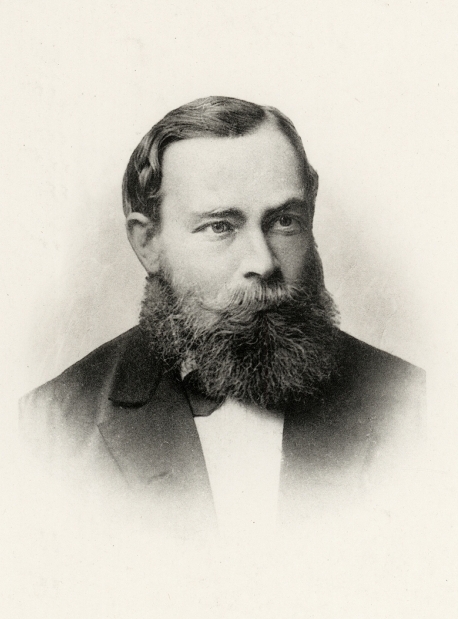
It was at this time that he became interested in the foundations of mathematics, particularly after reading Bertrand Russell's The Principles of Mathematics (1903), and Gottlob Frege's The Basic Laws of Arithmetic, vol. 1 (1893) and vol. 2 (1903). Wittgenstein's sister Hermine said he became obsessed with mathematics as a result, and was anyway losing interest in aeronautics. He decided instead that he needed to study logic and the foundations of mathematics, describing himself as in a "constant, indescribable, almost pathological state of agitation". In the summer of 1911 he visited Frege at the University of Jena to show him some philosophy of mathematics and logic he had written, and to ask whether it was worth pursuing. He wrote: I was shown into Frege's study. Frege was a small, neat man with a pointed beard who bounced around the room as he talked. He absolutely wiped the floor with me, and I felt very depressed; but at the end he said 'You must come again', so I cheered up. I had several discussions with him after that. Frege would never talk about anything but logic and mathematics, if I started on some other subject, he would say something polite and then plunge back into logic and mathematics.
Arrival at Cambridge
Wittgenstein wanted to study with Frege, but Frege suggested he attend the University of Cambridge to study under Russell, so on 18 October 1911 Wittgenstein arrived unannounced at Russell's rooms in Trinity College. Russell was having tea with C. K. Ogden, when, according to Russell, an unknown German [sic] appeared, speaking very little English but refusing to speak German. He turned out to be a man who had learned engineering at Charlottenburg, but during this course had acquired, by himself, a passion for the philosophy of mathematics & has now come to Cambridge on purpose to hear me.He was soon not only attending Russell's lectures but dominating them. The lectures were poorly attended and Russell often found himself lecturing only to C. D. Broad, E. H. Neville, and H. T. J. Norton. Wittgenstein started following him after lectures back to his rooms to discuss more philosophy, until it was time for the evening meal in Hall. Russell grew irritated; he wrote to his lover Lady Ottoline Morrell: "My German friend threatens to be an infliction."
Russell soon came to believe that Wittgenstein was a genius, especially after he had examined Wittgenstein's written work. He wrote in November 1911 that he had at first thought Wittgenstein might be a crank, but soon decided he was a genius: Some of his early views made the decision difficult. He maintained, for example, at one time that all existential propositions are meaningless. This was in a lecture room, and I invited him to consider the proposition: 'There is no hippopotamus in this room at present.' When he refused to believe this, I looked under all the desks without finding one; but he remained unconvinced. Three months after Wittgenstein's arrival Russell told Morrell:I love him & feel he will solve the problems I am too old to solve ... He is the young man one hopes for. Wittgenstein later told David Pinsent that Russell's encouragement had proven his salvation, and had ended nine years of loneliness and suffering, during which he had continually thought of suicide. In encouraging him to pursue philosophy and in justifying his inclination to abandon engineering, Russell had, quite literally, saved Wittgenstein's life.
Cambridge Moral Sciences Club
In 1912 Wittgenstein joined the Cambridge University Moral Sciences Club, an influential discussion group for philosophy dons and students, delivering his first paper there on 29 November that year, a four-minute talk defining philosophy as "all those primitive propositions which are assumed as true without proof by the various sciences". Wittgenstein left Cambridge in 1913, but would return to Cambridge in 1929 and resume attending meetings.
Cambridge Apostles
The economist John Maynard Keynes also invited him to join the Cambridge Apostles, an elite secret society formed in 1820, which both Bertrand Russell and G. E. Moore had joined as students, but Wittgenstein did not greatly enjoy it and attended only infrequently. Russell had been worried that Wittgenstein would not appreciate the group's raucous style of intellectual debate, its precious sense of humour, and the fact that the members were often in love with one another. He was admitted in 1912 but resigned almost immediately because he could not tolerate the style of discussion. Nevertheless, the Cambridge Apostles allowed Wittgenstein to participate in meetings again in the 1920s when he returned to Cambridge. Reportedly, Wittgenstein also had trouble tolerating the discussions in the Cambridge Moral Sciences Club.
Frustrations at Cambridge
Wittgenstein was quite vocal about his depression in his years at Cambridge and before he went to war; on many occasions, he told Russell of his woes. His mental anguish seemed to stem from two sources: his work and his personal life. Wittgenstein made numerous remarks to Russell about logic driving him mad. Wittgenstein also said to Russell that he "felt the curse of those who have half a talent". He later told of being in mediocre spirits due to his lack of progress in his logical work. Monk writes that Wittgenstein lived and breathed logic, and a temporary lack of inspiration plunged him into despair. Wittgenstein told of his work in logic affecting his mental state in an extreme way. However, he also told Russell another story. Around Christmas, in 1913, he wrote: how can I be a logician before I'm a human being? For the most important thing is coming to terms with myself! He also told Russell that he was worried about logic and his sins, and upon arriving in Russell's rooms one night, he announced to Russell that he would kill himself once he left. Ludwig's temperament was also recorded in the diary of David Pinsent. Pinsent wrote I have to be frightfully careful and tolerant when he gets these sulky fits and I am afraid he is in an even more sensitive neurotic state just now than usual when talking about Wittgenstein's emotional fluctuations.
In May 1913, Russell was writing his book Theory of Knowledge. Within the first few weeks he wrote 240 pages, which is when Wittgenstein delivered a critique stating that Russell's theory allowed for the creation of nonsense. Russell continued working on what he considered his next masterpiece until June. When he reached 350 pages, Wittgenstein's critique finally sank in, leading him to abandon it and change his direction in philosophy completely. The role-reversal between Russell and Wittgenstein was that despite Russell saving Wittgenstein's life it was his critique of Russell's work that led to Russell's great depressive episode.
On 19 June, in a devastating letter to Ottoline Morrell, Russell confessed the full psychological weight of the situation: All that has gone wrong with me lately comes from Wittgenstein's attack on my work—I have only just realized this... Yesterday felt ready for suicide.
This incident incited Wittgenstein's leaving of Cambridge as he believed he had now outgrown Russell intellectually, thus, along with his frustrations at Cambridge he moved to Norway.
Sexual orientation and relationship with David Pinsent
Wittgenstein had romantic relations with both men and women. He is generally believed to have fallen in love with at least three men, and had a relationship with the latter two: David Hume Pinsent in 1912, Francis Skinner in 1930, and Ben Richards in the late 1940s. He later claimed that, as a teenager in Vienna, he had had an affair with a woman. Additionally, in the 1920s Wittgenstein fell in love with a young Swiss woman, Marguerite Respinger, sculpting a bust modelled on her and seriously considering marriage, albeit on condition that they would not have children; she decided that he was not right for her.
Wittgenstein's relationship with David Pinsent occurred during an intellectually formative period and is well documented. Bertrand Russell introduced Wittgenstein to Pinsent in the summer of 1912. Pinsent was a mathematics undergraduate and a relation of David Hume. Wittgenstein and he soon became very close. The men worked together on experiments in the psychology laboratory about the role of rhythm in the appreciation of music, and Wittgenstein delivered a paper on the subject to the British Psychological Association in Cambridge in 1912. They also travelled together, including to Iceland in September 1912—the expenses paid by Wittgenstein, including first class travel, the hiring of a private train, and new clothes and spending money for Pinsent. In addition to Iceland, Wittgenstein and Pinsent travelled to Norway in 1913. In determining their destination, Wittgenstein and Pinsent visited a tourist office in search of a location that would fulfil the following criteria: a small village located on a fjord, a location away from tourists, and a peaceful destination to allow them to study logic and law.
Adapted from the Wikipedia article Ludwig Wittgenstein, available under CC BY-SA 4.0.
In their words
“Philosophy is a battle against the bewitchment of our intelligence by means of language.”
“The limits of my language mean the limits of my world.”
“Whereof one cannot speak, thereof one must be silent.”
Connections
Teachers
1Students
1Influenced by
4
Influenced
18 Bertrand Russell1872 – 1970
 Jacques Derrida1930 – 2004
 Pierre Bourdieu1930 – 2002
 Rudolf Carnap1891 – 1970
 Logical positivism1920 – 1960
 John Searle1932 – 2025
Show 12 moreShow less
 Hilary Putnam1926 – 2016
 Saul Kripke1940 – 2022
- Alan Watts1915 – 1973
- G. E. M. Anscombe1919 – 2001
- Philippa Foot1920 – 2010
- Donald Davidson1917 – 2003
- P. F. Strawson1919 – 2006
 Georg Henrik von Wright1916 – 2003
- Karl-Otto Apel1922 – 2017
- Stephen Toulmin1922 – 2009
 Yeshayahu Leibowitz1903 – 1994
 Stanley Hauerwasborn 1940
Ideas & arguments
15
Contributed to
9


Places
2

Related
1You might also explore
 Karl Popper★Modern European1902 – 1994Philosopher of science for whom theories must be falsifiable; defender of the open society.
 W. V. O. QuineAmericas1908 – 2000Naturalist who rejected the analytic–synthetic distinction.
 Aristotle★Greek & Roman384 – 322 BCEPlato's student and Alexander's tutor, who systematised logic, ethics, biology, metaphysics and politics — "the master…Saul KripkeAmericas1940 – 2022Saul Aaron Kripke was an American philosopher and logician. He was a distinguished professor of philosophy at the…
 Gottlob FregeModern European1848 – 1925Inventor of modern logic and the sense–reference distinction; grandfather of analytic philosophy.
 David Hume★Modern European1711 – 1776Scottish skeptic who showed we cannot rationally justify induction or causation, and that reason is the slave of the…