
David Chalmers
Named the "hard problem of consciousness".
David John Chalmers ( CHAH-mərz; born 20 April 1966) is an Australian philosopher and cognitive scientist, specializing in philosophy of mind and philosophy of language. He is a professor of philosophy and neural science at New York University (NYU), as well as co-director of NYU's Center for Mind, Brain and Consciousness (along with Ned Block). In 2006, he was elected a fellow of the Australian Academy of the Humanities. In 2013, he was elected as a fellow of the American Academy of Arts and Sciences.
Chalmers is best known for formulating the hard problem of consciousness, and for popularizing the philosophical zombie thought experiment.
Chalmers and David Bourget co-founded PhilPapers; a database of journal articles for philosophers.
Early life and education
David Chalmers was born in Sydney, New South Wales, and subsequently grew up in Adelaide, South Australia, where he attended Unley High School.
As a child, he experienced synesthesia. He began coding and playing computer games at the age of 10 on a PDP-10 at a medical center. He also performed exceptionally in mathematics, and secured a bronze medal in the International Mathematical Olympiad. When Chalmers was 13, he read Douglas Hofstadter's 1979 book Gödel, Escher, Bach, which awakened an interest in philosophy.
Chalmers received his undergraduate degree in pure mathematics from the University of Adelaide. After graduating, Chalmers spent six months reading philosophy books while hitchhiking across Europe, before continuing his studies at the University of Oxford, where he was a Rhodes Scholar but eventually withdrew from the course.
In 1993, Chalmers received his PhD in philosophy and cognitive science from Indiana University Bloomington under Douglas Hofstadter, writing a doctoral thesis entitled Toward a Theory of Consciousness. He was a postdoctoral fellow in the Philosophy-Neuroscience-Psychology program directed by Andy Clark at Washington University in St. Louis from 1993 to 1995.
Career
In 1994, Chalmers presented a lecture at the inaugural Toward a Science of Consciousness conference. According to the Chronicle of Higher Education, this "lecture established Chalmers as a thinker to be reckoned with and goosed a nascent field into greater prominence." He went on to co-organize the conference (renamed "The Science of Consciousness") for some years with Stuart Hameroff, but stepped away when he felt it became too divergent from mainstream science. Chalmers is a founding member of the Association for the Scientific Study of Consciousness and one of its past presidents.
Having established his reputation, Chalmers received his first professorship at UC Santa Cruz, from August 1995 to December 1998. In 1996 he published the widely cited book The Conscious Mind. Chalmers was subsequently appointed Professor of Philosophy (1999–2004) and then Director of the Center for Consciousness Studies (2002–2004) at the University of Arizona. In 2004, Chalmers returned to Australia, encouraged by an ARC Federation Fellowship, becoming professor of philosophy and director of the Center for Consciousness at the Australian National University. Chalmers accepted a part-time professorship at the philosophy department of New York University in 2009, becoming a full-time professor in 2014.
In 2013, Chalmers was elected a Fellow of the American Academy of Arts & Sciences. He is an editor on topics in the philosophy of mind for the Stanford Encyclopedia of Philosophy. In May 2018, it was announced that he would serve on the jury for the Berggruen Prize.
In 2023, Chalmers won a bet—made in 1998, for a case of wine—with neuroscientist Christof Koch that the neural underpinnings for consciousness would not be resolved by the year 2023, while Koch had bet that they would.
Philosophy of mind
Chalmers is best known for formulating what he calls the "hard problem of consciousness", in both his 1995 paper "Facing Up to the Problem of Consciousness" and his 1996 book The Conscious Mind. He makes a distinction between "easy" problems of consciousness, such as explaining object discrimination or verbal reports, and the single hard problem, which could be stated "why does the feeling which accompanies awareness of sensory information exist at all?" The essential difference between the (cognitive) easy problems and the (phenomenal) hard problem is that the former are at least theoretically answerable via the dominant strategy in the philosophy of mind: physicalism. Chalmers argues for an "explanatory gap" from the objective to the subjective, and criticizes physicalist explanations of mental experience, making him a dualist. Chalmers characterizes his view as "naturalistic dualism": naturalistic because he believes mental states supervene "naturally" on physical systems (such as brains); dualist because he believes mental states are ontologically distinct from and not reducible to physical systems. He has also characterized his view by more traditional formulations such as property dualism.
In support of property dualism and the extra need for non physical explanations alongside the physical ones for a complete explanation of the world, Chalmers is famous for his commitment to the logical (though, not natural) possibility of philosophical zombies. These zombies are complete physical duplicates of human beings, lacking only qualitative experience. Chalmers argues that since such zombies are conceivable to us, they must therefore be logically possible. Since they are logically possible, then qualia and sentience are not fully explained by physical properties alone; the facts about them are further facts. Instead, Chalmers argues that consciousness is a fundamental property ontologically autonomous of any known (or even possible) physical properties, and that there may be lawlike rules which he terms "psychophysical laws" that determine which physical systems are associated with which types of qualia. He further speculates that all information-bearing systems may be conscious, leading him to entertain the possibility of conscious thermostats and a qualified panpsychism he calls panprotopsychism. Chalmers maintains a formal agnosticism on the issue, even conceding that the viability of panpsychism places him at odds with the majority of his contemporaries. According to Chalmers, his arguments are similar to a line of thought that goes back to Leibniz's 1714 "mill" argument; the first substantial use of philosophical "zombie" terminology may be Robert Kirk's 1974 "Zombies vs. Materialists".
After the publication of Chalmers's landmark paper, more than twenty papers in response were published in the Journal of Consciousness Studies. These papers (by Daniel Dennett, Colin McGinn, Francisco Varela, Francis Crick, and Roger Penrose, among others) were collected and published in the book Explaining Consciousness: The Hard Problem. John Searle critiqued Chalmers's views in The New York Review of Books.
In the book, Chalmers rejects the claim that property dualism is a restatement of epiphenomenalism. Chalmers had previously collaborated on linguistics with Frank Jackson, known for endorsing epiphenomenalism regarding consciousness. Although Jaegwon Kim explicitly labeled qualia as epiphenomenal and Daniel Dennett accused Chalmers's property dualism of the same, Chalmers rejected this characterization stating that even ideas can be re-ingested into physical systems and affect them, and that there was no causal closure in the physical world.
With Andy Clark, Chalmers has written "The Extended Mind", an article about the borders of the mind.
According to Chalmers, systems that have the same functional organization "at a fine enough grain" (that are "functionally isomorphic") will have "qualitatively identical conscious experiences". In 1995, he proposed the reductio ad absurdum "fading qualia" thought experiment. It involves progressively replacing each neuron of a brain with a functional equivalent, for example implemented on a silicon chip. Since each substitute neuron performs the same function as the original, the subject would not notice any change. But, Chalmers argues, if qualia (for example, the perceived color of objects) were to fade or disappear, the brain's holder could notice the difference, which would alter the information processing in the brain, leading to a contradiction. He concludes that such fading qualia are impossible in practice, and that after each neuron is replaced, the resulting functionally isomorphic robotic brain would be as conscious as the original biological one. In addition, Chalmers proposed a similar thought experiment, "dancing qualia", which concludes that a robotic brain that is functionally isomorphic to a biological one would not only be as conscious, but would also have the same conscious experiences (e.g., the same perception of color when seeing an object). In 2023, he analyzed whether large language models could be conscious, and suggested that they were probably not conscious, but could become serious candidates for consciousness within a decade.
Philosophy of language
Chalmers has published works on the "theory of reference" concerning how words secure their referents. He, together with others such as Frank Jackson, played a major role in developing two-dimensional semantics.
Background
Before Saul Kripke delivered his famous lecture series Naming and Necessity in 1970, the descriptivism advocated by Gottlob Frege and Bertrand Russell was the orthodoxy. Descriptivism suggests that a name is an abbreviation of a description, which is a set of properties. This name secures its reference by a process of properties fitting: whichever object fits the description most, is the referent of the name. Therefore, the description provides the sense of the name, and it is through this sense that the reference of the name is determined.
Adapted from the Wikipedia article David Chalmers, available under CC BY-SA 4.0.
Connections
Belongs to
1Influenced by
2

Ideas & arguments
6


You might also explore
 Ludwig Wittgenstein★Modern European1889 – 1951Austrian-British philosopher who wrote two revolutionary philosophies: the picture theory of the Tractatus and the…
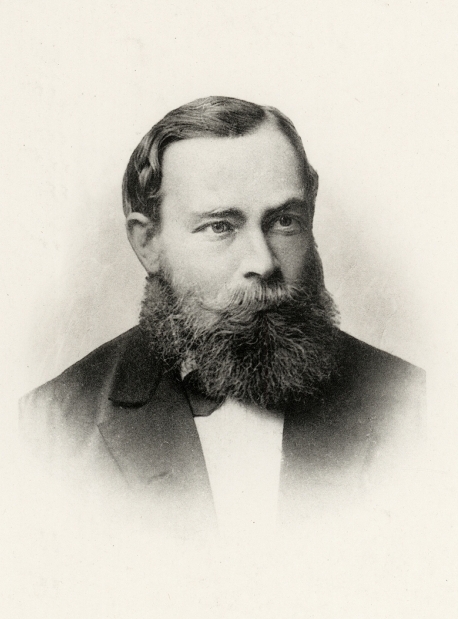 Gottlob FregeModern European1848 – 1925Inventor of modern logic and the sense–reference distinction; grandfather of analytic philosophy.
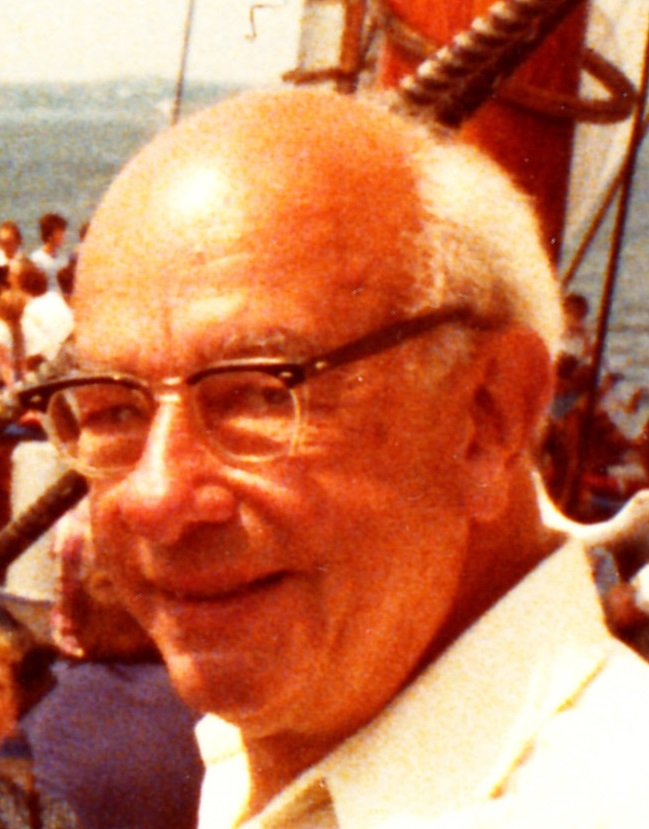 W. V. O. QuineAmericas1908 – 2000Naturalist who rejected the analytic–synthetic distinction.
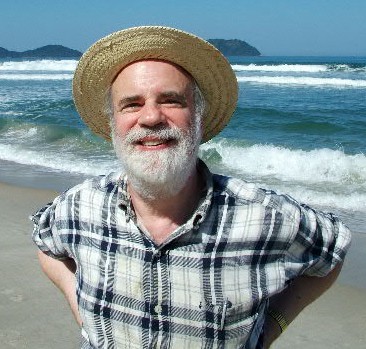 Saul KripkeAmericas1940 – 2022Saul Aaron Kripke was an American philosopher and logician. He was a distinguished professor of philosophy at the…
 Daniel DennettAmericas1942 – 2024Daniel Clement Dennett III was an American philosopher and cognitive scientist. His research centered on philosophy of…
 A. J. AyerModern European1910 – 1989Sir Alfred Jules "Freddie" Ayer was an English philosopher who became professionally established through his exposition…