
Aristotelianism
Aristotle's system: substance, the four causes, logic and virtue ethics — dominant for two thousand years.
Key ideas
Aristotelianism ( ARR-i-stə-TEE-lee-ə-niz-əm) is a philosophical tradition inspired by the work of Aristotle, usually characterized by deductive logic and an analytic inductive method in the study of natural philosophy and metaphysics. It covers the treatment of the social sciences under a system of natural law. It answers why-questions by a scheme of four causes, including purpose or telos, and emphasizes virtue ethics. Aristotle and his school wrote tractates on physics, biology, metaphysics, logic, ethics, aesthetics, poetry, theatre, music, rhetoric, psychology, linguistics, economics, politics, and government. Any school of thought that takes one of Aristotle's distinctive positions as its starting point can be considered "Aristotelian" in the widest sense. This means that different Aristotelian theories (e.g. in ethics or in ontology) may not have much in common as far as their actual content is concerned besides their shared reference to Aristotle.
In Aristotle's time, philosophy included natural philosophy, which preceded the advent of modern science during the Scientific Revolution. The works of Aristotle were initially defended by the members of the Peripatetic school and later on by the Neoplatonists, who produced many commentaries on Aristotle's writings. In the Islamic Golden Age, Avicenna and Averroes translated the works of Aristotle into Arabic and under them, along with philosophers such as Al-Kindi and Al-Farabi, Aristotelianism became a major part of early Islamic philosophy.
Moses Maimonides adopted Aristotelianism from the Islamic scholars and based his Guide for the Perplexed on it and that became the basis of Jewish scholastic philosophy. Although some of Aristotle's logical works were known to western Europe, it was not until the Latin translations of the 12th century and the rise of scholasticism that the works of Aristotle and his Arabic commentators became widely available. Scholars such as Albertus Magnus and Thomas Aquinas interpreted and systematized Aristotle's works in accordance with Catholic theology.
After retreating under criticism from modern natural philosophers, the distinctively Aristotelian idea of teleology was transmitted through Wolff and Kant to Hegel, who applied it to history conceived as a whole. However, this project was criticized by Trendelenburg and Brentano as non-Aristotelian; yet Hegel's influence is often regarded as a major source of Aristotelian themes in Marx.
Recent Aristotelian ethical and "practical" philosophy, such as that of Gadamer and McDowell, is often premised upon a rejection of Aristotelianism's traditional metaphysical or theoretical philosophy. From this viewpoint, the early modern tradition of political republicanism, which views the res publica, public sphere or state as constituted by its citizens' virtuous activity, can appear thoroughly Aristotelian.
Alasdair MacIntyre was a notable modern Aristotelian philosopher who helped to revive virtue ethics in his book After Virtue. MacIntyre revises Aristotelianism with the argument that the highest temporal goods, which are internal to human beings, are actualized through participation in social practices.
Ancient Greek
The original followers of Aristotle were the members of the Peripatetic school. The most prominent members of the school after Aristotle were Theophrastus and Strato of Lampsacus, who both continued Aristotle's researches. During the Roman era, the school concentrated on preserving and defending his work. The most important figure in this regard was Alexander of Aphrodisias who commentated on Aristotle's writings. With the rise of Neoplatonism in the 3rd century, Peripateticism as an independent philosophy came to an end. Still, the Neoplatonists sought to incorporate Aristotle's philosophy within their own system and produced many commentaries on Aristotle.
Byzantine Empire
Byzantine Aristotelianism emerged in the Byzantine Empire in the two decades after 1118 through the initiative of the princess Anna Comnena, who commissioned a number of scholars to write commentaries on previously neglected works of Aristotle. Michael of Ephesus wrote commentaries on the works of Aristotle's animal biology, on the Sophistical Refutations, the only work of the Organon not to have a commentary, and the Politics, completing the series of commentaries on Aristotle's extant works. Byzantine philosophers also filled in the gaps in the commentaries that had survived down to their time; Alexander of Aphrodisias' commentary on the Metaphysics, of which only the first five books survived, was completed by Michael of Ephesus, who, along with Eustratius, compiled a number of fragmentary commentaries on the Nicomachean Ethics which they supplemented with their own interpretations.
Islamic world
In the Abbasid Empire, many foreign works were translated into Arabic, large libraries were constructed, and scholars were welcomed. Under the caliphs Harun al-Rashid and his son Al-Ma'mun, the House of Wisdom in Baghdad flourished. Christian scholar Hunayn ibn Ishaq (809–873) was placed in charge of the translation work by the caliph. In his lifetime, Ishaq translated 116 writings, including works by Plato and Aristotle, into Syriac and Arabic.
With the founding of House of Wisdom, the entire corpus of Aristotelian works that had been preserved (excluding the Eudemian Ethics, Magna Moralia and Politics) became available, along with its Greek commentators; this corpus laid a uniform foundation for Islamic Aristotelianism.
Al-Kindi (801–873) was the first of the Muslim Peripatetic philosophers and is known for his efforts to introduce Greek and Hellenistic philosophy to the Arab world. He incorporated Aristotelian and Neoplatonist thought into an Islamic philosophical framework. This was an important factor in the introduction and popularization of Greek philosophy in the Muslim intellectual world. In the 9th century, Persian astrologer Albumasarl's Introductorium in Astronomiam was one of the most important sources for the recovery of Aristotle for medieval European scholars.
The philosopher Al-Farabi (872–950) had great influence on science and philosophy for several centuries, and in his time was widely thought second only to Aristotle in knowledge (alluded to by his title of "the Second Teacher"). His work, aimed at synthesis of philosophy and Sufism, paved the way for the work of Avicenna (980–1037). Avicenna was one of the main interpreters of Aristotle. The school of thought he founded became known as Avicennism, which was built on ingredients and conceptual building blocks that are largely Aristotelian and Neoplatonist.
At the western end of the Mediterranean Sea, during the reign of Al-Hakam II (961 to 976) in Córdoba, a massive translation effort was undertaken, and many books were translated into Arabic. Averroes (1126–1198), who spent much of his life in Cordoba and Seville, was especially distinguished as a commentator of Aristotle. He often wrote two or three different commentaries on the same work, and some 38 commentaries by Averroes on the works of Aristotle have been identified. Although his writings had an only marginal impact in Islamic countries, his works would eventually have a huge impact in the Latin West, and would lead to the school of thought known as Averroism.
Western Europe
Although some knowledge of Aristotle seems to have lingered on in the ecclesiastical centres of western Europe after the fall of the Roman empire, by the ninth century, nearly all that was known of Aristotle consisted of Boethius's commentaries on the Organon, and a few abridgments made by Latin authors of the declining empire, Isidore of Seville and Martianus Capella. From that time until the end of the eleventh century, little progress is apparent in Aristotelian knowledge.
The renaissance of the 12th century saw a major search by European scholars for new learning. James of Venice, who probably spent some years in Constantinople, translated Aristotle's Posterior Analytics from Greek into Latin in the mid-twelfth century, thus making the complete Aristotelian logical corpus, the Organon, available in Latin for the first time. Scholars travelled to areas of Europe that once had been under Muslim rule and still had substantial Arabic-speaking populations. From central Spain, which had returned to Christian rule in the eleventh century, scholars produced many of the Latin translations of the 12th century. The most productive of these translators was Gerard of Cremona, (c. 1114–1187), who translated 87 books, which included many of the works of Aristotle such as his Posterior Analytics, Physics, On the Heavens, On Generation and Corruption, and Meteorology. Michael Scot (c. 1175–1232) translated Averroes' commentaries on the scientific works of Aristotle.
Aristotle's physical writings began to be discussed openly. At a time when Aristotle's method was permeating all theology, these treatises were sufficient to cause his prohibition for heterodoxy in the Condemnations of 1210–1277. In the first of these, in Paris in 1210, it was stated that "neither the books of Aristotle on natural philosophy or their commentaries are to be read at Paris in public or secret, and this we forbid under penalty of ex-communication." However, despite further attempts to restrict the teaching of Aristotle, by 1270, the ban on Aristotle's natural philosophy was ineffective.
Adapted from the Wikipedia article Aristotelianism, available under CC BY-SA 4.0.
Connections
Founded by
1
Proposed by
1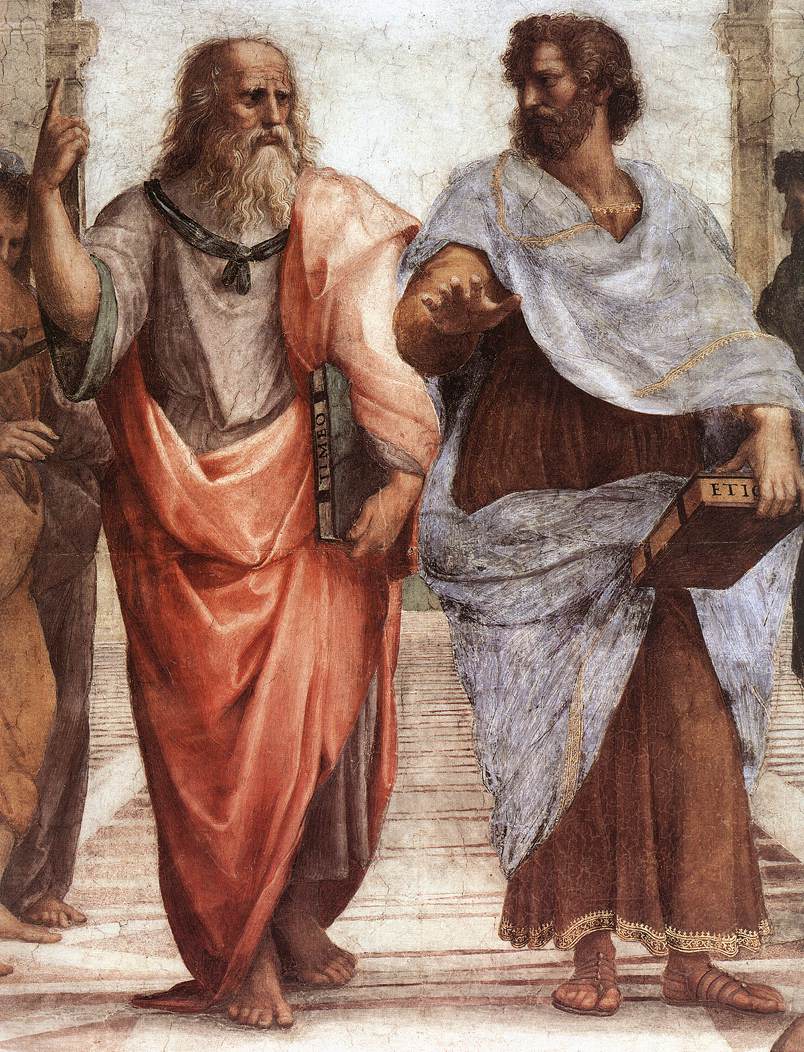
Members
19 Ibn Sīnā (Avicenna)980 – 1037
 Ibn Rushd (Averroes)1126 – 1198
 Maimonides1138 – 1204
 Al-Fārābīc. 872 – 950
 Al-Kindīc. 801 – 873
 Pierre Gassendi1592 – 1655
Show 13 moreShow less
 Franz Brentano1838 – 1917
 Jean Buridan1295 – 1358
 Martha Nussbaumborn 1947
 Alasdair MacIntyre1929 – 2025
 Mortimer J. Adler1902 – 2001
 Celsus200
 Pietro Pomponazzi1462 – 1525
- Philippa Foot1920 – 2010
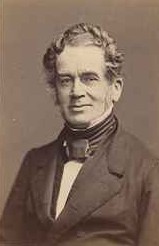 Friedrich Adolf Trendelenburg1802 – 1872
 John Argyropoulos1415 – 1487
 Giles of Rome1243 – 1316
 Jacopo Zabarella1533 – 1589
- Martha Nussbaumborn 1947
Places
1
Key contributors
4

You might also explore
 Analytic philosophyModern European1900 – presentPhilosophy as clarity through logical and linguistic analysis; dominant in the English-speaking world.
 PlatonismGreek & Roman387 BCE – presentThe view, from Plato, that abstract, perfect Forms are more real than the changing world of the senses.Falsafa (Islamic Peripatetics)Islamic850 – 1200Arabic Aristotelianism of al-Kindī, al-Fārābī, Ibn Sīnā and Ibn Rushd.
 ScholasticismMedieval Latin1100 – 1700The medieval universities' method of rigorous disputation reconciling Christian doctrine with Aristotle.
 PhenomenologyModern European1900 – presentDescribe experience exactly as it is lived, "back to the things themselves".
 EpicureanismGreek & Roman307 BCE – 300 CEThe good life is a pleasant life — but true pleasure is tranquillity (ataraxia) and freedom from pain, won through…