
Phenomenology
Describe experience exactly as it is lived, "back to the things themselves".
Phenomenology is a philosophical study and movement largely associated with the early 20th century that seeks to objectively investigate the nature of subjective, conscious experience. It attempts to describe the universal features of consciousness while avoiding assumptions about the external world, aiming to describe phenomena as they appear, and to explore the meaning and significance of lived experience.
This approach, while philosophical, has found many applications in qualitative research across different scientific disciplines, especially in the social sciences, humanities, psychology, and cognitive science, but also in fields as diverse as health sciences, architecture, and human-computer interaction, among many others. The application of phenomenology in these fields aims to gain a deeper understanding of subjective experience, rather than focusing on behavior.
Phenomenology is contrasted with phenomenalism, which reduces mental states and physical objects to complexes of sensations, and with psychologism, which treats logical truths or epistemological principles as the products of human psychology. In particular, transcendental phenomenology, as outlined by Edmund Husserl, aims to arrive at an objective understanding of the world via the discovery of universal logical structures in human subjective experience.
There are important differences in the ways that different branches of phenomenology approach subjectivity. For example, according to Martin Heidegger, truths are contextually situated and dependent on the historical, cultural, and social context in which they emerge. Other types include hermeneutic, genetic, and embodied phenomenology. All these different branches of phenomenology may be seen as representing different philosophies despite sharing the common foundational approach of phenomenological inquiry; that is, investigating things just as they appear, independent of any particular theoretical framework.
Etymology
The term phenomenology derives from the Greek φαινόμενον, phainómenon ("that which appears") and λόγος, lógos ("study"). It entered the English language around the turn of the 18th century and first appeared in direct connection to Husserl's philosophy in a 1907 article in The Philosophical Review.
In philosophy, "phenomenology" refers to the tradition inaugurated by Edmund Husserl at the beginning of the 20th century. The term, however, had been used in different senses in other philosophy texts since the 18th century. These include those by Johann Heinrich Lambert (1728–1777), Immanuel Kant (1724–1804), G. W. F. Hegel (1770–1831), and Carl Stumpf (1848–1936), among others.
It was, however, the usage of Franz Brentano (and, as he later acknowledged, Ernst Mach) that would prove definitive for Husserl. From Brentano, Husserl took the conviction that philosophy must commit itself to description of what is "given in direct 'self-evidence'."
Central to Brentano's phenomenological project was his theory of intentionality, which he developed from his reading of Aristotle's On the Soul. According to the phenomenological tradition, "the central structure of an experience is its intentionality, it being directed towards something, as it is an experience of or about some object." Also, on this theory, every intentional act is implicitly accompanied by a secondary, pre-reflective awareness of the act as one's own.
Overview
Phenomenology proceeds systematically, but it does not attempt to study consciousness from the perspective of clinical psychology or neurology. Instead, it seeks to determine the essential properties and structures of experience. Phenomenology is not a matter of individual introspection: a subjective account of experience, which is the topic of psychology, must be distinguished from an account of subjective experience, which is the topic of phenomenology. Its topic is not "mental states", but "worldly things considered in a certain way".
Phenomenology is a direct reaction to the psychologism and physicalism of Husserl's time. It takes as its point of departure the question of how objectivity is possible at all when the experience of the world and its objects is thoroughly subjective.
So far from being a form of subjectivism, phenomenologists argue that the scientific ideal of a purely objective third-person is a fantasy and falsity. The perspective and presuppositions of the scientist must be articulated and taken into account in the design of the experiment and the interpretation of its results. In as much as phenomenology is able to accomplish this, it can help to improve the quality of empirical scientific research.
Notwithstanding of the field's internal diversity, Shaun Gallagher and Dan Zahavi argue that the phenomenological method is composed of four basic steps:
In Husserl's usage, epoché denotes the procedure by which the phenomenologist endeavors to suspend commonsense and theoretical assumptions about reality (what he terms the natural attitude) in order to attend only to what is directly given in experience. This is not a philosophically skeptical move; reality is never in doubt. The purpose is to see it more closely to how it truly is. The underlying insight is that objects are "experienced and disclosed in the ways they are, thanks to the way consciousness is structured."
The phenomenological reduction is closely linked to the epoché. The aim of the reduction is to analyze the correlations between what is given in experience and specific structures of subjectivity shaping and enabling this givenness. This "leads back" (Latin: re-ducere) to the world.
Eidetic variation is the process of imaginatively stripping away the properties of things to determine what is essential to them, that is, what are the characteristics without which a thing would not be the thing that it is (eidos is Plato's Greek word for the essence of a thing). Significantly for the phenomenological researcher, eidetic variation can be practiced on acts of consciousness themselves to help clarify, for instance, the structure of perception or memory. Husserl openly acknowledges that the essences uncovered by this method include various degrees of vagueness and also that such analyses are defeasible. He contends, however, that this does not undermine the value of the method.
Intersubjective corroboration is simply the sharing of one's results with the larger research community. This allows for comparisons that help to sort out what is idiosyncratic to the individual from what might be essential to the structure of experience as such.
According to phenomenologist Maurice Natanson, "The radicality of the phenomenological method is both continuous and discontinuous with philosophy's general effort to subject experience to fundamental, critical scrutiny: to take nothing for granted and to show the warranty for what we claim to know." Husserl says that the suspension of belief in what is ordinarily taken for granted or inferred by conjecture diminishes the power of what is customarily embraced as objective reality. In the words of philosopher Rüdiger Safranski, "[Husserl and his followers'] great ambition was to disregard anything that had until then been thought or said about consciousness or the world [while] on the lookout for a new way of letting the things [they investigated] approach them, without covering them up with what they already knew."
History
Edmund Husserl "set the phenomenological agenda" even for exponents who did not strictly adhere to his teachings, including Martin Heidegger, Jean-Paul Sartre, and Maurice Merleau-Ponty. Each thinker has "different conceptions of phenomenology, different methods, and different results."
Husserl's conceptions
Husserl derived many important concepts central to phenomenology from the works and lectures of his teachers, the philosophers and psychologists Franz Brentano and Carl Stumpf. An important element of phenomenology that Husserl borrowed from Brentano is intentionality (often described as "aboutness" or "directedness"), the notion that consciousness is always consciousness of something. The object of consciousness is called the intentional object, and this object is constituted for consciousness in many different ways, through, for instance, perception, memory, signification, and so forth. Throughout these different intentionalities, though they have different structures and different ways of being "about" the object, an object is still constituted as the identical object; consciousness is directed at the same intentional object in direct perception as it is in the immediately-following retention of this object and the eventual remembering of it.
As envisioned by Husserl, phenomenology is a method of philosophical inquiry that rejects the rationalist bias that has dominated Western thought since Plato in favor of a method of reflective attentiveness that discloses the individual's "lived experience." Loosely rooted in an epistemological device called epoché, Husserl's method entails the suspension of judgment while relying on the intuitive grasp of knowledge, free of presuppositions and intellectualizing. Sometimes depicted as the "science of experience," the phenomenological method, rooted in intentionality, represents an alternative to the representational theory of consciousness. That theory holds that reality cannot be grasped directly because it is available only through perceptions of reality that are representations in the mind. In Husserl's own words:
experience is not an opening through which a world, existing prior to all experience, shines into a room of consciousness; it is not a mere taking of something alien to consciousness into consciousness... Experience is the performance in which for me, the experiencer, experienced being "is there", and is there as what it is, with the whole content and the mode of being that experience itself, by the performance going on in its intentionality, attributes to it.
In effect, he counters that consciousness is not "in" the mind; rather, consciousness is conscious of something other than itself (the intentional object), regardless of whether the object is a physical thing or just a figment of the imagination.
Logical Investigations (1900/1901)
In the first edition of the Logical Investigations, under the influence of Brentano, Husserl describes his position as "descriptive psychology." Husserl analyzes the intentional structures of mental acts and how they are directed at both real and ideal objects. The first volume of the Logical Investigations, the Prolegomena to Pure Logic, begins with a critique of psychologism, that is, the attempt to subsume the a priori validity of the laws of logic under psychology. Husserl establishes a separate field for research in logic, philosophy, and phenomenology, independently from the empirical sciences.
"Pre-reflective self-consciousness" is Shaun Gallagher and Dan Zahavi's term for Husserl's (1900/1901) idea that self-consciousness always involves a self-appearance or self-manifestation prior to self-reflection. This is one point of nearly unanimous agreement among phenomenologists: "a minimal form of self-consciousness is a constant structural feature of conscious experience. Experience happens for the experiencing subject in an immediate way and as part of this immediacy, it is implicitly marked as my experience."
Ideas (1913)
In 1913, Husserl published Ideas: General Introduction to Pure Phenomenology. In this work, he presents phenomenology as a form of "transcendental idealism". Although Husserl claimed to have always been a transcendental idealist, this was not how many of his admirers had interpreted the Logical Investigations, and some were alienated as a result.
This work introduced distinctions between the act of consciousness (noesis) and the phenomena at which it is directed (the noemata). Noetic refers to the intentional act of consciousness (believing, willing, etc.). Noematic refers to the object or content (noema), which appears in the noetic acts (the believed, wanted, hated, loved, etc.).
What is observed is not the object as it is in itself, but how and inasmuch it is given in the intentional acts. Knowledge of essences would only be possible by "bracketing" all assumptions about the existence of an external world and the inessential (subjective) aspects of how the object is concretely given to us. This phenomenological reduction is the second stage of Husserl's procedure of epoché. That which is essential is then determined by the imaginative work of eidetic variation, which is a method for clarifying the features of a thing without which it would not be what it is.
Husserl concentrated more on the ideal, essential structures of consciousness. As he wanted to exclude any hypothesis on the existence of external objects, he introduced the method of phenomenological reduction to eliminate them. What was left over was the pure transcendental ego, as opposed to the concrete empirical ego.
Transcendental phenomenology is the study of the essential structures that are left in pure consciousness: this amounts in practice to the study of the noemata and the relations among them.
Munich phenomenology
Some phenomenologists were critical of the new theories espoused in Ideas. Members of the Munich group, such as Max Scheler and Roman Ingarden, distanced themselves from Husserl's new transcendental phenomenology. Their theoretical allegiance was to the earlier, realist phenomenology of the first edition of Logical Investigations.
Heidegger's conception
Martin Heidegger modified Husserl's conception of phenomenology because of what Heidegger perceived as Husserl's subjectivist tendencies. Whereas Husserl conceived humans as having been constituted by states of consciousness, Heidegger countered that consciousness is peripheral to the primacy of one's existence, for which he introduces Dasein as a technical term, which cannot be reduced to a mode of consciousness. From this angle, one's state of mind is an "effect" rather than a determinant of existence, including those aspects of existence of which one is not conscious. By shifting the center of gravity to existence in what he calls fundamental ontology, Heidegger altered the subsequent direction of phenomenology.
According to Heidegger, ontologically-inflected phenomenology is more fundamental than modern scientific inquiry. According to him, science is only one way of knowing the world with no special access to truth. Furthermore, the scientific mindset itself is built on a much more "primordial" foundation of practical, everyday knowledge. This emphasis on the fundamental status of a person's pre-cognitive, practical orientation in the world, sometimes called "know-how", would be adopted by both Sartre and Merleau-Ponty.
While for Husserl, in the epoché, being appeared only as a correlate of consciousness, for Heidegger the pre-conscious grasp of being is the starting point. For this reason, he replaces Husserl's concept of intentionality with the notion of comportment, which is presented as "more primitive" than the "conceptually structured" acts analyzed by Husserl. Paradigmatic examples of comportment can be found in the unreflective dealing with equipment that presents itself as simply "ready-to-hand" in what Heidegger calls the normally circumspect mode of engagement within the world.
For Husserl, all concrete determinations of the empirical ego would have to be abstracted in order to attain pure consciousness. By contrast, Heidegger claims that "the possibilities and destinies of philosophy are bound up with man's existence, and thus with temporality and with historicality." For this reason, all experience must be seen as shaped by social context, which for Heidegger joins phenomenology with philosophical hermeneutics.
Husserl charged Heidegger with raising the question of ontology but failing to answer it, instead switching the topic to Dasein. That is neither ontology nor phenomenology, according to Husserl, but merely abstract anthropology.
While Being and Time and other early works are clearly engaged with Husserlian issues, Heidegger's later philosophy has little relation to the problems and methods of classical phenomenology.
Merleau-Ponty's conception
Maurice Merleau-Ponty develops his distinctive mode of phenomenology by drawing, in particular, upon Husserl's unpublished writings, Heidegger's analysis of being-in-the-world, Gestalt theory, and other contemporary psychology research. In his most famous work, The Phenomenology of Perception, Merleau-Ponty critiques empiricist and intellectualist accounts to chart a "third way" that avoids their metaphysical assumptions about an objective, pre-given world.
The central contentions of this work are that the body is the locus of engagement with the world, and that the body's modes of engagement are more fundamental than what phenomenology describes as consequent acts of objectification. Merleau-Ponty reinterprets concepts like intentionality, the phenomenological reduction, and the eidetic method to capture our inherence in the perceived world, that is, our embodied coexistence with things through a kind of reciprocal exchange. According to Merleau-Ponty, perception discloses a meaningful world that can never be completely determined, but which nevertheless aims at truth.
Varieties
Some scholars have differentiated phenomenology into seven types:
Transcendental constitutive phenomenology studies how objects are constituted in transcendental consciousness, setting aside questions of any relation to the natural world.
Naturalistic constitutive phenomenology studies how consciousness constitutes things in the world of nature, assuming with the natural attitude that consciousness is part of nature.
Generative historicist phenomenology studies how meaning—as found in human experience—is generated in historical processes of collective experience over time.
Genetic phenomenology (sometimes "phenomenology of genesis") studies the emergence of meanings of things within the stream of experience.
Hermeneutic phenomenology studies interpretive structures of experience. This approach was introduced in Martin Heidegger's early work.
Existential phenomenology studies concrete human existence, including human experience of free choice and/or action in concrete situations.
Realist(ic) phenomenology (sometimes "phenomenology of essences") studies the structure of consciousness and intentionality as "it occurs in a real world that is largely external to consciousness and not somehow brought into being by consciousness."
The contrast between "constitutive phenomenology" (sometimes "static/descriptive phenomenology") and "genetic phenomenology" is due to Husserl.
Modern scholarship also recognizes the existence of the following varieties:
Early-Heideggerian transcendental hermeneutic phenomenology
Late-Heideggerian destructive phenomenology (cf. Destruktion)
Herbert Marcuse's dialectical phenomenology
Maurice Merleau-Ponty's embodied phenomenology
Michel Henry's material phenomenology
J. L. Austin's linguistic phenomenology
Alva Noë's analytic phenomenology
Paul Crowther's post-analytic phenomenology
Lisa Guenther's critical phenomenology
Cornelius Castoriadis' and Don Ihde's post-phenomenology emphasizes the significance of social analysis and views culture as the medium through which the human encounter with the broader world is articulated.
Intentionality
Adapted from the Wikipedia article Phenomenology (philosophy), available under CC BY-SA 4.0.
Connections
Founded by
1Proposed by
5Members
25 Jean-Paul Sartre1905 – 1980
 Martin Heidegger1889 – 1976
 Hannah Arendt1906 – 1975
 Edmund Husserl1859 – 1938
 Max Scheler1874 – 1928
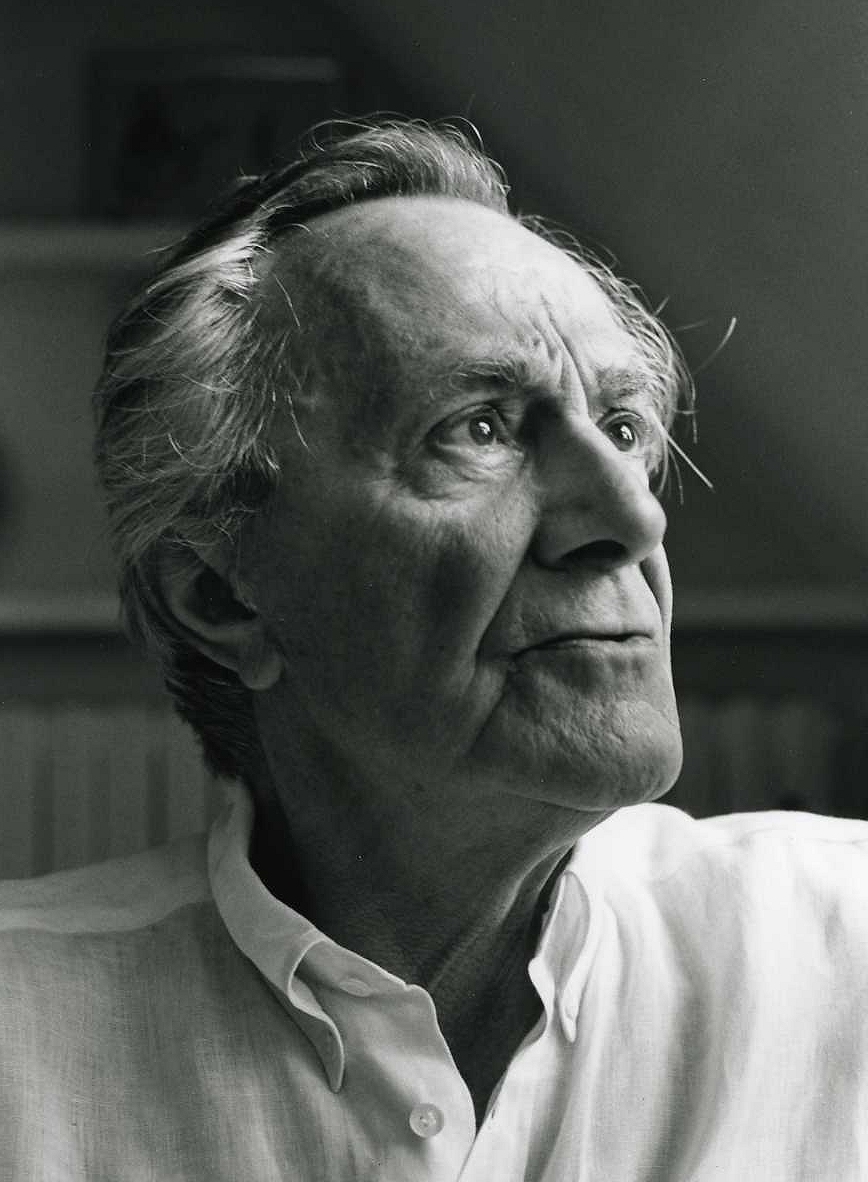 Jean-François Lyotard1924 – 1998
Show 19 moreShow less
 Emmanuel Levinas1906 – 1995
 Maurice Merleau-Ponty1908 – 1961
 Franz Brentano1838 – 1917
 Maurice Blanchot1907 – 2003
 Peter Sloterdijkborn 1947
- Alfred Schütz1899 – 1959
- Alexandre Koyré1892 – 1964
 Gianni Vattimo1936 – 2023
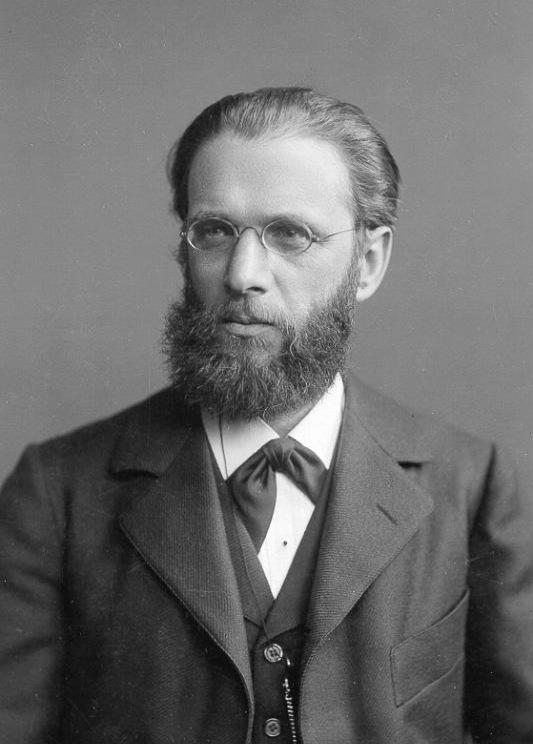 Carl Stumpf1848 – 1936
- Paul Virilio1932 – 2018
 Jan Patočka1907 – 1977
 Jean-Luc Nancy1940 – 2021
- Karl Löwith1897 – 1973
 Roman Ingarden1893 – 1970
 Günther Anders1902 – 1992
 Jean-Luc Marionborn 1946
 Rémi Bragueborn 1947
 Dietrich von Hildebrand1889 – 1977
 Michel Henry1922 – 2002


You might also explore
 Kantianism★Modern European1781 – presentKant's critical philosophy and its heirs: the mind structures experience; morality is grounded in rational autonomy.
 Analytic philosophyModern European1900 – presentPhilosophy as clarity through logical and linguistic analysis; dominant in the English-speaking world.ExistentialismModern European1840 – presentExistence precedes essence: we are thrown into a world without given meaning and must create ourselves through free…Marxism★Modern European1848 – presentHistory is driven by material and economic forces and class struggle; capitalism will give way to communism.Post-structuralismModern European1960 – presentMeaning is unstable; power and language shape what counts as knowledge and identity.