
John Rawls
The most important political philosopher of the 20th century: justice as fairness chosen behind a veil of ignorance.
Key ideas
John Bordley Rawls (; February 21, 1921 – November 24, 2002) was an American philosopher, most active in moral, legal, and political philosophy. Rawls has been described as one of the most influential modern liberal political philosophers of the 20th century.
In 1990, Will Kymlicka wrote in his introduction to the field that "it is generally accepted that the recent rebirth of normative political philosophy began with the publication of John Rawls's A Theory of Justice in 1971". Rawls's theory of "justice as fairness" recommends equal basic liberties, equality of opportunity, and facilitating the maximum benefit to the least advantaged members of society in any case where inequalities may occur. His argument for these principles of social justice uses a thought experiment called the "original position", in which people deliberatively select what kind of society they would choose to live in if they did not know which social position they would personally occupy. In his later work Political Liberalism (1993), he addresses the question of how political power can be exercised legitimately in a society where citizens hold diverse and often conflicting moral, religious, and philosophical points of view.
Rawls received both the Schock Prize for Logic and Philosophy and the National Humanities Medal in 1999. The latter was presented by President Bill Clinton in recognition of how his works "revived the disciplines of political and ethical philosophy with his argument that a society in which the most fortunate help the least fortunate is not only a moral society but a logical one".
Among contemporary political philosophers, Rawls is with some frequency mentioned by the courts of law in the United States and Canada and referred to by practicing politicians in the United States and the United Kingdom. In a 2008 national survey of political theorists, based on 1,086 responses from professors at accredited, four-year colleges and universities in the United States, Rawls was voted first on the list of "Scholars Who Have Had the Greatest Impact on Political Theory in the Past 20 Years".
Early life and education
Rawls was born on February 21, 1921, in Baltimore, Maryland, the second of five sons. His father, William Lee Rawls, was a prominent Baltimore attorney, and his mother, Anna Abell Stump Rawls, was active in local Democratic politics, including advocacy for women's voting rights. Tragedy struck Rawls at a young age:
Two of his brothers died in childhood because they had contracted fatal illnesses from him. ... In 1928, the seven-year-old Rawls contracted diphtheria. His brother Bobby, younger by 20 months, visited him in his room and was fatally infected. The next winter, Rawls contracted pneumonia. Another younger brother, Tommy, caught the illness from him and died.
Rawls's biographer Thomas Pogge calls the loss of the brothers the "most important events in John's childhood".
Rawls graduated in Baltimore before enrolling in the Kent School, an Episcopal preparatory school in Connecticut. Upon graduation in 1939, Rawls attended Princeton University, where he was accepted into the Ivy Club and the American Whig–Cliosophic Society. At Princeton, Rawls was influenced by Norman Malcolm, Ludwig Wittgenstein's student. During his last two years at Princeton, he "became deeply concerned with theology and its doctrines". He considered attending a seminary to study for the Episcopal priesthood and wrote an "intensely religious senior thesis (BI)". In his 181-page long thesis titled "Meaning of Sin and Faith", Rawls attacked Pelagianism because it "would render the Cross of Christ to no effect". Rawls graduated from Princeton in 1943 with a Bachelor of Arts, summa cum laude.
In early 1946, Rawls returned to Princeton to pursue a doctorate in moral philosophy. He married Margaret Warfield Fox, a Brown University graduate, in 1949. They had four children: Anne Warfield, Robert Lee, Alexander Emory, and Elizabeth Fox.
Rawls received his PhD from Princeton's philosophy department in 1950 after completing a doctoral dissertation titled A Study in the Grounds of Ethical Knowledge: Considered with Reference to Judgments on the Moral Worth of Character. His PhD included a year of study at Cornell. Rawls taught at Princeton until 1952 when he received a Fulbright Fellowship to Christ Church at Oxford University, where he was influenced by the liberal political theorist and historian Isaiah Berlin and the legal theorist H. L. A. Hart.
U.S. Army service (1943–1946)
Rawls enlisted in the U.S. Army in February 1943. During World War II, Rawls served as an infantryman in the Pacific with the 128th Infantry Regiment of the 32nd Infantry Division, where he served a tour of duty in New Guinea and was awarded a Combat Infantryman Badge and Bronze Star; and the Philippines, where he endured intensive trench warfare and witnessed traumatizing scenes of violence and bloodshed. It was there that he lost his Christian faith.
Following the surrender of Japan, Rawls became part of General MacArthur's occupying army and was promoted to sergeant. But he became disillusioned with the military when he saw the aftermath of the atomic blast in Hiroshima. Rawls later refused an order to discipline a fellow soldier, "believing no punishment was justified", and was "demoted back to a private". By January 1946, Rawls was disenchanted with the Army and left military service.
Professorship
After returning to the United States, in the fall of 1953, Rawls became an assistant professor at Cornell University, joining his mentor Norman Malcolm in the philosophy department. Three years later Rawls received tenure at Cornell. During the 1959–60 academic year he was a visiting professor at Harvard University, and he was appointed in 1960 as a professor in the humanities division at MIT. In 1962, he achieved a tenured position at MIT.
Later in 1962, he moved to Harvard, where he taught as a professor of philosophy until 1994. While tenured at Harvard, he trained some of the leading contemporary figures in moral and political philosophy, including Sibyl A. Schwarzenbach, Thomas Nagel, Allan Gibbard, Onora O'Neill, Adrian Piper, Arnold Davidson, Elizabeth S. Anderson, Christine Korsgaard, Susan Neiman, Claudia Card, Rainer Forst, Thomas Pogge, T. M. Scanlon, Barbara Herman, Joshua Cohen, Thomas E. Hill Jr., Gurcharan Das, Andreas Teuber, Henry S. Richardson, Nancy Sherman, Samuel Freeman and Paul Weithman. He held the James Bryant Conant University Professorship at Harvard. He remained there until reaching mandatory retirement age in 1991.
Rawls was, for a time, a member of the Mont Pèlerin Society. He was put forward for membership by Milton Friedman in 1968, and withdrew from the society three years later, just before his A Theory of Justice was published.
Later life
Rawls rarely gave interviews and, having both a stutter (which he attributed to the deaths of two of his brothers, who died through infections contracted from Rawls) and a "bat-like horror of the limelight", did not become a public intellectual despite his fame. He instead remained committed mainly to his academic and family life.
In 1995, he had the first of several strokes, severely impeding his ability to continue to work. He was nevertheless able to complete The Law of Peoples, the most complete statement of his views on international justice. Published in 2001 shortly before his death was Justice as Fairness: A Restatement, a response to criticisms of A Theory of Justice.
Death
Rawls died from heart failure at his home in Lexington, Massachusetts, on November 24, 2002, at age 81. He was buried at the Mount Auburn Cemetery in Massachusetts.
Philosophy
Rawls published three main books. The first, A Theory of Justice, focused on distributive justice and attempted to reconcile the competing claims of the values of freedom and equality. The second, Political Liberalism, addressed the question of how citizens divided by intractable religious and philosophical disagreements could come to endorse a constitutional democratic regime. The third, The Law of Peoples, focused on the issue of global justice.
A Theory of Justice
A Theory of Justice, published in 1971, aimed to resolve the seemingly competing claims of freedom and equality. The shape Rawls's resolution took, however, was not that of a balancing act that compromised or weakened the moral claim of one value compared with the other. Rather, his intent was to show that notions of freedom and equality could be integrated into a seamless unity he called justice as fairness. By attempting to enhance the perspective which his readers should take when thinking about justice, Rawls hoped to show that conflict between freedom and equality is illusory.
Rawls's A Theory of Justice (1971) includes a thought experiment he called the "original position". The intuition behind it is that political philosophy will be greatly benefited by a specification of the correct standpoint a person should take in their thinking about justice. When we think about what a just state of affairs between persons would mean, we eliminate certain features such as hair or eye color, height, or race, and focus upon others. Rawls's original position is meant to encode our intuitions about which features are relevant, and which are irrelevant, for the purposes of deliberating well about justice.
The original position is Rawls's hypothetical scenario in which a group of persons is set the task of reaching an agreement about the kind of political and economic structure they want for a society, which they will then occupy. Each individual, however, deliberates behind a "veil of ignorance": each lacks knowledge, for example, of their gender, race, age, intelligence, wealth, skills, education, religion, and disability status. The only thing that a given member knows about themselves is that they are in possession of the basic capacities necessary to fully participate in an enduring system of mutual cooperation; each knows they can be a member of the society.
Rawls posits two basic capacities that the individuals would know they possess. First, individuals know that they have the capacity to form, pursue and revise a conception of the good, or life plan. Exactly what sort of conception of the good this is, however, the individual does not yet know. It may be, for example, religious or secular, but at the start, the individual in the original position does not know which. Second, each individual understands that they have the capacity to develop a sense of justice and a generally effective desire to abide by it. Knowing only these two features of themselves, the group will deliberate in order to design a social structure, during which each person will seek their maximum advantage. The idea is that proposals that we would ordinarily think of as unjust—such as that black people or women should not be allowed to hold public office—will not be proposed in this, Rawls's original position, because it would be irrational to propose them. The reason is simple: one does not know whether he himself would be a woman or a black person. This position is expressed in the difference principle, according to which, in a system of ignorance about one's status, one would strive to improve the position of the worst off, because he might find himself in that position.
Rawls develops his original position by modeling it, in certain respects at least, after the "initial situations" of various social contract thinkers who came before him, including Thomas Hobbes, John Locke and Jean-Jacques Rousseau. Each social contractarian constructs their initial situation somewhat differently, having in mind a unique political morality they intend the thought experiment to generate. Iain King has suggested that the original position draws on Rawls's experiences in post-war Japan, where the Allied Occupation authorities were challenged with designing new social and political arrangements for the country while "imagining away all that had gone before".
In social justice processes, each person early on makes decisions about which features of persons to consider and which to ignore. Rawls's aspiration is to have created a thought experiment whereby a version of that process is carried to its completion, illuminating the correct standpoint that a person should take in their thinking about justice. If he has succeeded, then the original position thought experiment may function as a full specification of the moral standpoint we should attempt to achieve when deliberating about social justice.
In setting out his theory, Rawls described his method as one of "reflective equilibrium", a concept which has since been used in other areas of philosophy. Reflective equilibrium is achieved by mutually adjusting one's general principles and one's considered judgements on particular cases, to bring the two into line with one another.
Principles of justice
Rawls derives two principles of justice from the original position. The first of these is the Liberty Principle, which establishes equal basic liberties for all citizens. 'Basic' liberty entails the freedoms of conscience, association and expression as well as democratic rights; Rawls also includes a personal property right, but this is defended in terms of moral capacities and self-respect, rather than an appeal to a natural right of self-ownership (this distinguishes Rawls's account from the classical liberalism of John Locke and the libertarianism of Robert Nozick).
Rawls argues that a second principle of equality would be agreed upon to guarantee liberties that represent meaningful options for all in society and ensure distributive justice. For example, formal guarantees of political voice and freedom of assembly are of little real worth to the desperately poor and marginalized in society. Demanding that everyone have exactly the same effective opportunities in life would almost certainly offend the very liberties that are supposedly being equalized. Nonetheless, we would want to ensure at least the "fair worth" of our liberties: wherever one ends up in society, one wants life to be worth living, with enough effective freedom to pursue personal goals. Thus, participants would be moved to affirm a two-part second principle comprising Fair Equality of Opportunity and difference principle. This second principle ensures that those with comparable talents and motivation face roughly similar life chances, and that inequalities in society work to the benefit of the least advantaged.
Rawls held that these principles of justice apply to the "basic structure" of fundamental social institutions such as the judiciary, the economic structure and the political constitution, a qualification that has been the source of some controversy and constructive debate (see the work of Gerald Cohen). Rawls's theory of justice stakes out the task of equalizing the distribution of primary social goods to those least advantaged in society and thus may be seen as a largely political answer to the question of justice, with matters of morality somewhat conflated into a political account of justice and just institutions. Relational approaches to the question of justice, by contrast, seek to examine the connections between individuals and focuses on their relations in societies, with respect to how these relationships are established and configured.
Rawls further argued that these principles were to be 'lexically ordered' to award priority to basic liberties over the more equality-oriented demands of the second principle. This has also been a topic of much debate among moral and political philosophers.
Finally, Rawls maintained that his theory applies primarily to a "well-ordered society ... designed to advance the good of its members and effectively regulated by a public conception of justice". In this respect, he understood justice as fairness as a contribution to "ideal theory", the determination of "principles that characterize a well-ordered society under favorable circumstances".
Political Liberalism
In Political Liberalism (1993), Rawls turned towards the question of political legitimacy in the context of intractable philosophical, religious, and moral disagreement amongst citizens regarding the human good. Such disagreement, he insisted, was reasonable—the result of the free exercise of human rationality under the conditions of open enquiry and free conscience that the liberal state is designed to safeguard. The question of legitimacy in the face of reasonable disagreement was urgent for Rawls because his own justification of Justice as Fairness relied upon a Kantian conception of the human good that can be reasonably rejected. If the political conception offered in A Theory of Justice can only be shown to be good by invoking a controversial conception of human flourishing, it is unclear how a liberal state ordered according to it could possibly be legitimate.
The intuition animating this seemingly new concern is actually no different from the guiding idea of A Theory of Justice, namely that the fundamental charter of a society must rely only on principles, arguments and reasons that cannot be reasonably rejected by the citizens whose lives will be limited by its social, legal, and political circumscriptions. In other words, the legitimacy of a law is contingent upon its justification being impossible to reasonably reject. This old insight took on a new shape, however, when Rawls realized that its application must extend to the deep justification of Justice as Fairness itself, which he had presented in terms of a reasonably rejectable (Kantian) conception of human flourishing as the free development of autonomous moral agency.
The core of Political Liberalism is its insistence that in order to retain its legitimacy, the liberal state must commit itself to the "ideal of public reason". This roughly means that citizens in their public capacity must engage one another only in terms of reasons whose status as reasons is shared between them. Political reasoning, then, is to proceed purely in terms of "public reasons". For example: a Supreme Court justice deliberating on whether or not the denial to homosexuals of the ability to marry constitutes a violation of the 14th Amendment's Equal Protection Clause may not advert to his religious convictions on the matter, but he may take into account the argument that a same-sex household provides sub-optimal conditions for a child's development. This is because reasons based upon the interpretation of sacred text are non-public (their force as reasons relies upon faith commitments that can be reasonably rejected), whereas reasons that rely upon the value of providing children with environments in which they may develop optimally are public reasons—their status as reasons draws upon no deep, controversial conception of human flourishing.
Rawls held that the duty of civility—the duty of citizens to offer one another reasons that are mutually understood as reasons—applies within what he called the "public political forum". This forum extends from the upper reaches of government—for example the supreme legislative and judicial bodies of the society—all the way down to the deliberations of a citizen deciding for whom to vote in state legislatures or how to vote in public referendums. Campaigning politicians should also, he believed, refrain from pandering to the non-public religious or moral convictions of their constituencies.
Adapted from the Wikipedia article John Rawls, available under CC BY-SA 4.0.
In their words
“Justice is the first virtue of social institutions, as truth is of systems of thought.”
Connections
Belongs to
3

Influenced by
4
Influenced
6


Ideas & arguments
8
Works
1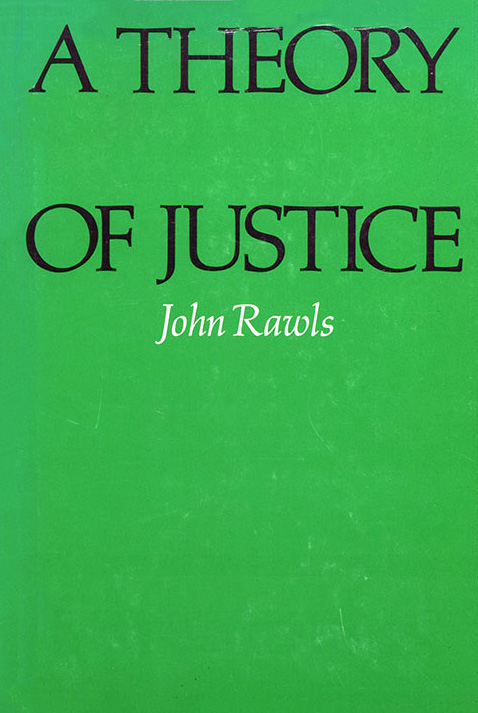

Criticized
1Criticized by
1
You might also explore
 G. W. F. Hegel★Modern European1770 – 1831Systematic idealist for whom history is the dialectical self-realisation of Spirit and freedom.
 Jean-Jacques Rousseau★Modern European1712 – 1778"Man is born free, and everywhere he is in chains": the general will and the corruption of natural goodness by society.
 David Hume★Modern European1711 – 1776Scottish skeptic who showed we cannot rationally justify induction or causation, and that reason is the slave of the…
 John Locke★Modern European1632 – 1704Founder of British empiricism and liberalism: the mind as blank slate; government by consent to protect life, liberty…
 Arthur Schopenhauer★Modern European1788 – 1860Pessimist who saw the world as blind Will and found relief in art, compassion and Indian philosophy.
 Thomas Hobbes★Modern European1588 – 1679Materialist who argued that without government life would be "solitary, poor, nasty, brutish, and short".