
William Lane Craig
William Lane Craig is an American analytic philosopher, Christian apologist, and Wesleyan theologian. He is a professor emeritus of philosophy at the Talbot School of Theology of Biola University.
William Lane Craig (; born August 23, 1949) is an American analytic philosopher, Christian apologist, and Wesleyan theologian. He is a professor emeritus of philosophy at the Talbot School of Theology of Biola University.
Craig earned a doctorate in philosophy from the University of Birmingham under John Hick in 1977 and a second doctorate in theology from the University of Munich under Wolfhart Pannenberg in 1984. He was a professor of religion at Trinity Evangelical Divinity School from 1980 to 1986, a professor of religious studies at Westmont College from 1986 to 1987, and a researcher at KU Leuven from 1987 to 1994. He then became a professor at the Talbot School of Theology, after which he also taught as a professor of philosophy at Houston Christian University from 2014 to 2024.
Craig has written or edited more than forty books on the philosophy of religion, natural theology, the philosophy of time, and philosophical theology. He served as president of the Evangelical Philosophical Society from 1996 to 2005. He is best known for popularizing the Kalam cosmological argument for the existence of God, which he developed in The Kalām Cosmological Argument (1979) and defended in later works.
Early life and education
Craig was born on August 23, 1949, in Peoria, Illinois. He was the second of three children. His father, Mallory John Craig, was a railway executive, and his mother, Doris Irene Walker, was a homemaker; neither were Christian. The elder Craig served in the Eighth Air Force during World War II, receiving a Bronze Star for his service, and worked as a clerk before becoming vice president of the Toledo, Peoria and Western Railway and chairman of the city planning commission of East Peoria, Illinois.
As a child, Craig suffered from the neurological disorder Charcot–Marie–Tooth disease, resulting in atrophy and muscle weakness. He was raised in Keokuk, Iowa. He attended East Peoria Community High School from 1963 to 1967. As a high school student, he competed in debate tournaments, winning a state championship in oratory in 1966. He also read the New Testament for the first time as a high school student and converted to Christianity on September 11, 1965.
After high school, Craig attended Wheaton College in Wheaton, Illinois, where he graduated with a Bachelor of Arts in communications with high honors in 1971. As a freshman undergraduate, he enrolled in a course taught by the philosopher Stuart C. Hackett, a noted proponent of natural theology, and was greatly influenced by the work of E. J. Carnell, which convinced him to study apologetics. He became the president of Wheaton's chapter of the Pi Kappa Delta honor society and received multiple awards for intercollegiate oratory, extemporaneous speaking, and rhetorical criticism.
In the summer of 1973, Craig enrolled at Trinity Evangelical Divinity School, which he chose to attend after seeing Norman Geisler, then a professor there, deliver a lecture in the spring of 1972. While there, he took courses under Geisler, John Warwick Montgomery, Clark Pinnock, John D. Woodbridge, Paul Feinberg, and J. I. Packer. He graduated summa cum laude with two master's degrees in 1975: a Master of Arts (M.A.) in the philosophy of religion and a second M.A. in church history.
In August of 1975, Craig began doctoral studies at the University of Birmingham, where he earned his Ph.D. in philosophy in 1977. He wrote his dissertation on cosmological arguments under the direction of English philosopher John Hick, with whom he developed a close relationship, and Anthony Kenny. Hick later recalled him as one of his top three students. Craig's doctoral thesis was titled, The Cosmological Argument for the Existence of God. The thesis examined the Kalam cosmological argument and updated it with scientific advancements such as the Big Bang and the laws of thermodynamics.
After receiving his doctorate, Craig enrolled with his wife at the Centre Missionnaire, a French language school in Albertville, France, for nine months beginning in January of 1977. He then was awarded a postdoctoral fellowship in July 1977 from the Alexander von Humboldt Foundation to pursue research on the Resurrection of Jesus under Wolfhart Pannenberg in Munich, Germany. He earned his second doctorate, a Doctor of Theology, from the University of Munich in 1984. As a doctoral student, he researched controversies over deism at the University of Cambridge during the summer of 1978 and passed his Rigorosum in 1982. His second doctoral dissertation was titled, The Historical Argument for the Resurrection of Jesus During the Deist Controversy.
Academic career
In the summer of 1979, Warren S. Benson, dean of Trinity Evangelical Divinity School (TEDS), contacted Craig to offer him an assistant professorship at the school to replace Geisler, who was moving to Dallas Theological Seminary. Craig accepted and moved from Germany to Deerfield, Illinois, to accommodate the position. He taught as an assistant professor of the philosophy of religion at TEDS from 1980 to 1986. In 1985, the school began to disband the philosophy of religion department—then consisting of only Craig and Hackett—so Craig accepted an invitation to join Agape Europe, a Campus Crusade for Christ branch. He then was an associate professor of religious studies at Westmont College from 1986 to 1987.
In 1987, Craig moved to Belgium to pursue research at the University of Louvain, where he was a visiting researcher until 1994. Afterwards, he joined the philosophy department of the new Talbot School of Theology at Biola University. At the time, the philosophy faculty consisted of only J. P. Moreland, Scott Rae, and Douglas Geivett. He was a research professor of philosophy at Talbot from 1996 to 2020. Between 1994 and 2004, Craig authored twenty books and 60 journal articles while working full-time both at Talbot and at Campus Crusade for Christ.
Craig served as president of the Evangelical Philosophical Society from 1996 to 2005. During his presidency, the society began organizing apologetics conferences alongside its annual scholarly meetings, an initiative that accompanied an expansion of the organization's activities and membership. Craig was also president of the Philosophy of Time Society from 1999 to 2006. In 2007, he established the online Christian apologetics ministry ReasonableFaith.org.
In February 2014, Craig became a professor of philosophy at Houston Baptist University while retaining his position at Talbot. He held the Houston professorship until 2024. He also held a visiting professorship in philosophy at Talbot beginning in 2021. In March 2015, Craig delivered the Edward Cadbury Lectures at the University of Birmingham, presenting a five-part lecture series titled "God Over All" concerning divine aseity and the philosophical challenge posed by Platonism. In July 2017, Biola University announced the establishment of its first endowed faculty chair, the William Lane Craig Endowed Chair in Philosophy, supported by a planned $3 million donation from Wayne and Ronnie Swindel.
As of 2026, Craig is currently a research professor emeritus of philosophy at Biola. He has authored or edited over forty books and over 200 articles in professional philosophy and theology journals. These include articles in The Journal of Philosophy, the British Journal for the Philosophy of Science, Philosophy and Phenomenological Research, Philosophical Studies, the Australasian Journal of Philosophy, Faith and Philosophy, Erkenntnis, and American Philosophical Quarterly.
Kalam cosmological argument
Craig's defense of the argument mainly focuses on the second premise, in which he offers four a priori and a posteriori arguments in favor. He also supports the second premise by citing increasing evidence for the Big bang theory and by the second law of thermodynamics. He gives two philosophical arguments against the possibility of an infinite past: the first appeals to paradoxes allegedly generated by the idea of an actual infinite, and the second appeals to a dynamic theory of time to argue that an infinite series of events could not have been formed by successive addition. One of the examples Craig often uses to show that an actual infinite is impossible in the real world is Hilbert's Hotel.
Craig is the foremost advocate of the Kalām cosmological argument among contemporary philosophers. While the Kalam originated in medieval Islamic philosophy, it remains influential among Christian philosophers, with Craig and Moreland as its most notable proponents. It continues to be a subject of extensive debate, even among theistic philosophers. Commentators on the argument include: Adolf Grünbaum, Quentin Smith, Wes Morriston, Graham Oppy, Andrew Loke, Robert C. Koons, and Alexander Pruss.
Divine omniscience
Craig is a proponent of Molinism, an idea first formulated by the Jesuit theologian Luis de Molina according to which God possesses foreknowledge of which free actions each person would perform under every possible circumstance, a kind of knowledge that is sometimes termed "middle knowledge". Protestant-Molinism, such as Craig's, first entered Protestant theology through two anti-Calvinist thinkers: Jacobus Arminius and Conrad Vorstius. Molinists such as Craig appeal to this idea to reconcile the perceived conflict between God's providence and foreknowledge with human free will. The idea is that, by relying on middle knowledge, God does not interfere with anyone's free will, instead choosing which circumstances to actualize given a complete understanding of how people would freely choose to act in response. Craig also appeals to Molinism in his discussions of the inspiration of scripture, Christian exclusivism, the perseverance of the Saints, and missionary evangelism.
Resurrection of Jesus
Adapted from the Wikipedia article William Lane Craig, available under CC BY-SA 4.0.
Connections
Belongs to
1Ideas & arguments
1
Contributed to
1
You might also explore
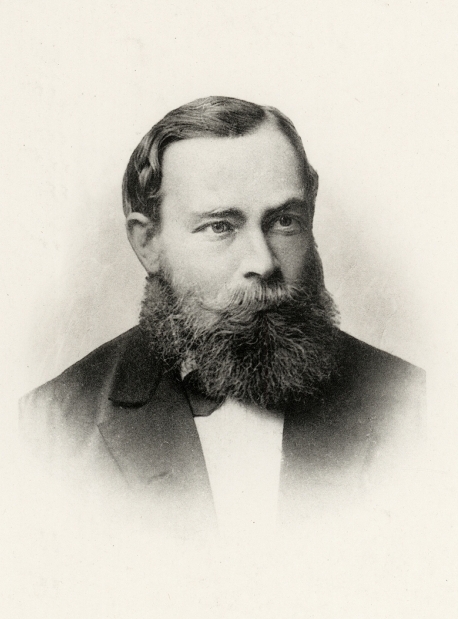 Gottlob FregeModern European1848 – 1925Inventor of modern logic and the sense–reference distinction; grandfather of analytic philosophy.
 Ludwig Wittgenstein★Modern European1889 – 1951Austrian-British philosopher who wrote two revolutionary philosophies: the picture theory of the Tractatus and the…
 René Descartes★Modern European1596 – 1650The father of modern philosophy: he doubted everything he could and found certainty in "I think, therefore I am".
 Bertrand Russell★Modern European1872 – 1970Logician, pacifist and public intellectual; co-founded analytic philosophy and discovered Russell's paradox.
 Karl Popper★Modern European1902 – 1994Philosopher of science for whom theories must be falsifiable; defender of the open society.
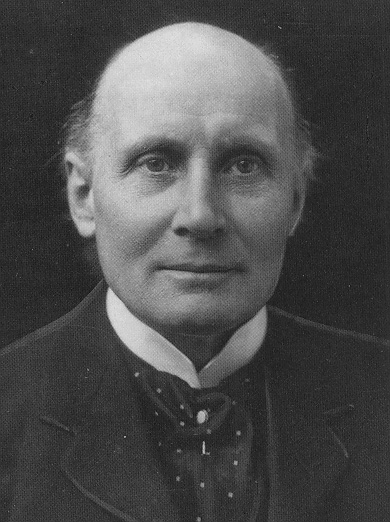 Alfred North WhiteheadModern European1861 – 1947Alfred North Whitehead was an English mathematician and philosopher. He created the philosophical school known as…