
Aristotle
Plato's student and Alexander's tutor, who systematised logic, ethics, biology, metaphysics and politics — "the master of those who know".
Key ideas
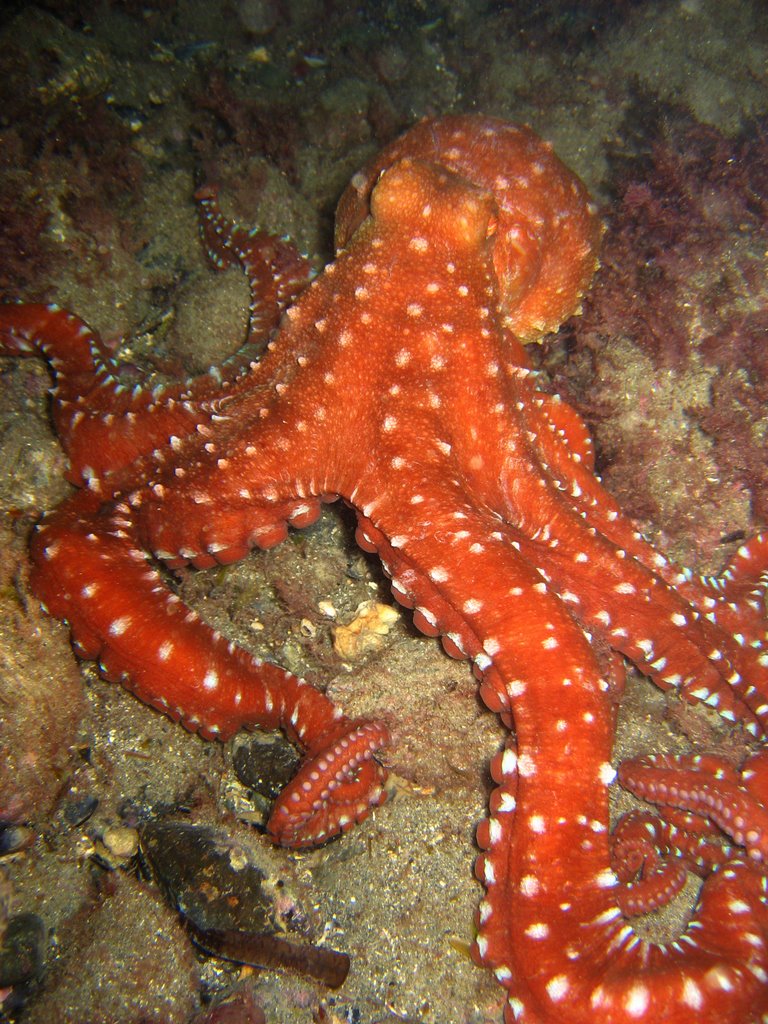
Aristotle came to Athens from northern Greece at seventeen and studied in Plato's Academy for twenty years. After tutoring the young Alexander the Great he founded his own school, the Lyceum, where he and his students collected and organised knowledge on an unprecedented scale — from the constitutions of 158 city-states to the anatomy of the octopus.
Against Plato, Aristotle held that forms exist in things, not in a separate realm. A thing's substance is its form realised in matter; to understand it is to grasp its four causes — material, formal, efficient and final (its purpose). He invented formal logic with the syllogism, which remained the core of logic until the nineteenth century.
His ethics asks what the highest human good is and answers: eudaimonia, flourishing or living well, which consists in rational activity in accordance with virtue over a complete life. Virtues of character are stable dispositions at a mean between excess and deficiency — courage between cowardice and recklessness — acquired by practice. In politics he called humans "political animals" who realise their nature only in a community.
Lost to the Latin West for centuries, Aristotle was preserved and developed by Arabic philosophers; when Ibn Rushd's commentaries reached Europe, Aquinas and the scholastics made him simply "the Philosopher".
Aristotle (Ancient Greek: Ἀριστοτέλης, romanized: Aristotélēs; 384–322 BC) was an ancient Greek philosopher and polymath. His writings span the natural sciences, philosophy, linguistics, economics, politics, psychology, and the arts. As the founder of the Peripatetic school of philosophy in the Lyceum in Athens, he began the wider Aristotelian tradition that followed, which set the groundwork for the development of modern science.
Little is known about Aristotle's life. He was born in the city of Stagira in Chalkidiki (northern Greece) during the Classical period. His father, Nicomachus, died when Aristotle was a child, and he was brought up by a guardian. At around eighteen years old, he joined Plato's Academy in Athens and remained there until the age of thirty seven (c. 347 BC). Shortly after Plato died, Aristotle left Athens and, at the request of Philip II of Macedon, tutored his son Alexander the Great beginning in 343 BC. He established a library in the Lyceum, which helped him to produce many of his hundreds of books on papyrus scrolls.
Though Aristotle wrote many treatises and dialogues for publication, only around a third of his original output has survived, none of it intended for publication. Aristotle provided a complex synthesis of the various philosophies existing prior to him. His teachings and methods of inquiry have had a significant impact across the world, and remain a subject of contemporary philosophical discussion.
Aristotle's views profoundly shaped medieval scholarship. The influence of his physical science extended from late antiquity and the Early Middle Ages into the Renaissance, and was not replaced systematically until the Enlightenment and theories such as classical mechanics were developed. He influenced Judeo-Islamic philosophies during the Middle Ages, as well as Christian theology, especially the Neoplatonism of the Early Church and the scholastic tradition of the Catholic Church. Aristotle was revered among medieval Muslim scholars as "The First Teacher", and among medieval Christians like Thomas Aquinas as simply "The Philosopher". He has been described as the first scientist. His works contain the earliest known systematic study of logic, and were studied by medieval scholars such as Peter Abelard and Jean Buridan. His influence on logic continued well into the 19th century. In addition, his ethics, although always influential, has gained renewed interest with the modern advent of virtue ethics.
Life
In general, the details of Aristotle's life are not well-established. The biographies written in ancient times are often speculative and historians only agree on a few salient points. Aristotle was born in 384 BC in Stagira, Chalcidice, about 55 km (34 miles) east of modern-day Thessaloniki. He was the son of Nicomachus, the personal physician of King Amyntas of Macedon, and Phaestis, a woman with origins from Chalcis, Euboea. Nicomachus was said to have belonged to the medical guild of Asclepiadae and was likely responsible for Aristotle's early interest in biology and medicine. Ancient tradition held that Aristotle's family descended from the legendary physician Asclepius and his son Machaon. Both of Aristotle's parents died when he was still at a young age and Proxenus of Atarneus became his guardian. Although little information about Aristotle's childhood has survived, he probably spent some time in the Macedonian capital Pella, making his first connections with the Macedonian monarchy.
At the age of seventeen or eighteen, Aristotle moved to Athens to continue his education at Plato's Academy. He became distinguished as a researcher and lecturer, earning for himself the nickname "mind of the school" by his tutor Plato. In Athens, he probably experienced the Eleusinian Mysteries as he wrote when describing the sights one viewed at the Mysteries, "to experience is to learn" (παθεĩν μαθεĩν). Aristotle remained in Athens for nearly twenty years before leaving in 348/47 BC after Plato's death. The traditional story about his departure records that he was disappointed with the academy's direction after control passed to Plato's nephew Speusippus, although it is possible that the anti-Macedonian sentiments in Athens could have also influenced his decision. Aristotle left with Xenocrates to Assos in Asia Minor, where he was invited by his former fellow student Hermias of Atarneus; he stayed there for a few years, leaving around the time of Hermias' death. While at Assos, Aristotle and his colleague Theophrastus did extensive research in botany and marine biology, which they later continued at the near-by island of Lesbos. During this time, Aristotle married Pythias, Hermias's adoptive daughter and niece, and had a daughter whom they also named Pythias.
In 343/42 BC, Aristotle was invited to Pella by Philip II of Macedon to become the tutor to his thirteen-year-old son Alexander; a choice perhaps influenced by the relationship of Aristotle's family with the Macedonian dynasty. Aristotle taught Alexander at the private school of Mieza, in the gardens of the Nymphs, the royal estate near Pella. Alexander's education probably included a number of subjects, such as ethics and politics, as well as standard literary texts, like Euripides and Homer. It is likely that during Aristotle's time in the Macedonian court, other prominent nobles, like Ptolemy and Cassander, would have occasionally attended his lectures. Aristotle encouraged Alexander toward eastern conquest, and his own attitude towards Persia was strongly ethnocentric. In one famous example, he counsels Alexander to be "a leader to the Greeks and a despot to the barbarians". Alexander's education under the guardianship of Aristotle likely lasted for only a few years, as at around the age of sixteen he returned to Pella and was appointed regent of Macedon by his father Philip. During this time, Aristotle gifted Alexander an annotated copy of the Iliad, which is said to have become one of Alexander's most prized possessions. Scholars speculate that two of Aristotle's now lost works, On kingship and On behalf of the Colonies, were composed by the philosopher for the young prince. Aristotle returned to Athens for the second and final time a year after Philip II's assassination in 336 BC.
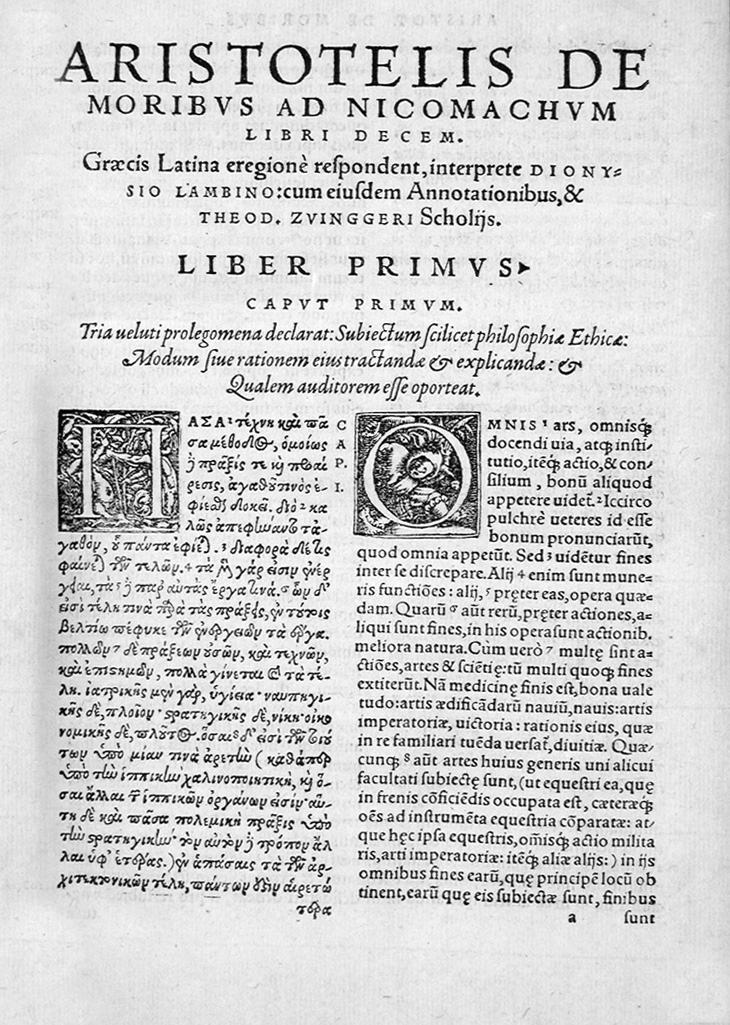
As a metic, Aristotle could not own property in Athens and thus rented a building known as the Lyceum (named after the sacred grove of Apollo Lykeios), in which he established his own school. The building included a gymnasium and a colonnade (peripatos), from which the school acquired the name Peripatetic. Aristotle conducted courses and research at the school for the next twelve years. He often lectured small groups of distinguished students and, along with some of them, such as Theophrastus, Eudemus, and Aristoxenus, Aristotle built a large library which included manuscripts, maps, and museum objects. While in Athens, his wife Pythias died and Aristotle became involved with Herpyllis of Stagira. They had a son whom Aristotle named after his father, Nicomachus. This period in Athens, between 335 and 323 BC, is when Aristotle is believed to have composed many of his philosophical works. He wrote many dialogues, of which only fragments have survived. Those works that have survived are in treatise form and were not, for the most part, intended for widespread publication; they are generally thought to be lecture aids for his students. His most important treatises include Physics, Metaphysics, Nicomachean Ethics, Politics, On the Soul and Poetics. Aristotle studied and made significant contributions to "logic, metaphysics, mathematics, physics, biology, botany, ethics, politics, agriculture, medicine, dance, and theatre."
While Alexander deeply admired Aristotle, near the end of his life, the two men became estranged having diverging opinions over issues, such as the optimal administration of city-states, the treatment of conquered populations, such as the Persians, and philosophical questions, like the definition of braveness. A widespread speculation in antiquity suggested that Aristotle played a role in Alexander's death, but the only evidence of this is an unlikely claim made some six years after the death. Following Alexander's death, anti-Macedonian sentiment in Athens was rekindled. In 322 BC, Demophilus and Eurymedon the Hierophant reportedly denounced Aristotle for impiety, prompting him to flee to his mother's family estate in Chalcis, Euboea, at which occasion he was said to have stated "I will not allow the Athenians to sin twice against philosophy" – a reference to Athens's trial and execution of Socrates. He died in Chalcis, Euboea of natural causes later that same year, having named his student Antipater as his chief executor and left a will in which he asked to be buried next to his wife. Aristotle left his works to Theophrastus, his successor as the head of the Lyceum, who in turn passed them down to Neleus of Scepsis in Asia Minor. There, the papers remained hidden for protection until they were purchased by the collector Apellicon. In the meantime, many copies of Aristotle's major works had already begun to circulate and be used in the Lyceum of Athens, Alexandria, and later in Rome.
Logic
With the Prior Analytics, Aristotle is credited with the earliest systematic study of logic, and his conception of it was the dominant form of Western logic until 19th-century advances in mathematical logic. Kant even stated in the Critique of Pure Reason that with Aristotle, logic reached its completion.
Organon
Most of Aristotle's work is probably not in its original form, because it was most likely edited by students and later lecturers. The logical works of Aristotle were compiled into a set of six books called the Organon around 40 BC by Andronicus of Rhodes or others among his followers. The books are:
Categories
On Interpretation
Prior Analytics
Posterior Analytics
Topics
On Sophistical Refutations
The order of the books (or the teachings from which they are composed) is not certain, but this list was derived from analysis of Aristotle's writings. It goes from the basics, the analysis of simple terms in the Categories, the analysis of propositions and their elementary relations in On Interpretation, to the study of more complex forms, namely, syllogisms and demonstration (in the Analytics) and dialectics (in the Topics and Sophistical Refutations). The first three treatises form the core of the logical theory stricto sensu: the grammar of the language of logic and the correct rules of reasoning. The Rhetoric is not conventionally included, but it states that it relies on the Topics.
Syllogism
What is today called Aristotelian logic with its types of syllogism (methods of logical argument), Aristotle himself would have labelled "analytics". The term "logic" he reserved to mean dialectics.
Demonstration
Aristotle's Posterior Analytics contains his account of demonstration, or demonstrative knowledge, what would today be considered the study of epistemology rather than logic, but which for Aristotle is deeply connected with his account of syllogism. For Aristotle, knowledge is that which is necessarily the case, along with the study of causes.
Metaphysics
The word "metaphysics" comes from the title of a collection of works by Aristotle bearing that title. However, Aristotle did not use that term himself, which is due to a later compiler, but instead called it "first philosophy" or theology. He distinguished this as "the study of being qua being" which, as opposed to other studies of being, such as mathematics and natural science, studies that which is eternal, unchanging, and immaterial. He wrote in his Metaphysics (1026a16):
If there were no other independent things besides the composite natural ones, the study of nature would be the primary kind of knowledge; but if there is some motionless independent thing, the knowledge of this precedes it and is first philosophy, and it is universal in just this way, because it is first. And it belongs to this sort of philosophy to study being as being, both what it is and what belongs to it just by virtue of being.
Substance
Aristotle examines the concepts of substance (ousia) and essence (to ti ên einai, "the what it was to be") in his Metaphysics (Book VII), and he concludes that a particular substance is a combination of both matter and form, a philosophical theory called hylomorphism. In Book VIII, he distinguishes the matter of the substance as the substratum, or the stuff of which it is composed. For example, the matter of a house is the bricks, stones, timbers, etc., or whatever constitutes the potential house, while the form of the substance is the actual house, namely 'covering for bodies and chattels' or any other differentia that let us define something as a house. The formula that gives the components is the account of the matter, and the formula that gives the differentia is the account of the form.
= Moderate realism =
Like his teacher Plato, Aristotle's philosophy aims at the universal. Aristotle's ontology has the universal (katholou) exist in a lesser sense than particulars (kath' hekaston), things in the world, whereas for Plato the universal is a realer, separately existing form which particular things merely imitate. For Aristotle, universals still exist, but are only encountered when "instantiated" in a particular substance.
In addition, Aristotle disagreed with Plato about the location of universals. Where Plato spoke of the forms as existing separately from the things that participate in them, Aristotle maintained that universals are multiply located. So, according to Aristotle, the form of apple exists within each apple, rather than in the world of the forms.
= Potentiality and actuality =
Concerning the nature of change (kinesis) and its causes, as he outlines in his Physics and On Generation and Corruption (319b–320a), he distinguishes coming-to-be (genesis, also translated as 'generation') from:
growth and diminution, which is change in quantity;
locomotion, which is change in space; and
alteration, which is change in quality.
Coming-to-be is a change where the substrate of the thing that has undergone the change has itself changed. In that particular change he introduces the concept of potentiality (dynamis) and actuality (entelecheia) in association with the matter and the form. Referring to potentiality, this is what a thing is capable of doing or being acted upon if the conditions are right and it is not prevented by something else. For example, the seed of a plant in the soil is potentially (dynamei) a plant, and if it is not prevented by something, it will become a plant. Potentially, beings can either 'act' (poiein) or 'be acted upon' (paschein), which can be either innate or learned. For example, the eyes possess the potentiality of sight (innate – being acted upon), while the capability of playing the flute can be possessed by learning (exercise – acting). Actuality is the fulfilment of the end of the potentiality. Because the end (telos) is the principle of every change, and potentiality exists for the sake of the end, actuality, accordingly, is the end. Referring then to the previous example, it can be said that an actuality is when a plant does one of the activities that plants do.
For that for the sake of which (to hou heneka) a thing is, is its principle, and the becoming is for the sake of the end; and the actuality is the end, and it is for the sake of this that the potentiality is acquired. For animals do not see in order that they may have sight, but they have sight that they may see.
In summary, the matter used to make a house has potentiality to be a house and both the activity of building and the form of the final house are actualities, which is also a final cause or end. Then Aristotle proceeds and concludes that the actuality is prior to potentiality in formula, in time and in substantiality. With this definition of the particular substance (i.e., matter and form), Aristotle tries to solve the problem of the unity of the beings, for example, "what is it that makes a man one"? Since, according to Plato there are two Ideas: animal and biped, how then is man a unity? However, according to Aristotle, the potential being (matter) and the actual one (form) are one and the same.
Natural philosophy
Aristotle's "natural philosophy" spans a wide range of natural phenomena including those now covered by physics, biology and other natural sciences. In Aristotle's terminology, "natural philosophy" is a branch of philosophy examining the phenomena of the natural world, and includes fields that would be regarded today as physics, biology and other natural sciences. Aristotle's work encompassed virtually all facets of intellectual inquiry. Aristotle makes philosophy in the broad sense coextensive with reasoning, which he also would describe as "science". However, his use of the term science carries a different meaning than that covered by the term "scientific method". For Aristotle, "all science (dianoia) is either practical, poetical or theoretical" (Metaphysics 1025b25). His practical science includes ethics and politics; his poetical science means the study of fine arts including poetry; his theoretical science covers physics, mathematics and metaphysics.
Five elements
In his On Generation and Corruption, Aristotle related each of the four elements proposed earlier by Empedocles, earth, water, air, and fire, to two of the four sensible qualities, hot, cold, wet, and dry. In the Empedoclean scheme, all matter was made of the four elements, in differing proportions. Aristotle's scheme added the heavenly aether, the divine substance of the heavenly spheres, stars and planets.
Motion
Aristotle describes two kinds of motion: "violent" or "unnatural motion", such as that of a thrown stone, in the Physics (254b10), and "natural motion", such as of a falling object, in On the Heavens (300a20). In violent motion, as soon as the agent stops causing it, the motion stops also: in other words, the natural state of an object is to be at rest, since Aristotle does not address friction. With this understanding, it can be observed that, as Aristotle stated, heavy objects (on the ground, say) require more force to make them move; and objects pushed with greater force move faster. This would imply the equation
F=mv,
incorrect in modern physics.
Natural motion depends on the element concerned: the aether naturally moves in a circle around the heavens, while the 4 Empedoclean elements move vertically up (like fire, as is observed) or down (like earth) towards their natural resting places.
In the Physics (215a25), Aristotle effectively states a quantitative law, that the speed, v, of a falling body is proportional (say, with constant c) to its weight, W, and inversely proportional to the density, ρ, of the fluid in which it is falling:
v=cWρ
Aristotle implies that in a vacuum the speed of fall would become infinite, and concludes from this apparent absurdity that a vacuum is not possible. Opinions have varied on whether Aristotle intended to state quantitative laws. Henri Carteron held the "extreme view" that Aristotle's concept of force was basically qualitative, but other authors reject this.
Archimedes corrected Aristotle's theory that bodies move towards their natural resting places; metal boats can float if they displace enough water; floating depends in Archimedes' scheme on the mass and volume of the object, not, as Aristotle thought, its elementary composition.
Aristotle's writings on motion remained influential until the early modern period. John Philoponus (in late antiquity) and Galileo (in the early modern period) are said to have shown by experiment that Aristotle's claim that a heavier object falls faster than a lighter object is incorrect. A contrary opinion is given by Carlo Rovelli, who argues that Aristotle's physics of motion is correct within its domain of validity, that of objects in the Earth's gravitational field immersed in a fluid such as air. In this system, heavy bodies in steady fall indeed travel faster than light ones (whether friction is ignored, or not), and they do fall more slowly in a denser medium.
Isaac Newton's "forced" motion corresponds to Aristotle's "violent" motion with its external agent, but Aristotle's assumption that the agent's effect stops immediately it stops acting (e.g., the ball leaves the thrower's hand) has awkward consequences: he has to suppose that surrounding fluid helps to push the ball along to make it continue to rise even though the hand is no longer acting on it, resulting in the Medieval theory of impetus.
Four causes
Aristotle distinguished between four different "causes"(Ancient Greek: αἰτία, aitia) or explanations for why an object exists or changes:
The material cause describes the material out of which something is composed. Thus the material cause of a wooden table is the wood it is made of.
The formal cause is its form, i.e., the arrangement of that matter, the design of the table independent of the specific material it is made of.
The efficient cause is "the primary source", the modern definition of "cause" as either the agent or agency of particular events or states of affairs. In the case of two dominoes, when the first is knocked over it causes the second to fall. In the case of an animal, this agency is a combination of how it develops from the egg, and how its body functions.
The final cause (telos) is its purpose, the reason why it exists or is done, or function that something is supposed to serve. In the case of living things, it implies adaptation to a particular way of life.
Optics
Aristotle was aware of Pythagorean optics. He used optics in his Meteorology, treating it as a science. He viewed optics as stating the laws of sight, thus combining what is now treated as physics and biology. The process of seeing involved the movement of a visible form from the thing seen through the air (or other medium) to the eye, where the form comes to rest. Aristotle does not analyse the nature of this movement; he does not anticipate geometrical optics.
Chance and spontaneity
According to Aristotle, spontaneity and chance are causes of some things, distinguishable from other types of cause such as simple necessity. Chance as an incidental cause lies in the realm of accidental things, "from what is spontaneous". There is also a more specific kind of chance, which Aristotle names "luck", that only applies to people's moral choices.
Astronomy
In astronomy, Aristotle refuted Democritus's claim that the Milky Way was made up of "those stars which are shaded by the earth from the sun's rays," pointing out partly correctly that if "the size of the sun is greater than that of the earth and the distance of the stars from the earth many times greater than that of the sun, then... the sun shines on all the stars and the earth screens none of them." He also wrote descriptions of comets, including the Great Comet of 371 BC.
Geology and natural sciences
Aristotle was one of the first people to record any geological observations. He stated that geological change was too slow to be observed in one person's lifetime.
The geologist Charles Lyell noted that Aristotle described such change, including "lakes that had dried up" and "deserts that had become watered by rivers", giving as examples the growth of the Nile delta since the time of Homer, and "the upheaving of one of the Aeolian islands, previous to a volcanic eruption."
Meteorologica lends its name to the modern study of meteorology, but its modern usage diverges from the content of Aristotle's ancient treatise on meteors. The ancient Greeks did use the term for a range of atmospheric phenomena, but also for earthquakes and volcanic eruptions. Aristotle proposed that the cause of earthquakes was a gas or vapour (anathymiaseis) that was trapped inside the earth and trying to escape, following other Greek authors Anaxagoras, Empedocles and Democritus.
Aristotle also made many observations about the hydrologic cycle. For example, he made some of the earliest observations about desalination: he observed early – and correctly – that when seawater is heated, freshwater evaporates and that the oceans are then replenished by the cycle of rainfall and river runoff ("I have proved by experiment that salt water evaporated forms fresh and the vapour does not when it condenses condense into sea water again.")
Empirical research
Aristotle was the first person to study biology systematically, and biology forms a large part of his writings. He spent two years observing and describing the zoology of Lesbos and the surrounding seas, including in particular the Pyrrha lagoon in the centre of Lesbos. His data in History of Animals, Generation of Animals, Movement of Animals, and Parts of Animals are from his own observations, statements by knowledgeable people such as beekeepers and fishermen, and accounts by travellers. His apparent emphasis on animals rather than plants is a historical accident: his works on botany have been lost, but two books on plants by his pupil Theophrastus have survived.
Aristotle reports on sea life from observation on Lesbos and the catches of fishermen. He describes the catfish, electric ray, and frogfish, as well as cephalopods such as the octopus and paper nautilus. His description of the hectocotyl arm of cephalopods, used in sexual reproduction, was widely disbelieved until the 19th century. He gives accurate descriptions of the four-chambered stomachs of ruminants, and of the ovoviviparous embryological development of the hound shark.
He notes that an animal's structure is well matched to function so the heron has a long neck, long legs, and a sharp spear-like beak, whereas ducks have short legs and webbed feet. Darwin, too, noted such differences, but unlike Aristotle used the data to come to the theory of evolution. Aristotle's writings can seem to imply evolution, but Aristotle saw mutations or hybridizations as rare accidents, distinct from natural causes. He was thus critical of Empedocles's theory of a "survival of the fittest" origin of living things and their organs, and ridiculed the idea that accidents could lead to orderly results. In modern terms, he nowhere says that different species can have a common ancestor, that one kind can change into another, or that kinds can become extinct.
Scientific style
Aristotle did not do experiments in the modern sense. He made observations, or at most investigative procedures like dissection. In Generation of Animals, he opens a fertilized hen's egg to see the embryo's heart beating inside.
Instead, he systematically gathered data, discovering patterns common to whole groups of animals, and inferring possible causal explanations from these. This style is common in modern biology when large amounts of data become available in a new field, such as genomics. This sets out testable hypotheses and constructs a narrative explanation of what is observed. In this sense, Aristotle's biology is scientific.
From his data, Aristotle inferred rules relating the life-history features of live-bearing tetrapods (terrestrial placental mammals) that he studied. He correctly predicted that brood size decreases with body mass; that lifespan increases with gestation period and with body mass; and that fecundity decreases with lifespan.
Classification of living things
Aristotle distinguished about 500 animal species, arranging them in a nonreligious graded scale of perfection, with man at the top. The highest gave live birth to hot and wet creatures, the lowest laid cold, dry mineral-like eggs. He grouped what a zoologist would call vertebrates as "animals with blood", and invertebrates as "animals without blood". Those with blood were divided into live-bearing (mammals), and egg-laying (birds, reptiles, fish). Those without blood were insects, crustacea and hard-shelled molluscs. He recognised that animals did not exactly fit onto a scale, and noted exceptions, such as that sharks had a placenta. To a biologist, the explanation is convergent evolution. Philosophers of science have concluded that Aristotle was not interested in taxonomy, but zoologists think otherwise.
Soul
Aristotle's psychology, in his treatise On the Soul (peri psychēs), posits three kinds of soul (psyches): the vegetative, sensitive, and rational. Humans have all three. The vegetative soul is concerned with growth and nourishment. The sensitive soul experiences sensations and movement. The uniquely human, rational soul receives forms of things and compares them using the nous (intellect) and logos (reason).
For Aristotle, the soul is the form of a living being. Because all beings are composites of form and matter, the form of living beings is that which endows them with what is specific to living beings, e.g., the ability to initiate movement. In contrast to earlier philosophers, but in accordance with the Egyptians, he placed the rational soul in the heart. Aristotle distinguished sensation and thought, unlike previous philosophers except for Alcmaeon.
In On the Soul, Aristotle criticizes Plato's theory of the soul and develops his own in response. Firstly he criticises Plato's Timaeus which holds the soul takes up space and can come into physical contact with bodies. 20th-century scholarship held that Aristotle had here misinterpreted Plato. Aristotle also argued that Plato's view of reincarnation entails that a soul and its body can be mis-matched; in principle, Aristotle alleges, any soul can go with any body, according to Plato's theory.
Memory
According to Aristotle in On the Soul, memory is the ability to hold a perceived experience in the mind and to distinguish between the internal "appearance" and a past occurrence. A memory is a mental picture (phantasm) that can be recovered. An impression is left on a semi-fluid bodily organ that undergoes changes in order to make a memory. A memory occurs when stimuli such as sights or sounds are so complex that the nervous system cannot receive them all at once. These changes are the same as those involved in sensation, 'common sense', and thinking.
Aristotle uses the term 'memory' for the actual retaining of an experience in the impression that develops from sensation, and for the intellectual anxiety that comes with the impression because it is formed at a particular time and processing specific contents. Memory is of the past, prediction is of the future, and sensation is of the present. Retrieval of impressions cannot be performed suddenly. A transitional channel is needed and located in past experiences, both for previous experience and present experience.
Because Aristotle believed people perceive all kinds of sense perceptions as impressions, people continually weave together new impressions of experiences. To search for impressions, people search memory itself. Within memory, if an experience is offered instead of a specific memory, that person will reject this experience until they find what they are looking for. Recollection occurs when a retrieved experience naturally follows another. If the chain of "images" is needed, one memory stimulates the next. When people recall experiences, they stimulate certain previous experiences until they reach the one that is needed. Recollection is thus the self-directed activity of retrieving information stored in a memory impression. Only humans can remember impressions of intellectual activity, such as numbers and words. Animals that have perception of time can retrieve memories of their past observations. Remembering involves only perception of the things remembered and of the time passed.
Adapted from the Wikipedia article Aristotle, available under CC BY-SA 4.0.
In their words
“Man is by nature a political animal.”
“One swallow does not make a summer, nor does one day; and so too one day, or a short time, does not make a man blessed and happy.”
Connections
Proposed by
1
Founded
1
Belongs to
1Teachers
1Students
4

Influenced by
9



Influenced
57 Dante Alighieri1265 – 1321
 René Descartes1596 – 1650
 Friedrich Nietzsche1844 – 1900
 Thomas Aquinas1225 – 1274
 Gottfried Wilhelm Leibniz1646 – 1716
 G. W. F. Hegel1770 – 1831
Show 51 moreShow less
 Ibn Sīnā (Avicenna)980 – 1037
 Baruch Spinoza1632 – 1677
 Søren Kierkegaard1813 – 1855
 Ibn Khaldūn1332 – 1406
 Thomas Hobbes1588 – 1679
 Denis Diderot1713 – 1784
 Martin Heidegger1889 – 1976
 Henry David Thoreau1817 – 1862
 Henri Bergson1859 – 1941
 C. S. Lewis1898 – 1963
 Ibn Rushd (Averroes)1126 – 1198
 Karl Popper1902 – 1994
 Hannah Arendt1906 – 1975
 Ayn Rand1905 – 1982
 Edmund Burke1729 – 1797
- Hypatiac. 355 – 415
 Maimonides1138 – 1204
 Muhammad Iqbal1877 – 1938
 Jerome345 – 420
 Al-Fārābīc. 872 – 950
 William of Ockham1287 – 1347
 Boethius477 – 524
 Marshall McLuhan1911 – 1980
 Pierre Bourdieu1930 – 2002
 Bonaventure1221 – 1274
 Hans-Georg Gadamer1900 – 2002
 Carl Schmitt1888 – 1985
 Proclus412 – 485
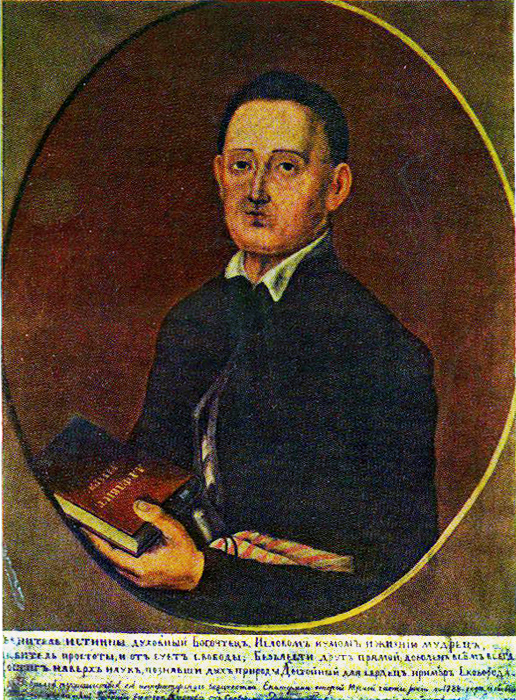 Hryhorii Skovoroda1722 – 1794
 Ibn Tufayl1110 – 1185
 Jean Buridan1295 – 1358
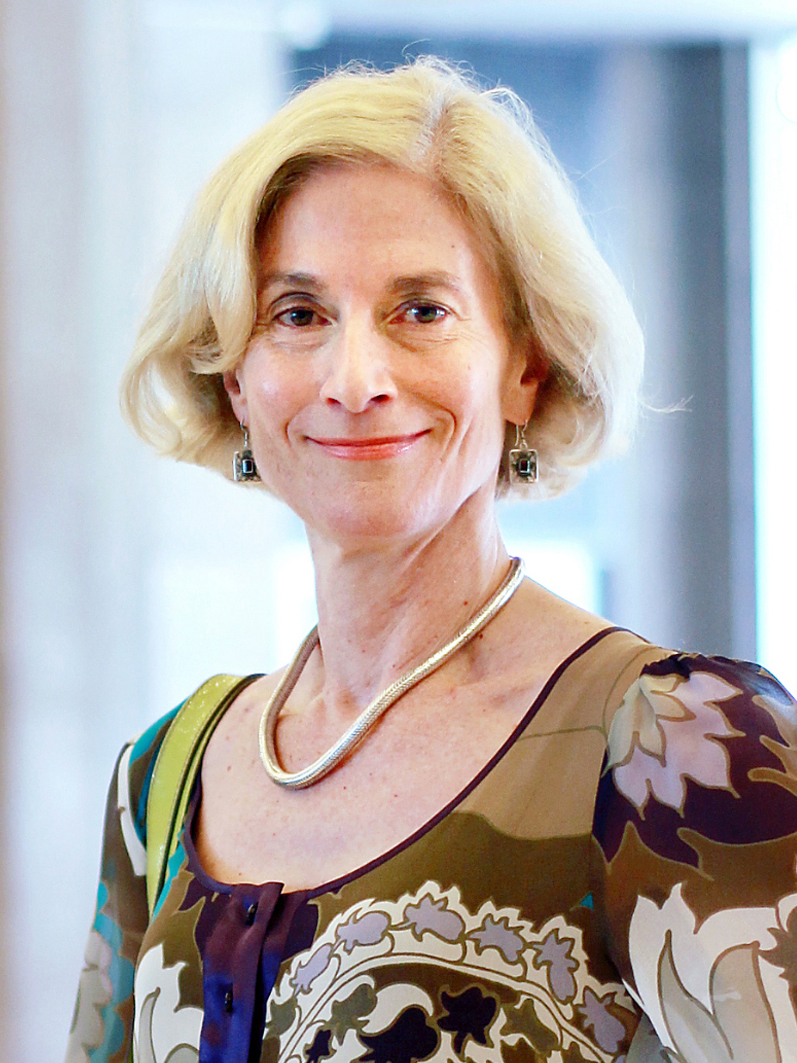 Martha Nussbaumborn 1947
 Alain1868 – 1951
- John Langshaw Austin1911 – 1960
- G. E. M. Anscombe1919 – 2001
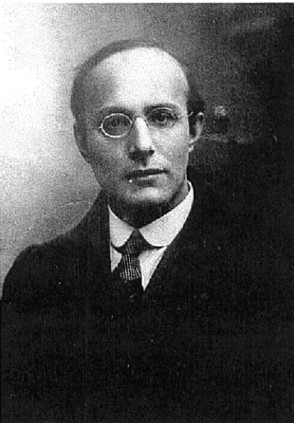 Karl Polanyi1886 – 1964
 Mortimer J. Adler1902 – 2001
 Strato of Lampsacus335 – 269 BCE
- Philippa Foot1920 – 2010
 Abu Ma'shar al-Balkhi787 – 886
 Alain of Lille1117 – 1202
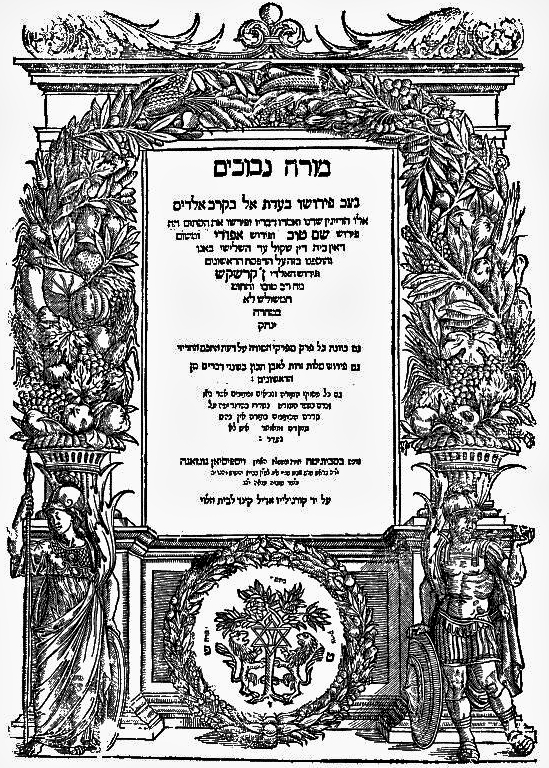 Hasdai Crescas1340 – 1410
 Andrea Cesalpino1519 – 1603
 Georg Henrik von Wright1916 – 2003
 Siger of Brabant1235 – 1284
 David Anhaght600 – 600
 Georges Canguilhem1904 – 1995
 Rémi Bragueborn 1947
 Ploutarchos of Athens350 – 432
 Yeshayahu Leibowitz1903 – 1994
 Stanley Hauerwasborn 1940
Ideas & arguments
17





Criticized
1
Related
1You might also explore
 Plato★Greek & Romanc. 428 – 348 BCEFounder of the Academy whose dialogues defined Western philosophy's agenda: Forms, justice, the soul, knowledge and the…Baruch Spinoza★Jewish1632 – 1677Lens-grinder of Amsterdam who identified God with Nature and wrote an Ethics in geometrical order.Thomas Aquinas★Medieval Latin1225 – 1274The great scholastic synthesiser of Aristotle and Christianity, author of the Summa Theologiae and the Five Ways.Friedrich Nietzsche★Modern European1844 – 1900Diagnostician of nihilism who proclaimed the death of God and called for a revaluation of all values.G. W. F. Hegel★Modern European1770 – 1831Systematic idealist for whom history is the dialectical self-realisation of Spirit and freedom.Martin Heidegger★Modern European1889 – 1976Asked the question of the meaning of Being; analysed human existence (Dasein) as being-in-the-world and…