Philosophy of religion
Arguments for and against God, the problem of evil, faith and reason.
Key ideas
Philosophy of religion is "the philosophical examination of the central themes and concepts involved in religious traditions". Philosophical discussions on such topics date from ancient times, and appear in the earliest known texts concerning philosophy. The field involves many other branches of philosophy, including metaphysics, epistemology, logic, ethics, aesthetics, philosophy of language, and philosophy of science.
The philosophy of religion differs from religious philosophy in that it seeks to discuss questions regarding the nature of religion as a whole, rather than examining the problems brought forth by a particular belief-system. The philosophy of religion differs from theology in that it critically evaluates the logical coherence and truth of fundamental religious concepts (such as God, souls, miracles, revelation, transcendence, ultimate reality, and mystical or religious experiences) independently of a particular religious tradition. The philosophy of religion also differs from religious studies in that its examination of religion is not limited to historical or sociological perspectives. It can be carried out dispassionately by those who identify as believers or non-believers.
Overview
Philosopher William L. Rowe characterized the philosophy of religion as: "the critical examination of basic religious beliefs and concepts." Philosophy of religion covers alternative beliefs about God, gods, demons, spirits or all, the varieties of religious experience, the interplay between science and religion, the nature and scope of good and evil, and religious treatments of birth, history, and death. The field also includes the ethical implications of religious commitments, the relation between faith, reason, experience and tradition, concepts of the miraculous, the sacred revelation, mysticism, power, and salvation.
The term philosophy of religion did not come into general use in the West until the nineteenth century, and most pre-modern and early modern philosophical works included a mixture of religious themes and non-religious philosophical questions. In Asia, examples include texts such as the Hindu Upanishads, the works of Daoism and Confucianism and Buddhist texts. Greek philosophies like Pythagoreanism and Stoicism included religious elements and theories about deities, and Medieval philosophy was strongly influenced by the big three monotheistic Abrahamic religions. In the Western world, early modern philosophers such as Thomas Hobbes, John Locke, and George Berkeley discussed religious topics alongside secular philosophical issues as well.
The philosophy of religion has been distinguished from theology by pointing out that, for theology, "its critical reflections are based on religious convictions". Also, "theology is responsible to an authority that initiates its thinking, speaking, and witnessing ... [while] philosophy bases its arguments on the ground of timeless evidence."
Some aspects of philosophy of religion have classically been regarded as a part of metaphysics. In Aristotle's Metaphysics, the necessarily prior cause of eternal motion was an unmoved mover, who, like the object of desire, or of thought, inspires motion without itself being moved. Today, however, philosophers have adopted the term "philosophy of religion" for the subject, and typically it is regarded as a separate field of specialization, although it is also still treated by some, particularly Catholic philosophers, as a part of metaphysics.
Ultimate reality
Different religions have different ideas about ultimate reality, its source or ground (or lack thereof) and also about what is the "Maximal Greatness". Paul Tillich's concept of 'Ultimate Concern' and Rudolf Otto's 'Idea of the Holy' are concepts which point to concerns about the ultimate or highest truth which most religious philosophies deal with in some way. One of the main differences among religions is whether the ultimate reality is a personal god or an impersonal reality.
In Western religions, various forms of theism are the most common conceptions, while in Eastern religions, there are theistic and also various non-theistic conceptions of the Ultimate. Theistic versus non-theistic is a common way of sorting the different types of religions.
There are also several philosophical positions with regard to the existence of God that one might take including various forms of theism (such as monotheism and polytheism), agnosticism and different forms of atheism.
Monotheism
Keith Yandell outlines roughly three kinds of historical monotheisms: Greek, Semitic and Hindu. Greek monotheism holds that the world has always existed and does not believe in creationism or divine providence, while Semitic monotheism believes the world was created by a God at a particular point in time and that this God acts in the world. Indian monotheism teaches that the world is beginningless, but that there is God's act of creation which sustains the world.
The attempt to provide proofs or arguments for the existence of God is one aspect of what is known as natural theology or the natural theistic project. This strand of natural theology attempts to justify belief in God by independent grounds. Perhaps most of the philosophy of religion is predicated on natural theology's assumption that the existence of God can be justified or warranted on rational grounds. There has been considerable philosophical and theological debate about the kinds of proofs, justifications and arguments that are appropriate for this discourse.
Non-theistic conceptions
Eastern religions have included both theistic and other alternative positions about the ultimate nature of reality. One such view is Jainism, which holds a dualistic view that all that exists is matter and a multiplicity of souls (jiva), without depending on a supreme deity for their existence. There are also different Buddhist views, such as the Theravada Abhidharma view, which holds that the only ultimately existing things are transitory phenomenal events (dharmas) and their interdependent relations. Madhyamaka Buddhists such as Nagarjuna hold that ultimate reality is emptiness (shunyata) while the Yogacara holds that it is vijñapti (mental phenomena). In Indian philosophical discourses, monotheism was defended by Hindu philosophers (particularly the Nyaya school), while Buddhist thinkers argued against their conception of a creator god (Sanskrit: Ishvara).
The Hindu view of Advaita Vedanta, as defended by Adi Shankara, is a total non-dualism. Although Advaitins do believe in the usual Hindu gods, their view of ultimate reality is a radically monistic oneness (Brahman without qualities) and anything which appears (like persons and gods) is illusory (maya).
The various philosophical positions of Taoism can also be viewed as non-theistic about the ultimate reality (Tao). Taoist philosophers have conceived of different ways of describing the ultimate nature of things. For example, while the Taoist Xuanxue thinker Wang Bi argued that everything is "rooted" inWu (non-being, nothingness), Guo Xiang rejected Wu as the ultimate source of things, instead arguing that the ultimate nature of the Tao is "spontaneous self-production" (zi sheng) and "spontaneous self-transformation" (zi hua).
Traditionally, Jains and Buddhists did not rule out the existence of limited deities or divine beings, they only rejected the idea of a single all-powerful creator God or First cause posited by monotheists.
Knowledge and belief
All religious traditions make knowledge claims which they argue are central to religious practice and to the ultimate solution to the main problem of human life. These include epistemic, metaphysical and ethical claims.
Evidentialism is the position that may be characterized as "a belief is rationally justified only if there is sufficient evidence for it". Many theists and non-theists are evidentialists, for example, Aquinas and Bertrand Russell agree that belief in God is rational only if there is sufficient evidence, but disagree on whether such evidence exists. These arguments often stipulate that subjective religious experiences are not reasonable evidence and thus religious truths must be argued based on non-religious evidence. One of the strongest positions of evidentialism is that by William Kingdon Clifford who wrote: "It is wrong always, everywhere, and for anyone, to believe anything upon insufficient evidence". His view of evidentialism is usually read in tandem with William James's article A Will to Believe (1896), which argues against Clifford's principle. More recent supporters of evidentialism include Antony Flew ("The Presumption of Atheism", 1972) and Michael Scriven (Primary philosophy, 1966). Both of them rely on the Ockhamist view that in the absence of evidence for X, belief in X is not justified. Many modern Thomists are also evidentialists in that they hold they can demonstrate there is evidence for the belief in God. Another move is to argue in a Bayesian way for the probability of a religious truth like God, not for total conclusive evidence.
Some philosophers, however, argue that religious belief is warranted without evidence and they are hence sometimes called non-evidentialists. They include fideists and reformed epistemologists. Alvin Plantinga and other reformed epistemologists are examples of philosophers who argue that religious beliefs are "properly basic beliefs" and that it is not irrational to hold them even though they are not supported by any evidence. The rationale here is that some beliefs we hold must be foundational and not be based on further rational beliefs. If this is not so, then we risk an infinite regress. This is qualified by the proviso that they can be defended against objections (this differentiates this view from fideism). A properly basic belief is a belief that one can reasonably hold without evidence, such as a memory, a basic sensation or a perception. Plantinga's argument is that belief in God is of this type because within every human mind there is a natural awareness of divinity.
William James in his essay "The Will to Believe" argues for a pragmatic conception of religious belief. For James, religious belief is justified if one is presented with a question which is rationally undecidable and if one is presented with genuine and live options which are relevant for the individual. For James, religious belief is defensible because of the pragmatic value it can bring to one's life, even if there is no rational evidence for it.
Some work in recent epistemology of religion goes beyond debates over evidentialism, fideism, and reformed epistemology to consider contemporary issues deriving from new ideas about knowledge-how and practical skill; how practical factors can affect whether one could know whether theism is true; from formal epistemology's use of probability theory; or from social epistemology (particularly the epistemology of testimony, or the epistemology of disagreement).
For example, an important topic in the epistemology of religion is that of religious disagreement, and the issue of what it means for intelligent individuals of the same epistemic parity to disagree about religious issues. Religious disagreement has been seen as possibly posing first-order or higher-order problems for religious belief. A first order problem refers to whether that evidence directly applies to the truth of any religious proposition, while a higher order problem instead applies to whether one has rationally assessed the first order evidence. One example of a first order problem is the Argument from nonbelief. Higher order discussions focus on whether religious disagreement with epistemic peers (someone whose epistemic ability is equal to our own) demands us to adopt a skeptical or agnostic stance or whether to reduce or change our religious beliefs.
Faith and reason
While religions resort to rational arguments to attempt to establish their views, they also claim that religious belief is at least partially to be accepted through faith, confidence or trust in one's religious belief. There are different conceptions or models of faith, including:
The affective model of faith sees it as a feeling of trust, a psychological state
The special knowledge model of faith as revealing specific religious truths (defended by Reformed epistemology)
The belief model of faith as the theoretical conviction that a certain religious claim is true.
Faith as trusting, as making a fiducial commitment such as trusting in God.
The practical doxastic venture model where faith is seen as a commitment to believe in the trustworthiness of a religious truth or in God. In other words, to trust in God presupposes belief, thus faith must include elements of belief and trust.
The non-doxastic venture model of faith as practical commitment without actual belief (defended by figures such as Robert Audi, J. L. Schellenberg and Don Cupitt). In this view, one need not believe in literal religious claims about reality to have religious faith.
The hope model, faith as hoping
There are also different positions on how faith relates to reason. One example is the belief that faith and reason are compatible and work together, which is the view of Thomas Aquinas and the orthodox view of Catholic natural theology. According to this view, reason establishes certain religious truths and faith (guided by reason) gives us access to truths about the divine which, according to Aquinas, "exceed all the ability of human reason."
Another position on is fideism, the view that faith is "in some sense independent of, if not outright adversarial toward, reason." Modern philosophers such as Kierkegaard, William James, and Wittgenstein have been associated with this label. Kierkegaard in particular, argued for the necessity of the religious to take a non-rational leap of faith to bridge the gulf between man and God. Wittgensteinian fideism meanwhile sees religious language games as being incommensurate with scientific and metaphysical language games, and that they are autonomous and thus may only be judged on their own standards. The obvious criticism to this is that many religions clearly put forth metaphysical claims.
Several contemporary New Atheist writers which are hostile to religion hold a related view that says that religious claims and scientific claims are opposed to each other and that therefore religions are false.
The Protestant theologian Karl Barth (1886–1968) argued that religious believers have no need to prove their beliefs through reason and thus rejected the project of natural theology. According to Barth, human reason is corrupt and God is utterly different from his creatures, thus we can only rely on God's own revelation for religious knowledge. Barth's view has been termed Neo-orthodoxy. Similarly, D.Z. Phillips argues that God is not intelligible through reason or evidence because God is not an empirical object or a 'being among beings'.
As Brian Davies points out, the problem with positions like Barth's is that they do not help us in deciding between inconsistent and competing revelations of the different religions.
Science
The topic of whether religious beliefs are compatible with science and in what way is also another significant topic in the philosophy of religion as well as in theology. This field draws the historical study of their interactions and conflicts, such as the debates in the United States over the teaching of evolution and creationism. There are different models of interaction that have been discussed in the philosophical literature, including:
Conflict thesis which sees them as being in constant conflict, such as during the reception of the theory of evolution and the current debate over creationism.
Independence model, both have separate domains, or non-overlapping magisteria
Dialogue model, some overlap between the fields, they remain separate but share some concepts and presuppositions
Integration or unification model includes projects like natural theology and process theology
The field also draws the scientific study of religion, particularly by psychologists and sociologists as well as cognitive scientists. Various theories about religion have arisen from these various disciplines. One example is the various evolutionary theories of religion which see the phenomenon as either adaptive or a by-product. Another can be seen in the various theories put forth by the Cognitive science of religion. Some argued that evolutionary or cognitive theories undermine religious belief.
Religious experience
Closely related to knowledge and belief is how to interpret religious experiences and their potential for providing knowledge. Religious experiences have been recorded throughout all cultures and are widely diverse. These personal experiences tend to be highly important to individuals who undergo them. Discussions about religious experiences can be said to be informed in part by the question: "what sort of information about what there is might religious experience provide, and how could one tell?"
One could interpret these experiences either veridically, neutrally or as delusions. Both monotheistic and non-monotheistic religious thinkers and mystics have appealed to religious experiences as evidence for their claims about ultimate reality. Philosophers such as Richard Swinburne and William Alston have compared religious experiences to everyday perceptions, that is, both are noetic and have a perceptual object, and thus religious experiences could logically be veridical unless we have good reason to disbelieve them. Other philosophers such as Eleonore Stump and Matthew Benton argue for an interpersonal epistemology on which one can experience and know God in a relational or personal sense.
According to Brian Davies common objections against the veridical force of religious experiences include the fact that experience is frequently deceptive and that people who claim an experience of a god may be "mistakenly identifying an object of their experience", or be insane or hallucinating. However, he argues that we cannot deduce from the fact that our experiences are sometimes mistaken, hallucinations or distorted to the conclusion that all religious experiences are mistaken etc. Indeed, a drunken or hallucinating person could still perceive things correctly, therefore these objections cannot be said to necessarily disprove all religious experiences.
According to C. B. Martin, "there are no tests agreed upon to establish genuine experience of God and distinguish it decisively from the ungenuine", and therefore all that religious experiences can establish is the reality of these psychological states.
Naturalistic explanations for religious experiences are often seen as undermining their epistemic value. Explanations such as the fear of death, suggestion, infantile regression, sexual frustration, neurological anomalies ("it's all in the head") as well as the socio-political power that having such experiences might grant to a mystic have been put forward. More recently, some argued that religious experiences are caused by cognitive misattributions akin to hallucinations, although this was denied by others. A contrary position was taken by Bertrand Russell who compared the veridical value of religious experiences to the hallucinations of a drunk person: "From a scientific point of view, we can make no distinction between the man who eats little and sees heaven and the man who drinks much and sees snakes. Each is in an abnormal physical condition, and therefore has abnormal perceptions." However, as William L. Rowe notes:
Adapted from the Wikipedia article Philosophy of religion, available under CC BY-SA 4.0.
Connections


Discussed in
7


Key contributors
53 Augustine of Hippo354 – 430
 G. W. F. Hegel1770 – 1831
 Blaise Pascal1623 – 1662
 Ludwig Wittgenstein1889 – 1951
 David Hume1711 – 1776
 William James1842 – 1910
Show 47 moreShow less
 Ludwig Feuerbach1804 – 1872
 Johann Gottfried Herder1744 – 1803
 Simone Weil1909 – 1943
 Max Stirner1806 – 1856
 George Santayana1863 – 1952
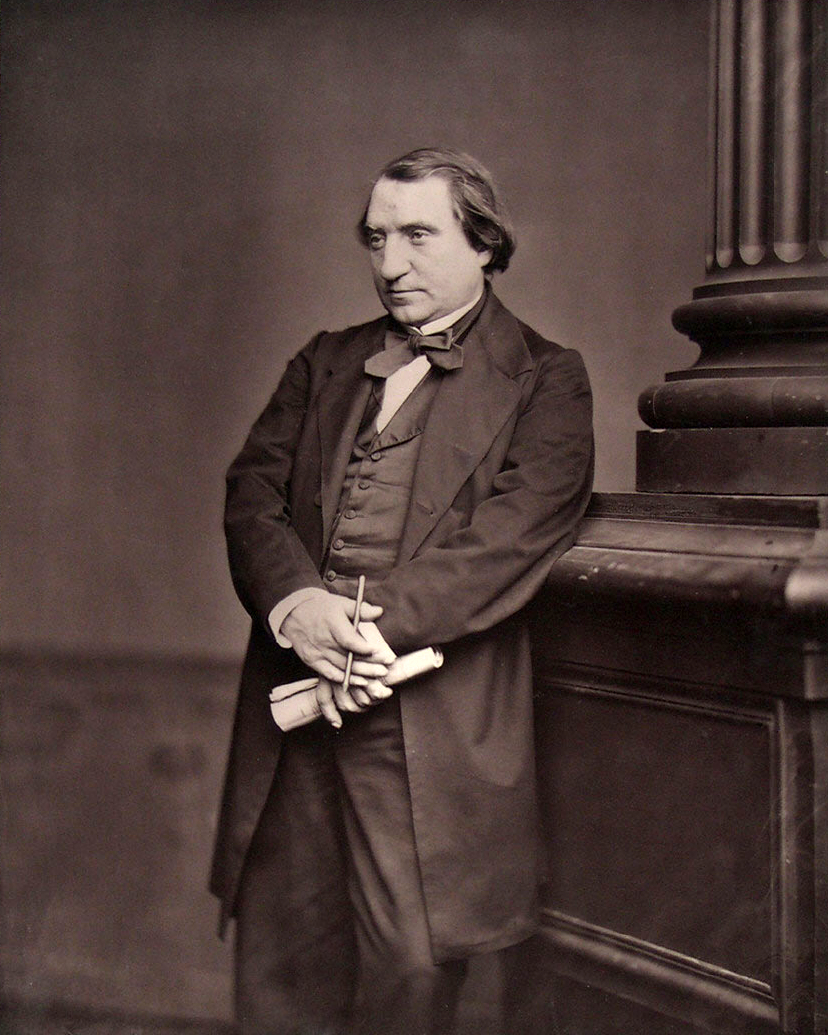 Ernest Renan1823 – 1892
 Giovanni Pico della Mirandola1463 – 1494
 Max Scheler1874 – 1928
 Pierre Teilhard de Chardin1881 – 1955
 Daniel Dennett1942 – 2024
 Carl Schmitt1888 – 1985
 Vladimir Solovyov1853 – 1900
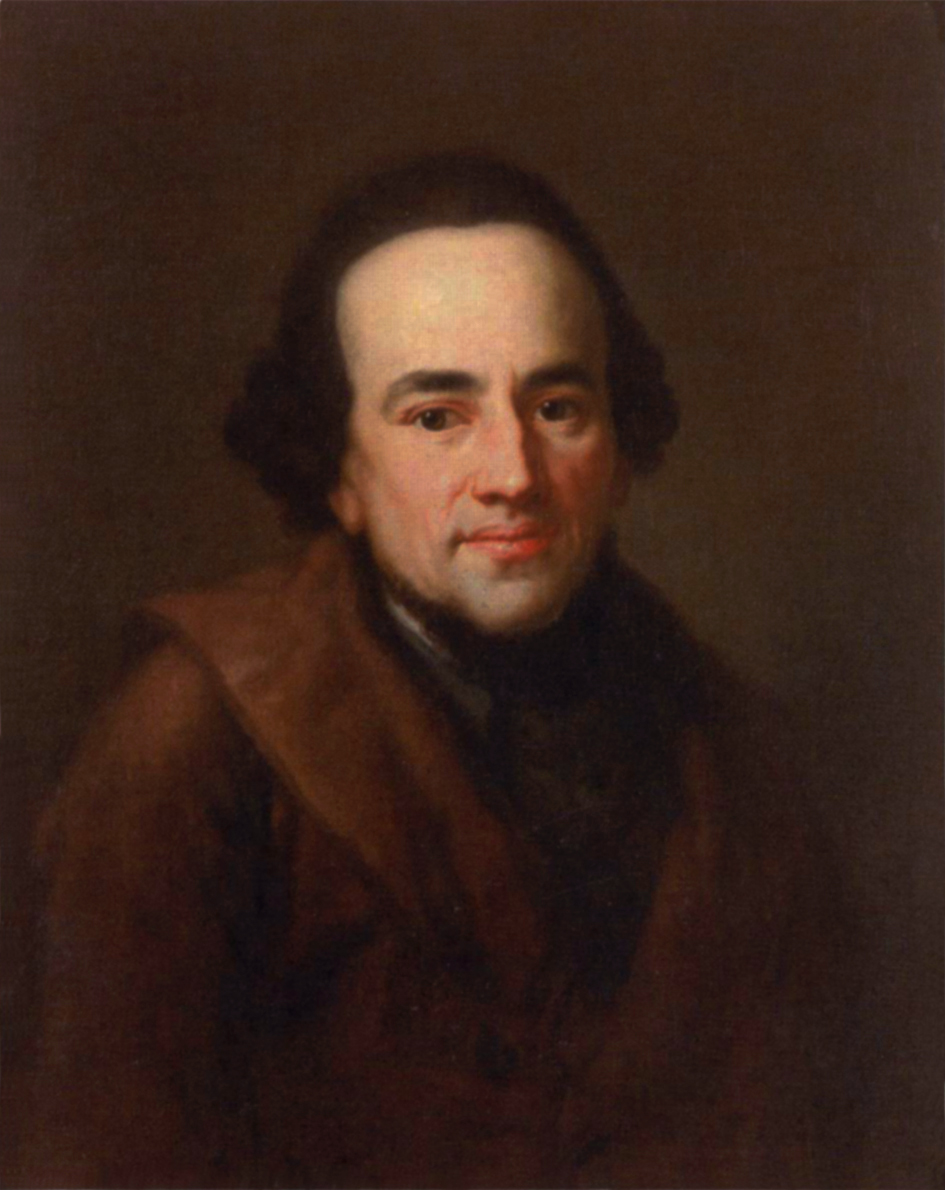 Moses Mendelssohn1729 – 1786
 Otto Weininger1880 – 1903
 Adam Weishaupt1748 – 1830
 Leszek Kołakowski1927 – 2009
 Jacques Maritain1882 – 1973
 Leo Strauss1899 – 1973
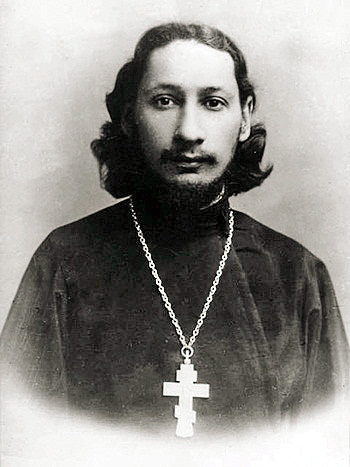 Pavel Florensky1882 – 1937
 María Zambrano1904 – 1991
 Sergei Bulgakov1871 – 1944
 Alvin Plantingaborn 1932
 Uriel da Costa1585 – 1640
 Hans Jonas1903 – 1993
 Nicolás Gómez Dávila1913 – 1994
 Cornel Westborn 1953
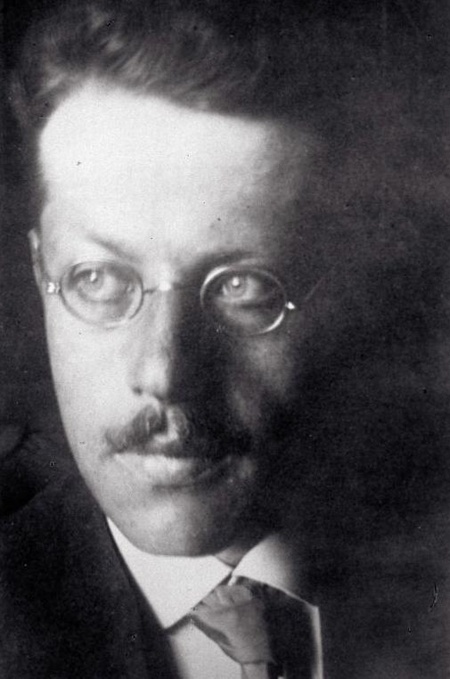 Franz Rosenzweig1886 – 1929
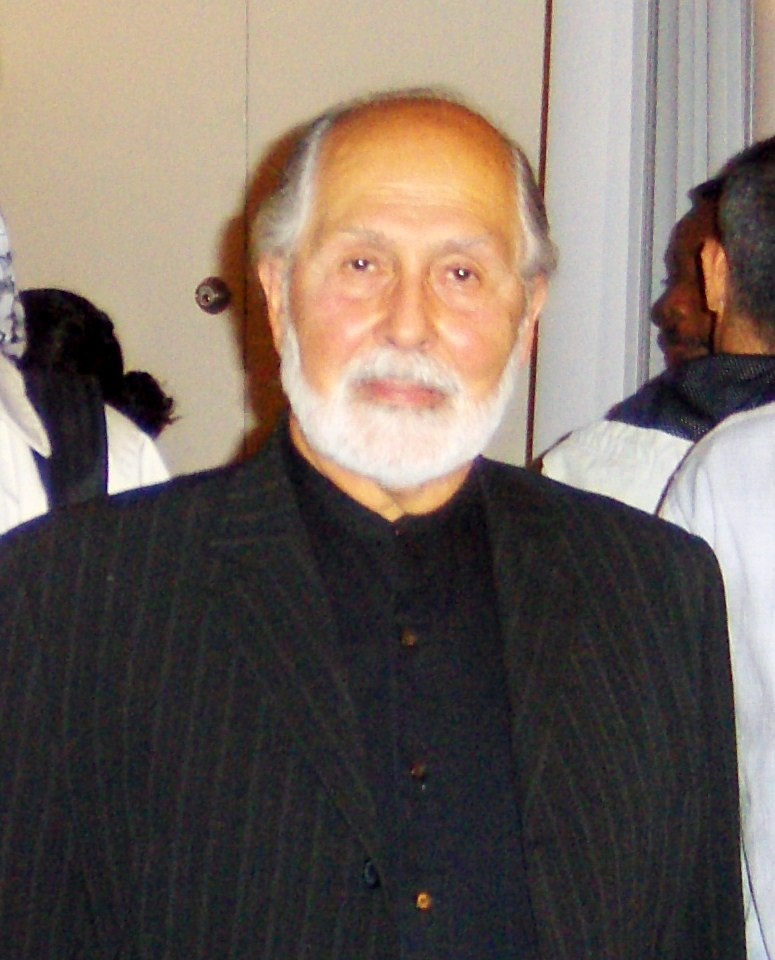 Hossein Nasrborn 1933
 Gershom Scholem1897 – 1982
 Michael Oakeshott1901 – 1990
 Antony Flew1923 – 2010
 Josiah Royce1855 – 1916
 Vasilij Vasilʹevič Rozanov1856 – 1919
 Eduard Zeller1814 – 1908
 Émile Boutroux1845 – 1921
- J. L. Mackie1917 – 1981
 Richard Swinburneborn 1934
 Abdolkarim Soroushborn 1945
- Henry Corbin1903 – 1978
 Rémi Bragueborn 1947
 Dietrich von Hildebrand1889 – 1977
 Michel Henry1922 – 2002
- Charles Hartshorne1897 – 2000
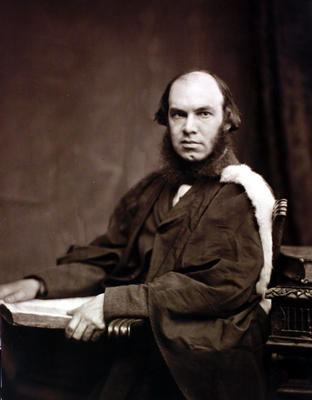 Edward Caird1835 – 1908
 Nishitani Keiji1900 – 1990
 John Anderson1893 – 1962
 Sarvepalli Radhakrishnan1888 – 1975
You might also explore
 Political philosophyJustice, the state, power, rights, liberty and equality: how should we live together?
 Metaphysics★The study of the most general features of reality: being, existence, time, causation, identity and possibility.Ethics★How should we live and what should we do? Ethics studies right and wrong, good and bad, virtue and vice.Epistemology★The theory of knowledge: what knowledge is, how we get it, and whether we can have any at all.Aesthetics★The philosophy of beauty, art and taste.Philosophy of scienceWhat makes science scientific, and what does it tell us about reality?