
Key ideas
Philosophy of language, or sometimes linguistic philosophy, is the study of the nature of language. It investigates the relationship between language, language users, and the world. Investigations may include inquiry into the nature of meaning, indexicality, intentionality, reference, the constitution of sentences, concepts, learning, and thought.
Gottlob Frege and Bertrand Russell were pivotal figures in analytic philosophy's "linguistic turn". These writers were followed by Ludwig Wittgenstein (Tractatus Logico-Philosophicus), the Vienna Circle, logical positivists, and Willard Van Orman Quine.
Ancient philosophy
In the West, inquiry into language stretches back to the 5th century BC with philosophers such as Socrates, Plato, Aristotle, and the Stoics. Linguistic speculation predated systematic descriptions of grammar which emerged c. the 5th century BC in India and c. the 3rd century BC in Greece.
In the dialogue Cratylus, Plato considers the question of whether the names of things are determined by convention or by nature. He criticizes conventionalism as leading to the bizarre consequence that, as anything can be conventionally denominated by any name, there can hence be neither fitting, or correct, names, nor unfitting or incorrect ones—yet it seems, intuitively, that such "incorrect" names are indeed possible: e.g., if Theophilus means "god-beloved", it seems inappropriate for anyone who is not, in fact, very pious at all. Plato argues, further, that primitive (as opposed to derived) names have a natural correctness, because each phoneme represents basic ideas or sentiments; for example, the letter λ and its sound represent—for Plato—the idea of smoothness or softness. However, by the end of Cratylus, he seems to admit that some social conventions are also involved, and that the idea that phonemes have individual meanings is not without flaw. Plato is often considered a proponent of extreme realism.
Aristotle interested himself with issues of logic, categories, and the creation of meaning. He separated all things into categories of species and genus. He thought that the meaning of a predicate was established through an abstraction of the similarities between various individual things. This theory later came to be called nominalism. However, since Aristotle took these similarities to be constituted by a real commonality of form, he is more often considered a proponent of moderate realism.
The Stoics made important contributions to the analysis of grammar, distinguishing five parts of speech: nouns, verbs, appellatives (names or epithets), conjunctions and articles. They also developed a sophisticated doctrine of the lektón associated with each sign of a language, but distinct from both the sign itself and the thing to which it refers. This lektón was the meaning or sense of every term. The complete lektón of a sentence is what we would now call its proposition. Only propositions were considered truth-bearing—meaning they could be considered true or false—while sentences were simply their vehicles of expression. Different lektá could also express things besides propositions, such as commands, questions and exclamations.
Classical Indian philosophy saw the primary debates occurring between the Nyāya school, Mīmāṃsā philosophy, and Vyākaraṇa (grammar) traditions regarding linguistic meaning. The Mīmāṃsā school developed theories on how sentences carry meaning, which is expressed through the ideas of Kumārila Bhaṭṭa who proposed abhihitānvayavāda (meaning arising from the association of expressed words) and Prabhākara who proposed anvitābhidhānavāda (words conveying meaning only in relation to a sentence's unified action). In contrast, the 5th-century grammarian Bhartṛhari puts forth a holistic model in his treatise, the Vākyapadīya, known as akhaṇḍavākyasphoṭa. In this view, words and sounds do not carry the meaning in and of themselves. It is the sentences that are the units of meaning which can be realized through an intuitive cognition known as pratibhā. He also linked language to metaphysics through his concept of Śabdādvaita, asserting that cognition is fundamentally structured by language (Śabda-Brahman).
Medieval philosophy
Medieval philosophers were greatly interested in the subtleties of language and its usage. For many scholastics, this interest was provoked by the necessity of translating Greek texts into Latin. There were several noteworthy philosophers of language in the medieval period. According to Peter J. King (though this has been disputed), Peter Abelard anticipated the modern theories of reference. Also, William of Ockham's Summa Logicae brought forward one of the first serious proposals for codifying a mental language.
The scholastics of the high medieval period, such as Ockham and John Duns Scotus, considered logic to be a scientia sermocinalis (science of language). The result of their studies was the elaboration of linguistic-philosophical notions whose complexity and subtlety has only recently come to be appreciated. Many of the most interesting problems of modern philosophy of language were anticipated by medieval thinkers. The phenomena of vagueness and ambiguity were analyzed intensely, and this led to an increasing interest in problems related to the use of syncategorematic words, such as and, or, not, if, and every. The study of categorematic words (or terms) and their properties was also developed greatly. One of the major developments of the scholastics in this area was the doctrine of the suppositio. The suppositio of a term is the interpretation that is given of it in a specific context. It can be proper or improper (as when it is used in metaphor, metonym, and other figures of speech). A proper suppositio, in turn, can be either formal or material according to whether it refers to its usual non-linguistic referent (as in "Charles is a man"), or to itself as a linguistic entity (as in "'Charles' has seven letters"). Such a classification scheme is the precursor of modern distinctions between use and mention, and between language and metalanguage.
There is a tradition called speculative grammar which existed from the 11th to the 13th century. Leading scholars included Martin of Dacia and Thomas of Erfurt (see Modistae).
Modern philosophy
Linguists of the Renaissance and Baroque periods such as Johannes Goropius Becanus, Athanasius Kircher and John Wilkins were infatuated with the idea of a philosophical language reversing the confusion of tongues, influenced by the gradual discovery of Chinese characters and Egyptian hieroglyphs (Hieroglyphica). This thought parallels the idea that there might be a universal language of music.
European scholarship began to absorb the Indian linguistic tradition only from the mid-18th century, pioneered by Jean François Pons and Henry Thomas Colebrooke (the editio princeps of Varadarāja, a 17th-century Sanskrit grammarian, dating to 1849).
In the early 19th century, the Danish philosopher Søren Kierkegaard insisted that language should play a larger role in Western philosophy. He argued that philosophy has not sufficiently focused on the role language plays in cognition and that future philosophy ought to proceed with a conscious focus on language:
If the claim of philosophers to be unbiased were all it pretends to be, it would also have to take account of language and its whole significance in relation to speculative philosophy ... Language is partly something originally given, partly that which develops freely. And just as the individual can never reach the point at which he becomes absolutely independent ... so too with language.
Contemporary philosophy
Language began to play a central role in Western philosophy in the early 20th century. The phrase "linguistic turn" describes the noteworthy emphasis that contemporary philosophers put upon language during this time.
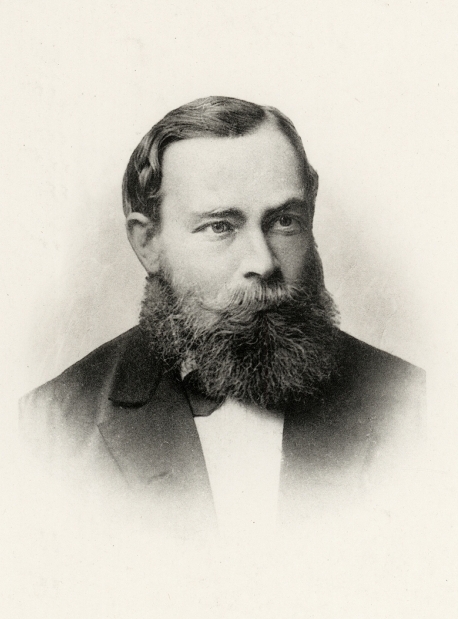
One of the central figures involved in this development was the German philosopher Gottlob Frege, whose work on philosophical logic and the philosophy of language in the late 19th century influenced the work of 20th-century analytic philosophers Bertrand Russell and Ludwig Wittgenstein. In continental philosophy, the foundational work in the field was Ferdinand de Saussure's Cours de linguistique générale, published posthumously in 1916. The philosophy of language became so pervasive that for a time, in analytic philosophy circles, philosophy as a whole was understood to be a matter of philosophy of language.
Searching to disrupt the philosophy of language embroiled in these postmodernist and post-structuralist deadlocks, American academic Jason Ānanda Josephson Storm has introduced hylosemiotics. Influenced by theory including pragmatism in the mode of William James combined with insight into plant and animal communication, hylosemiotics seeks to establish a panspecies approach to signs, their intention, and meaning. In other words, hylosemiotics is a movement to strip the philosophy of language of its anthropocentrism.
Meaning
The topic that has received the most attention in the philosophy of language has been the nature of meaning, to explain what "meaning" is, and what we mean when we talk about meaning. Within this area, issues include: the nature of synonymy, the origins of meaning itself, our apprehension of meaning, and the nature of composition (the question of how meaningful units of language are composed of smaller meaningful parts, and how the meaning of the whole is derived from the meaning of its parts).
There have been several distinctive explanations of what a linguistic "meaning" is. Each has been associated with its own body of literature.
The ideational theory of meaning, most commonly associated with the British empiricist John Locke, claims that meanings are mental representations provoked by signs. Although this view of meaning has been beset by a number of problems from the beginning (see the main article for details), interest in it has been renewed by some contemporary theorists under the guise of semantic internalism.
The truth-conditional theory of meaning holds meaning to be the conditions under which an expression may be true or false. This tradition goes back at least to Frege and is associated with a rich body of modern work, spearheaded by philosophers like Alfred Tarski and Donald Davidson. (See also Wittgenstein's picture theory of language.)
The use theory of meaning, most commonly associated with the later Wittgenstein, helped inaugurate the idea of "meaning as use", and a communitarian view of language. Wittgenstein was interested in the way in which the communities use language, and how far it can be taken. It is also associated with P. F. Strawson, John Searle, Robert Brandom, and others.
The inferentialist theory of meaning, the view that the meaning of an expression is derived from the inferential relations that it has with other expressions. This view is thought to be descended from the use theory of meaning, and has been most notably defended by Wilfrid Sellars and Robert Brandom.
The direct reference theory of meaning, the view that the meaning of a word or expression is what it points out in the world. While views of this kind have been widely criticized regarding the use of language in general, John Stuart Mill defended a form of this view, and Saul Kripke and Ruth Barcan Marcus have both defended the application of direct reference theory to proper names.
The semantic externalist theory of meaning, according to which meaning is not a purely psychological phenomenon, because it is determined, at least in part, by features of one's environment. There are two broad subspecies of externalism: social and environmental. The first is most closely associated with Tyler Burge and the second with Hilary Putnam, Saul Kripke and others.
The verificationist theory of meaning is generally associated with the early 20th century movement of logical positivism. The traditional formulation of such a theory is that the meaning of a sentence is its method of verification or falsification. In this form, the thesis was abandoned after the acceptance by most philosophers of the Duhem–Quine thesis of confirmation holism after the publication of Quine's "Two Dogmas of Empiricism". However, Michael Dummett has advocated a modified form of verificationism since the 1970s. In this version, the comprehension (and hence meaning) of a sentence consists in the hearer's ability to recognize the demonstration (mathematical, empirical or other) of the truth of the sentence.
Pragmatic theories of meaning include any theory in which the meaning (or understanding) of a sentence is determined by the consequences of its application. Dummett attributes such a theory of meaning to Charles Sanders Peirce and other early 20th century American pragmatists.
Psychological theories of meaning, which focus on the intentions of a speaker in determining the meaning of an utterance. One notable proponent of such a view was Paul Grice, whose views also account for non-linguistic meaning (i.e., meaning as conveyed by body language, meanings as consequences, etc.).
Reference
Investigations into how language interacts with the world are called theories of reference. Gottlob Frege was an advocate of a mediated reference theory. Frege divided the semantic content of every expression, including sentences, into two components: sense and reference. The sense of a sentence is the thought that it expresses. Such a thought is abstract, universal and objective. The sense of any sub-sentential expression consists in its contribution to the thought that its embedding sentence expresses. Senses determine reference and are also the modes of presentation of the objects to which expressions refer. Referents are the objects in the world that words pick out. The senses of sentences are thoughts, while their referents are truth values (true or false). The referents of sentences embedded in propositional attitude ascriptions and other opaque contexts are their usual senses.
Bertrand Russell, in his later writings and for reasons related to his theory of acquaintance in epistemology, held that the only directly referential expressions are what he called "logically proper names". Logically proper names are such terms as I, now, here and other indexicals. He viewed proper names of the sort described above as "abbreviated definite descriptions" (see Theory of descriptions). Hence Joseph R. Biden may be an abbreviation for "a past President of the United States and husband of Jill Biden". Definite descriptions are denoting phrases (see "On Denoting") which are analyzed by Russell into existentially quantified logical constructions. Such phrases denote in the sense that there is an object that satisfies the description. However, such objects are not to be considered meaningful on their own, but have meaning only in the proposition expressed by the sentences of which they are a part. Hence, they are not directly referential in the same way as logically proper names, for Russell.
On Frege's account, any referring expression has a sense as well as a referent. Such a "mediated reference" view has certain theoretical advantages over Mill's view. For example, co-referential names, such as Samuel Clemens and Mark Twain, cause problems for a directly referential view because it is possible for someone to hear "Mark Twain is Samuel Clemens" and be surprised – thus, their cognitive content seems different.
Despite the differences between the views of Frege and Russell, they are generally lumped together as descriptivists about proper names. Such descriptivism was criticized in Saul Kripke's Naming and Necessity.
Kripke put forth what has come to be known as "the modal argument" (or "argument from rigidity"). Consider the name Aristotle and the descriptions "the greatest student of Plato", "the founder of logic" and "the teacher of Alexander". Aristotle obviously satisfies all of the descriptions (and many of the others we commonly associate with him), but it is not necessarily true that if Aristotle existed then Aristotle was any one, or all, of these descriptions. Aristotle may well have existed without doing any single one of the things for which he is known to posterity. He may have existed and not have become known to posterity at all or he may have died in infancy. Suppose that Aristotle is associated by Mary with the description "the last great philosopher of antiquity" and (the actual) Aristotle died in infancy. Then Mary's description would seem to refer to Plato. But this is deeply counterintuitive. Hence, names are rigid designators, according to Kripke. That is, they refer to the same individual in every possible world in which that individual exists. In the same work, Kripke articulated several other arguments against "Frege–Russell" descriptivism (see also Kripke's causal theory of reference).
The whole philosophical enterprise of studying reference has been critiqued by linguist Noam Chomsky in various works.
Composition and parts
It has long been known that there are different parts of speech. One part of the common sentence is the lexical word, which is composed of nouns, verbs, and adjectives. A major question in the field – perhaps the single most important question for formalist and structuralist thinkers – is how the meaning of a sentence emerges from its parts.
Many aspects of the problem of the composition of sentences are addressed in the field of linguistics of syntax. Philosophical semantics tends to focus on the principle of compositionality to explain the relationship between meaningful parts and whole sentences. The principle of compositionality asserts that a sentence can be understood on the basis of the meaning of the parts of the sentence (i.e., words, morphemes) along with an understanding of its structure (i.e., syntax, logic). Further, syntactic propositions are arranged into discourse or narrative structures, which also encode meanings through pragmatics like temporal relations and pronominals.
It is possible to use the concept of functions to describe more than just how lexical meanings work: they can also be used to describe the meaning of a sentence. In the sentence "The horse is red", "the horse" can be considered to be the product of a propositional function. A propositional function is an operation of language that takes an entity (in this case, the horse) as an input and outputs a semantic fact (i.e., the proposition that is represented by "The horse is red"). In other words, a propositional function is like an algorithm. The meaning of "red" in this case is whatever takes the entity "the horse" and turns it into the statement, "The horse is red."
Linguists have developed at least two general methods of understanding the relationship between the parts of a linguistic string and how it is put together: syntactic and semantic trees. Syntactic trees draw upon the words of a sentence with the grammar of the sentence in mind; semantic trees focus upon the role of the meaning of the words and how those meanings combine to provide insight onto the genesis of semantic facts.
Innateness and learning
Some of the major issues at the intersection of philosophy of language and philosophy of mind are also dealt with in modern psycholinguistics. Some important questions regard the amount of innate language, if language acquisition is a special faculty in the mind, and what the connection is between thought and language.
Adapted from the Wikipedia article Philosophy of language, available under CC BY-SA 4.0.
Connections
Proposed by
1Includes
1Discussed in
3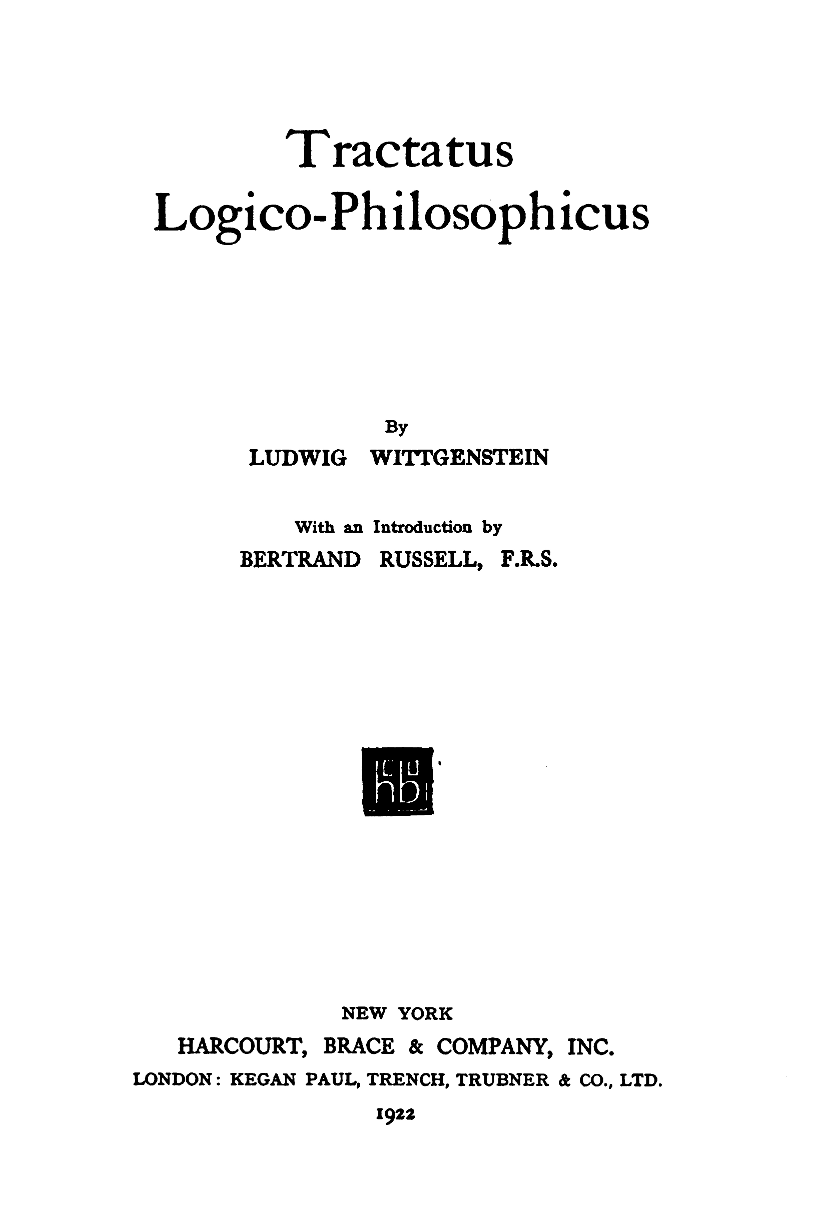
Key contributors
43 Ludwig Wittgenstein1889 – 1951
 Martin Heidegger1889 – 1976
 Henri Bergson1859 – 1941
 Peter Abelard1079 – 1142
 Johann Gottfried Herder1744 – 1803
 Walter Benjamin1892 – 1940
Show 37 moreShow less
 Wilhelm von Humboldt1767 – 1835
 Gottlob Frege1848 – 1925
 Hans-Georg Gadamer1900 – 2002
 Pāṇinic. 520 – 460 BCE
 Julia Kristevaborn 1941
 W. V. O. Quine1908 – 2000
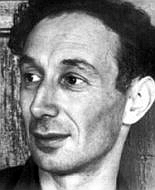 A. J. Ayer1910 – 1989
 Paul Ricœur1913 – 2005
 Richard Rorty1931 – 2007
 John Searle1932 – 2025
 Hilary Putnam1926 – 2016
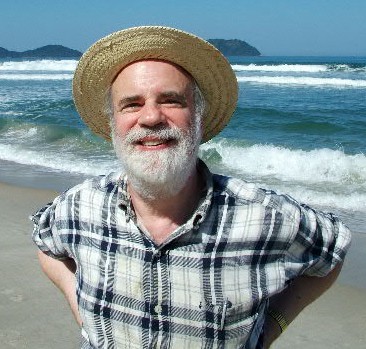 Saul Kripke1940 – 2022
- John Langshaw Austin1911 – 1960
- Gilbert Ryle1900 – 1976
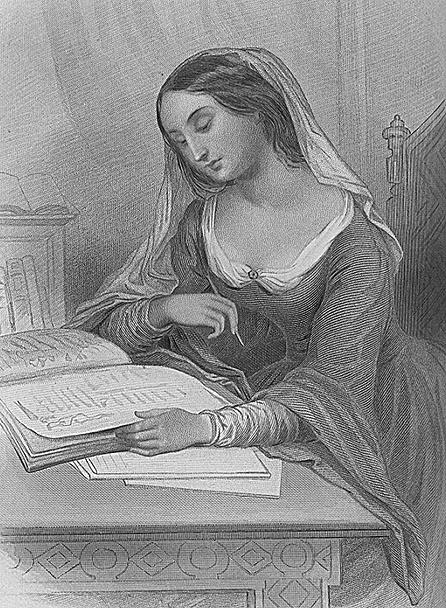 Héloïse d’Argenteuil1101 – 1164
 Maurice Blanchot1907 – 2003
- G. E. M. Anscombe1919 – 2001
 Johann Georg Hamann1730 – 1788
 David Chalmersborn 1966
 Jerry Fodor1935 – 2017
 Michael Dummett1925 – 2011
- Paul Grice1913 – 1988
- Donald Davidson1917 – 2003
- Nelson Goodman1906 – 1998
- P. F. Strawson1919 – 2006
 Georg Henrik von Wright1916 – 2003
 Karl Leonhard Reinhold1757 – 1823
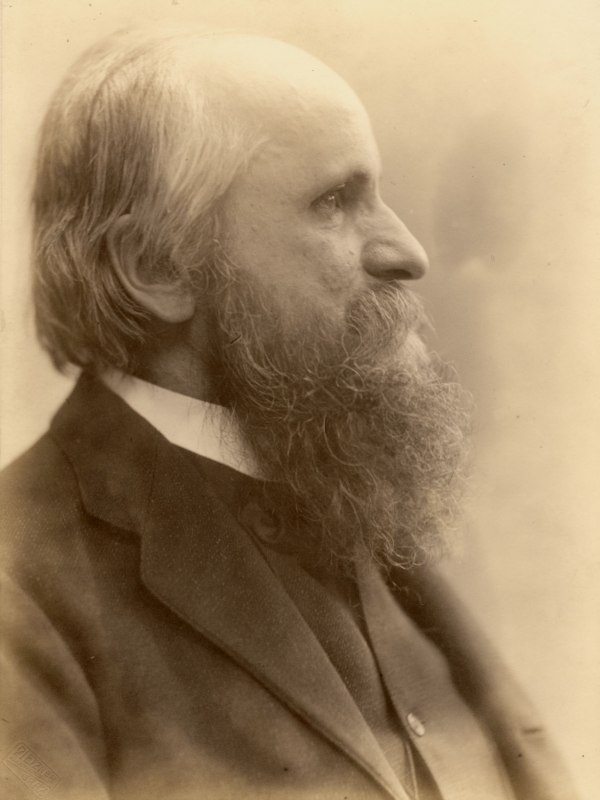 Alexius Meinong1853 – 1920
 David Lewis1941 – 2001
- J. L. Mackie1917 – 1981
- Karl-Otto Apel1922 – 2017
 Fritz Mauthner1849 – 1923
 Ludwig Klages1872 – 1956
- Charles Kay Ogden1889 – 1957
 Simon Blackburnborn 1944
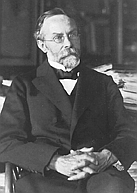 Anton Marty1847 – 1914
- William Crathorn1301
You might also explore
 Metaphysics★The study of the most general features of reality: being, existence, time, causation, identity and possibility.Ethics★How should we live and what should we do? Ethics studies right and wrong, good and bad, virtue and vice.
 Logic★The study of correct reasoning: what follows from what, and why.Aesthetics★The philosophy of beauty, art and taste.