Key ideas
Aesthetics is the branch of philosophy that studies beauty, taste, and related phenomena. In a broad sense, it includes the philosophy of art, which examines the nature of art, artistic creativity, the meanings of artworks, and audience appreciation.
Aesthetic properties are features that influence the appeal of objects. They include aesthetic values, which express positive or negative qualities, such as the contrast between beauty and ugliness. Philosophers debate whether aesthetic properties have objective existence or depend on the subjective experiences of observers. According to a common view, aesthetic experiences are associated with disinterested pleasure detached from practical concerns. Taste is a subjective sensitivity to aesthetic qualities, and differences in taste can lead to disagreements about aesthetic judgments.
Artworks are artifacts or performances typically created by humans, encompassing diverse forms such as painting, music, dance, architecture, and literature. Some definitions focus on their intrinsic aesthetic qualities; others understand art as a socially constructed category. Art interpretation and criticism seek to identify the meanings of artworks. Discussions focus on elements such as what an artwork represents, which emotions it expresses, and what the author's underlying intent was.
Many fields of study investigate aesthetic phenomena, examining their roles in ethics, religion, and everyday life, as well as the psychological processes involved in aesthetic experiences. Comparative aesthetics analyzes the similarities and differences between traditions such as Western, Indian, Chinese, Islamic, and African aesthetics. Aesthetic thought has its roots in antiquity but only emerged as a distinct field of inquiry in the 18th century when philosophers systematically engaged with the subject.
Definition
Aesthetics, sometimes spelled esthetics, is the systematic study of beauty, art, and taste. As a branch of philosophy, it examines which types of aesthetic phenomena there are, how people experience them, and how objects evoke them. This field also investigates the nature of aesthetic judgments, the meaning of artworks, and the problem of art criticism. Key questions in aesthetics include "What is art?", "Can aesthetic judgments be objective?", and "How is aesthetic value related to other values?". One characterization distinguishes between three main approaches to aesthetics: the study of aesthetic concepts and judgments, the study of aesthetic experiences and other mental responses, and the study of the nature and features of aesthetic objects. In a slightly different sense, the term aesthetics can also refer to particular theories of beauty or to beautiful appearances.
Aesthetics is closely related to the philosophy of art, and the two terms are often used interchangeably since both involve the philosophical study of aesthetic phenomena. One difference is that the philosophy of art focuses on art, whereas the scope of aesthetics also includes other domains, such as beauty in nature and everyday life. Accordingly, one outlook argues that the philosophy of art is a subfield of aesthetics. The precise relation between the two fields is disputed, and another characterization holds that the philosophy of art is the broader discipline. This view asserts that aesthetics mainly addresses aesthetic properties, while the philosophy of art also investigates non-aesthetic features of artworks, belonging to fields such as metaphysics, epistemology, philosophy of language, and ethics.
Even though the philosophical study of aesthetic problems originated in antiquity, it was not until the 18th century that aesthetics emerged as a distinct branch of philosophy when philosophers engaged in systematic inquiry into its principles. The Latin term aesthetica was coined by the philosopher Alexander Baumgarten in 1735, initially defined as the study of sensibility or sensations of beautiful objects. The term comes from the ancient Greek words aisthetikos, meaning 'perceptible things', aisthesthai, meaning 'perceive, see', and aisthesis, meaning 'sensation, perception'. The earliest known use in the English language appeared in a translation by W. Hooper in the 1770s.
Basic concepts
Philosophers rely on several basic concepts in their inquiry. They examine aesthetic objects and the properties or features responsible for their appeal, such as beauty. Researchers study the experience and pleasure these objects evoke, the judgments about them, and taste as an underlying sensitivity. However, this field comes with theoretical difficulties caused by disagreements about the definitions of and relations between these concepts. Similarly, the exact boundaries of the domain of aesthetics as a whole are disputed—it is controversial whether there is a group of essential features shared by all aesthetic phenomena or whether they are more loosely related through family resemblances.
Aesthetic properties and objects
Aesthetic properties are features of an object that shape its appeal or factors that influence aesthetic evaluations. For instance, when an art critic describes an artwork as great, vivid, or amusing, they express aesthetic properties of this artwork. Some aesthetic properties focus on aesthetic value in general, like beautiful and ugly; others center on more specific forms of value, such as graceful and elegant. Aesthetic properties can also refer to perceptual qualities of objects like balanced and vivid, to representational aspects like realistic and distorted, or to emotional responses such as joyful and angry.
The precise distinction between aesthetic and non-aesthetic properties is disputed. According to one proposal, aesthetic properties require a specific aesthetic sensitivity in addition to the sensory perception of non-aesthetic properties, going beyond simple colors, shapes, and sounds. Aesthetic properties are associated with evaluations, but not all are intrinsically good or bad. For example, being a realistic representation may be aesthetically good in some artistic contexts and bad in others.
The school of realism argues that aesthetic properties are objective, mind-independent features of reality. A related proposal asserts that they are emergent properties dependent on non-aesthetic properties. According to this view, the beauty of a painting may emerge from the right combination of colors and shapes. A different position holds that aesthetic properties are response-dependent, for example, that features of objects only qualify as aesthetic properties if they evoke aesthetic experiences in observers. The terms "aesthetic property" and "aesthetic quality" are often used interchangeably. Some philosophers distinguish the two, associating aesthetic properties with objective features and aesthetic qualities with subjective experiences and emotional responses.
An aesthetic object is an object with aesthetic properties. One interpretation suggests that aesthetic objects are material entities that evoke aesthetic experiences. According to this view, if a person admires an oil painting, then the physical canvas and paint make up the aesthetic object. Another interpretation, associated with the school of phenomenology, argues that aesthetic objects are not material but intentional objects. Intentional objects are part of the content of experiences, and their existence depends on the perceiver. An intentional object may accurately reflect a material object, as in the case of veridical perceptions, but can also fail to do so, which happens during perceptual illusions. The phenomenological perspective focuses on the intentional object given in experience rather than the material object considered independently of the perceiver.
Aesthetic values and beauty
Aesthetic values are a special type of aesthetic property. They express the sensory appeal of an object as a qualitative measure of its aesthetic merit, encompassing both positive and negative evaluations. Aesthetic values contrast with values in other domains, such as moral, epistemic, religious, and economic values.
The aesthetic value of beauty is often singled out as a central topic of aesthetics. It is a key aspect of human experience, influencing both personal decisions and cultural developments. Often-cited examples of beautiful objects include landscapes, sunsets, humans, and artworks. As a positive value, beauty contrasts with ugliness as its negative counterpart. Beauty is typically understood as a quality of objects that involves balance or harmony and evokes admiration or pleasure when perceived, but its precise definition is debated. Some theories understand beauty as an objective feature of external objects. Others emphasize its subjective nature, linking it to personal experience and perception. They argue that "beauty is in the eye of the beholder" rather than in the perceived object. Another central debate concerns the features that all beautiful objects have in common. The so-called classical conception of beauty is rooted in classical antiquity and the Italian Renaissance. Focusing on objective features, it asserts that beauty is a harmonious arrangement of parts into a coherent whole. Aesthetic hedonism, by contrast, is a subjective theory holding that a thing is beautiful if it acts as a source of aesthetic pleasure. Other conceptions define beautiful objects in terms of intrinsic value, the manifestation of ideal forms, or as what evokes love and passion.
In pre-modern philosophy, beauty was often treated as the only aesthetic value. This outlook holds that beauty encompasses all that is aesthetically commendable and serves as a unifying concept of the whole domain of aesthetics. As discussions of aesthetic phenomena expanded, other aesthetic values were proposed. For example, the sublime is another value of things that inspire feelings of awe and fear. Further suggested values include charm, elegance, harmony, and grace.
Aesthetic experiences, attitude, and pleasure
An aesthetic experience is an appreciation of beauty or an awareness of other aesthetic features. In its most typical form, it is a sensory perception of a natural object or an artwork. It can also take other forms, such as aesthetic imagination of fictional objects described in literature. Internalist theories, like Monroe Beardsley's view, explain aesthetic experience from a first-person perspective, focusing on aspects internal to the experience, such as focus and intensity. By contrast, externalist theories, such as George Dickie's position, argue that the key element of aesthetic experiences comes from the perceived external objects and their aesthetic properties.
Several features are associated with aesthetic experiences, but it is controversial whether any of them are essential. Aesthetic experiences usually appreciate an object for its own sake because of its sensory properties, resulting in aesthetic pleasure from a positive evaluation of the object. This pleasure is typically said to be detached from practical concerns and can involve selfless absorption, allowing imaginative freedom or free play of mental faculties in addition to sensory perception. Some theorists associate this free play with an absence of conceptual activity. Aesthetic experiences may also be normative, meaning that certain responses are appropriate, like the positive appreciation of beauty, but others are not, such as the positive appreciation of ugliness.
A central aspect of aesthetic experience is the aesthetic attitude—a special way of observing or engaging with art and nature. This attitude involves a form of pure appreciation of perceptual qualities detached from personal desires and practical concerns. It is disinterested in this sense by engaging with an object for its own sake without ulterior motives or practical consequences. For example, the experience of a violent storm through the aesthetic attitude may focus on its intricate patterns of lightning and thunder rather than preparing for its immediate dangers. One characterization understands the aesthetic attitude as a natural form of apprehension that occurs on its own in certain situations. Another outlook holds that the aesthetic attitude is a voluntary stance people can choose to adopt toward any object. There is debate about the extent and type of emotional engagement a disinterested stance requires, for instance, whether fear during a horror movie can be disinterested.
The aesthetic attitude is sometimes contrasted with other attitudes, such as the practical attitude, which is interested in usefulness and seeks to utilize or manipulate objects to achieve specific goals. Similarly, it differs from the scientific attitude, which aims to explain phenomena and acquire factual knowledge about the world. Some philosophers, such as Arthur Schopenhauer and Martin Heidegger, suggest that the aesthetic attitude can reveal aspects of reality obscured in other attitudes.
Aesthetic experience is further associated with aesthetic pleasure—a form of enjoyment in response to natural and artistic beauty. It is typically characterized as disinterested pleasure. It contrasts with interested pleasure that arises from the satisfaction of desires, such as the joy of achieving a personal goal or indulging in a particular type of food one craves. Another difference is that aesthetic pleasure does not depend on the existence of the enjoyed object, like enjoying the beauty of a sunset in a dream. The joy in achieving a personal goal, by contrast, would be frustrated if one discovered that the achievement was merely a dream. Philosophers like Immanuel Kant argue that aesthetic pleasure is preconceptual, meaning that it arises from a free interplay between imagination and understanding rather than from cognitive judgments or conceptual analysis. One view distinguishes refined from unrefined aesthetic pleasures based on whether the pleasure is evoked by a cultivated taste or an immediate, instinctual response.
Aesthetic pleasure is central to the characterization of many aesthetic phenomena that are said to involve or evoke such pleasure. However, the view that aesthetic pleasure is the defining characteristic of the entire aesthetic domain is controversial. It faces challenges in explaining phenomena such as the sublime, drama, tragedy, and forms of modern art, which may evoke diverse emotions not primarily linked to pleasure.
Aesthetic judgments and taste
Aesthetic judgments are assessments of the aesthetic features and values of objects, expressed in statements like "this music is beautiful". They can apply both to natural objects and artworks. Aesthetic judgments also include assessments about how or why an object has aesthetic value without explicitly determining its overall aesthetic worth, as in the statement "this music is balanced". Many debates in aesthetics concern the nature of aesthetic judgments, in particular, whether they can be as objective and universal as empirical judgments made by natural scientists. Subjectivists argue that aesthetic judgments express personal feelings and dislikes without universal validity. This view is contested by objectivists, who hold that aesthetic judgments describe objective features that are independent of the particular preferences of the judging individual. Intermediate views suggest that the standards of aesthetic judgment are grounded in stable shared dispositions rather than variable individual preferences, resulting in a form of subjective universality. This position is reflected in Kant's view, which identifies four core features of aesthetic judgments: they are subjective, universal, disinterested, and involve an interplay of sense, imagination, and understanding.
Philosophers such as Francis Hutcheson and David Hume argue that there are general aesthetic principles or universal criteria that are applied when making aesthetic judgments. Particularists, by contrast, assert that the unique nature of each aesthetic object requires a case-by-case evaluation that cannot be fully subsumed under general principles. A related debate between rationalism and the immediacy thesis concerns whether aesthetic judgments are mediated through concept application and reasoning or emerge directly from sensory intuition.
Aesthetic judgments rely on taste, which is a sensitivity to aesthetic qualities, a capacity to feel aesthetic pleasure, or an ability to discern beauty and other aesthetic qualities. Taste is a type of preference expressed in immediate reactions and is sometimes understood as an inner sense or cognitive faculty. Differences in taste are often used to explain why people disagree about aesthetic judgments and why the judgments of some people, such as art critics with extensive experience and a refined sense, carry more weight than those of casual observers. Taste varies both among cultures and among individuals within a culture. There are also some cross-cultural agreements. Several philosophers argue that taste can be learned to some extent and that the judgments of experienced observers follow similar standards, suggesting the existence of social norms of right and wrong aesthetic assessments.
The term "aesthetic universal" refers to aspects of taste and other aesthetic phenomena that are shared across different cultures and societies, indicating common features of human nature underlying aesthetics. Suggested general tendencies include the dispositions to engage in artistic expressions or to derive aesthetic pleasure from appreciating these expressions. The existence of more specific shared tendencies is debated. An example is the idea that humans generally find savanna-like landscapes with open grassy plains and scattered trees pleasing.
Art
Art is a central topic of aesthetics and the main subject of the philosophy of art. It encompasses diverse forms, including painting, sculpture, music, dance, literature, and theater. This field covers both artworks and the skills or activities involved in their creation. Artworks are artifacts or performances typically created by humans. They differ in this respect from naturally occurring aesthetic objects, like landscapes and sunsets.
Definitions
A central debate in the philosophy of art concerns the definition of art or how to distinguish it from non-art. There are many theories, each offering a unique perspective on the nature of art.
Essentialist approaches argue that there is an essence or a set of inherent features shared by all artworks and only by them. They often define artworks in terms of other aesthetic concepts, such as representation, beauty, or aesthetic experience. An early object-centered approach, first proposed by Plato, characterizes artworks as representations that seek to reflect or imitate certain aspects of reality. Another definition suggests that artworks are objects designed to evoke aesthetic experiences or pleasure. A related approach proposes that all artworks have certain aesthetic properties in common, such as beauty. Aesthetic formalism argues that specific formal features, such as a "significant form", are the hallmark of art. Artist-centered approaches see artistic activity as the essential aspect of artworks. One conception understands artworks as special vehicles through which artists express emotions and other mental states.
Conventionalist definitions view art as a socially constructed category. This means that it does not primarily depend on the inherent properties of objects, for example, what they represent or what forms they have. Instead, art is defined by social and cultural agreements, which are subject to change. A key motivation for this approach has been the emergence of modern art, which has challenged many earlier conceptions. Conventionalist definitions can explain, for instance, that even mundane ready-made objects like a urinal are considered art if conventions say so. Institutional theories argue that the conventions are set by social institutions of the art world. Because of this social dependence, an object considered art in one society may not be art in another society. Historical theories, another form of conventionalism, assert that the category of art depends on established traditions and historical contexts. They claim that an object becomes part of this category if it stands in the right relation to these traditions, for example, by being created in an artistic context and resembling other recognized artworks.
There are also hybrid theories that combine elements from other theories. For instance, one approach holds that an object is an artwork if it either meets certain aesthetic standards or is conventionally regarded as art. The diversity of proposed definitions and the difficulties in reconciling them have led some philosophers to argue against the existence of precise criteria. Some conclude that a definition is strictly impossible. Others provide vague characterizations, suggesting that the domain of art is characterized by overlapping similarities, known as family resemblance.
Ontology and categories
The ontology of art seeks to discern the fundamental categories of being to which all artworks belong. One approach argues that artworks are universals—general or repeatable entities that can have several instances at the same time. For example, a novel can have many copies, a film can have many screenings, and a photo can have many prints. One version of this view distinguishes artworks as types from their instances, which are considered tokens of this type. A different outlook rejects the idea that artworks are universals, arguing instead that they are particulars or unique concrete entities. For them, if there are several instances, then the artwork is the collection or sum of all instances. According to this view, Alfred Stieglitz's photograph The Steerage is not a type underlying its prints but rather the collection or sum of all prints together.
A similar discussion addresses whether artworks are material objects, which exist independent of observers, or intentional objects, which exist in the experience of observers. Pluralists argue that different types of artworks belong to distinct ontological categories. Contextualists accept this view and further propose that the ontological category depends on the context of discussion. Deflationism is skeptical about the fundamental existence of artworks in any form. It acknowledges that the term art may be practically useful in everyday language but rejects that it refers to any fundamental entities of reality.
Artworks are categorized in many ways. Some distinctions focus on the medium used to express artistic ideas. For example, paintings typically use paint, such as oil or acrylic paint, which is distributed on a surface, whereas dance involves bodily movements. Similarly, music is performed using instruments and voice to produce sounds, and literature relies on language. Hybrid forms like opera and film combine several of these elements. Another distinction is between performance works and object works. Performance works, like a song performed on stage, are dynamically enacted in time, whereas object works, like a painting, have a more static nature. Artworks can also be classified by art historic style, such as impressionism and surrealism, and by their intended purpose, like political and religious art.
Meaning
The meaning of an artwork is what is involved in understanding it or comprehending what it communicates, encompassing factors such as representation and expression. Certain aspects of meaning may be directly accessible; others require in-depth interpretation, for example, to grasp symbolic or metaphorical elements. Understanding influences aesthetic experience, and for certain artworks, a comprehensive understanding may be required to fully appreciate them. One approach to the analysis of meaning is the distinction between form and content. Content refers to what is presented, such as the depicted topic, expressed ideas, and conceptual messages. Form refers to how the content is presented, such as medium, technique, composition, and style. Form encompasses modes of presentation in different art forms, like color and spatial arrangement in painting, harmony and rhythm in music, and narrative voice and plot structure in literature.
Representation and expression
Representation is a depiction of real or imagined entities. For example, a portrait painting represents a person, and a fantasy novel represents an imaginary chain of events. Similarity is a crucial element in many forms of artistic representation, meaning that the artwork resembles the depicted entity. Representation can also happen through other means, such as conventional symbols and established codes. It is particularly prevalent in certain art forms and styles, such as classical art and realism. Since antiquity, representation has been a key concept in theories of art, such as Plato's idea of defining art as imitation. However, it is controversial whether representation plays a central role in all art forms, including music and abstract modern art.
Expression is the conveyance of psychological states, such as emotions, moods, and attitudes. For example, a painter may depict a barren landscape in muted colors to express sadness, and a musician might use a fast tempo and upbeat melody to convey excitement. The expressed mental states often align with the artist's personal experience. However, this is not necessarily the case, and artists may explore psychological states they observed in others or entirely fictional experiences. An artwork can express a mental state like sadness by evoking it in the experience of the audience. Alternatively, the expression can also happen if observers recognize the presence of sadness in the artwork even if they do not personally feel it. Expression theories consider expression a core feature of artworks. They characterize artworks as expressions of the artist's mind, focusing on creativity and originality in the manifestation of aesthetic experiences.
Interpretation and criticism
The process of interpretation is the attempt to uncover the meaning of an artwork to understand its significance and value. In the widest sense, interpretation encompasses any way of assigning meaning, including obvious descriptions of depicted entities and explanations of literal word meanings. In philosophy of art, the term is typically used in a narrower sense for assignments of meaning that involve deeper analysis and creative thought, such as the examination of the canvas and mirror shown in Diego Velázquez's 1656 painting Las Meninas to explore the relation between painter, viewer, and depicted topic. Interpretations aim to discover underlying aspects that are relevant to the understanding and appreciation of the artwork. The terms interpretation and criticism are sometimes used interchangeably. However, criticism is typically associated with more components, like a general description of the criticized artwork and a classification of style and genre. Criticism also explains the art-historical background and evaluates positive and negative qualities.
Critics sometimes propose conflicting interpretations of the same artwork. According to critical monism, there is only one comprehensive correct interpretation, implying that conflicting interpretations cannot both be correct. Critical pluralism, by contrast, asserts that there can be different but equally valid interpretations and that it is not always possible to determine which of two conflicting interpretations is superior. A similar debate addresses whether interpretations can be true or false in an objective sense.
Several frameworks of interpretation have been proposed. According to intentionalism, the meaning of an artwork is determined by the author's intent—their reasons and motives that led to the creation of the artwork. This typically involves analyzing the ideas the artist aimed to express but can also include a biographical analysis to learn about psychological and social circumstances in the artist's life.
Intentionalism is a controversial theory, sometimes termed the intentional fallacy by its critics. Some objections point to cases where the author's intention cannot be known, where the author cannot be identified, or where no traditional author exists, as in artworks created by artificial intelligence. In these cases, meaning would be inaccessible or non-existent. Other objections assert that an artist may fail to accurately express their intention or may manifest unintended aesthetic features, suggesting that an artwork can contain both less and more than the artist intended.
An alternative to intentionalism argues that meaning is determined by artistic, stylistic, linguistic, and other cultural conventions. For example, linguistic conventions determine the literal meanings of words and thereby influence the overall meaning of a poem. Another framework holds that meaning is shaped by how the audience, rather than the author, interprets or would interpret the intention underlying the work. Artistic formalism proposes a different approach by focusing interpretation exclusively on formal or perceptual features of artworks.
Aestheticism and instrumentalism are theories about the value of art. Aestheticism asserts that the primary value of art lies in its intrinsic aesthetic merits, independent of any external purposes. This idea of the autonomy of art is expressed in the slogan "art for art's sake". Strong forms of aestheticism not only disregard external purposes but see them as detrimental influences that undermine artistic integrity. Instrumentalism, by contrast, explains the value of art by the effects it has on other domains. It understands art as a means to things such as moral education, spiritual growth, therapeutic benefits, and social cohesion.
The individual arts
The individual arts are practices or disciplines in the domain of art. They encompass a wide range of fields, including traditionally established forms such as painting, music, and literature, as well as newer types like video games. One classification divides them into visual arts, literary arts, and performance arts. The boundaries between these categories are not always clear, and alternative classifications have been proposed.
Painting is a visual art in which a painter applies colors to a surface. It allows for a diverse range of motives and styles, and is often considered a paradigm form of art. The representation of real entities plays a central role in many forms of painting, ranging from landscapes and people to historic events. This process involves artistic choices that go beyond simple replication, such as guiding the viewer's attention to specific aspects or highlighting important but easily overlooked features. The issue of representation is also crucial in photography, a visual art shaped by technological developments in camera design and editing processes. A key topic in the philosophy of photography concerns its mechanical manner of authentically representing real objects, frequently drawing parallels and distinctions with painting. The status of photographs as true artworks is disputed, with critics arguing that the mechanical nature of capturing images lacks the necessary artistic creativity.
Adapted from the Wikipedia article Aesthetics, available under CC BY-SA 4.0.
Connections
Proposed by
2Includes
1
Key contributors
57 Aristotle384 – 322 BCE
 Kantianism1781 – present
 Friedrich Nietzsche1844 – 1900
 G. W. F. Hegel1770 – 1831
 Arthur Schopenhauer1788 – 1860
 Ludwig Wittgenstein1889 – 1951
Show 51 moreShow less
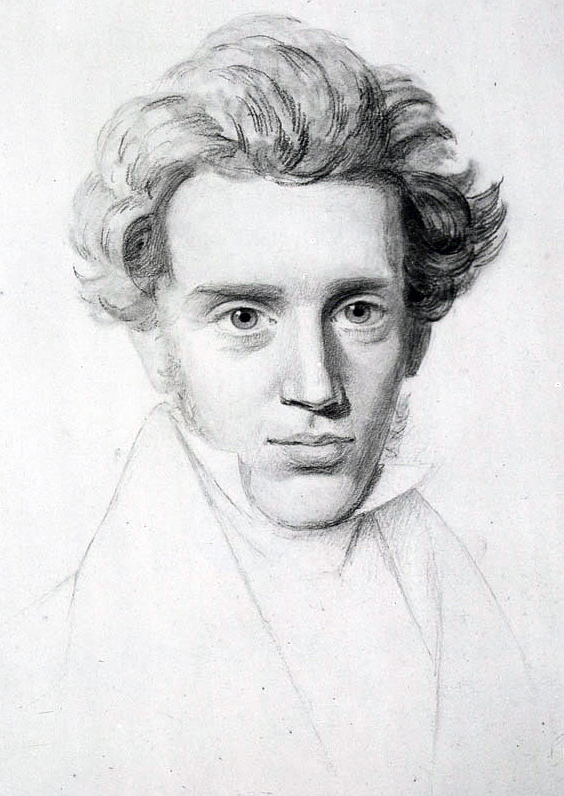 Søren Kierkegaard1813 – 1855
 David Hume1711 – 1776
 Martin Heidegger1889 – 1976
 John Dewey1859 – 1952
 Theodor Adorno1903 – 1969
 Johann Gottfried Herder1744 – 1803
 Walter Benjamin1892 – 1940
 Friedrich Wilhelm Joseph Schelling1775 – 1854
- Gilles Deleuze1925 – 1995
 Emil Cioran1911 – 1995
 Hans-Georg Gadamer1900 – 2002
 Nikolay Chernyshevsky1828 – 1889
 Georg Lukács1885 – 1971
 Jean-François Lyotard1924 – 1998
 Ernst Cassirer1874 – 1945
 Maurice Merleau-Ponty1908 – 1961
 Roger Scruton1944 – 2020
 Johann Friedrich Herbart1776 – 1841
- Alexander Gottlieb Baumgarten1714 – 1762
 Giorgio Agambenborn 1942
 Maurice Blanchot1907 – 2003
 Johann Christoph Gottsched1700 – 1766
 Johann Georg Hamann1730 – 1788
 Thomas Reid1710 – 1796
 Eduard von Hartmann1842 – 1906
 Hermann Lotze1817 – 1881
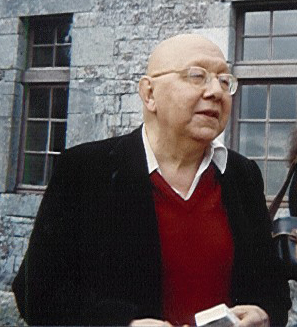 Cornelius Castoriadis1922 – 1997
 Michel Onfrayborn 1959
- Philippa Foot1920 – 2010
 Jean-Marie Guyau1854 – 1888
 R. G. Collingwood1889 – 1943
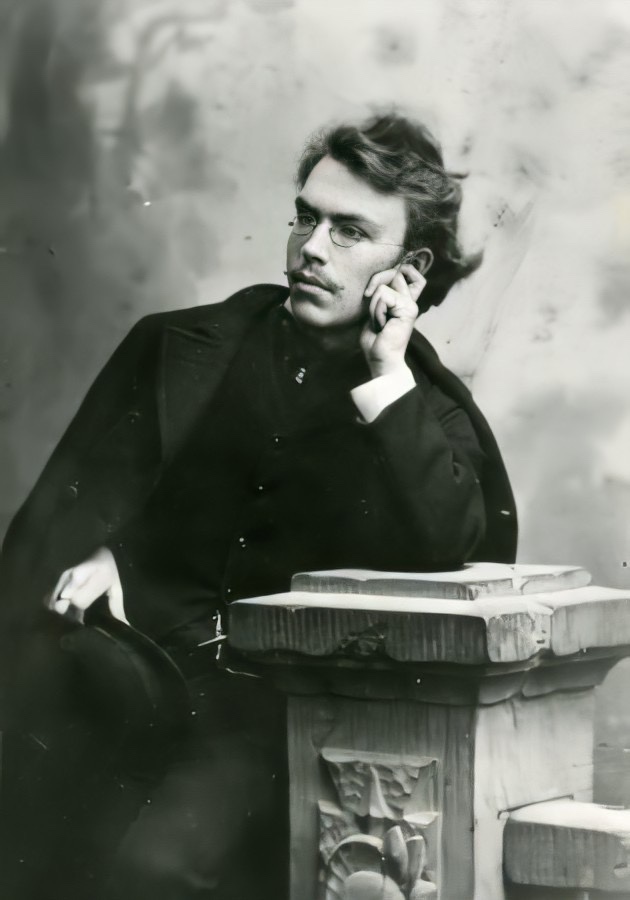 Philipp Mainländer1841 – 1876
 Jacques Rancièreborn 1940
 Nicolás Gómez Dávila1913 – 1994
- Susanne Langer1895 – 1985
 Nishida Kitarō1870 – 1945
- Nelson Goodman1906 – 1998
- Paul Virilio1932 – 2018
 Jan Patočka1907 – 1977
 Roman Ingarden1893 – 1970
 Samuel Alexander1859 – 1938
 Arthur Coleman Danto1924 – 2013
 Sarah Kofman1934 – 1994
 Ludwig Klages1872 – 1956
 Dietrich von Hildebrand1889 – 1977
 Theodor Lipps1851 – 1914
 Bernard Bosanquet1848 – 1923
- Clarence Irving Lewis1883 – 1964
 Tetsuro Watsuji1889 – 1960
- Charles L. Stevenson1908 – 1979
- Immanuel Kant1724 – 1804
You might also explore
 Metaphysics★The study of the most general features of reality: being, existence, time, causation, identity and possibility.Epistemology★The theory of knowledge: what knowledge is, how we get it, and whether we can have any at all.Ethics★How should we live and what should we do? Ethics studies right and wrong, good and bad, virtue and vice.
 Political philosophyJustice, the state, power, rights, liberty and equality: how should we live together?
 Philosophy of languageMeaning, reference, truth and the use of language.Philosophy of mindWhat is the mind, and how does it relate to the body and brain?