Philosophy of mind
What is the mind, and how does it relate to the body and brain?
Key ideas
Philosophy of mind is a branch of philosophy that deals with the nature of the mind and its relation to the body and the external world.
The mind–body problem is a paradigmatic issue in philosophy of mind, although a number of other issues are addressed; these include the hard problem of consciousness and the nature of particular mental states. Aspects of the mind that are studied include mental events, mental functions, mental properties, consciousness and its neural correlates, the ontology of the mind, the nature of cognition and of thought, and the relationship of the mind to the body.
Dualism and monism are the two central schools of thought on the mind–body problem, although nuanced views have arisen that do not fit either category neatly, with the current emergence of trialism, as a potential school of thought.
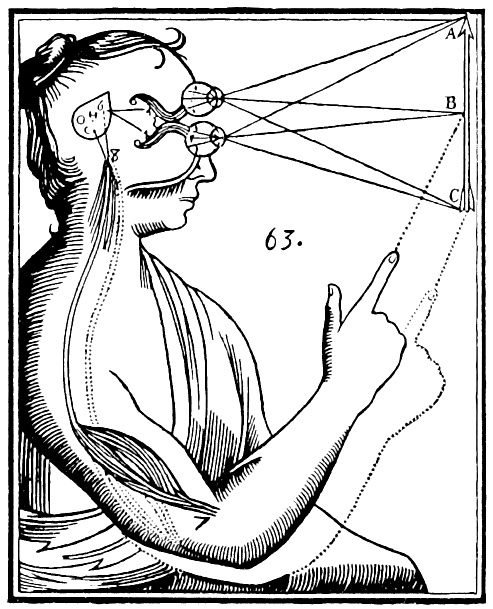
Dualism finds its entry into Western philosophy thanks to René Descartes in the 17th century. Substance dualists like Descartes argue that the mind is an independently existing substance, whereas property dualists maintain that the mind is a group of independent properties that emerge from and cannot be reduced to the brain, but that it is not a distinct substance.
Monism is the position that mind and body are ontologically indiscernible entities, not dependent substances. This view was espoused by the 17th-century rationalist Baruch Spinoza. Physicalists argue that only entities postulated by physical theory exist, and that mental processes will eventually be explained in terms of these entities as physical theory continues to evolve. Physicalists maintain various positions on the prospects of reducing mental properties to physical properties (many of whom adopt compatible forms of property dualism), and the ontological status of such mental properties remains unclear. Idealists maintain that the mind is all that exists and that the external world is either mental itself, or an illusion created by the mind. Neutral monists such as Ernst Mach and William James argue that events in the world can be thought of as either mental (psychological) or physical depending on the network of relationships into which they enter, and dual-aspect monists such as Spinoza adhere to the position that there is some other, neutral substance, and that both matter and mind are properties of this unknown substance. The most common monisms in the 20th and 21st centuries have all been variations of physicalism; these positions include behaviorism, type physicalism, anomalous monism and functionalism.
Trialism was introduced in philosophy by John Cottingham in the 20th century, as a reinterpretation of René Descartes dualism by adding a third substance sensation, which is the union of mind and body in what he called Cartesian trialism.
Most modern philosophers of mind adopt either a reductive physicalist or non-reductive physicalist position, maintaining in their different ways that the mind is not something separate from the body. These approaches have been particularly influential in the sciences, especially in the fields of sociobiology, computer science (specifically, artificial intelligence), evolutionary psychology, and the various neurosciences. Reductive physicalists assert that all mental states and properties will eventually be explained by scientific accounts of physiological processes and states. Non-reductive physicalists argue that although the mind is not a separate substance, mental properties supervene on physical properties, or that the predicates and vocabulary used in mental descriptions and explanations are indispensable, and cannot be reduced to the language and lower-level explanations of physical science. Continued neuroscientific progress has helped to clarify some of these issues; however, they are far from being resolved. Modern philosophers of mind continue to ask how the subjective qualities and the intentionality of mental states and properties can be explained in naturalistic terms.
Mind–body problem
The mind–body problem concerns the explanation of the relationship that exists between minds, or mental processes, and bodily states or processes. The main aim of philosophers working in this area is to determine the nature of the mind and mental states/processes, and how—or even if—minds are affected by and can affect the body.
Perceptual experiences depend on stimuli that arrive at our various sensory organs from the external world, and these stimuli cause changes in our mental states, ultimately causing us to feel a sensation, which may be pleasant or unpleasant. The subjective features of these sensations are often referred to as qualia, the “what it is like” aspect of conscious experience. For example, someone's desire for a slice of pizza will tend to cause that person to move his or her body in a specific manner and direction to obtain what he or she wants. The question, then, is how it can be possible for conscious experiences to arise out of a lump of gray matter endowed with nothing but electrochemical properties.
A related problem is how someone's propositional attitudes (e.g. beliefs and desires) cause that individual's neurons to fire and muscles to contract. These comprise some of the puzzles that have confronted epistemologists and philosophers of mind from the time of René Descartes.
Dualist solutions to the mind–body problem
Dualism is a set of views about the relationship between mind and matter (or body). It begins with the claim that mental phenomena are, in some respects, non-physical.
A form of property dualism may be found in the ancient Indian philosophical schools of Samkhya and Yoga (ca. 6th c. BCE), as mind and body (Indriya) are different functions of prakriti. Wrongly conflating purusha ("spirit", or better, pure consciousness) with mind or manas (a development of non-conscious prakriti) while correctly distinguishing purusha and prakriti (two eternally-different ontological entities) leads to the erroneous conclusion that Samkhya supports substance dualism. Yet both mind and body are equally non-conscious (jaDaa) in Samkhya and, while they are different developments of prakriti, they are both made up of gunas.
In Western philosophy, the earliest discussions of dualist ideas are in the writings of Plato, who suggested that humans' intelligence (a faculty of the mind or soul) could not be identified with, or explained in terms of, their physical body. However, the best-known version of dualism is due to René Descartes (1641), and holds that the mind is a non-extended, non-physical substance, a "res cogitans". Descartes was the first to clearly identify the mind with consciousness and self-awareness, and to distinguish this from the brain, which was the seat of intelligence. He was therefore the first to formulate the mind–body problem in the form in which it still exists today.
Arguments for dualism
The most frequently used argument in favor of dualism appeals to the common-sense intuition that conscious experience is distinct from inanimate matter. If asked what the mind is, the average person would usually respond by identifying it with their self, their personality, their soul, or another related entity. They would almost certainly deny that the mind simply is the brain, or vice versa, finding the idea that there is just one ontological entity at play to be too mechanistic or unintelligible. Modern philosophers of mind think that these intuitions are misleading, and that critical faculties, along with empirical evidence from the sciences, should be used to examine these assumptions and determine whether there is any real basis to them.
According to philosophers like Thomas Nagel and Frank Jackson, the mental and the physical seem to have quite different, and perhaps irreconcilable, properties. Mental events have a subjective quality, whereas physical events do not. So, for example, one can reasonably ask what a burnt finger feels like, or what a blue sky looks like, or what nice music sounds like to a person. But it is meaningless, or at least odd, to ask what a surge in the uptake of glutamate in the dorsolateral portion of the prefrontal cortex feels like.
A related thought experiment is the Inverted Spectrum Hypothesis (ISH). Which explores the idea of people experiencing colors differently. The ISH suggests that people could have an inverted view of colors. For instance, what one person sees as red, another person might see the opposite on the color wheel, which would be green. However, both people have learned to assign the color that they experience differently to the one term.The idea can be traced back to John Locke, found in his book Essay Concerning Human Understanding published in 1690.
Philosophers of mind call the subjective aspects of mental events "qualia" or "raw feels". There are qualia involved in these mental events that seem particularly difficult to reduce to anything physical. David Chalmers explains this argument by stating that we could conceivably know all the objective information about something, such as the brain states and wavelengths of light involved with seeing the color red, but still not know something fundamental about the situation – what it is like to see the color red. The phrase “what it is like” is used in philosophy of mind to characterize conscious experience; it originated with Timothy Sprigge and was later popularized by Thomas Nagel.
If consciousness (the mind) can exist independently of physical reality (the brain), one must explain how physical memories are created concerning consciousness. Dualism must therefore explain how consciousness affects physical reality. One possible explanation is that of a miracle, proposed by Arnold Geulincx and Nicolas Malebranche, where all mind–body interactions require the direct intervention of God.
Another argument that has been proposed by C. S. Lewis is the Argument from Reason: if, as monism implies, all of our thoughts are the effects of physical causes, then we have no reason for assuming that they are also the consequent of a reasonable ground. Knowledge, however, is apprehended by reasoning from ground to consequent. Therefore, if monism is correct, there would be no way of knowing this—or anything else—we could not even suppose it, except by a fluke.
The zombie argument is based on a thought experiment proposed by Todd Moody, and developed by David Chalmers in his book The Conscious Mind. The basic idea is that one can imagine one's body, and therefore conceive the existence of one's body, without any conscious states being associated with this body. Chalmers' argument is that it seems possible that such a being could exist because all that is needed is that all and only the things that the physical sciences describe about a zombie must be true of it. Since none of the concepts involved in these sciences make reference to consciousness or other mental phenomena, and any physical entity can be by definition described scientifically via physics, the move from conceivability to possibility is not such a large one. Others such as Dennett have argued that the notion of a philosophical zombie is an incoherent, or unlikely, concept. It has been argued under physicalism that one must either believe that anyone including oneself might be a zombie, or that no one can be a zombie—following from the assertion that one's own conviction about being (or not being) a zombie is a product of the physical world and is therefore no different from anyone else's. This argument has been expressed by Dennett who argues that "Zombies think they are conscious, think they have qualia, think they suffer pains—they are just 'wrong' (according to this lamentable tradition) in ways that neither they nor we could ever discover!"
See also the problem of other minds.
Avshalom Elitzur has described himself as a "reluctant dualist". One argument Elitzur makes in favor of dualism is an argument from bafflement. According to Elitzur, a conscious being can conceive of a P-zombie version of his/herself. However, a P-zombie cannot conceive of a version of itself that lacks corresponding qualia.
Christian List argues that the existence of first-person perspectives is evidence against physicalist views of consciousness. According to List, first-personal phenomenal facts cannot supervene on third-person physical facts. However, List argues that this also refutes versions of dualism that have purely third-personal metaphysics. List has proposed a model he calls the "many-worlds theory of consciousness" in order to reconcile the subjective nature of consciousness without lapsing into solipsism.
Interactionist dualism
Interactionist dualism, or simply interactionism, is the particular form of dualism first espoused by Descartes in the Meditations. In the 20th century, its major defenders have been Karl Popper and John Carew Eccles. It is the view that mental states, such as beliefs and desires, causally interact with physical states.
Descartes's argument for this position can be summarized as follows: Seth has a clear and distinct idea of his mind as a thinking thing that has no spatial extension (i.e., it cannot be measured in terms of length, weight, height, and so on). He also has a clear and distinct idea of his body as something that is spatially extended, subject to quantification and not able to think. It follows that mind and body are not identical because they have radically different properties.
Seth's mental states (desires, beliefs, etc.) have causal effects on his body and vice versa: A child touches a hot stove (physical event) which causes pain (mental event) and makes her yell (physical event), this in turn provokes a sense of fear and protectiveness in the caregiver (mental event), and so on.
Descartes' argument depends on the premise that what Seth believes to be "clear and distinct" ideas in his mind are necessarily true. Many contemporary philosophers doubt this. For example, Joseph Agassi suggests that several scientific discoveries made since the early 20th century have undermined the idea of privileged access to one's own ideas. Freud claimed that a psychologically-trained observer can understand a person's unconscious motivations better than the person himself does. Duhem has shown that a philosopher of science can know a person's methods of discovery better than that person herself does, while Malinowski has shown that an anthropologist can know a person's customs and habits better than the person whose customs and habits they are. He also asserts that modern psychological experiments that cause people to see things that are not there provide grounds for rejecting Descartes' argument, because scientists can describe a person's perceptions better than the person themself can.
= Psychophysical parallelism =
Psychophysical parallelism, or simply parallelism, is the view that mind and body, while having distinct ontological statuses, do not causally influence one another. Instead, they run along parallel paths (mind events causally interact with mind events and brain events causally interact with brain events) and only seem to influence each other. This view was most prominently defended by Gottfried Leibniz. Although Leibniz was an ontological monist who believed that only one type of substance, the monad, exists in the universe, and that everything is reducible to it, he nonetheless maintained that there was an important distinction between "the mental" and "the physical" in terms of causation. He held that God had arranged things in advance so that minds and bodies would be in harmony with each other. This is known as the doctrine of pre-established harmony.
= Occasionalism =
Occasionalism is the view espoused by Nicholas Malebranche as well as Islamic philosophers such as Abu Hamid Muhammad ibn Muhammad al-Ghazali that asserts all supposedly causal relations between physical events, or between physical and mental events, are not really causal at all. While body and mind are different substances, causes (whether mental or physical) are related to their effects by an act of God's intervention on each specific occasion.
= Property dualism =
Property dualism is the view that the world is constituted of one kind of substance – the physical kind – and there exist two distinct kinds of properties: physical properties and mental properties. It is the view that non-physical, mental properties (such as beliefs, desires and emotions) inhere in some physical bodies (at least, brains). Sub-varieties of property dualism include:
Emergent materialism asserts that when matter is organized in the appropriate way (i.e., in the way that living human bodies are organized), mental properties emerge in a way not fully accountable for by physical laws. These emergent properties have an independent ontological status and cannot be reduced to, or explained in terms of, the physical substrate from which they emerge. They are dependent on the physical properties from which they emerge, but opinions vary as to the coherence of top–down causation, that is, the causal effectiveness of such properties. A form of emergent materialism has been espoused by David Chalmers and the concept has undergone something of a renaissance in recent years, but it was already suggested in the 19th century by William James.
Epiphenomenalism is a doctrine first formulated by Thomas Henry Huxley. It consists of the view that mental phenomena are causally ineffectual, where one or more mental states do not have any influence on physical states or mental phenomena are the effects, but not the causes, of physical phenomena. Physical events can cause other physical and mental events, but mental events cannot cause anything since they are just causally inert by-products (i.e., epiphenomena) of the physical world. This view has been defended by Frank Jackson.
Non-reductive physicalism is the view that mental properties form a separate ontological class to physical properties: mental states (such as qualia) are not reducible to physical states. The ontological stance towards qualia in the case of non-reductive physicalism does not imply that qualia are causally inert; this is what distinguishes it from epiphenomenalism.
Panpsychism is the view that all matter has a mental aspect, or, alternatively, all objects have a unified center of experience or point of view. Superficially, it seems to be a form of property dualism, since it regards everything as having both mental and physical properties. However, some panpsychists say that mechanical behaviour is derived from the primitive mentality of atoms and molecules—as are sophisticated mentality and organic behaviour, the difference being attributed to the presence or absence of complex structure in a compound object. So long as the reduction of non-mental properties to mental ones is in place, panpsychism is not a (strong) form of property dualism; otherwise it is.
= Dual aspect theory =
Dual aspect theory or dual-aspect monism is the view that the mental and the physical are two aspects of, or perspectives on, the same substance. (Thus it is a mixed position, which is monistic in some respects). In modern philosophical writings, the theory's relationship to neutral monism has become somewhat ill-defined, but one proffered distinction says that whereas neutral monism allows the context of a given group of neutral elements and the relationships into which they enter to determine whether the group can be thought of as mental, physical, both, or neither, dual-aspect theory suggests that the mental and the physical are manifestations (or aspects) of some underlying substance, entity or process that is itself neither mental nor physical as normally understood. Various formulations of dual-aspect monism also require the mental and the physical to be complementary, mutually irreducible and perhaps inseparable (though distinct).
Adapted from the Wikipedia article Philosophy of mind, available under CC BY-SA 4.0.
Connections
Proposed by
1Includes
6


Discussed in
4
Key contributors
38 René Descartes1596 – 1650
 Ludwig Wittgenstein1889 – 1951
 David Hume1711 – 1776
 Karl Popper1902 – 1994
 William James1842 – 1910
 Johann Gottlieb Fichte1762 – 1814
Show 32 moreShow less
 Johann Gottfried Herder1744 – 1803
 Daniel Dennett1942 – 2024
 W. V. O. Quine1908 – 2000
 Maurice Merleau-Ponty1908 – 1961
 Étienne Bonnot de Condillac1714 – 1780
 Paul Feyerabend1924 – 1994
 Richard Rorty1931 – 2007
 John Searle1932 – 2025
 Hilary Putnam1926 – 2016
 Saul Kripke1940 – 2022
- John Langshaw Austin1911 – 1960
- Gilbert Ryle1900 – 1976
 Thomas Nagelborn 1937
- G. E. M. Anscombe1919 – 2001
 Johann Georg Hamann1730 – 1788
 Pietro Pomponazzi1462 – 1525
 Antonio Rosmini1797 – 1855
 David Chalmersborn 1966
 Jerry Fodor1935 – 2017
- Donald Davidson1917 – 2003
- Susanne Langer1895 – 1985
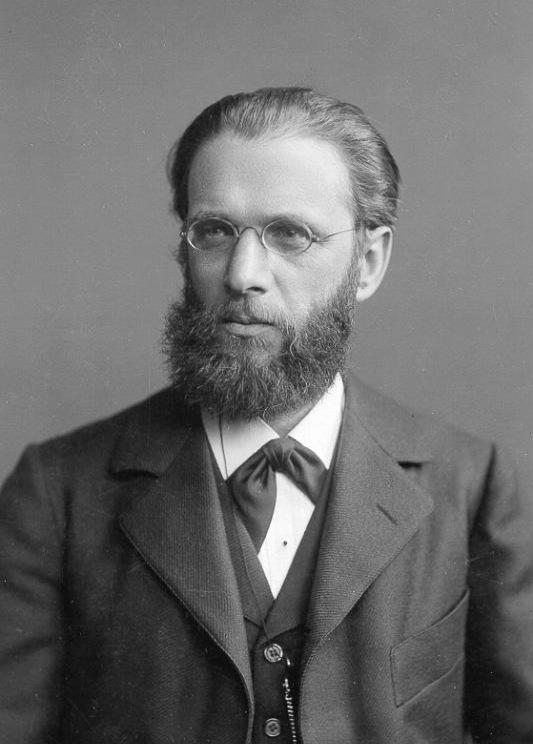 Carl Stumpf1848 – 1936
- P. F. Strawson1919 – 2006
 Derek Parfit1942 – 2017
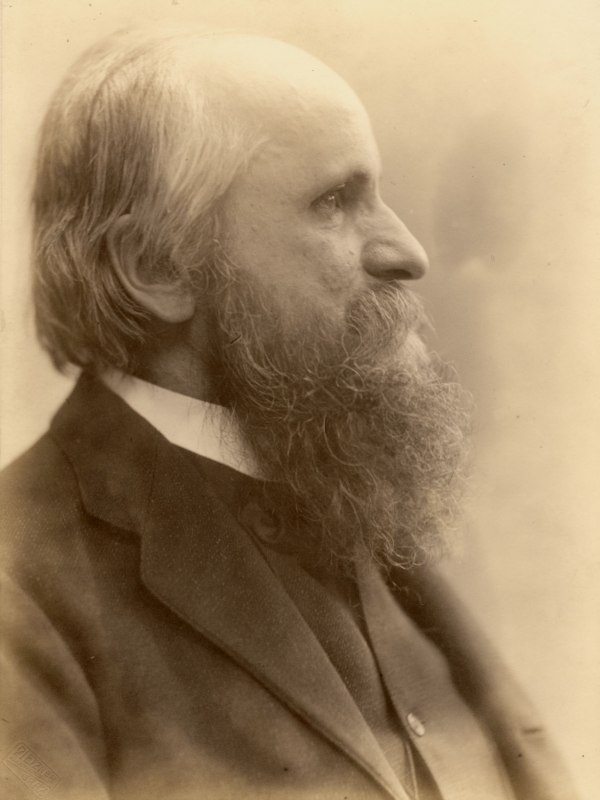 Alexius Meinong1853 – 1920
 Anton Wilhelm Amo1703 – 1759
 Patricia Churchlandborn 1943
 Ludwig Klages1872 – 1956
 Wilfrid Sellars1912 – 1989
 C. D. Broad1887 – 1971
 Frank Jacksonborn 1943
 D. C. Williams1899 – 1983
You might also explore
 Philosophy of languageMeaning, reference, truth and the use of language.
 Metaphysics★The study of the most general features of reality: being, existence, time, causation, identity and possibility.
 Political philosophyJustice, the state, power, rights, liberty and equality: how should we live together?Ethics★How should we live and what should we do? Ethics studies right and wrong, good and bad, virtue and vice.
 Logic★The study of correct reasoning: what follows from what, and why.