Gilles Deleuze
Gilles Louis René Deleuze was a French philosopher who, from the early 1950s until his death, wrote on a variety of subjects including ontology, social critique, film theory, and fine art. His most popular works were the two volumes of Capitalism and Schizophrenia: Anti-Oedipus and A Thousand Plateaus, both co-written
Gilles Louis René Deleuze (18 January 1925 – 4 November 1995) was a French philosopher who, from the early 1950s until his death, wrote on a variety of subjects including ontology, social critique, film theory, and fine art. His most popular works were the two volumes of Capitalism and Schizophrenia: Anti-Oedipus (1972) and A Thousand Plateaus (1980), both co-written with long-term collaborator Félix Guattari. His metaphysical treatise Difference and Repetition (1968) is considered to be his magnum opus.
A significant part of Deleuze's oeuvre is devoted to the radical reinterpretation of important figures in the history of philosophy including the Stoics, Leibniz, Hume, Kant, Nietzsche, Spinoza, and Bergson. A. W. Moore, citing Bernard Williams's criteria for a great thinker, ranks Deleuze among the "greatest philosophers". Although he once characterized himself as a "pure metaphysician", his concepts have influenced many fields and been applied across art, literary theory, musicology and sociology amongst others and is frequently associated with post-structuralism and postmodernism.
Early life and education
Gilles Deleuze was born into a middle-class family in Paris and lived there for most of his life. His mother was Odette Camaüer and his father, Louis, was an engineer. His initial schooling was undertaken during World War II, during which time he attended the Lycée Carnot. He also spent a year in khâgne at the Lycée Henri IV. During the Nazi occupation of France, Deleuze's brother, three years his senior, Georges, was arrested for his participation in the French Resistance, and died while in transit to a concentration camp. In 1944, Deleuze went to study at the Sorbonne. His teachers there included several noted specialists in the history of philosophy, such as Georges Canguilhem, Jean Hyppolite, Ferdinand Alquié, and Maurice de Gandillac. Deleuze's lifelong interest in the canonical figures of modern philosophy owed much to these teachers.
Career
Deleuze passed the agrégation in philosophy in 1948, and taught at various lycées (Amiens, Orléans, Louis le Grand) until 1957, when he took up a position at the University of Paris. In 1953, he published his first monograph, Empiricism and Subjectivity, on David Hume. This monograph was based on his 1947 diplôme d'études supérieures (DES) thesis, roughly equivalent to an M.A. thesis, which was conducted under the direction of Jean Hyppolite and Georges Canguilhem. From 1960 to 1964, he held a research fellow position at the Centre National de Recherche Scientifique. During this time he published the seminal Nietzsche and Philosophy (1962) and befriended Michel Foucault. From 1964 to 1969, he was a professor at the University of Lyon. In 1968, Deleuze defended his two DrE dissertations amid the ongoing May 68 demonstrations; he later published his two dissertations under the titles Difference and Repetition (supervised by Gandillac) and Expressionism in Philosophy: Spinoza (supervised by Alquié).
In 1969, he was appointed to the University of Paris VIII, an experimental school organized to implement educational reform. This new university drew a number of well-known academics, including Foucault (who suggested Deleuze's hiring) and the psychoanalyst Félix Guattari. Deleuze taught at Paris VIII until his retirement in 1987.
Death
Deleuze, who had suffered from respiratory ailments from a young age, developed tuberculosis in 1968 and underwent lung removal (he was an avid smoker). He suffered increasingly severe respiratory symptoms for the rest of his life. In the last years of his life, simple tasks such as writing required laborious effort. Overwhelmed by his respiratory problems, he died by suicide on 4 November 1995, throwing himself from the window of his apartment.
Before his death, Deleuze had announced his intention to write a book entitled La Grandeur de Marx (The Greatness of Marx), and left behind two chapters of an unfinished project entitled Ensembles and Multiplicities (these chapters have been published as the essays "Immanence: A Life" and "The Actual and the Virtual"). He is buried in the cemetery of the village of Saint-Léonard-de-Noblat.
Philosophy
Deleuze's works fall into two groups: on the one hand, monographs interpreting the work of other philosophers (Baruch Spinoza, Gottfried Wilhelm Leibniz, David Hume, Immanuel Kant, Friedrich Nietzsche, Henri Bergson, Michel Foucault) and artists (Marcel Proust, Franz Kafka, Francis Bacon); on the other, eclectic philosophical tomes organized by concept (e.g., difference, sense, event, economy, cinema, desire, philosophy). However, both of these aspects are seen by his critics and analysts as often overlapping, in particular, due to his prose and the unique mapping of his books that allow for multifaceted readings.
Metaphysics
Deleuze's main philosophical project in the works he wrote prior to his collaborations with Guattari can be summarized as an inversion of the traditional metaphysical relationship between identity and difference. Traditionally, difference is seen as derivative from identity: e.g., saying that "X is different from Y" entails some X and Y with at least relatively stable identities (as in Plato's forms). Deleuze, on the other hand, claims that all identities are effects of difference. Identities are neither logically nor metaphysically prior to difference, Deleuze argues, "given that there exist differences of nature between things of the same genus." That is, not only are no two things ever the same, the categories themselves, used to identify individuals in the first place, derive from differences. Apparent identities such as "X" are composed of endless series of differences, where X is the difference between x and x′, whereas x′ is the difference between..., and so forth. Difference, in other words, goes all the way down. To confront reality honestly, Deleuze argues, beings must be grasped exactly as they are, and concepts of identity (forms, categories, resemblances, unities of apperception, predicates, etc.) fail to attain what he calls "difference in itself." "If philosophy has a positive and direct relation to things, it is only insofar as philosophy claims to grasp the thing itself, according to what it is, in its difference from everything it is not, in other words, in its internal difference."
Like Kant, Deleuze considers traditional notions of space and time as unifying forms imposed by the subject. He, therefore, concludes that pure difference is non-spatiotemporal; it is an idea, what Deleuze calls "the virtual". (The coinage refers to Proust's definition of what is constant in both the past and the present: "real without being actual, ideal without being abstract.") While Deleuze's virtual ideas superficially resemble Plato's forms and Kant's ideas of pure reason, they are not originals or models, nor do they transcend possible experience; instead they are the conditions of actual experience, the internal difference in itself. "The concept they [the conditions] form is identical to its object." A Deleuzean idea or concept of difference is therefore not a wraith-like abstraction of an experienced thing, it is a real system of differential relations that creates actual spaces, times, and sensations.
Simultaneously, Deleuze claims that being is univocal, i.e., that all of its senses are affirmed in one voice. Deleuze borrows the doctrine of ontological univocity from the medieval philosopher John Duns Scotus. In medieval disputes over the nature of God, many eminent theologians and philosophers (such as Thomas Aquinas) held that when one says that "God is good", God's goodness is only analogous to human goodness. Scotus argued to the contrary that when one says that "God is good", the goodness in question is exactly the same sort of goodness that is meant when one says "Jane is good". That is, God only differs from humans in degree, and properties such as goodness, power, reason, and so forth are univocally applied, regardless of whether one is talking about God, a person, or a flea.
Deleuze adapts the doctrine of univocity to claim that being is, univocally, difference. "With univocity, however, it is not the differences which are and must be: it is being which is Difference, in the sense that it is said of difference. Moreover, it is not we who are univocal in a Being which is not; it is we and our individuality which remains equivocal in and for a univocal Being." Here Deleuze at once echoes and inverts Spinoza, who maintained that everything that exists is a modification of the one substance, God or Nature. For Deleuze, there is no one substance, only an always-differentiating process, an origami cosmos, always folding, unfolding, refolding. Deleuze summarizes this ontology in the paradoxical formula "pluralism = monism".
Difference and Repetition (1968) is Deleuze's most sustained and systematic attempt to work out the details of such a metaphysics, but his other works develop similar ideas. In Nietzsche and Philosophy (1962), for example, reality is a play of forces; in Anti-Oedipus (1972), a "body without organs"; in What is Philosophy? (1991), a "plane of immanence" or "chaosmos".
Epistemology
Deleuze's unusual metaphysics entails an equally atypical epistemology, or what he calls a transformation of "the image of thought". According to Deleuze, the traditional image of thought, found in philosophers such as Aristotle, René Descartes, and Edmund Husserl, misconceives thinking as a mostly unproblematic business. Truth may be hard to discover—it may require a life of pure theorizing, or rigorous computation, or systematic doubt—but thinking is able, at least in principle, to correctly grasp facts, forms, ideas, etc. It may be practically impossible to attain a God's-eye, neutral point of view, but that is the ideal to approximate: a disinterested pursuit that results in a determinate, fixed truth; an orderly extension of common sense. Deleuze rejects this view as papering over the metaphysical flux, instead claiming that genuine thinking is a violent confrontation with reality, an involuntary rupture of established categories. Truth changes thought; it alters what people think is possible. By setting aside the assumption that thinking has a natural ability to recognize the truth, Deleuze says, people attain a "thought without image", a thought always determined by problems rather than solving them. "All this, however, presupposes codes or axioms which do not result by chance, but which do not have an intrinsic rationality either. It's just like theology: everything about it is quite rational if you accept sin, the immaculate conception, and the incarnation. Reason is always a region carved out of the irrational—not sheltered from the irrational at all, but traversed by it and only defined by a particular kind of relationship among irrational factors. Underneath all reason lies delirium, and drift."
Deleuze at times refers to his philosophy as a transcendental empiricism (empirisme transcendantal), alluding to Kant. In Kant's transcendental idealism, experience only makes sense when organized by intuitions (namely, space and time) and concepts (such as causality). Assuming the content of these intuitions and concepts to be qualities of the world as it exists independently of human perceptual access, according to Kant, spawns seductive but senseless metaphysical beliefs (for example, extending the concept of causality beyond possible experience results in unverifiable speculation about a first cause). Deleuze inverts the Kantian arrangement: experience exceeds human concepts by presenting novelty, and this raw experience of difference actualizes an idea, unfettered by prior categories, forcing the invention of new ways of thinking.
The Logic of Sense, published in 1969, is one of Deleuze's most peculiar works in the field of epistemology. Michel Foucault, in his essay "Theatrum Philosophicum" about the book, attributed this to how he begins with his metaphysics but approaches it through language and truth; the book is focused on "the simple condition that instead of denouncing metaphysics as the neglect of being, we force it to speak of extrabeing". In it, he refers to epistemological paradoxes: in the first series, as he analyzes Lewis Carroll's Alice in Wonderland, he remarks that "the personal self requires God and the world in general. But when substantives and adjectives begin to dissolve, when the names of pause and rest are carried away by the verbs of pure becoming and slide into the language of events, all identity disappears from the self, the world, and God."
Deleuze's peculiar readings of the history of philosophy stem from this unusual epistemological perspective. To read a philosopher is no longer to aim at finding a single, correct interpretation, but is instead to present a philosopher's attempt to grapple with the problematic nature of reality. "Philosophers introduce new concepts, they explain them, but they don't tell us, not completely anyway, the problems to which those concepts are a response. [...] The history of philosophy, rather than repeating what a philosopher says, has to say what he must have taken for granted, what he didn't say but is nonetheless present in what he did say."
Likewise, rather than seeing philosophy as a timeless pursuit of truth, reason, or universals, Deleuze defines philosophy as the creation of concepts. For Deleuze, concepts are not identity conditions or propositions, but metaphysical constructions that define a range of thinking, such as Plato's ideas, Descartes's cogito, or Kant's doctrine of the faculties. A philosophical concept "posits itself and its object at the same time as it is created." In Deleuze's view, then, philosophy more closely resembles practical or artistic production than it does an adjunct to a definitive scientific description of a pre-existing world (as in the tradition of John Locke or Willard Van Orman Quine).
In his later work (from roughly 1981 onward), Deleuze sharply distinguishes art, philosophy, and science as three distinct disciplines, each relating to reality in different ways. While philosophy creates concepts, the arts create novel qualitative combinations of sensation and feeling (what Deleuze calls "percepts" and "affects"), and the sciences create quantitative theories based on fixed points of reference such as the speed of light or absolute zero (which Deleuze calls "functives"). According to Deleuze, none of these disciplines enjoy primacy over the others: they are different ways of organizing the metaphysical flux, "separate melodic lines in constant interplay with one another." For example, Deleuze does not treat cinema as an art representing an external reality, but as an ontological practice that creates different ways of organizing movement and time. Philosophy, science, and art are equally, and essentially, creative and practical. Hence, instead of asking traditional questions of identity such as "is it true?" or "what is it?", Deleuze proposes that inquiries should be functional or practical: "what does it do?" or "how does it work?"
Values
In ethics and politics Deleuze again echoes Spinoza, albeit in a sharply Nietzschean key. Following his rejection of any metaphysics based on identity, Deleuze criticizes the notion of 'individual' as arrested or halted from differentiation. Opposing the very origin of the word, that is in‑divisible, he argued for a rather processual view where, guided by the naturalistic ethics of Spinoza and Nietzsche, Deleuze instead seeks to understand individuals and their moralities as products of the organization of pre-individual desires and powers.
In the two volumes of Capitalism and Schizophrenia, Anti-Oedipus (1972) and A Thousand Plateaus (1980), Deleuze and Guattari describe history as a congealing and regimentation of "desiring-production" (a concept combining features of Freudian drives and Marxist labor) into the modern individual (typically neurotic and repressed), the nation-state (a society of continuous control), and capitalism (an anarchy domesticated into infantilizing commodification). Deleuze, following Karl Marx, welcomes capitalism's destruction of traditional social hierarchies as liberating but inveighs against its homogenization of all values to the aims of the market.
The first part of Capitalism and Schizophrenia undertakes a universal history and posits the existence of a separate socius (the social body that takes credit for production) for each mode of production: the earth for the tribe, the body of the despot for the empire, and capital for capitalism."
In his 1990 essay "Postscript on the Societies of Control" ("Post-scriptum sur les sociétés de contrôle"), Deleuze builds on Foucault's notion of the society of discipline to argue that society is undergoing a shift in structure and control. Where societies of discipline were characterized by discrete physical enclosures (such as schools, factories, prisons, office buildings, etc.), institutions and technologies introduced since World War II have dissolved the boundaries between these enclosures. As a result, social coercion and discipline have moved into the lives of individuals considered as "masses, samples, data, markets, or 'banks'." The mechanisms of modern societies of control are described as continuous, following and tracking individuals throughout their existence via transaction records, mobile location tracking, and other personally identifiable information.
But how does Deleuze square his pessimistic diagnoses with his ethical naturalism? Deleuze claims that standards of value are internal or immanent: to live well is to fully express one's power, to go to the limits of one's potential, rather than to judge what exists by non-empirical, transcendent standards. Modern society still suppresses difference and alienates people from what they can do. To affirm reality, which is a flux of change and difference, established identities must be overturned and so become all that they can become—though exactly what cannot be known in advance. The pinnacle of Deleuzean practice, then, is creativity. "Herein, perhaps, lies the secret: to bring into existence and not to judge. If it is so disgusting to judge, it is not because everything is of equal value, but on the contrary, because what has value can be made or distinguished only by defying judgment. What expert judgment, in art, could ever bear on the work to come?"
Deleuze's interpretations
Deleuze's studies of individual philosophers and artists are purposely heterodox. Deleuze once famously described his method of interpreting philosophers as "buggery (enculage)", as sneaking behind an author and producing an offspring which is recognizably his, yet also monstrous and different.
The various monographs thus are not attempts to present what Nietzsche or Spinoza strictly intended, but re-stagings of their ideas in different and unexpected ways. Deleuze's peculiar readings aim to enact the creativity he believes is the acme of philosophical practice. A parallel in painting Deleuze points to is Francis Bacon's Study after Velázquez—it is quite beside the point to say that Bacon "gets Velasquez wrong". Similar considerations apply, in Deleuze's view, to his own uses of mathematical and scientific terms, pace critics such as Alan Sokal: "I'm not saying that Resnais and Prigogine, or Godard and Thom, are doing the same thing. I'm pointing out, rather, that there are remarkable similarities between scientific creators of functions and cinematic creators of images. And the same goes for philosophical concepts, since there are distinct concepts of these spaces."
Similarities with Heidegger
Adapted from the Wikipedia article Gilles Deleuze, available under CC BY-SA 4.0.
Connections
Belongs to
4
Influenced by
18 Karl Marx1818 – 1883
 Kantianism1781 – present
 Friedrich Nietzsche1844 – 1900
 Gottfried Wilhelm Leibniz1646 – 1716
 Jean-Paul Sartre1905 – 1980
 Baruch Spinoza1632 – 1677
Show 12 moreShow less
 David Hume1711 – 1776
 Henri Bergson1859 – 1941
 Michel Foucault1926 – 1984
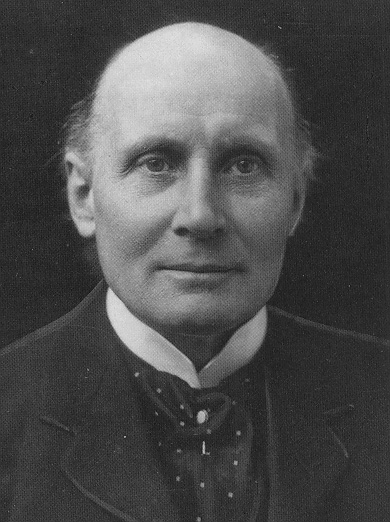 Alfred North Whitehead1861 – 1947
 Jacques Lacan1901 – 1981
 Charles Sanders Peirce1839 – 1914
 John Duns Scotus1266 – 1308
- Louis Althusser1918 – 1990
 Michel Serres1930 – 2019
 Jean Hyppolite1907 – 1968
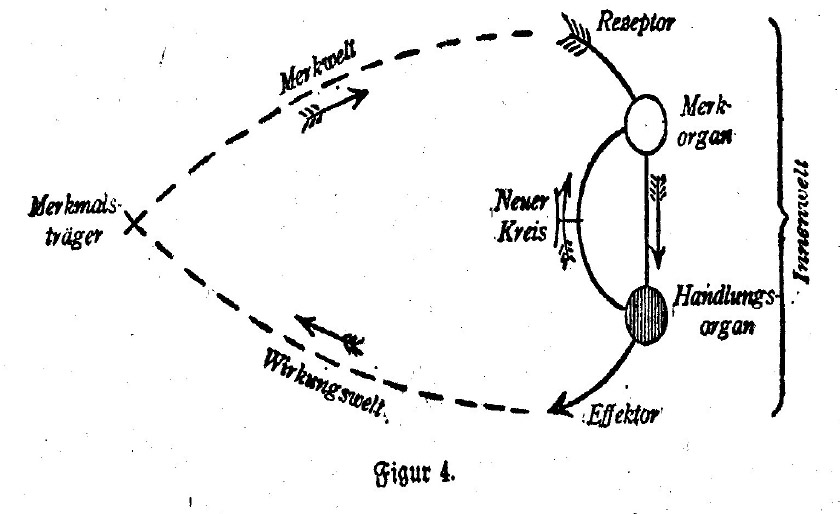 Jakob von Uexküll1864 – 1944
 Georges Canguilhem1904 – 1995
Influenced
5


Ideas & arguments
13

You might also explore
 G. W. F. Hegel★Modern European1770 – 1831Systematic idealist for whom history is the dialectical self-realisation of Spirit and freedom.Michel Foucault★Modern European1926 – 1984Historian of power and knowledge — prisons, madness, sexuality and the disciplined self.
 Martin Heidegger★Modern European1889 – 1976Asked the question of the meaning of Being; analysed human existence (Dasein) as being-in-the-world and…Friedrich Nietzsche★Modern European1844 – 1900Diagnostician of nihilism who proclaimed the death of God and called for a revaluation of all values.Baruch Spinoza★Jewish1632 – 1677Lens-grinder of Amsterdam who identified God with Nature and wrote an Ethics in geometrical order.
 Arthur Schopenhauer★Modern European1788 – 1860Pessimist who saw the world as blind Will and found relief in art, compassion and Indian philosophy.