Existentialism
Existence precedes essence: we are thrown into a world without given meaning and must create ourselves through free choices.
Key ideas
Existentialism is less a doctrine than a mood and a method. It starts not from abstract questions about knowledge or substance but from the concrete situation of an individual who must live, choose and die.
Kierkegaard insisted that truth worth having must be lived "subjectively"; Nietzsche announced the death of God and asked how we could create values without him. In 20th-century France Jean-Paul Sartre gave the movement its slogan — existence precedes essence: there is no human nature that determines what we are; we make ourselves through our choices, and we are "condemned to be free". Simone de Beauvoir applied the idea to gender ("one is not born, but becomes, a woman"), while Albert Camus explored the absurd clash between our demand for meaning and a silent universe.
Existentialism shaped literature, theology, psychotherapy and the counter-culture, and its questions — how to live authentically, how to face death and freedom — remain urgent.
Existentialism is a family of philosophical views and inquiry that explore the human individual's struggle to lead an authentic life despite the apparent absurdity or incomprehensibility of existence. In examining meaning, purpose, and value, existentialist thought often includes concepts such as existential crises, angst, courage, and the curse and blessing of human freedom.
Existentialism is associated with several 19th- and 20th-century European philosophers who shared an emphasis on the human subject, despite often profound differences in thought. Among the 19th-century figures now associated with existentialism are philosophers Søren Kierkegaard and Friedrich Nietzsche, as well as novelist Fyodor Dostoevsky, all of whom critiqued rationalism and concerned themselves with the problem of meaning. The word existentialism, however, was not coined until the mid 20th century, during which it became most associated with contemporaneous philosophers Jean-Paul Sartre, Martin Heidegger, Simone de Beauvoir, Karl Jaspers, Gabriel Marcel, Paul Tillich, and more controversially Albert Camus.
Many existentialists considered traditional systematic or academic philosophies, in style and content, to be too abstract and removed from concrete human experience. A primary virtue in existentialist thought is authenticity. Existentialism would influence many disciplines outside of philosophy, including theology, drama, art, literature, and psychology.
Existentialist philosophy encompasses a range of perspectives, but it shares certain underlying concepts. Among these, a central tenet of existentialism is that personal freedom, individual responsibility, and deliberate choice are essential to the pursuit of self-discovery and the determination of life's meaning.
Etymology
The term existentialism (French: L'existentialisme) was coined by the French Catholic philosopher Gabriel Marcel in the mid-1940s. When Marcel first applied the term to Jean-Paul Sartre, at a colloquium in 1945, Sartre rejected it. Sartre subsequently changed his mind and, on October 29, 1945, publicly adopted the existentialist label in a lecture to the Club Maintenant in Paris, published as L'existentialisme est un humanisme (Existentialism Is a Humanism), a short book that helped popularize existentialist thought. Marcel later came to reject the label himself in favour of Neo-Socratic, in honor of Kierkegaard's essay "On the Concept of Irony".
Some scholars argue that the term should be used to refer only to the cultural movement in Europe in the 1940s and 1950s associated with the works of the philosophers Sartre, Simone de Beauvoir, Maurice Merleau-Ponty, and Albert Camus. Others extend the term to Kierkegaard, and yet others extend it as far back as Socrates. However, it is often identified with the philosophical views of Sartre.
Definitional issues and background
The labels existentialism and existentialist are often seen as historical conveniences in as much as they were first applied to many philosophers long after they had died. While existentialism is generally considered to have originated with Kierkegaard, the first prominent existentialist philosopher to adopt the term as a self-description was Sartre. Sartre posits the idea that "what all existentialists have in common is the fundamental doctrine that existence precedes essence", as the philosopher Frederick Copleston explains. According to philosopher Steven Crowell, defining existentialism has been relatively difficult, and he argues that it is better understood as a general approach used to reject certain systematic philosophies rather than as a systematic philosophy itself. In a lecture delivered in 1945, Sartre described existentialism as "the attempt to draw all the consequences from a position of consistent atheism". For others, existentialism need not involve the rejection of God, but rather "examines mortal man's search for meaning in a meaningless universe", considering less "What is the good life?" (to feel, be, or do, good), instead asking "What is life good for?".
Although many outside Scandinavia consider the term existentialism to have originated from Kierkegaard, it is more likely that Kierkegaard adopted this term (or at least the term "existential" as a description of his philosophy) from the Norwegian poet and literary critic Johan Sebastian Cammermeyer Welhaven. This assertion comes from two sources:
The Norwegian philosopher Erik Lundestad refers to the Danish philosopher Fredrik Christian Sibbern. Sibbern is supposed to have had two conversations in 1841, the first with Welhaven and the second with Kierkegaard. It is in the first conversation that it is believed that Welhaven came up with "a word that he said covered a certain thinking, which had a close and positive attitude to life, a relationship he described as existential". This was then brought to Kierkegaard by Sibbern.
The second claim comes from the Norwegian historian Rune Slagstad, who claimed to prove that Kierkegaard himself said the term existential was borrowed from the poet. He strongly believes that it was Kierkegaard himself who said that "Hegelians do not study philosophy 'existentially;' to use a phrase by Welhaven from one time when I spoke with him about philosophy."
Existence precedes essence
Sartre argued that a central proposition of existentialism is that existence precedes essence, which is to say that individuals shape themselves by existing and cannot be perceived through preconceived and a priori categories, an "essence". The actual life of the individual is what constitutes what could be called their "true essence" instead of an arbitrarily attributed essence others use to define them. Human beings, through their own consciousness, create their own values and determine a meaning to their life. This view is in contradiction to Aristotle and Aquinas, who taught that essence precedes individual existence. Although it was Sartre who explicitly coined the phrase, similar notions can be found in the thought of existentialist philosophers such as Heidegger, and Kierkegaard:
The subjective thinker's form, the form of his communication, is his style. His form must be just as manifold as are the opposites that he holds together. The systematic eins, zwei, drei is an abstract form that also must inevitably run into trouble whenever it is to be applied to the concrete. To the same degree as the subjective thinker is concrete, to that same degree his form must also be concretely dialectical. But just as he himself is not a poet, not an ethicist, not a dialectician, so also his form is none of these directly. His form must first and last be related to existence, and in this regard he must have at his disposal the poetic, the ethical, the dialectical, the religious. Subordinate character, setting, etc., which belong to the well-balanced character of the esthetic production, are in themselves breadth; the subjective thinker has only one setting—existence—and has nothing to do with localities and such things. The setting is not the fairyland of the imagination, where poetry produces consummation, nor is the setting laid in England, and historical accuracy is not a concern. The setting is inwardness in existing as a human being; the concretion is the relation of the existence-categories to one another. Historical accuracy and historical actuality are breadth.
Some interpret the imperative to define oneself as meaning that anyone can wish to be anything. However, an existentialist philosopher would say such a wish constitutes an inauthentic existence – what Sartre would call "bad faith". Instead, the phrase should be taken to say that people are defined only insofar as they act and that they are responsible for their actions. Someone who acts cruelly towards other people is, by that act, defined as a cruel person. Such persons are themselves responsible for their new identity (cruel persons). This is opposed to their genes, or human nature, bearing the blame.
As Sartre said in his lecture Existentialism is a Humanism: "Man first of all exists, encounters himself, surges up in the world—and defines himself afterwards." The more positive, therapeutic aspect of this is also implied: a person can choose to act in a different way, and to be a good person instead of a cruel person.
Jonathan Webber interprets Sartre's usage of the term essence not in a modal fashion, i.e. as necessary features, but in a teleological fashion: "an essence is the relational property of having a set of parts ordered in such a way as to collectively perform some activity". For example, it belongs to the essence of a house to keep the bad weather out, which is why it has walls and a roof. Humans are different from houses because—unlike houses—they do not have an inbuilt purpose: they are free to choose their own purpose and thereby shape their essence; thus, their existence precedes their essence.
Sartre is committed to a radical conception of freedom: nothing fixes our purpose but we ourselves, our projects have no weight or inertia except for our endorsement of them. Simone de Beauvoir, on the other hand, holds that there are various factors, grouped together under the term sedimentation, that offer resistance to attempts to change our direction in life. Sedimentations are themselves products of past choices and can be changed by choosing differently in the present, but such changes happen slowly. They are a force of inertia that shapes the agent's evaluative outlook on the world until the transition is complete.
Adapted from the Wikipedia article Existentialism, available under CC BY-SA 4.0.
Connections
Founded by
1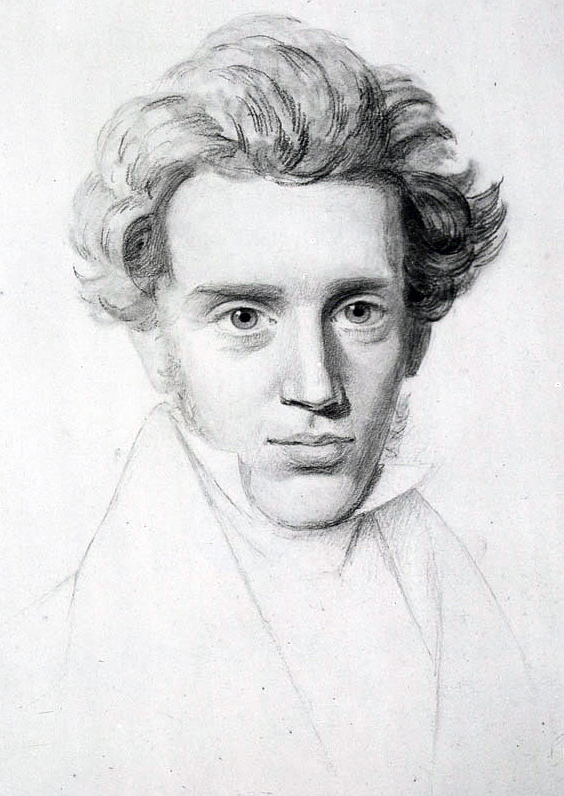
Members
4


Places
1
Related
1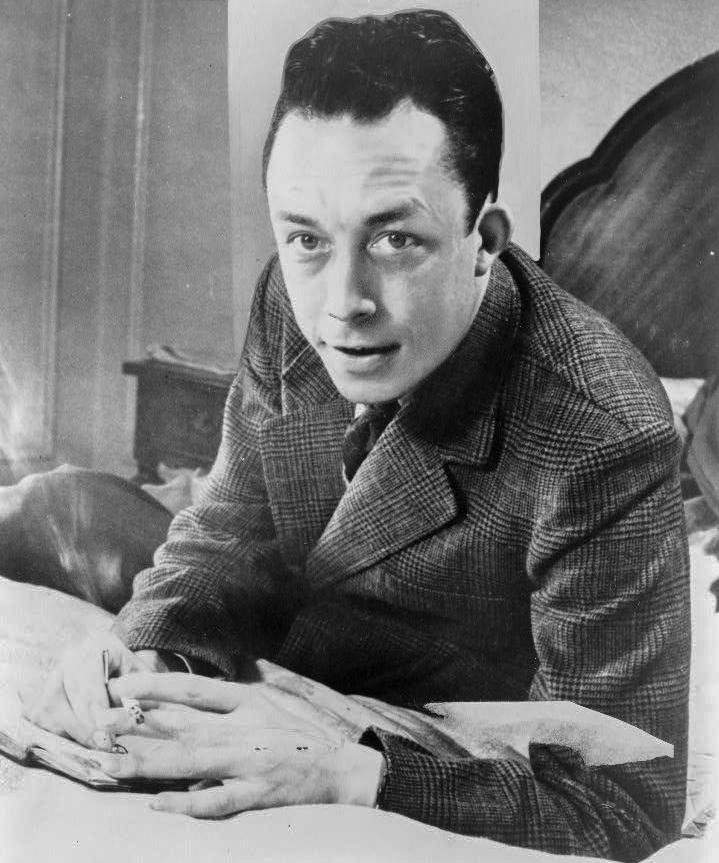
You might also explore
 PhenomenologyModern European1900 – presentDescribe experience exactly as it is lived, "back to the things themselves".
 Kantianism★Modern European1781 – presentKant's critical philosophy and its heirs: the mind structures experience; morality is grounded in rational autonomy.Marxism★Modern European1848 – presentHistory is driven by material and economic forces and class struggle; capitalism will give way to communism.UtilitarianismModern European1780 – presentThe right act is the one that produces the greatest happiness for the greatest number.
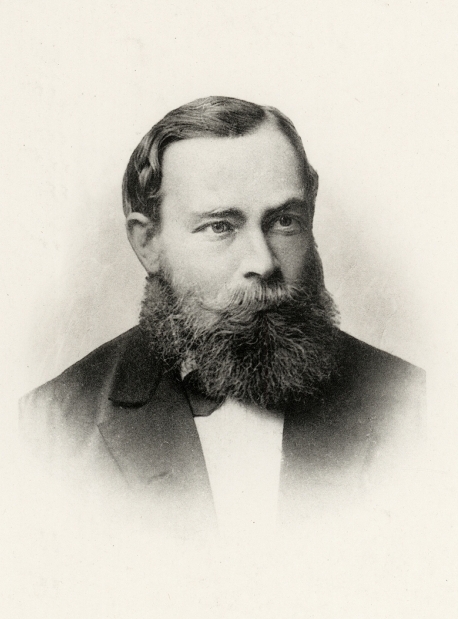 Analytic philosophyModern European1900 – presentPhilosophy as clarity through logical and linguistic analysis; dominant in the English-speaking world.