
Charles Sanders Peirce
Founder of pragmatism and semiotics; pioneer of abduction and modern logic.
Charles Sanders Peirce ( PURSE; September 10, 1839 – April 19, 1914) was an American scientist, mathematician, logician, and philosopher who is sometimes known as "the father of pragmatism". According to philosopher Paul Weiss, writing in 1934, Peirce was "the most original and versatile of America's philosophers and America's greatest logician". Bertrand Russell wrote in 1959, "he was one of the most original minds of the later nineteenth century and certainly the greatest American thinker ever".
Educated as a chemist and employed as a scientist for thirty years, Peirce made major contributions to logic, such as theories of relations and quantification. C. I. Lewis wrote, "The contributions of C. S. Peirce to symbolic logic are more numerous and varied than those of any other writer—at least in the nineteenth century." For Peirce, logic also encompassed much of what is now called epistemology and the philosophy of science. He saw logic as the formal branch of semiotics or study of signs, of which he is a founder, which foreshadowed the debate among logical positivists and proponents of philosophy of language that dominated 20th-century Western philosophy. Peirce's study of signs also included a tripartite theory of predication.
Additionally, he defined the concept of abductive reasoning, as well as rigorously formulating mathematical induction and deductive reasoning. He was one of the founders of statistics. As early as 1886, he saw that logical operations could be carried out by electrical switching circuits. The same idea was used decades later to produce digital computers.
In metaphysics, Peirce was an "objective idealist" in the tradition of German philosopher Immanuel Kant as well as a scholastic realist about universals. He also held a commitment to the ideas of continuity and chance as real features of the universe, views he labeled synechism and tychism respectively. Peirce believed an epistemic fallibilism and anti-skepticism went along with these views.
Early life
Peirce was born at 3 Phillips Place in Cambridge, Massachusetts. He was the son of Sarah Hunt Mills and Benjamin Peirce, himself a professor of mathematics and astronomy at Harvard University. At age 12, Charles read his older brother's copy of Richard Whately's Elements of Logic, then the leading English-language text on the subject. So began his lifelong fascination with logic and reasoning.
He suffered from his late teens onward from a nervous condition then known as "facial neuralgia", which would today be diagnosed as trigeminal neuralgia. His biographer, Joseph Brent, says that when in the throes of its pain "he was, at first, almost stupefied, and then aloof, cold, depressed, extremely suspicious, impatient of the slightest crossing, and subject to violent outbursts of temper". Its consequences may have led to the social isolation of his later life.
Education
Peirce went on to earn a Bachelor of Arts degree and a Master of Arts degree (1862) from Harvard. In 1863 the Lawrence Scientific School awarded him a Bachelor of Science degree, Harvard's first summa cum laude chemistry degree. His academic record was otherwise undistinguished. At Harvard, he began lifelong friendships with Francis Ellingwood Abbot, Chauncey Wright, and William James. One of his Harvard instructors, Charles William Eliot, formed an unfavorable opinion of Peirce. This proved fateful, because Eliot, while President of Harvard (1869–1909—a period encompassing nearly all of Peirce's working life), repeatedly vetoed Peirce's employment at the university.
United States Coast Survey
Between 1859 and 1891, Peirce was intermittently employed in various scientific capacities by the United States Coast Survey, which in 1878 was renamed the United States Coast and Geodetic Survey, where he enjoyed his highly influential father's protection until the latter's death in 1880. At the Survey, he worked mainly in geodesy and gravimetry, refining the use of pendulums to determine small local variations in the Earth's gravity.
American Civil War
This employment exempted Peirce from having to take part in the American Civil War; it would have been very awkward for him to do so, as the Boston Brahmin Peirces sympathized with the Confederacy. No members of the Peirce family volunteered or enlisted. Peirce grew up in a home where white supremacy was taken for granted, and slavery was considered natural. Peirce's father had described himself as a secessionist until the outbreak of the war, after which he became a Union partisan, providing donations to the Sanitary Commission, the leading Northern war charity.
Peirce liked to use the following syllogism to illustrate the unreliability of traditional forms of logic (for the first premise arguably assumes the conclusion):
Travels to Europe
He was elected a resident fellow of the American Academy of Arts and Sciences in January 1867. The Survey sent him to Europe five times, first in 1870, returning in 1871, as part of a group sent to observe a solar eclipse that was to take place on December 22, 1870. There, he sought out Augustus De Morgan, William Stanley Jevons, and William Kingdon Clifford, British mathematicians and logicians whose turn of mind resembled his own. In 1875, Peirce conducted experiments at the Geneva Observatory with a reversible pendulum leading to the development of a pendulum of his own design in 1878. This work led in 1901 to the Earth ellipsoid proposed by Friedrich Robert Helmert, whose parameter values were close to modern values.
Harvard observatory
From 1869 to 1872, he was employed as an assistant in Harvard's astronomical observatory, doing important work on determining the brightness of stars and the shape of the Milky Way. In 1872 he founded the Metaphysical Club, a conversational philosophical club that Peirce, the future Supreme Court Justice Oliver Wendell Holmes Jr., the philosopher and psychologist William James, amongst others, formed in January 1872 in Cambridge, Massachusetts, and dissolved in December 1872. Other members of the club included Chauncey Wright, John Fiske, Francis Ellingwood Abbot, Nicholas St. John Green, and Joseph Bangs Warner. The discussions eventually birthed Peirce's notion of pragmatism.
National Academy of Sciences
On April 20, 1877, he was elected a member of the National Academy of Sciences. Also in 1877, he proposed measuring the meter as so many wavelengths of light of a certain frequency, the kind of definition employed from 1960 to 1983 and since 2019.
In 1879 Peirce developed Peirce quincuncial projection, having been inspired by H. A. Schwarz's 1869 conformal transformation of a circle onto a polygon of n sides (known as the Schwarz–Christoffel mapping).
1880 to 1891
During 1883–1909 Peirce wrote entries, ultimately thousands, on philosophy, logic, science, and other subjects for the encyclopedic Century Dictionary. In 1885, a US Senate investigation into efficiency of the United States Geological Survey and three similar government organizations led to the dismissal of Superintendent Julius Hilgard and several other Coast Survey employees for misuse of public funds. A shift in political support away from government sponsored scientific work ultimately led a request for his resignation. In 1891, Peirce resigned from the Coast Survey at Superintendent Thomas Corwin Mendenhall's request.
Johns Hopkins University
In 1879, Peirce was appointed lecturer in logic at Johns Hopkins University, which had strong departments in areas that interested him, such as philosophy (Royce and Dewey completed their PhDs at Hopkins), psychology (taught by G. Stanley Hall and studied by Joseph Jastrow, who coauthored a landmark empirical study with Peirce), and mathematics (taught by J. J. Sylvester, who came to admire Peirce's work on mathematics and logic). His Studies in Logic by Members of the Johns Hopkins University (1883) contained works by himself and Allan Marquand, Christine Ladd, Benjamin Ives Gilman, and Oscar Howard Mitchell, several of whom were his graduate students. Peirce's nontenured position at Hopkins was the only academic appointment he ever held.
Brent documents something Peirce never suspected, namely that his efforts to obtain academic employment, grants, and scientific respectability were repeatedly frustrated by the covert opposition of a major Canadian-American scientist of the day, Simon Newcomb. Newcomb had been a favourite student of Peirce's father; although "no doubt quite bright", "like Salieri in Peter Shaffer's Amadeus he also had just enough talent to recognize he was not a genius and just enough pettiness to resent someone who was". Additionally "an intensely devout and literal-minded Christian of rigid moral standards", he was appalled by what he considered Peirce's personal shortcomings. Peirce's efforts may also have been hampered by what Brent characterizes as "his difficult personality". In contrast, Keith Devlin believes that Peirce's work was too far ahead of his time to be appreciated by the academic establishment of the day and that this played a large role in his inability to obtain a tenured position.
Personal life
Peirce's personal life undoubtedly worked against his professional success. After his first wife, Harriet Melusina Fay ("Zina"), left him in 1875, Peirce, while still legally married, became involved with Juliette, whose last name, given variously as Froissy and Pourtalai, and nationality (she spoke French) remain uncertain. When his divorce from Zina became final in 1883, he married Juliette. That year, Newcomb pointed out to a Johns Hopkins trustee that Peirce, while a Hopkins employee, had lived and traveled with a woman to whom he was not married; the ensuing scandal led to his dismissal in January 1884. Over the years Peirce sought academic employment at various universities without success. He had no children by either marriage.
Later life and poverty
In 1887, Peirce spent part of his inheritance from his parents to buy 2,000 acres (8 km2) of rural land near Milford, Pennsylvania, which never yielded an economic return. There he had an 1854 farmhouse remodeled to his design. The Peirces named the property "Arisbe". There they lived with few interruptions for the rest of their lives, Charles writing prolifically, with much of his work remaining unpublished to this day (see Works). Living beyond their means soon led to grave financial and legal difficulties. Charles spent much of his last two decades unable to afford heat in winter and subsisting on old bread donated by the local baker. Unable to afford new stationery, he wrote on the verso side of old manuscripts. An outstanding warrant for assault and unpaid debts led to his being a fugitive in New York City for a while. Several people, including his brother James Mills Peirce and his neighbors, relatives of Gifford Pinchot, settled his debts and paid his property taxes and mortgage.
Peirce did some scientific and engineering consulting and wrote much for meager pay, mainly encyclopedic dictionary entries, and reviews for The Nation (with whose editor, Wendell Phillips Garrison, he became friendly). He did translations for the Smithsonian Institution, at its director Samuel Langley's instigation. Peirce also did substantial mathematical calculations for Langley's research on powered flight. Hoping to make money, Peirce tried inventing. He began but did not complete several books. In 1888, President Grover Cleveland appointed him to the Assay Commission.
From 1890 on, he had a friend and admirer in Judge Francis C. Russell of Chicago, who introduced Peirce to editor Paul Carus and owner Edward C. Hegeler of the pioneering American philosophy journal The Monist, which eventually published at least 14 articles by Peirce. He wrote many texts in James Mark Baldwin's Dictionary of Philosophy and Psychology (1901–1905); half of those credited to him appear to have been written actually by Christine Ladd-Franklin under his supervision. He applied in 1902 to the newly formed Carnegie Institution for a grant to write a systematic book describing his life's work. The application was doomed; his nemesis, Newcomb, served on the Carnegie Institution executive committee, and its president had been president of Johns Hopkins at the time of Peirce's dismissal.
The one who did the most to help Peirce in these desperate times was his old friend William James, dedicating his Will to Believe (1897) to Peirce, and arranging for Peirce to be paid to give two series of lectures at or near Harvard (1898 and 1903). Most important, each year from 1907 until James's death in 1910, James wrote to his friends in the Boston intelligentsia to request financial aid for Peirce; the fund continued even after James died. Peirce reciprocated by designating James's eldest son as his heir should Juliette predecease him. It has been believed that this was also why Peirce used "Santiago" ("St. James" in English) as a middle name, but he appeared in print as early as 1890 as Charles Santiago Peirce. (See Charles Santiago Sanders Peirce for discussion and references).
Death
Peirce died destitute in Milford, Pennsylvania, twenty years before his widow. Juliette Peirce kept the urn with Peirce's ashes at Arisbe. In 1934, Pennsylvania Governor Gifford Pinchot arranged for Juliette's burial in Milford Cemetery. The urn with Peirce's ashes was interred with Juliette.
Legacy
Bertrand Russell (1959) wrote "Beyond doubt [...] he was one of the most original minds of the later nineteenth century and certainly the greatest American thinker ever". Russell and Whitehead's Principia Mathematica, published from 1910 to 1913, does not mention Peirce (Peirce's work was not widely known until later). A. N. Whitehead, while reading some of Peirce's unpublished manuscripts soon after arriving at Harvard in 1924, was struck by how Peirce had anticipated his own "process" thinking. (On Peirce and process metaphysics, see Lowe 1964.) Karl Popper viewed Peirce as "one of the greatest philosophers of all times".
Yet, Peirce's achievements were not immediately recognized. Umberto Eco described Peirce as "undoubtedly the greatest unpublished writer of our generation". The Internet Encyclopedia of Philosophy says of Peirce that although "long considered an eccentric figure whose contribution to pragmatism was to provide its name and whose importance was as an influence upon James and Dewey, Peirce's significance in his own right is now largely accepted." His imposing contemporaries William James and Josiah Royce admired him and Cassius Jackson Keyser, at Columbia and C. K. Ogden, wrote about Peirce with respect but to no immediate effect.
The first scholar to give Peirce his considered professional attention was Royce's student Morris Raphael Cohen, the editor of an anthology of Peirce's writings entitled Chance, Love, and Logic (1923), and the author of the first bibliography of Peirce's scattered writings. John Dewey studied under Peirce at Johns Hopkins. From 1916 onward, Dewey's writings repeatedly mention Peirce with deference. His 1938 Logic: The Theory of Inquiry is much influenced by Peirce. The publication of the first six volumes of Collected Papers (1931–1935) was the most important event to date in Peirce studies and one that Cohen made possible by raising the needed funds; however it did not prompt an outpouring of secondary studies. The editors of those volumes, Charles Hartshorne and Paul Weiss, did not become Peirce specialists. Early landmarks of the secondary literature include the monographs by Buchler (1939), Feibleman (1946), and Goudge (1950), the 1941 PhD thesis by Arthur W. Burks (who went on to edit volumes 7 and 8), and the studies edited by Wiener and Young (1952). The Charles S. Peirce Society was founded in 1946. Its Transactions, an academic quarterly specializing in Peirce's pragmatism and American philosophy has appeared since 1965. (See Phillips 2014, 62 for discussion of Peirce and Dewey relative to transactionalism.)
By 1943 such was Peirce's reputation, in the US at least, that Webster's Biographical Dictionary said that Peirce was "now regarded as the most original thinker and greatest logician of his time".
In 1949, while doing unrelated archival work, the historian of mathematics Carolyn Eisele (1902–2000) chanced on an autograph letter by Peirce. So began her forty years of research on Peirce, “the mathematician and scientist,” culminating in several works (Eisele 1976, 1979, 1985). In 1952, the Scottish philosopher W. B. Gallie had his book Peirce and Pragmatism published, which introduced the work of Peirce to an international readership. A.J. Ayer, the English philosopher, provided the Editorial Foreword to Gallie's book. In it he credited Peirce's philosophy as being 'not only of great historical significance, as one of the original sources of American pragmatism, but also extremely important in itself.' Ayer concluded: 'it is clear from Professor Gallie's exposition of his doctrines that he is a philosopher from whom we still have much to learn.'
Beginning around 1960, Max Fisch (1900-1995), the philosopher and historian of ideas, emerged as an authority on Peirce (Fisch, 1986). He included many of his relevant articles in a survey (Fisch 1986: 422–448) of the impact of Peirce's thought through 1983.
Peirce has gained an international following, marked by university research centers devoted to Peirce studies and pragmatism in Brazil (CeneP/CIEP and Centro de Estudos de Pragmatismo), Finland (HPRC and Commens), Germany (Wirth's group, Hoffman's and Otte's group, and Deuser's and Härle's group), France (L'I.R.S.C.E.), Spain (GEP), and Italy (CSP). His writings have been translated into several languages, including German, French, Finnish, Spanish, and Swedish. Since 1950, there have been French, Italian, Spanish, British, and Brazilian Peirce scholars of note. For many years, the North American philosophy department most devoted to Peirce was the University of Toronto, thanks in part to the leadership of Thomas Goudge and David Savan. In recent years, U.S. Peirce scholars have clustered at Indiana University – Purdue University Indianapolis, home of the Peirce Edition Project (PEP) –, and Pennsylvania State University.
Currently, considerable interest is being taken in Peirce's ideas by researchers wholly outside the arena of academic philosophy. The interest comes from industry, business, technology, intelligence organizations, and the military; and it has resulted in the existence of a substantial number of agencies, institutes, businesses, and laboratories in which ongoing research into and development of Peircean concepts are being vigorously undertaken.
In recent years, Peirce's trichotomy of signs is exploited by a growing number of practitioners for marketing and design tasks.
John Deely writes that Peirce was the last of the "moderns" and "first of the postmoderns". He lauds Peirce's doctrine of signs as a contribution to the dawn of the Postmodern epoch. Deely additionally comments that "Peirce stands...in a position analogous to the position occupied by Augustine as last of the Western Fathers and first of the medievals".
Mathematics
Peirce's most important work in pure mathematics was in logical and foundational areas. He also worked on linear algebra, matrices, various geometries, topology and Listing numbers, Bell numbers, graphs, the four-color problem, and the nature of continuity.
He worked on applied mathematics in economics, engineering, and map projections, and was especially active in probability and statistics.
Discoveries
Peirce made a number of striking discoveries in formal logic and foundational mathematics, nearly all of which came to be appreciated only long after he died:
Adapted from the Wikipedia article Charles Sanders Peirce, available under CC BY-SA 4.0.
Connections
Founded
1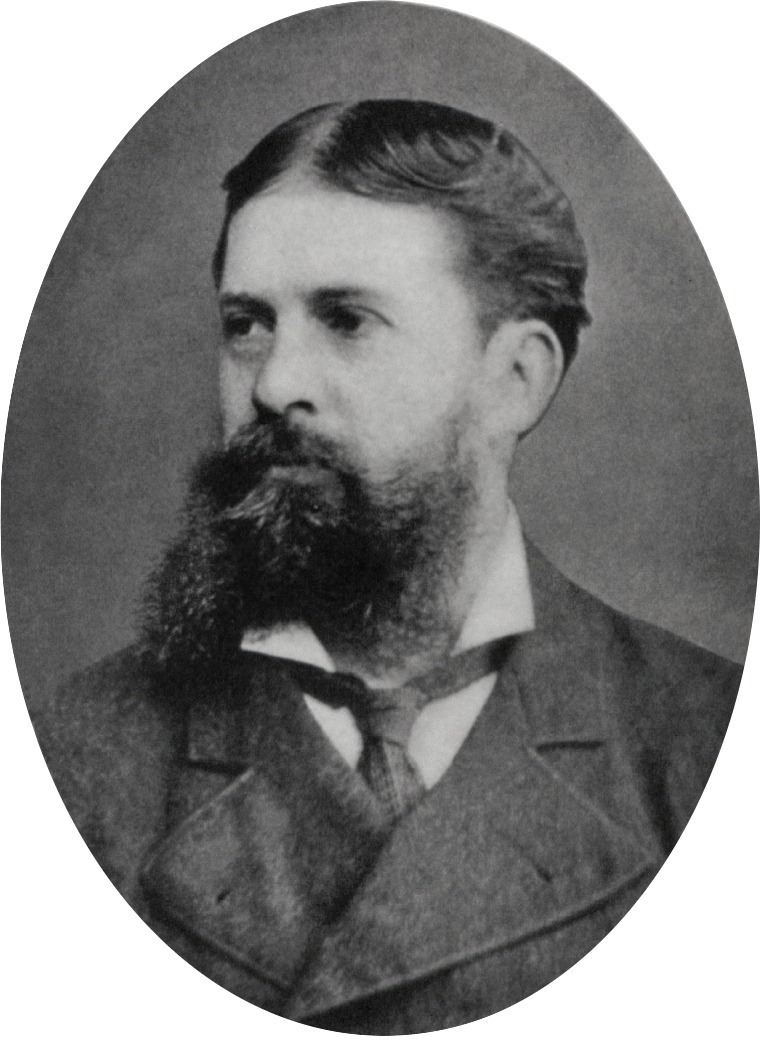
Belongs to
1Influenced by
1
Influenced
9


Ideas & arguments
3


You might also explore
 Jürgen HabermasModern Europeanborn 1929Theorist of communicative action and deliberative democracy.
 Ferdinand Canning Scott SchillerModern European1864 – 1937Ferdinand Canning Scott Schiller, usually cited as F. C.
 Jean-Paul Sartre★Modern European1905 – 1980Existentialist who declared that existence precedes essence and that we are condemned to be free.
 Ludwig Wittgenstein★Modern European1889 – 1951Austrian-British philosopher who wrote two revolutionary philosophies: the picture theory of the Tractatus and the…
 David Hume★Modern European1711 – 1776Scottish skeptic who showed we cannot rationally justify induction or causation, and that reason is the slave of the…