Analytic philosophy: Frege to Neurath
Philosophy as clarity through logical and linguistic analysis; dominant in the English-speaking world.
- 1
 SchoolModern European1900 – present
Analytic philosophy
Philosophy as clarity through logical and linguistic analysis; dominant in the English-speaking world.
- ◆Logical analysis of language
- ◆Clarity and rigour
- ◆Continuity with science
Read the full pageAnalytic philosophy is a broad school of thought or style in contemporary Western philosophy, especially anglophone philosophy, with an emphasis on analysis, clear prose, rigorous arguments, formal logic, mathematics, and the natural sciences (with less emphasis on the humanities). It is further characterized by the linguistic turn, or a concern with language and meaning.
Analytic philosophy is often contrasted with continental philosophy, a catch-all term for other methods prominent in continental Europe, most notably existentialism, phenomenology, and Hegelianism. The distinction has also been drawn between "analytic" being academic or technical philosophy and "continental" being literary philosophy.
- 2PhilosopherModern European1848 – 1925
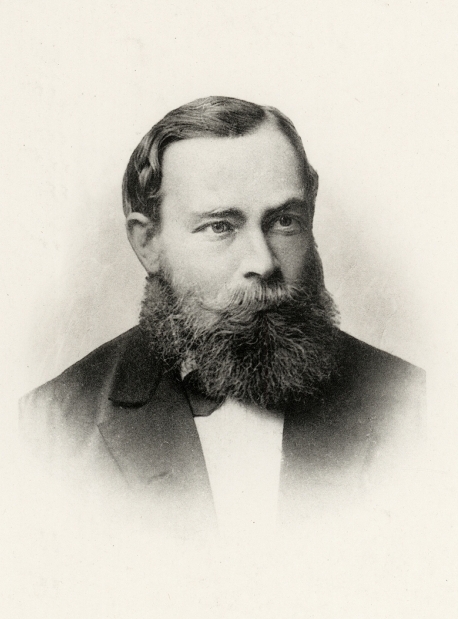
Gottlob Frege
Inventor of modern logic and the sense–reference distinction; grandfather of analytic philosophy.
- ◆Analytic philosophy
- ◆Ancestral relation
- ◆Anti-psychologism
- ◆Basic law V
- ◆Concept and object
- ◆Concept horse paradox
Read the full pageFriedrich Ludwig Gottlob Frege (; German: [ˈɡɔtloːp ˈfreːɡə]; 8 November 1848 – 26 July 1925) was a German philosopher, logician, and mathematician. He was a mathematics professor at the University of Jena, and is understood by many to be the father of analytic philosophy, concentrating on the philosophy of language, logic, and mathematics. Though he was largely ignored during his lifetime, Giuseppe Peano (1858–1932), Bertrand Russell (1872–1970), and, to some extent, Ludwig Wittgenstein (1889–1951) introduced his work to later generations of philosophers. Frege is widely considered to be one of the greatest logicians since Aristotle, and one of the most profound philosophers of mathematics ever.
His contributions include the development of modern logic in the Begriffsschrift and work in the foundations of mathematics. His book The Foundations of Arithmetic is the seminal text of the logicist project, and is cited by Michael Dummett as where to pinpoint the linguistic turn. His philosophical papers "On Sense and Reference" and "The Thought" are also widely cited. The former argues for two different types of meaning and descriptivism. In Foundations and "The Thought", Frege argues for Platonism against psychologism and formalism, concerning numbers and propositions respectively.
- 3PhilosopherModern European1848 – 1925
Gottlob Frege
Inventor of modern logic and the sense–reference distinction; grandfather of analytic philosophy.
- ◆Analytic philosophy
- ◆Ancestral relation
- ◆Anti-psychologism
- ◆Basic law V
- ◆Concept and object
- ◆Concept horse paradox
Read the full pageFriedrich Ludwig Gottlob Frege (; German: [ˈɡɔtloːp ˈfreːɡə]; 8 November 1848 – 26 July 1925) was a German philosopher, logician, and mathematician. He was a mathematics professor at the University of Jena, and is understood by many to be the father of analytic philosophy, concentrating on the philosophy of language, logic, and mathematics. Though he was largely ignored during his lifetime, Giuseppe Peano (1858–1932), Bertrand Russell (1872–1970), and, to some extent, Ludwig Wittgenstein (1889–1951) introduced his work to later generations of philosophers. Frege is widely considered to be one of the greatest logicians since Aristotle, and one of the most profound philosophers of mathematics ever.
His contributions include the development of modern logic in the Begriffsschrift and work in the foundations of mathematics. His book The Foundations of Arithmetic is the seminal text of the logicist project, and is cited by Michael Dummett as where to pinpoint the linguistic turn. His philosophical papers "On Sense and Reference" and "The Thought" are also widely cited. The former argues for two different types of meaning and descriptivism. In Foundations and "The Thought", Frege argues for Platonism against psychologism and formalism, concerning numbers and propositions respectively.
- 4
 PhilosopherModern European1861 – 1947
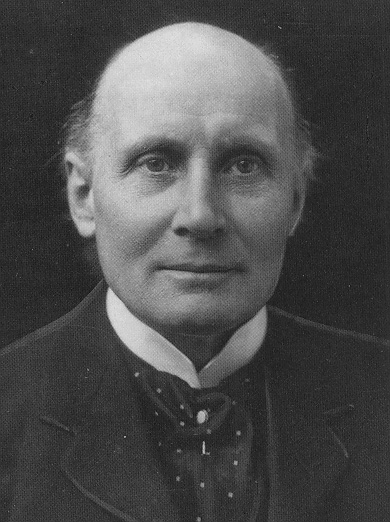
Alfred North Whitehead
Alfred North Whitehead was an English mathematician and philosopher. He created the philosophical school known as process philosophy, which has been applied in a wide variety of disciplines, including ecology, theology, education, physics, biology, economics and psychology.
- ◆Inert knowledge
- ◆Gunk
- ◆Mereotopology
- ◆Process philosophy
- ◆Process theology
- ◆Prehension
Read the full pageAlfred North Whitehead (15 February 1861 – 30 December 1947) was an English mathematician and philosopher. He created the philosophical school known as process philosophy, which has been applied in a wide variety of disciplines, including ecology, theology, education, physics, biology, economics and psychology.
In his early career Whitehead wrote primarily on mathematics, logic and physics. He wrote the three-volume Principia Mathematica (1910–1913), with his former student Bertrand Russell. Principia Mathematica is considered one of the twentieth century's most important works in mathematical logic, and placed 23rd in a list of the top 100 English-language nonfiction books of the twentieth century by Modern Library.
- 5PhilosopherModern European1871 – 1947
Harold Arthur Prichard
Harold Arthur Prichard was an English philosopher.
- ◆duty
- ◆utilitarianism
- ◆obligation
Read the full pageHarold Arthur Prichard (30 October 1871 – 29 December 1947) was an English philosopher.
He was born in London in 1871, the eldest child of Walter Stennett Prichard (a solicitor) and his wife Lucy.
- 6
 PhilosopherModern European1872 – 1970
Bertrand Russell
Logician, pacifist and public intellectual; co-founded analytic philosophy and discovered Russell's paradox.
- ◆Logicism
- ◆Theory of descriptions
- ◆Russell's paradox
- ◆Knowledge by acquaintance
Read the full pageBertrand Arthur William Russell, 3rd Earl Russell (18 May 1872 – 2 February 1970), was an English mathematician, philosopher, and social critic.
A grandson of John Russell, 1st Earl Russell, a former prime minister of the United Kingdom, Russell was orphaned at the age of four and raised primarily by his grandmother Frances. He won a scholarship to Trinity College, Cambridge, where he studied mathematics and graduated with a first-class degree in 1893. Russell was initially an adherent of British idealism, the dominant philosophy of the time. His friendship with G. E. Moore, a professor of philosophy at Cambridge, led him to analytic philosophy. In Moore and Russell's "revolt against idealism", he rejected dialectic, monism, and idealism and championed logical analysis and pluralism.
- 7
 PhilosopherModern European1873 – 1958
G. E. Moore
George Edward Moore was an English philosopher who, alongside Bertrand Russell, Ludwig Wittgenstein and earlier Gottlob Frege, was an initiator of analytic philosophy. He and Russell began de-emphasising the idealism which was then prevalent among British philosophers and became known for advocating common-sense concep
- ◆Common-sense
- ◆Naturalistic fallacy
- ◆Moore's paradox
- ◆Paradox of analysis
- ◆Open-question argument
- ◆relations
Read the full pageGeorge Edward Moore (4 November 1873 – 24 October 1958) was an English philosopher who, alongside Bertrand Russell, Ludwig Wittgenstein and earlier Gottlob Frege, was an initiator of analytic philosophy. He and Russell began de-emphasising the idealism which was then prevalent among British philosophers and became known for advocating common-sense concepts and contributing to ethics, epistemology and metaphysics. He was said to have had an "exceptional personality and moral character". Ray Monk dubbed him "the most revered philosopher of his era".
As Professor of Philosophy at the University of Cambridge, he influenced but abstained from the Bloomsbury Group, an informal set of intellectuals. He edited the journal Mind. He was a member of the Cambridge Apostles from 1894 to 1901, a fellow of the British Academy from 1918, and was chairman of the Cambridge University Moral Sciences Club in 1912–1944. A humanist, he presided over the British Ethical Union (now Humanists UK) in 1935–1936.
- 8
 PhilosopherModern European1877 – 1971
William David Ross
Sir William David Ross, known as David Ross but usually cited as W. D.
- ◆Deontological
- ◆pluralism
- ◆ethical non-naturalism
- ◆ethical intuitionism
- ◆Internet Encyclopedia of Philosophy
- ◆prima facie
Read the full pageSir William David Ross (15 April 1877 – 5 May 1971), known as David Ross but usually cited as W. D. Ross, was a Scottish Aristotelian philosopher, translator, WWI veteran, civil servant, and university administrator. His best-known work is The Right and the Good (1930), in which he developed a pluralist, deontological form of intuitionist ethics in response to G. E. Moore's consequentialist form of intuitionism. Ross also critically edited and translated a number of Aristotle's works, such as his 12-volume translation of Aristotle together with John Alexander Smith, and wrote on other Greek philosophy.
William David Ross was born in Thurso, Caithness in the north of Scotland the son of John Ross (1835–1905).
- 9
 PhilosopherModern European1878 – 1956
Jan Łukasiewicz
Jan Leopold Łukasiewicz was a Polish logician, and philosopher who is best known for Polish notation and Łukasiewicz logic. His work centred on philosophical logic, mathematical logic and history of logic.
- ◆Polish notation
- ◆Łukasiewicz logic
- ◆Łukasiewicz–Moisil algebra
- ◆Reductive reasoning
Read the full pageJan Leopold Łukasiewicz (Polish: [ˈjan wukaˈɕɛvit͡ʂ] ; 21 December 1878 – 13 February 1956) was a Polish logician, and philosopher who is best known for Polish notation and Łukasiewicz logic. His work centred on philosophical logic, mathematical logic and history of logic. He thought innovatively about traditional propositional logic, the principle of non-contradiction and the law of excluded middle, offering one of the earliest systems of many-valued logic. Contemporary research on Aristotelian logic also builds on innovative works by Łukasiewicz, which applied methods from modern logic to the formalization of Aristotle's syllogistic.
The Łukasiewicz approach was reinvigorated in the early 1970s in a series of papers by John Corcoran and Timothy Smiley that inform modern translations of Prior Analytics by Robin Smith in 1989 and Gisela Striker in 2009. Łukasiewicz is regarded as one of the most important historians of logic.
- 10PhilosopherModern European1879 – 1944
Ernst Mally
Ernst Mally was an Austrian analytic philosopher, initially affiliated with Alexius Meinong's Graz school of object theory. Mally was one of the founders of deontic logic and is mainly known for his contributions in that field of research.
- ◆"Instantiating" vs. "being determined by"
- ◆property
- ◆predication
- ◆International Congress of Philosophy
- ◆Theodor Elsenhans
- ◆Abstract determinates
Read the full pageErnst Mally (; German: [ˈmali]; 11 October 1879 – 8 March 1944) was an Austrian analytic philosopher, initially affiliated with Alexius Meinong's Graz school of object theory. Mally was one of the founders of deontic logic and is mainly known for his contributions in that field of research. In metaphysics, he is known for introducing a distinction between two kinds of predication, better known as the dual predication approach.
Mally was born in the town of Kranj (German: Krainburg) in the Duchy of Carniola, Austria-Hungary (now in Slovenia). His father was of Slovene origin, but identified himself with Austrian German culture (he also Germanized the orthography of his surname, originally spelled Mali, a common Slovene surname of Upper Carniola). After his death, the family moved to the Carniolan capital of Ljubljana (German: Laibach). There, Ernst attended the prestigious Ljubljana German-language Gymnasium. Already at a young age, Mally became a fervent supporter of the pan-German nationalist movement of Georg von Schönerer. In the same time, he developed an interest in philosophy.
- 11
 PhilosopherModern European1882 – 1936
Moritz Schlick
Friedrich Albert Moritz Schlick was a German philosopher, physicist, and the founding father of logical positivism and the Vienna Circle. He was murdered by a former student, Johann Nelböck, in 1936.
- ◆General theory of knowledge
- ◆observational statement
- ◆Kohlhammer Verlag
Read the full pageFriedrich Albert Moritz Schlick (; German: [ʃlɪk] ; 14 April 1882 – 22 June 1936) was a German philosopher, physicist, and the founding father of logical positivism and the Vienna Circle. He was murdered by a former student, Johann Nelböck, in 1936.
Schlick was born in Berlin to a wealthy Prussian family with deep nationalist and conservative traditions. His father was Ernst Albert Schlick and his mother was Agnes Arndt. At the age of sixteen, he started to read Descartes' Meditations and Schopenhauer's Die beiden Grundprobleme der Ethik. Nietzsche's Also sprach Zarathustra especially impressed him.
- 12
 PhilosopherModern European1882 – 1945
Otto Neurath
Otto Karl Wilhelm Neurath was an Austrian-born philosopher of science, sociologist, and political economist. Considered "one of the neglected geniuses of the twentieth century", Neurath, among other things, invented the ISOTYPE method of pictorial statistics and an innovator in museum practice.
- ◆Physicalism
- ◆protocol statement
- ◆Neurath's boat
- ◆Isotype
Read the full pageOtto Karl Wilhelm Neurath (; Austrian German: [ˈɔtoː ˈnɔʏraːt]; 10 December 1882 – 22 December 1945) was an Austrian-born philosopher of science, sociologist, and political economist. Considered "one of the neglected geniuses of the twentieth century", Neurath, among other things, invented the ISOTYPE method of pictorial statistics and an innovator in museum practice. Before he fled his native country in 1934, Neurath was one of the leading figures of the Vienna Circle.
Neurath was born in Vienna, the son of Wilhelm Neurath (1840–1901), a well-known Jewish political economist at the time. Otto's mother was a Protestant, and he would also become one. Helene Migerka was his cousin. He studied mathematics and physics at the University of Vienna (he formally enrolled for classes only for two semesters in 1902–3). In 1906, he gained his Ph.D. in the department of Political Science and Statistics at the University of Berlin with a thesis entitled Zur Anschauung der Antike über Handel, Gewerbe und Landwirtschaft (On the Conceptions in Antiquity of Trade, Commerce and Agriculture).