Analytic philosophy: Lewis to Nagel
- 1PhilosopherAmericas1883 – 1964
Clarence Irving Lewis
Clarence Irving Lewis was an American academic philosopher. He is considered the progenitor of modern modal logic and the founder of conceptual pragmatism.
- ◆Conceptual pragmatism
- ◆Symbolic
- ◆modal logic
- ◆Lewis algebra
- ◆Qualia
- ◆Strict conditional
Read the full pageClarence Irving Lewis (April 12, 1883 – February 3, 1964) was an American academic philosopher. He is considered the progenitor of modern modal logic and the founder of conceptual pragmatism. First a noted logician, he later branched into epistemology, and during the last 20 years of his life, he wrote much on ethics. The New York Times memorialized him as "a leading authority on symbolic logic and on the philosophic concepts of knowledge and value." He coined the term "Qualia" as used in philosophy, linguistics, and cognitive sciences.
Lewis was born in Stoneham, Massachusetts. His father was a skilled worker in a shoe factory, and Lewis grew up in relatively humble circumstances. He discovered philosophy at age 13, when reading about the Greek pre-Socratics, Anaxagoras and Heraclitus in particular. The first work of philosophy Lewis recalled studying was A Short History of Greek Philosophy by John Marshall (1891). Immanuel Kant proved a major lifelong influence on Lewis's thinking. In his article "Logic and Pragmatism", Lewis wrote: "Nothing comparable in importance happened [in my life] until I became acquainted with Kant... Kant compelled me. He had, so I felt, followed scepticism to its inevitable last stage, and laid the foundations where they could not be disturbed."
- 2
 PhilosopherModern European1884 – 1944
Leon Chwistek
Leon Chwistek was a Polish logician, philosopher, mathematician, avant-garde painter, theoretician of modern art and literary critic. He mainly worked in the field of the philosophy of science and mathematical logic.
Read the full pageLeon Chwistek (Polish: [ˈxfistɛk]; 13 June 1884, Kraków, Austria-Hungary – 20 August 1944, Barvikha near Moscow, Russia) was a Polish logician, philosopher, mathematician, avant-garde painter, theoretician of modern art and literary critic.
He mainly worked in the field of the philosophy of science and mathematical logic. As an artist, he was a representative of Polish Formism, drawing on Cubist and Futurist ideas. He taught at the Jagiellonian University and the University of Lviv and was one of the founders of the Polish Mathematical Society.
- 3PhilosopherModern European1885 – 1943
Susan Stebbing
Lizzie Susan Stebbing was a British philosopher. She belonged to the 1930s generation of analytic philosophy, and was a founder in 1933 of the journal Analysis.
- ◆Ordinary language
Read the full pageLizzie Susan Stebbing (2 December 1885 – 11 September 1943) was a British philosopher. She belonged to the 1930s generation of analytic philosophy, and was a founder in 1933 of the journal Analysis. Stebbing was the first woman to hold a philosophy chair in the United Kingdom, as well as the first female President of Humanists UK.
Born in North Finchley, Middlesex, Susan Stebbing (as she preferred to be called), was the youngest of six children born to Alfred Charles Stebbing and Elizabeth (née Elstob), and was orphaned at an early age.
- 4
 PhilosopherModern European1887 – 1971
C. D. Broad
Charlie Dunbar Broad was an English philosopher who worked on epistemology, history of philosophy, philosophy of science, and ethics, as well as the philosophical aspects of psychical research. He was known for his thorough and dispassionate examinations of arguments in such works as Scientific Thought, The Mind and It
- ◆Growing block universe
- ◆Rate of passage argument
- ◆The Philosophy of Time: A Collection of Essays
- ◆critical philosophy
- ◆speculative philosophy
Read the full pageCharlie Dunbar Broad (30 December 1887 – 11 March 1971) was an English philosopher who worked on epistemology, history of philosophy, philosophy of science, and ethics, as well as the philosophical aspects of psychical research. He was known for his thorough and dispassionate examinations of arguments in such works as Scientific Thought (1923), The Mind and Its Place in Nature (1925), and Examination of McTaggart's Philosophy (2 vols., 1933–1938).
Broad's essay on "Determinism, Indeterminism, and Libertarianism" in Ethics and the History of Philosophy (1952) introduced the philosophical terms occurrent causation and non-occurrent causation, which became the basis for the contemporary distinction between "agent-causal" and "event-causal" in debates on libertarian free will.
- 5
 PhilosopherModern European1889 – 1951
Ludwig Wittgenstein
Austrian-British philosopher who wrote two revolutionary philosophies: the picture theory of the Tractatus and the language games of the Investigations.
- ◆Picture theory of meaning
- ◆"Whereof one cannot speak, thereof one must be silent"
- ◆Meaning is use
- ◆Language games
- ◆Private language argument
- ◆Family resemblance
Read the full pageLudwig Wittgenstein came from one of Vienna's richest families, studied engineering, then arrived in Cambridge in 1911 to work with Bertrand Russell, who soon felt he had little left to teach him.
His first book, the Tractatus Logico-Philosophicus (1921), argues that language pictures reality: meaningful propositions share a logical form with the facts they represent. Ethics, aesthetics and the meaning of life cannot be said, only shown — and so the book ends: "Whereof one cannot speak, thereof one must be silent." Believing he had solved philosophy's problems, Wittgenstein left to become a schoolteacher in rural Austria.
- 6
 PhilosopherModern European1891 – 1970
Rudolf Carnap
Paul Rudolf Carnap was a German philosopher and logician who was active in Europe before 1935 and in the United States thereafter. He was a major member of the Vienna Circle and an advocate of logical positivism.
- ◆Physicalism
- ◆Phenomenalism
- ◆Logical behaviorism
- ◆Extensionalism
- ◆Analytic–synthetic distinction
- ◆Internal–external distinction
Read the full pagePaul Rudolf Carnap (; German: [ˈkaʁnaːp]; 18 May 1891 – 14 September 1970) was a German philosopher and logician who was active in Europe before 1935 and in the United States thereafter. He was a major member of the Vienna Circle and an advocate of logical positivism.
Carnap was born Paul Rudolf Carnap on 18 May 1891 in Ronsdorf, in present-day Wuppertal, Germany. Carnap's father rose from being a poor ribbon-weaver to be the owner of a ribbon-making factory. His mother came from an academic family; her father was an educational reformer and her oldest brother was the archaeologist Wilhelm Dörpfeld.
- 7
 PhilosopherAmericas1891 – 1953
Hans Reichenbach
Hans Reichenbach was a leading philosopher of science, educator, and proponent of logical empiricism. He founded the Gesellschaft für empirische Philosophie (Society for Empirical Philosophy) in Berlin in 1928, also known as the "Berlin Circle".
- ◆Probabilistic
- ◆justification
- ◆reasoning
- ◆theory of relativity
- ◆quantum mechanics
- ◆Relativized
Read the full pageHans Reichenbach (; German: [ˈʁaɪçənbax]; September 26, 1891 – April 9, 1953) was a leading philosopher of science, educator, and proponent of logical empiricism. He founded the Gesellschaft für empirische Philosophie (Society for Empirical Philosophy) in Berlin in 1928, also known as the "Berlin Circle". Carl Gustav Hempel, Richard von Mises, David Hilbert and Kurt Grelling all became members of the Berlin Circle.
In 1930, Reichenbach and Rudolf Carnap became editors of the journal Erkenntnis. He also made lasting contributions to the study of empiricism based on a theory of probability; the logic and the philosophy of mathematics; space, time, and relativity theory; analysis of probabilistic reasoning; and quantum mechanics. In 1951, he authored The Rise of Scientific Philosophy, his most popular book.
- 8
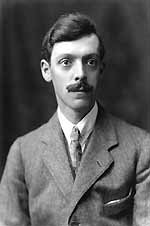 PhilosopherModern European1893 – 1962
John Anderson
John Anderson was a Scottish philosopher who occupied the post of Challis Professor of Philosophy at Sydney University from 1927 to 1958. He founded the empirical brand of philosophy known as Australian realism.
- ◆Systematic realism
Read the full pageJohn Anderson (1 November 1893 – 6 July 1962) was a Scottish philosopher who occupied the post of Challis Professor of Philosophy at Sydney University from 1927 to 1958. He founded the empirical brand of philosophy known as Australian realism.
Anderson's promotion of 'freethought' in all subjects, including politics and morality, was controversial and brought him into constant conflict with the august senate of the university. However, he is credited with educating a generation of influential 'Andersonian' thinkers and activists—some of whom helped to place Sydney in the forefront of the 'sexual revolution' of the 1950s and 1960s.
- 9PhilosopherModern European1899 – 1984
Henry Habberley Price
Henry Habberley Price was a Welsh philosopher, known for his work on the philosophy of perception. He also wrote on parapsychology.
- ◆Sense data
- ◆phenomenalism
- ◆afterlife
Read the full pageHenry Habberley Price (17 May 1899 – 26 November 1984) was a Welsh philosopher, known for his work on the philosophy of perception. He also wrote on parapsychology.
Born in Neath, Glamorganshire, Wales, Price was educated at Winchester College and New College, Oxford. He obtained first-class honours in Literae Humaniores in 1921.
- ◆Trope theory
- ◆empirical realism
- ◆problem of induction
Read the full pageDonald Cary Williams (28 May 1899 – 16 January 1983), usually cited as D. C. Williams, was an American philosopher and a professor at both the University of California Los Angeles (from 1930 to 1938) and at Harvard University (from 1939 to 1967).
Williams was born in Crows Landing, California in 1899. As a teenager he was greatly interested in classics, English literature, poetry, and science fiction. He was a lifelong fan of the works of William Shakespeare, Mark Twain, and H. G. Wells. He studied English at Occidental College, California, and then English and Philosophy at Harvard University where he received an AM in Philosophy in 1925. He continued to study Philosophy and Psychology at UC-Berkeley. One of his teachers there was Jacob Loewenberg, and one of his peers was Arthur E. Murphy. In 1927 he returned to Harvard and obtained his PhD under the supervision of Ralph Barton Perry. He submitted his thesis – titled A Metaphysical Interpretation of Behaviorism – on 1 April 1928. In that same year he married Katherine Pressly Adams, who he knew from his time at UC-Berkeley. They had two sons: Donald Jr. and David. Williams was awarded a Sheldon Traveling Fellowship and studied philosophy in France and Germany, 1928–29.
- 11PhilosopherModern European1900 – 1976
Gilbert Ryle
Gilbert Ryle was a British philosopher, principally known for his critique of Cartesian dualism, for which he coined the phrase "ghost in the machine". Some of Ryle's ideas in philosophy of mind have been called logical behaviourist.
- ◆Category mistake
- ◆Ryle's regress
- ◆ordinary language philosophy
- ◆ghost in the machine
- ◆thick description
- ◆knowing-how
Read the full pageGilbert Ryle (19 August 1900 – 6 October 1976) was a British philosopher, principally known for his critique of Cartesian dualism, for which he coined the phrase "ghost in the machine". Some of Ryle's ideas in philosophy of mind have been called logical behaviourist. In his best-known book, The Concept of Mind (1949), he writes that the "general trend of this book will undoubtedly, and harmlessly, be stigmatised as 'behaviourist'." Having studied the philosophers Bernard Bolzano, Franz Brentano, Alexius Meinong, Edmund Husserl, and Martin Heidegger, Ryle suggested that the book instead "could be described as a sustained essay in phenomenology, if you are at home with that label."
Gilbert Ryle was born in Brighton, England, on 19 August 1900, and grew up in an environment of learning.
- 12PhilosopherAmericas1901 – 1985
Ernest Nagel
Ernest Nagel was an American philosopher of science. Along with Rudolf Carnap, Hans Reichenbach, and Carl Hempel, he is sometimes seen as one of the major figures of the logical positivist movement.
- ◆Reductionism
Read the full pageErnest Nagel (; German: [ˈnaːɡl̩]; November 16, 1901 – September 20, 1985) was an American philosopher of science. Along with Rudolf Carnap, Hans Reichenbach, and Carl Hempel, he is sometimes seen as one of the major figures of the logical positivist movement. His 1961 book The Structure of Science is considered a foundational work in the logic of scientific explanation.
Nagel was born in Nové Mesto nad Váhom (now in Slovakia, then Vágújhely and part of the Austro-Hungarian Empire) to Jewish parents. His mother, Frida Weiss, was from the nearby town of Vrbové (or Verbo).
