Phenomenology: Blanchot to Brague
- 1
 PhilosopherModern European1907 – 2003
Maurice Blanchot
Maurice Blanchot was a French writer, philosopher and literary theorist. His work, exploring a philosophy of death alongside poetic theories of meaning and sense, bore significant influence on post-structuralist philosophers such as Gilles Deleuze, Michel Foucault, Jacques Derrida and Jean-Luc Nancy.
- ◆event
- ◆virtual
Read the full pageMaurice Blanchot ( blon-SHOH; French: [blɑ̃ʃo]; 22 September 1907 – 20 February 2003) was a French writer, philosopher and literary theorist. His work, exploring a philosophy of death alongside poetic theories of meaning and sense, bore significant influence on post-structuralist philosophers such as Gilles Deleuze, Michel Foucault, Jacques Derrida and Jean-Luc Nancy.
Blanchot was born in the village of Quain (Saône-et-Loire) on 22 September 1907.
- 2
 PhilosopherModern European1907 – 1977
Jan Patočka
Jan Patočka was a Czech philosopher. Having studied at Prague, Paris, Berlin, and Freiburg, he was one of the last pupils of Edmund Husserl and Martin Heidegger.
- ◆Care of the soul
Read the full pageJan Patočka (Czech: [ˈpatot͡ʃka]; 1 June 1907 – 13 March 1977) was a Czech philosopher. Having studied at Prague, Paris, Berlin, and Freiburg, he was one of the last pupils of Edmund Husserl and Martin Heidegger. At Freiburg he also developed a lifelong philosophical friendship with Husserl's assistant Eugen Fink. Patočka worked in the Czechoslovak Socialist Republic for almost his entire career, but never joined the Communist Party and was affected by persecution, which ended in his death as a dissident spokesperson of Charter 77.
Patočka was a prolific writer and lecturer with a wide range of reference, contributing much to existential phenomenology as well as the interpretation of Czech culture and European culture in general. From his Czech collected works, some of the most notable have been translated into English and other major languages. These include the late works Plato and Europe (1973) and Heretical Essays in the Philosophy of History (1975), in which Patočka developed a philosophy of history identifying the Socratic-Platonic theme of the care of the soul as the basis of "Europe".
- 3
 PhilosopherModern European1908 – 1961
Maurice Merleau-Ponty
Maurice Jean Jacques Merleau-Ponty was a French phenomenological philosopher, strongly influenced by Edmund Husserl and Martin Heidegger. The constitution of meaning in human experience was his main interest and he wrote on perception, art, politics, religion, biology, psychology, psychoanalysis, language, nature, and
- ◆Embodied cognition
- ◆invagination
- ◆intentionality
Read the full pageMaurice Jean Jacques Merleau-Ponty ( MUR-loh PON-tee; French: [mɔʁis mɛʁlo pɔ̃ti]; 14 March 1908 – 3 May 1961) was a French phenomenological philosopher, strongly influenced by Edmund Husserl and Martin Heidegger. The constitution of meaning in human experience was his main interest and he wrote on perception, art, politics, religion, biology, psychology, psychoanalysis, language, nature, and history. He was the lead editor of Les Temps modernes, the leftist magazine he established with Jean-Paul Sartre and Simone de Beauvoir in 1945.
At the core of Merleau-Ponty's philosophy is a sustained argument for the foundational role that perception plays in the human experience of the world. Merleau-Ponty understands perception to be an ongoing dialogue between one's lived body and the world which it perceives, in which perceivers passively and actively strive to express the perceived world in concert with others. He was the only major phenomenologist of the first half of the twentieth century to engage extensively with the sciences. It is through this engagement that his writings became influential in the project of naturalising phenomenology, in which phenomenologists use the results of psychology and cognitive science.
- 4
 PhilosopherModern European1922 – 2002
Michel Henry
Michel Henry was a French philosopher, phenomenologist and novelist. He wrote four novels and numerous philosophical works.
- ◆material phenomenology
- ◆phenomenological life
Read the full pageMichel Henry (; French: [ɑ̃ʁi]; 10 January 1922 – 3 July 2002) was a French philosopher, phenomenologist and novelist. He wrote four novels and numerous philosophical works. He also lectured at universities in France, Belgium, the United States, and Japan.
Michel Henry was born in Haiphong, French Indochina (now Vietnam), and he lived in French Indochina until he was seven years old. Following the death of his father, who was an officer in the French Navy, he and his mother settled in metropolitan France. While studying in Paris, he discovered a true passion for philosophy, which he decided to make his profession—he enrolled at the École Normale Supérieure, at the time part of the University of Paris. From June 1943, he was fully engaged with the French Resistance, joining the maquis of the Haut Jura under the code name of Kant. He often had to come down from the mountains in order to accomplish missions in Nazi-occupied Lyon, an experience of clandestinity that deeply marked his philosophy.
- 5
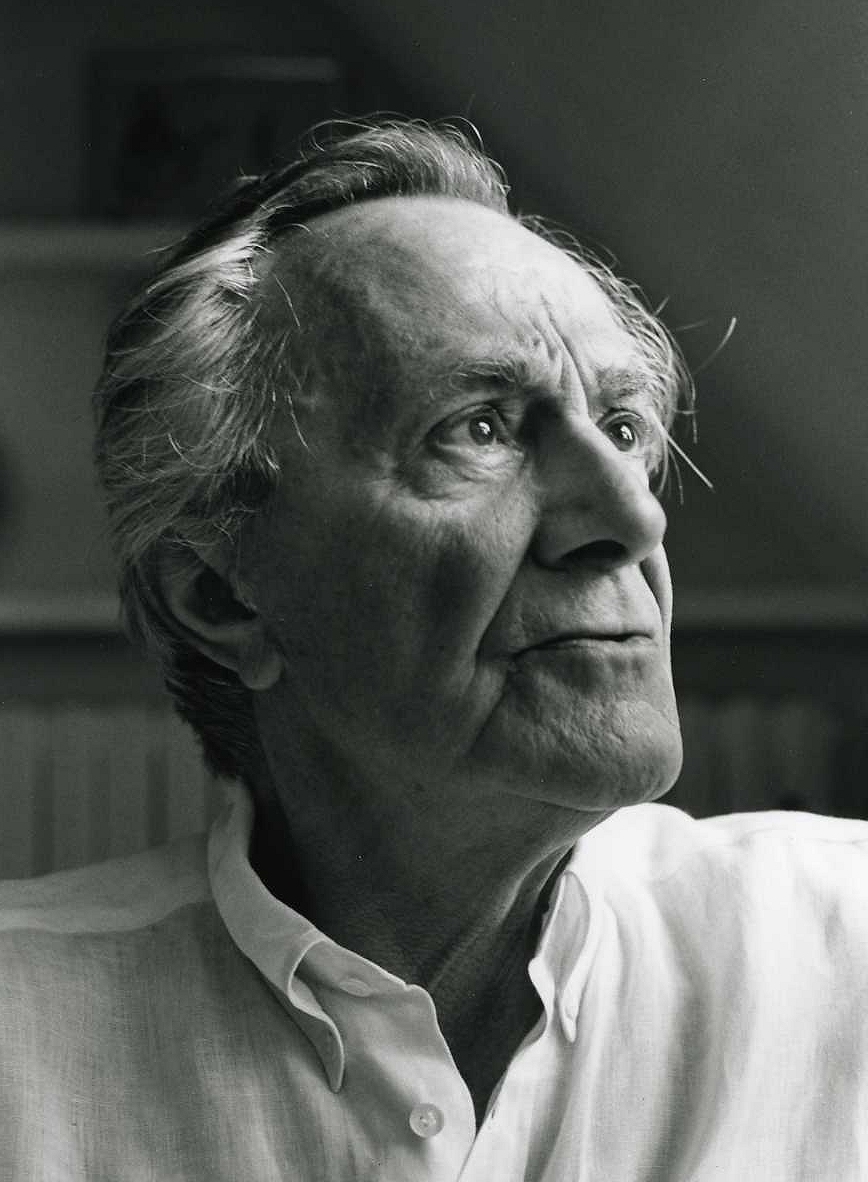 PhilosopherModern European1924 – 1998
Jean-François Lyotard
Jean-François Lyotard was a French philosopher, sociologist, and literary theorist. His interdisciplinary discourse spans such topics as epistemology and communication, the human body, modern art and postmodern art, literature and critical theory, music, film, time and memory, space, the city and landscape, the sublime
- ◆postmodern condition
- ◆grand narrative
- ◆libidinal economy
Read the full pageJean-François Lyotard (; French: [ʒɑ̃ fʁɑ̃swa ljɔtaʁ]; 10 August 1924 – 21 April 1998) was a French philosopher, sociologist, and literary theorist. His interdisciplinary discourse spans such topics as epistemology and communication, the human body, modern art and postmodern art, literature and critical theory, music, film, time and memory, space, the city and landscape, the sublime, and the relation between aesthetics and politics. He is best known for his articulation of postmodernism after the late 1970s and the analysis of the impact of postmodernity on the human condition. Lyotard was a key personality in contemporary continental philosophy and authored 26 books and many articles. He was a director of the International College of Philosophy founded by Jacques Derrida, François Châtelet, Jean-Pierre Faye, and Dominique Lecourt.
Jean François Lyotard was born on 10 August 1924, in Versailles, France, to Jean-Pierre Lyotard, a sales representative, and Madeleine Cavalli. He went to school at the Lycée Buffon (1935–42) and Louis-le-Grand, Paris. As a child, Lyotard had many aspirations: to be an artist, a historian, a Dominican friar, and a writer. He later gave up the dream of becoming a writer when he finished writing an unsuccessful fictional novel at the age of 15. Ultimately, Lyotard described the realization that he would not become any of these occupations because of "fate", as he describes in his intellectual biography called Peregrinations, published in 1988.
- 6PhilosopherModern European1932 – 2018
Paul Virilio
Paul Virilio was a French cultural theorist, urbanist, architect and aesthetic philosopher. He is best known for his writings about technology as it has developed in relation to speed and power, with diverse references to architecture, the arts, the city and the military.
- ◆Dromology
Read the full pagePaul Virilio (French: [viʁiljo]; 4 January 1932 – 10 September 2018) was a French cultural theorist, urbanist, architect and aesthetic philosopher. He is best known for his writings about technology as it has developed in relation to speed and power, with diverse references to architecture, the arts, the city and the military. Virilio was a prolific creator of neologisms, most notably his concept of "dromology", the all-around, pervasive inscription of speed in every aspect of life.
According to two biographers, Virilio was a "historian of warfare, technology and photography, a philosopher of architecture, military strategy and cinema, and a politically engaged provocative commentator on history, terrorism, mass media and human-machine relations."
- 7
 PhilosopherModern European1936 – 2023
Gianni Vattimo
Gianteresio "Gianni" Vattimo was an Italian philosopher and politician.
- ◆Weak thought
- ◆hermeneutic communism
Read the full pageGianteresio "Gianni" Vattimo (Italian: [ˈdʒanni ˈvattimo]; 4 January 1936 – 19 September 2023) was an Italian philosopher and politician.
Born in Turin, Piedmont, Vattimo studied philosophy under Luigi Pareyson, an existentialist philosopher, at the University of Turin and graduated with a laurea in 1959. In 1963, he moved to the University of Heidelberg and studied with Karl Löwith, Jürgen Habermas, and Hans-Georg Gadamer with a scholarship from the Alexander von Humboldt Foundation.
- 8
 PhilosopherModern European1940 – 2021
Jean-Luc Nancy
Jean-Luc Nancy was a French philosopher. Nancy's first book, published in 1973, was Le titre de la lettre, a reading of the work of French psychoanalyst Jacques Lacan, written in collaboration with Philippe Lacoue-Labarthe.
- ◆Absolute
- ◆existence
- ◆ontological
- ◆sense
- ◆freedom
- ◆Internet Encyclopedia of Philosophy
Read the full pageJean-Luc Nancy ( nahn-SEE; French: [ʒɑ̃lyk nɑ̃si]; 26 July 1940 – 23 August 2021) was a French philosopher. Nancy's first book, published in 1973, was Le titre de la lettre (The Title of the Letter, 1992), a reading of the work of French psychoanalyst Jacques Lacan, written in collaboration with Philippe Lacoue-Labarthe. Nancy is the author of works on many thinkers, including La remarque spéculative in 1973 (The Speculative Remark, 2001) on Georg Wilhelm Friedrich Hegel, Le Discours de la syncope (1976) and L'Impératif catégorique (1983) on Immanuel Kant, Ego sum (1979) on René Descartes, and Le Partage des voix (1982) on Martin Heidegger.
In addition to Le titre de la lettre, Nancy collaborated with Lacoue-Labarthe on several other books and articles. Nancy is credited with helping to reopen the question of the ground of community and politics with his 1985 work La communauté désoeuvrée (The Inoperative Community), following Blanchot's The Unavowable Community (1983) and Agamben responded to both with The Coming Community (1990). One of the very few monographs that Jacques Derrida ever wrote on a contemporary philosopher is On Touching, Jean-Luc Nancy.
- 9
 PhilosopherModern Europeanborn 1946
Jean-Luc Marion
Jean-Luc Marion is a French philosopher and Catholic theologian. His work is informed by patristic and mystical theology, phenomenology, and modern philosophy.
- ◆reduction
- ◆givenness
- ◆intentionality
- ◆counter-experience
Read the full pageJean-Luc Marion (French: [ʒɑ̃ lyk maʁjɔ̃]; born 3 July 1946) is a French philosopher and Catholic theologian. His work is informed by patristic and mystical theology, phenomenology, and modern philosophy.
Much of his academic work has dealt with Descartes and phenomenologists like Martin Heidegger and Edmund Husserl, but also religion. God Without Being, for example, is concerned predominantly with an analysis of idolatry, a theme strongly linked in Marion's work with love and the gift, which is a concept also explored at length by Derrida.
- 10
 PhilosopherModern Europeanborn 1947
Peter Sloterdijk
Peter Sloterdijk is a German philosopher and cultural theorist. He was a professor of philosophy and media theory at and Rector from 2001 to 2015 of the Karlsruhe University of Arts and Design.
- ◆Spherology (''Sphärologie'')
- ◆human zoo (''Menschenpark'')
Read the full pagePeter Sloterdijk (; German: [ˈsloːtɐˌdaɪk]; born 26 June 1947) is a German philosopher and cultural theorist. He was a professor of philosophy and media theory at and Rector from 2001 to 2015 of the Karlsruhe University of Arts and Design. He co-hosted the German television show Das Philosophische Quartett from 2002 until 2012.
Sloterdijk's father was Dutch; his mother was German. He studied philosophy, German studies and history at LMU Munich and the University of Hamburg from 1968 to 1974. In 1975, he received his PhD from the University of Hamburg. In 1978, he became a disciple of Rajneesh, and lived in his ashram until 1980. In the 1980s, he worked as a freelance writer, and published his Critique of Cynical Reason (German: Kritik der zynischen Vernunft) in 1983. Sloterdijk has since published a number of philosophical works acclaimed in Germany. In 2001, he was named chancellor of the Karlsruhe University of Arts and Design, part of the ZKM Center for Art and Media Karlsruhe. His best-known Karlsruhe student and former assistant is Marc Jongen, a member of the Bundestag. In 2002, Sloterdijk began to co-host Das Philosophische Quartett ('The Philosophical Quartet'), a show on the German ZDF television channel devoted to discussing key contemporary issues in-depth.
- 11
 PhilosopherModern Europeanborn 1947
Rémi Brague
Rémi Brague is a French historian of philosophy specializing in Islamic, Jewish, and Christian thought of the Middle Ages. He is professor emeritus of Arabic and religious philosophy at the Sorbonne and Romano Guardini chair of philosophy (emeritus) at LMU Munich.
- ◆Romanitas
- ◆secularism
- ◆secularity
Read the full pageRémi Brague (born 8 September 1947) is a French historian of philosophy specializing in Islamic, Jewish, and Christian thought of the Middle Ages. He is professor emeritus of Arabic and religious philosophy at the Sorbonne and Romano Guardini chair of philosophy (emeritus) at LMU Munich.
Educated primarily at the École Normale Supérieure in Paris, Brague began his career as a student of Greek philosophy, interpreted in a distinctly modern key. His doctoral thesis, later published as Aristote et la question du monde: Essai sur le contexte cosmologique et anthropologique de l'ontologie (1988), developed a phenomenological account of Aristotle's world conception. In particular, his goal was to write the book on Aristotle that Heidegger would have written had he not written Being and Time. From there, he was led to study Hebrew to read the Old Testament and Arabic in order "to read the Jewish philosopher Maimonides' The Guide for the Perplexed in its original language." Since then, most of his work has occurred at the intersection of the three Abrahamic religions as they developed out of the ancient world, formed themselves in dialogue, and eventually gave rise to modernity.