Philosophy of science
What makes science scientific, and what does it tell us about reality?
Key ideas
Philosophy of science (also theory of science) is the branch of philosophy concerned with the foundations, methods, and implications of science. Amongst its central questions are the difference between science and non-science, the reliability of scientific theories, and the ultimate purpose and meaning of science as a human endeavour. Philosophy of science focuses on metaphysical, epistemic and semantic aspects of scientific practice, and overlaps with metaphysics, ontology, logic, and epistemology, for example, when it explores the relationship between science and the concept of truth. Philosophy of science is both a theoretical and empirical discipline, relying on philosophical theorising as well as meta-studies of scientific practice. Ethical issues such as bioethics and scientific misconduct are often considered ethics or science studies rather than the philosophy of science.
Many of the central problems concerned with the philosophy of science lack contemporary consensus, including whether science can infer truth about unobservable entities and whether inductive reasoning can be justified as yielding definite scientific knowledge. Philosophers of science also consider philosophical problems within particular sciences (such as biology, physics and social sciences such as economics and psychology). Some philosophers of science also use contemporary results in science to reach conclusions about philosophy itself.
While philosophical thought pertaining to science dates back at least to the time of Aristotle, the general philosophy of science emerged as a distinct discipline only in the 20th century following the logical positivist movement, which aimed to formulate criteria for ensuring all philosophical statements' meaningfulness and objectively assessing them. Karl Popper criticized logical positivism and helped establish a modern set of standards for scientific methodology. Thomas Kuhn's 1962 book The Structure of Scientific Revolutions was also formative, challenging the view of scientific progress as the steady, cumulative acquisition of knowledge based on a fixed method of systematic experimentation and instead arguing that any progress is relative to a "paradigm", the set of questions, concepts, and practices that define a scientific discipline in a particular historical period.
Subsequently, the coherentist approach to science, in which a theory is validated if it makes sense of observations as part of a coherent whole, became prominent due to W. V. Quine and others. Some thinkers such as Stephen Jay Gould seek to ground science in axiomatic assumptions, such as the uniformity of nature. A vocal minority of philosophers, and Paul Feyerabend in particular, argue against the existence of the "scientific method", so all approaches to science should be allowed, including explicitly supernatural ones. Another approach to thinking about science involves studying how knowledge is created from a sociological perspective, an approach represented by scholars like David Bloor and Barry Barnes. Finally, a tradition in continental philosophy approaches science from the perspective of a rigorous analysis of human experience.
Philosophies of the particular sciences range from questions about the nature of time raised by Einstein's general relativity, to the implications of economics for public policy. A central theme is whether the terms of one scientific theory can be intra- or intertheoretically reduced to the terms of another. Can chemistry be reduced to physics, or can sociology be reduced to individual psychology? The general questions of philosophy of science also arise with greater specificity in some particular sciences. For instance, the question of the validity of scientific reasoning is seen in a different guise in the foundations of statistics. The question of what counts as science and what should be excluded arises as a life-or-death matter in the philosophy of medicine. Additionally, the philosophies of biology, psychology, and the social sciences explore whether the scientific studies of human nature can achieve objectivity or are inevitably shaped by values and by social relations.
Defining science
Distinguishing between science and non-science is referred to as the demarcation problem. For example, should psychoanalysis, creation science, and historical materialism be considered pseudosciences? Karl Popper called this the central question in the philosophy of science. However, no unified account of the problem has won acceptance among philosophers, and some regard the problem as unsolvable or uninteresting. Martin Gardner has argued for the use of a Potter Stewart standard ("I know it when I see it") for recognizing pseudoscience.
Early attempts by the logical positivists grounded science in observation while non-science was non-observational and hence meaningless. Popper argued that the central property of science is falsifiability. That is, every genuinely scientific claim is capable of being proven false, at least in principle.
An area of study or speculation that masquerades as science in an attempt to claim a legitimacy that it would not otherwise be able to achieve is referred to as pseudoscience, fringe science, or junk science. Physicist Richard Feynman coined the term "cargo cult science" for cases in which researchers believe they are doing science because their activities have the outward appearance of it but actually lack the "kind of utter honesty" that allows their results to be rigorously evaluated.
Scientific explanation
A closely related question is what counts as a good scientific explanation. In addition to providing predictions about future events, society often takes scientific theories to provide explanations for events that occur regularly or have already occurred. Philosophers have investigated the criteria by which a scientific theory can be said to have successfully explained a phenomenon, as well as what it means to say a scientific theory has explanatory power.
One early and influential account of scientific explanation is the deductive-nomological model. It says that a successful scientific explanation must deduce the occurrence of the phenomena in question from a scientific law. This view has been subjected to substantial criticism, resulting in several widely acknowledged counterexamples to the theory. It is especially challenging to characterize what is meant by an explanation when the thing to be explained cannot be deduced from any law because it is a matter of chance, or otherwise cannot be perfectly predicted from what is known. Wesley Salmon developed a model in which a good scientific explanation must be statistically relevant to the outcome to be explained. Others have argued that the key to a good explanation is unifying disparate phenomena or providing a causal mechanism.
Justifying science
Although it is often taken for granted, it is not at all clear how one can infer the validity of a general statement from a number of specific instances or infer the truth of a theory from a series of successful tests.
One approach is to acknowledge that induction cannot achieve certainty, but observing more instances of a general statement can at least make the general statement more probable. So the chicken would be right to conclude from all those mornings that it is likely the farmer will come with food again the next morning, even if it cannot be certain. However, there remain difficult questions about the process of interpreting any given evidence into a probability that the general statement is true. One way out of these particular difficulties is to declare that all beliefs about scientific theories are subjective, or personal, and correct reasoning is merely about how evidence should change one's subjective beliefs over time.
Some argue that what scientists do is not inductive reasoning at all but rather abductive reasoning, or inference to the best explanation. In this account, science is not about generalizing specific instances but rather about hypothesizing explanations for what is observed. As discussed in the previous section, it is not always clear what is meant by the "best explanation". Occam's razor, which counsels choosing the simplest available explanation, thus plays an important role in some versions of this approach. To return to the example of the chicken, would it be simpler to suppose that the farmer cares about it and will continue taking care of it indefinitely or that the farmer is fattening it up for slaughter? Philosophers have tried to make this heuristic principle more precise regarding theoretical parsimony or other measures. Yet, although various measures of simplicity have been brought forward as potential candidates, it is generally accepted that there is no such thing as a theory-independent measure of simplicity. In other words, there appear to be as many different measures of simplicity as there are theories themselves, and the task of choosing between measures of simplicity appears to be every bit as problematic as the job of choosing between theories.
Nicholas Maxwell argued for some decades that unity rather than simplicity is the key non-empirical factor in influencing the choice of theory in science, persistent preference for unified theories in effect committing science to the acceptance of a metaphysical thesis concerning unity in nature. In order to improve this problematic thesis, it needs to be represented in the form of a hierarchy of theses, each thesis becoming more insubstantial as one goes up the hierarchy.
Observation inseparable from theory
When making observations, scientists look through telescopes, study images on electronic screens, record meter readings, and so on. Generally, on a basic level, they can agree on what they see, e.g., the thermometer shows 37.9 degrees C. But, if these scientists have different ideas about the theories that have been developed to explain these basic observations, they may disagree about what they are observing. For example, before Albert Einstein's general theory of relativity, observers would have likely interpreted an image of the Einstein cross as five different objects in space. In light of that theory, however, astronomers will tell you that there are actually only two objects, one in the center and four different images of a second object around the sides. Alternatively, if other scientists suspect that something is wrong with the telescope and only one object is actually being observed, they are operating under yet another theory. Observations that cannot be separated from theoretical interpretation are said to be theory-laden.
All observation involves both perception and cognition. That is, one does not make an observation passively, but rather is actively engaged in distinguishing the phenomenon being observed from surrounding sensory data. Therefore, observations are affected by one's underlying understanding of the way in which the world functions, and that understanding may influence what is perceived, noticed, or deemed worthy of consideration. In this sense, it can be argued that all observation is theory-laden.
The purpose of science
Should science aim to determine ultimate truth, or are there questions that science cannot answer? Scientific realists claim that science aims at truth and that one ought to regard scientific theories as true, approximately true, or likely true. Conversely, scientific anti-realists argue that science does not aim (or at least does not succeed) at truth, especially truth about unobservables like electrons or other universes. Instrumentalists argue that scientific theories should only be evaluated on whether they are useful. In their view, whether theories are true or not is beside the point, because the purpose of science is to make predictions and enable effective technology.
Realists often point to the success of recent scientific theories as evidence for the truth (or near truth) of current theories. Antirealists point to either the many false theories in the history of science, epistemic morals, the success of false modeling assumptions, or widely termed postmodern criticisms of objectivity as evidence against scientific realism. Antirealists attempt to explain the success of scientific theories without reference to truth. Some antirealists claim that scientific theories aim at being accurate only about observable objects and argue that their success is primarily judged by that criterion.
Real patterns
The notion of real patterns has been suggested, notably by philosopher Daniel C. Dennett, as an intermediate position between strong realism and eliminative materialism. This concept delves into the investigation of patterns observed in scientific phenomena to ascertain whether they signify underlying truths or are mere constructs of human interpretation. Dennett provides a unique ontological account concerning real patterns, examining the extent to which these recognized patterns have predictive utility and allow for efficient compression of information.
The discourse on real patterns extends beyond philosophical circles, finding relevance in various scientific domains. For example, in biology, inquiries into real patterns seek to elucidate the nature of biological explanations, exploring how recognized patterns contribute to a comprehensive understanding of biological phenomena. Similarly, in chemistry, debates around the reality of chemical bonds as real patterns continue.
Evaluation of real patterns also holds significance in broader scientific inquiries. Researchers, like Tyler Millhouse, propose criteria for evaluating the realness of a pattern, particularly in the context of universal patterns and the human propensity to perceive patterns, even where there might be none. This evaluation is pivotal in advancing research in diverse fields, from climate change to machine learning, where recognition and validation of real patterns in scientific models play a crucial role.
Values and science
Values intersect with science in different ways. There are epistemic values that mainly guide the scientific research. The scientific enterprise is embedded in particular culture and values through individual practitioners. Values emerge from science, both as product and process and can be distributed among several cultures in the society. When it comes to the justification of science in the sense of general public participation by single practitioners, science plays the role of a mediator between evaluating the standards and policies of society and its participating individuals, wherefore science indeed falls victim to vandalism and sabotage adapting the means to the end.
If it is unclear what counts as science, how the process of confirming theories works, and what the purpose of science is, there is considerable scope for values and other social influences to shape science. Indeed, values can play a role ranging from determining which research gets funded to influencing which theories achieve scientific consensus. For example, in the 19th century, cultural values held by scientists about race shaped research on evolution, and values concerning social class influenced debates on phrenology (considered scientific at the time).
Pre-modern
The origins of philosophy of science trace back to Plato and Aristotle, who distinguished the forms of approximate and exact reasoning, set out the threefold scheme of abductive, deductive, and inductive inference, and also analyzed reasoning by analogy. The eleventh century Arab polymath Ibn al-Haytham (known in Latin as Alhazen) conducted his research in optics by way of controlled experimental testing and applied geometry, especially in his investigations into the images resulting from the reflection and refraction of light. Roger Bacon (1214–1294), an English thinker and experimenter heavily influenced by al-Haytham, is recognized by many to be the father of modern scientific method. His view that mathematics was essential to a correct understanding of natural philosophy is considered to have been 400 years ahead of its time.
Early modern
Simon Stevin was a Flemish scientist who aimed to bring about a second age of wisdom in which mankind would have recovered all of its earlier knowledge. He deduced that the language spoken in this age would have to be in the Dutch language, which also happened to be his first language. This was the main reason why he wrote all of his works in Dutch and left the translation of them for others to do. The other reason was that he wanted his works to be practically useful to people who had not mastered the common scientific language of the time, Latin. Because of Stevin, the Dutch language got its proper scientific vocabulary such as "wiskunde" ("kunst van het gewisse of zekere" the art of what is known or what is certain) for mathematics, "natuurkunde" (the "art of nature") for physics, "scheikunde" (the "art of separation") for chemistry, "sterrenkunde" (the "art of stars") for astronomy, "meetkunde" (the "art of measuring") for geometry.
Modern
Francis Bacon (no direct relation to Roger Bacon, who lived 300 years earlier) was a seminal figure in philosophy of science at the time of the Scientific Revolution. In his work Novum Organum (1620)—an allusion to Aristotle's Organon—Bacon outlined a new system of logic to improve upon the old philosophical process of syllogism. Bacon's method relied on experimental histories to eliminate alternative theories. In 1637, René Descartes established a new framework for grounding scientific knowledge in his treatise, Discourse on Method, advocating the central role of reason as opposed to sensory experience. By contrast, in 1713, the 2nd edition of Isaac Newton's Philosophiae Naturalis Principia Mathematica argued that "... hypotheses ... have no place in experimental philosophy. In this philosophy[,] propositions are deduced from the phenomena and rendered general by induction." This passage influenced a "later generation of philosophically-inclined readers to pronounce a ban on causal hypotheses in natural philosophy".
In particular, later in the 18th century, David Hume would famously articulate skepticism about the ability of science to determine causality and gave a definitive formulation of the problem of induction, though both theses would be contested by the end of the 18th century by Immanuel Kant in his Critique of Pure Reason and Metaphysical Foundations of Natural Science. In 19th century Auguste Comte made a major contribution to the theory of science. The 19th century writings of John Stuart Mill are also considered important in the formation of current conceptions of the scientific method, as well as anticipating later accounts of scientific explanation.
Logical positivism
Instrumentalism became popular among physicists around the turn of the 20th century, after which logical positivism defined the field for several decades. Logical positivism accepts only testable statements as meaningful, rejects metaphysical interpretations, and embraces verificationism (a set of theories of knowledge that combines logicism, empiricism, and linguistics to ground philosophy on a basis consistent with examples from the empirical sciences). Seeking to overhaul all of philosophy and convert it to a new scientific philosophy, the Berlin Circle and the Vienna Circle propounded logical positivism in the late 1920s.
Adapted from the Wikipedia article Philosophy of science, available under CC BY-SA 4.0.
Connections
Proposed by
1


Key contributors
44 Francis Bacon1561 – 1626
 Michel de Montaigne1533 – 1592
 Karl Popper1902 – 1994
 Simone Weil1909 – 1943
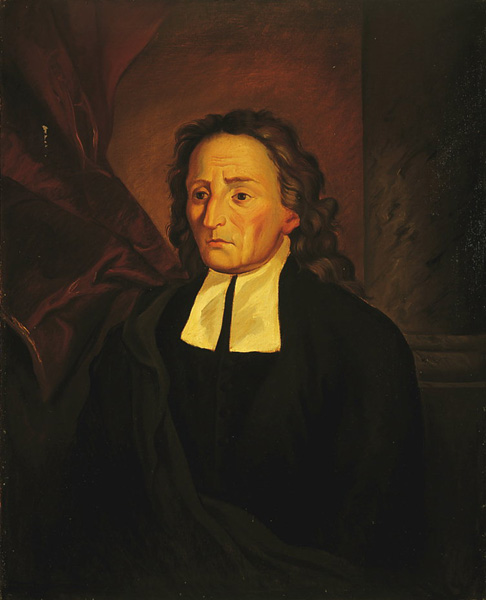 Giambattista Vico1668 – 1744
 Thomas Kuhn1922 – 1996
Show 38 moreShow less
 Rudolf Carnap1891 – 1970
 W. V. O. Quine1908 – 2000
 A. J. Ayer1910 – 1989
 Imre Lakatos1922 – 1974
 Georges Sorel1847 – 1922
 Moritz Schlick1882 – 1936
 Paul Feyerabend1924 – 1994
 Hilary Putnam1926 – 2016
 Jacques Maritain1882 – 1973
 Otto Neurath1882 – 1945
 Ernest Gellner1925 – 1995
 Richard Avenarius1843 – 1896
 Cornelius Castoriadis1922 – 1997
 Hans Reichenbach1891 – 1953
 Alvin Plantingaborn 1932
 Carl Gustav Hempel1905 – 1997
 Michel Serres1930 – 2019
 Ludwig Büchner1824 – 1899
 Mario Bunge1919 – 2020
- Alexandre Koyré1892 – 1964
 Nicola Abbagnano1901 – 1990
 Hossein Nasrborn 1933
- Nelson Goodman1906 – 1998
 Georg Henrik von Wright1916 – 2003
 Kazimierz Ajdukiewicz1890 – 1963
 Mary Midgley1919 – 2018
 Patricia Churchlandborn 1943
 Ian Hacking1936 – 2023
- Ernest Nagel1901 – 1985
 Richard Swinburneborn 1934
- Sandra Harding1935 – 2025
 Hans Albert1921 – 2023
 Michał Hellerborn 1936
 Michael Ruse1940 – 2024
 Susan Haack1945 – 2026
- Herbert Feigl1902 – 1988
 Leon Chwistek1884 – 1944
- Wesley C. Salmon1925 – 2001
You might also explore
 Logic★The study of correct reasoning: what follows from what, and why.
 Political philosophyJustice, the state, power, rights, liberty and equality: how should we live together?
 Metaphysics★The study of the most general features of reality: being, existence, time, causation, identity and possibility.Philosophy of languageMeaning, reference, truth and the use of language.Philosophy of mindWhat is the mind, and how does it relate to the body and brain?