Cosmological argument
Everything that begins to exist has a cause; the universe began to exist; so it has a cause.
The argument, step by step
In philosophy of religion, a cosmological argument is an argument for the existence of God based on observational statements concerning the universe and its contents, examined metaphysically through the lenses of causation or motion (change). The universe is determined to be contingent or finite in a manner that substantiates an external foundation for its existence. By referring to reason and observation alone for its premises—and precluding revelation—this category of argument falls within the domain of natural theology. A cosmological argument can also be referred to as an argument from universal causation, a First Cause argument or prime mover argument.
The concept of causation, or causal principle, is a fundamental pillar of most cosmological arguments, especially in affirming the necessity for a First Cause. The latter is identified by philosophical analysis to be God as determined within classical or other specific conceptions of theism. Some formulations of the argument classify the universe as contingent in the metaphysical sense that it has the potential to not exist and lacks a reason for its existence within itself. Other variations expound its finitude in the impossibility of an infinite regress of causal interactions, kinetic interactions between objects in motion or past events, to specify the existence of a First Cause or an unmoved mover.
The origins of the argument date back at least to Aristotle, developed subsequently within the scholarly traditions of Neoplatonism and early Christianity, then under medieval Islamic scholasticism through the 9th to 12th centuries. It would eventually be re-introduced to Christian theology in the 13th century by Thomas Aquinas. In the 18th century, it would become associated with the principle of sufficient reason articulated by Gottfried Leibniz and Samuel Clarke, itself an exposition of the Parmenidean causal principle that "nothing comes from nothing". Contemporary defenders of cosmological arguments include William Lane Craig, Robert Koons, John Lennox, Stephen Meyer, and Alexander Pruss.
Classical philosophy
Plato (c. 427–347 BC) and Aristotle (c. 384–322 BC) both presented cosmological arguments, though each had notable caveats. In The Laws (Book X), Plato theorised that all movement in the world and cosmos was "imparted motion" that required a "self-originated motion" to set it in motion and to maintain it. In Timaeus, he posited a demiurge of supreme wisdom and intelligence as the creator of the cosmos.
Aristotle disputed the idea of an efficient First Cause, noting that it contradicts his doctrine of an eternal cosmos without a beginning in time. His conception of the unmoved mover describes a timeless being that sustains cosmic motion through an infinite duration, rather than an efficient cause that initiates motion from a cosmic beginning. He proposed the existence of multiple unmoved movers, each powering a celestial sphere, dwelling eternally beyond the sphere of fixed stars, subordinated to a Prime Mover (πρῶτον κινοῦν ἀκίνητον or primus motor) that serves as the ultimate source for all motion. In what he called "first philosophy", or metaphysics, Aristotle intended a theological correspondence between the Prime Mover and a deity. Practically, however, he had presented an explanation for the apparent motion of the fixed stars.
According to Aristotle's natural theology, his pantheon of eternal beings did not create the world, nor do they act on whims. He illustrated the unmoved movers as timeless, immutable beings of pure actuality and thought. Being immaterial, they are incapable of interacting with the cosmos and have no knowledge of what transpires therein. From an "aspiration or desire", the celestial spheres imitate this perfection by moving in the most perfect way possible, in a uniform circular motion. The unmoved movers are no different in kind from the Prime Mover, yet subordinated to it via a dependency of relation.
Late antiquity to the Islamic Golden Age
Plotinus, a third-century Platonist, taught that the One transcendent absolute caused the universe to exist simply as a consequence of its existence (creatio ex deo). His disciple Proclus stated, "The One is God". In the 6th century, Syriac Christian neo-Platonist John Philoponus (c. 490 – c. 570) examined the contradiction between Greek pagan conceptions of past eternity and Aristotle's rejection of the existence of actual infinities. He categorised arguments for the finitude of the past, which underpinned his arguments for the existence of God. Philoponus's ideas would later receive further articulation among Muslim and Jewish exponents of kalam, or medieval Islamic scholasticism.
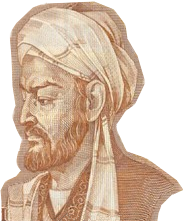
In the 11th century, Islamic philosopher Avicenna (c. 980 – 1037) inquired into the question of being, in which he distinguished between essence (māhiyya) and existence (wuǧūd). He argued that the fact of existence could not be inferred from or accounted for by the essence of existing things, and that form and matter by themselves could not originate and interact with the movement of the universe or the progressive actualization of existing things. Thus, he reasoned that existence must be due to an agent cause that necessitates, imparts, gives, or adds existence to an essence. To do so, the cause must coexist with its effect and be an existing thing.
Medieval Christian theology
Thomas Aquinas (c. 1225 – 1274) adapted and enhanced the argument he found in his reading of Aristotle, Avicenna (the Proof of the Truthful) and Maimonides to formulate one of the most influential versions of the cosmological argument. His conception of the first cause was the idea that the universe must be caused by something that is itself uncaused, which he claimed is 'that which we call God':
The second way is from the nature of the efficient cause. In the world of sense we find there is an order of efficient causes. There is no case known (neither is it, indeed, possible) in which a thing is found to be the efficient cause of itself; for so it would be prior to itself, which is impossible. Now in efficient causes it is not possible to go on to infinity, because in all efficient causes following in order, the first is the cause of the intermediate cause, and the intermediate is the cause of the ultimate cause, whether the intermediate cause be several, or only one. Now to take away the cause is to take away the effect. Therefore, if there be no first cause among efficient causes, there will be no ultimate, nor any intermediate cause. But if in efficient causes it is possible to go on to infinity, there will be no first efficient cause, neither will there be an ultimate effect, nor any intermediate efficient causes; all of which is plainly false. Therefore it is necessary to admit a first efficient cause, to which everyone gives the name of God.
Notably, Aquinas's Five Ways, given the second question of his Summa Theologica, are not the entirety of Aquinas's demonstration that the Christian God exists. The Five Ways form only the beginning of Aquinas's Treatise on the Divine Nature.
The infinite regress
A regress is a series of related elements, arranged in some type of sequence of succession, examined in backwards succession (regression) from a fixed point of reference. Depending on the type of regress, this retrograde examination may take the form of recursive analysis, in which the elements in a series are studied as products of prior, often simpler, elements. If there is no 'last member' in a regress (i.e. no 'first member' in the series) it becomes an infinite regress, continuing in perpetuity. In the context of the cosmological argument the term 'regress' usually refers to causal regress, in which the series is a chain of cause and effect, with each element in the series arising from causal activity of the prior member. Some variants of the argument may also refer to temporal regress, wherein the elements are past events (discrete units of time) arranged in a temporal sequence.
An infinite regress argument attempts to establish the falsity of a proposition by showing that it entails an infinite regress that is vicious. The cosmological argument is a type of positive infinite regress argument given that it defends a proposition (in this case, the existence of a first cause) by arguing that its negation would lead to a vicious regress. An infinite regress may be vicious due to various reasons:
Impossibility: Thought experiments such as Hilbert's Hotel are cited to demonstrate the metaphysical impossibility of actual infinities existing in reality. Correspondingly, it may be argued that an infinite causal or temporal regress cannot occur in the real world.
Implausibility: The regress contradicts empirical evidence (e.g. for the finitude of the past) or basic principles such as Occam's razor.
Explanatory failure: A failure of explanatory goals resulting in an infinite regress of explanations. This may arise in the case of logical fallacies such as begging the question or when investigating causes concerning ultimate origins or fundamental principles.
Accidental and essential ordering of causes
Aquinas refers to the distinction found in Aristotle's Physics (8.5) that a series of causes may either be accidental or essential, though the designation of this terminology would follow later under John Duns Scotus at the turn of the 14th century.
In an accidentally ordered series of causes, earlier members need not continue exerting causal activity (having done so to propagate the chain) for the series to continue. For example, in a generational line, ancestors need no longer exist for their offspring to continue the sequence of descent. In an essential series, prior members must maintain causal interrelationship for the series to continue: If a hand grips a stick that moves a rock along the ground, the rock would stop motion once the hand or stick ceases to exist.
Adapted from the Wikipedia article Cosmological argument, available under CC BY-SA 4.0.
Objections & replies
Why must the first cause be God rather than the universe itself?
Defenders argue the first cause must be timeless, immaterial and powerful.
Hume: causal principles apply within the universe, not to it as a whole.
Connections
Proposed by
1
You might also explore
 The Five WaysMedieval LatinAquinas's five proofs of God: from motion, causation, contingency, degrees of perfection and design.Problem of evilIf God is all-powerful, all-knowing and wholly good, why is there evil and suffering?
 Pascal's wagerModern EuropeanIf God exists, belief gains infinitely; if not, little is lost — so it is rational to believe.
 Ontological argumentMedieval LatinGod is that than which nothing greater can be conceived; such a being must exist in reality, not only in the mind.Argument from designThe order and apparent purpose of nature imply an intelligent designer — Paley's watchmaker.
 Euthyphro dilemmaGreek & RomanIs something good because God commands it, or does God command it because it is good?