intermediate · 45 min
Minds, brains and machines
From Descartes's dualism to the hard problem and the Chinese Room.
Your progress0 / 10
- Philosophy of mindBranchThe mind–body problem.What is the mind, and how does it relate to the body and brain?
- The Floating ManArgumentIbn Sīnā's thought experiment, 600 years before Descartes.Ibn Sīnā's person created in mid-air, without senses, who would still know that he exists.
 Cogito, ergo sumArgumentI think, therefore I am."I think, therefore I am": the one certainty that survives radical doubt.
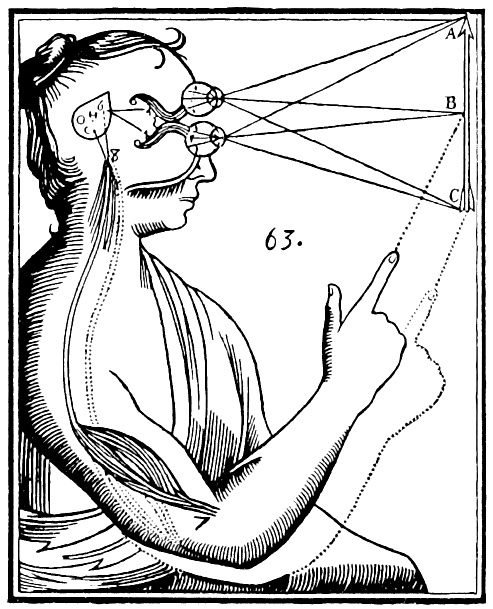 Mind–body dualismConceptTwo kinds of stuff?Mind and body are fundamentally different kinds of thing.
- No-self (Anattā)ConceptThe Buddhist alternative: no self at all.There is no permanent, unchanging self — only a stream of physical and mental processes.
 What Is It Like to Be a Bat?ArgumentWhat is it like to be a bat?Nagel's argument that the subjective character of experience escapes objective physical description.
 Mary's RoomArgumentDoes Mary learn something new?A scientist who knows all physical facts about colour sees red for the first time — does she learn something new?
 Hard problem of consciousnessConceptWhy does experience exist at all?Why is there something it is like to have a brain at all — why does physical processing feel like anything?
- Philosophical zombieArgumentCould there be a physical you with no inner life?A being physically identical to you but with no inner experience. If conceivable, consciousness is not physical.
- Chinese RoomArgumentCan a computer understand?A person following rules to manipulate Chinese symbols seems to understand Chinese but does not — so can a computer?