Critical theory and its heirs
The Frankfurt School criticised capitalism and mass culture; Foucault traced how power shapes knowledge; Derrida deconstructed texts; feminist and decolonial thinkers widened the questions.
- 1
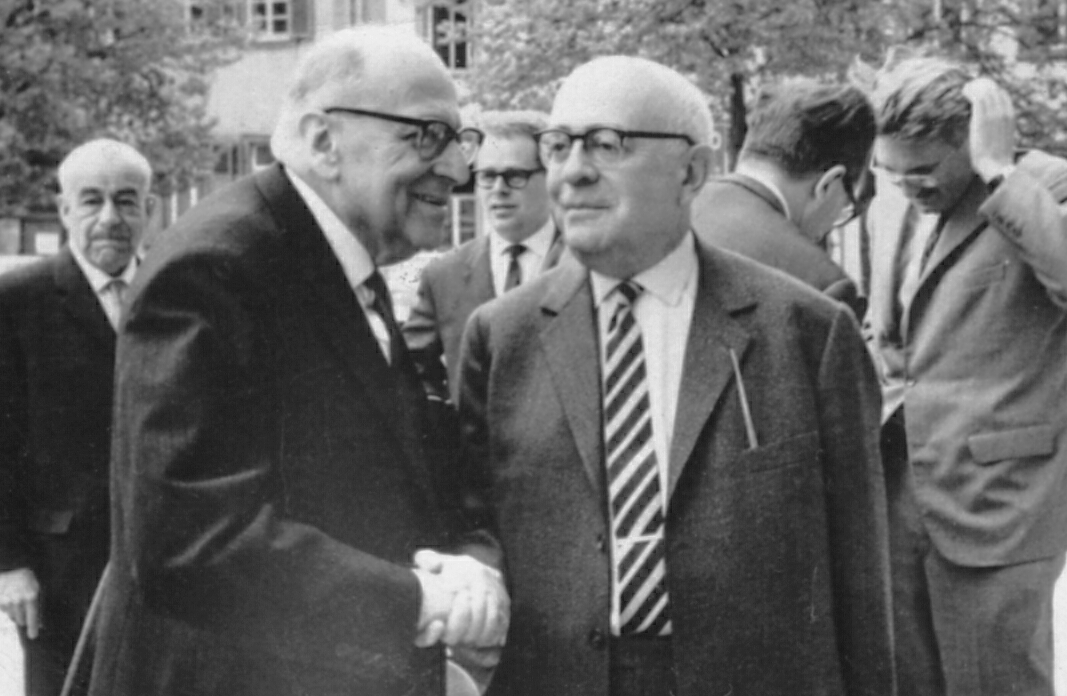 SchoolModern European1930 – present
Critical theory
A Marxist-inspired critique of society, culture and domination.
Read the full pageThe Frankfurt School is a school of thought in sociology and critical theory. It is associated with the Institute for Social Research, founded on February 3, 1923, at the University of Frankfurt am Main (today known as Goethe University Frankfurt). Formed during the Weimar Republic during the European interwar period, the first generation of the Frankfurt School was composed of intellectuals, academics, and political dissidents dissatisfied with the socio-economic systems of the 1930s: namely, capitalism, fascism, and communism. Significant figures associated with the school include Max Horkheimer, Theodor Adorno, Walter Benjamin, Erich Fromm, Wilhelm Reich, Herbert Marcuse, and Jürgen Habermas.
The Frankfurt theorists proposed that existing social theory was unable to explain the turbulent Political factionalism and reactionary politics, such as Nazism, in 20th-century liberal capitalist societies. Also critical of Marxism–Leninism as a philosophically inflexible system of social organization, the School's critical-theory research sought alternative paths to social development.
What unites the disparate members of the School is a shared commitment to the project of human emancipation, theoretically pursued by an attempted synthesis of the Marxist tradition, psychoanalysis, and empirical sociological research.
- 2
 PhilosopherModern European1903 – 1969
Theodor Adorno
Frankfurt School critic of the culture industry and instrumental reason.
- ◆anti-intellectualism
- ◆Humanitas
- ◆culture industry
- ◆Andrew Arato
- ◆modernist
- ◆Maturity
Read the full pageTheodor W. Adorno (; German: [ˈteːodoːɐ̯ aˈdɔʁno] ; born Theodor Ludwig Wiesengrund; 11 September 1903 – 6 August 1969) was a German philosopher, cultural theorist, and music critic. He was a leading member of the Frankfurt School of critical theory, whose work has come to be associated with thinkers such as Ernst Bloch, Walter Benjamin, Max Horkheimer, Erich Fromm, and Herbert Marcuse, for whom the works of Sigmund Freud, Karl Marx, and G. W. F. Hegel were essential to a critique of modern society. As a critic of both fascism and what he called the culture industry, he authored numerous works—such as Dialectic of Enlightenment (1947), Minima Moralia (1951), and Negative Dialectics (1966)—that strongly influenced the European New Left.
In an intellectual climate shaped by existentialism and logical positivism, Adorno developed a dialectical conception of history and philosophy that challenged the foundations of both, anticipating the divide that would later emerge between the analytic and continental traditions. As a classically trained musician, Adorno studied composition with Alban Berg of the Second Viennese School, influenced by his early admiration for the music of Arnold Schoenberg. Adorno's commitment to avant-garde music formed the backdrop of his subsequent writings and led to his collaboration with Thomas Mann on the latter's novel Doctor Faustus (1947), while the two men lived in California as exiles during the Second World War. Working at the newly relocated Institute for Social Research, Adorno collaborated on influential studies of authoritarianism, antisemitism, and propaganda that would later serve as models for sociological studies the institute carried out in post-war Germany.
Upon his return to Frankfurt, Adorno was involved with the reconstitution of German intellectual life through debates with Karl Popper on the limitations of positivist science, critiques of Martin Heidegger's language of authenticity, writings on German responsibility for the Holocaust, and continued interventions into matters of public policy. As a writer of polemics in the tradition of Friedrich Nietzsche and Karl Kraus, Adorno delivered scathing critiques of contemporary Western culture. Adorno's posthumously published Aesthetic Theory (1970), which he had planned to dedicate to Samuel Beckett, is the culmination of a lifelong commitment to modern art, which seeks to revoke the "fatal separation" of feeling and understanding long demanded by the history of philosophy and explode the privilege aesthetics accords to content over form and contemplation over immersion. Adorno was nominated for the 1965 Nobel Prize in Literature by Helmut Viebrock.
- 3
 PhilosopherModern Europeanborn 1929
Jürgen Habermas
Theorist of communicative action and deliberative democracy.
- ◆Communicative action
- ◆Communicative rationality
- ◆Constitutional patriotism
- ◆Discourse ethics
- ◆Ideal speech situation
- ◆Performative contradiction
Read the full pageJürgen Habermas (18 June 1929 – 14 March 2026) was a German philosopher and social theorist in the tradition of critical theory and pragmatism. His work addressed communicative rationality and the public sphere. He held professorships at Heidelberg University and Goethe University Frankfurt and directed the Max Planck Institute in Starnberg.
Associated with the Frankfurt School, Habermas's work focused on the foundations of epistemology and social theory, the analysis of advanced capitalism and democracy, the rule of law in a critical social-evolutionary context, and contemporary politics, particularly German politics. His major works include The Structural Transformation of the Public Sphere (1962), a social history of the emergence and decline of bourgeois public discourse, and The Theory of Communicative Action (1981), which advanced a theory of rationality grounded in interpersonal linguistic communication rather than in instrumental or strategic reason.
He developed the concept of discourse ethics and argued that the Enlightenment remained an "unfinished project" requiring correction rather than abandonment. Habermas's theoretical system is devoted to revealing the possibility of reason, emancipation, and rational-critical communication latent in modern institutions and in the human capacity to deliberate and pursue rational interests. Habermas was known for his work on the phenomenon of modernity, particularly with respect to the discussions of rationalization originally set forth by Max Weber. He was influenced by American pragmatism, action theory, and poststructuralism.
- 4SchoolModern European1960 – present
Post-structuralism
Meaning is unstable; power and language shape what counts as knowledge and identity.
Read the full pagePost-structuralism is a philosophical movement that questions the objectivity or stability of the various interpretive structures that are posited by structuralism and considers them to be constituted by broader systems of power. Although different post-structuralists present different critiques of structuralism, common themes include the rejection of the self-sufficiency of structuralism, as well as an interrogation of the binary oppositions that constitute its structures. Accordingly, post-structuralism discards the idea of interpreting media (or the world) within pre-established, socially constructed structures.
Structuralism proposes that human culture can be understood by means of a structure that is modeled on language. As a result, there is concrete reality on the one hand, abstract ideas about reality on the other hand, and a "third order" that mediates between the two.
A post-structuralist response, then, might suggest that in order to build meaning out of such an interpretation, one must (falsely) assume that the definitions of these signs are both valid and fixed, and that the author employing structuralist theory is somehow above and apart from these structures they are describing so as to be able to wholly appreciate them. The rigidity and tendency to categorize intimations of universal truths found in structuralist thinking is a common target of post-structuralist thought, while also building upon structuralist conceptions of reality mediated by the interrelationship between signs.
- 5
 PhilosopherModern European1926 – 1984
Michel Foucault
Historian of power and knowledge — prisons, madness, sexuality and the disciplined self.
- ◆Biopower
- ◆biopolitics
- ◆disciplinary institution
- ◆discourse analysis
- ◆discursive formation
- ◆dispositif
Read the full pagePaul-Michel Foucault, known as Michel Foucault, (UK: FOO-koh, US: foo-KOH; French: [pɔl miʃɛl fuko]; 15 October 1926 – 25 June 1984) was a French philosopher, literary critic, and historian of ideas who analyzed the relationships between power, knowledge, and liberty, and how they are used as a form of social control through institutions. Sometimes called a structuralist or postmodernist, he rejected these labels and sought to critique authority without limiting himself. His thought has influenced academics in many areas of study, including anthropology, communication studies, criminology, cultural studies, feminism, literary theory, psychology, and sociology. His arguments against homophobia, racial prejudice, and other ideological doctrines have also shaped scholarship on critical theory and Marxism.
Born in Poitiers, France, into an upper-middle-class family, Foucault was educated at the Lycée Henri-IV, at the École Normale Supérieure, developing an interest in philosophy and coming under the influence of his tutors Jean Hyppolite and Louis Althusser. At the University of Paris (Sorbonne), he earned degrees in philosophy and psychology. After several years as a cultural diplomat abroad, he returned to France and published his first major book, The History of Madness (1961). While working at the University of Clermont-Ferrand (1960–66), he produced The Birth of the Clinic (1963) and The Order of Things (1966), which have a structuralist affinity from which he later distanced himself. These first three histories exemplified "archeology", a historiographical technique he was developing.
Foucault lectured at the University of Tunis (1966–68), before returning to France, becoming head of the philosophy department at the new experimental university of Paris VIII, and publishing The Archaeology of Knowledge (1969). He was admitted to the Collège de France (1970), a membership he retained until his death. He also became active in several left-wing groups involved in anti-racist human rights campaigns, including penal reform. He later published Discipline and Punish (1975) and The History of Sexuality (1976), developing archaeological and genealogical methods that emphasize the role power plays in society.
- 6Read the full page
In critical theory, power-knowledge is a term introduced by the French philosopher Michel Foucault (French: le savoir-pouvoir). According to Foucault's understanding, power is based on knowledge and makes use of knowledge; on the other hand, power reproduces knowledge by shaping it in accordance with its anonymous intentions. Power creates and recreates its own fields of exercise through knowledge.
The relationship between power and knowledge has always been a central theme in the social sciences.
Foucault, an epistemological constructivist and historicist, was critical of the idea that humans can reach "absolute" knowledge about the world. A fundamental goal in many of Foucault's works is to show how that which has traditionally been considered as absolute, universal and true is in fact historically contingent. To Foucault, even the idea of absolute knowledge is a historically contingent idea. This does not, however, lead to epistemological nihilism; rather, Foucault argues that people "always begin anew" when it comes to knowledge.
- 7
 PhilosopherModern European1930 – 2004
Jacques Derrida
Founder of deconstruction, exposing hidden hierarchies in texts and concepts.
- ◆Deconstruction
- ◆différance
- ◆phallogocentrism
- ◆free play
- ◆arche-writing
- ◆metaphysics of presence
Read the full pageJacques Derrida (; French: [ʒak dɛʁida]; born Jackie Élie Derrida; 15 July 1930 – 9 October 2004) was a French philosopher. He developed the philosophy of deconstruction, which he applied in some of his texts, and which he developed through close readings of the linguistics of Ferdinand de Saussure and Husserlian and Heideggerian phenomenology. He is one of the major figures associated with post-structuralism and postmodern philosophy although he distanced himself from post-structuralism and disavowed the word "postmodernity".
During his career, Derrida published over 40 books, together with hundreds of essays and public presentations. He has had a significant influence on the humanities and social sciences, including philosophy, literature, law, anthropology, historiography, applied linguistics, sociolinguistics, psychoanalysis, music, architecture, and political theory.
Into the 2000s, his work retained major academic influence throughout the United States, continental Europe, South America and all other countries where continental philosophy has been predominant, particularly in debates around ontology, epistemology (especially concerning social sciences), ethics, aesthetics, hermeneutics, and the philosophy of language. For the last two decades of his life, Derrida was Professor in Humanities at the University of California, Irvine. In most of the Anglosphere, where analytic philosophy is dominant, Derrida's influence is most presently felt in literary studies include literary theory and criticism due to his longstanding interest in language and his association with prominent literary critics. He also influenced architecture (in the form of deconstructivism), music (especially in the musical atmosphere of hauntology), art, and art criticism.
- 8SchoolModern European1790 – present
Feminist philosophy
Examines how gender shapes knowledge, ethics, politics and the self.
Read the full pageFeminist philosophy is an approach to philosophy from a feminist perspective and also the employment of philosophical methods to feminist topics and questions. Feminist philosophy involves both reinterpreting philosophical texts and methods in order to supplement the feminist movement and attempts to criticise or re-evaluate the ideas of traditional philosophy from within a feminist framework.
Feminist philosophy is united by a central concern with gender. It also typically involves some form of commitment to justice for women, whatever form that may take. Aside from these uniting features, feminist philosophy is a diverse field covering a wide range of topics from a variety of approaches. Broadening further, feminist philosophy entails how race, sexuality, socioeconomic class, and other factors of identity impact gender inequalities. Feminist philosophers, as philosophers, are found in both the analytic and continental traditions, and a myriad of different viewpoints are taken on philosophical issues within those traditions. Feminist philosophers, as feminists, can also belong to many different varieties of feminism.
Feminist philosophy can be understood to have three main functions:
- ◆Gender performativity
Read the full pageJudith Butler (born February 24, 1956) is an American feminist, queer philosopher, and gender studies scholar whose work has influenced political philosophy, ethics, psychoanalysis, and the fields of feminist and queer theory, academic freedom, and literary theory.
Butler has held academic appointments at Wesleyan University, George Washington University, and Johns Hopkins University where they received tenure in 1992 before joining the faculty in the Department of Rhetoric at the University of California, Berkeley in 1993. There they became the Maxine Elliot Professor in 1998, holding faculty appointments in the Departments of Rhetoric and Comparative Literature and the program in critical theory which they cofounded in 2007. They founded the International Consortium of Critical Theory, funded by the Mellon Foundation, in 2015. They also hold the Hannah Arendt Chair at the European Graduate School (EGS).
Butler is best known for the books Gender Trouble: Feminism and the Subversion of Identity (1990) and Bodies That Matter: On the Discursive Limits of Sex (1993), in which they challenge conventional, heteronormative notions of gender and develop their theory of gender performativity. This theory has had a major influence on feminist and queer scholarship.
- 10
 PhilosopherAmericas1952 – 2021
bell hooks
Thinker of race, gender, class and love as a practice of freedom.
- ◆Oppositional gaze
Read the full pageGloria Jean Watkins (September 25, 1952 – December 15, 2021), better known by her pen name bell hooks (stylized in lowercase), was an American philosopher, educator, author, and social critic; she was a Distinguished Professor in Residence at Berea College in Kentucky. Professor hooks wrote about race, feminism, and social class. Her work explored the intersections of race, capitalism, and gender, and what she described as their ability to produce and perpetuate systems of oppression and class domination. Her work served as foundational to the modern idea of intersectionality. She published numerous scholarly articles and nearly 40 books, in styles ranging from essays and poetry to children's literature, with a body of work that addressed love, gender, art, history, sexuality, and mass media.
hooks began her academic career in 1976 teaching English and ethnic studies at the University of Southern California. She later taught at several institutions including Stanford University (as a guest-lecturer), Yale University, New College of Florida, and The City College of New York, before joining Berea College in Berea, Kentucky, in 2004. In 2014, hooks also founded the bell hooks Institute at Berea College. Her pen name was borrowed from her maternal great-grandmother, Bell Blair Hooks, using lowercase to decenter herself and instead maintain focus on the substance of her writings.
Gloria Jean Watkins was born on September 25, 1952, to a working-class African-American family, in Hopkinsville, a small, segregated town in Kentucky. hooks was one of six children born to Rosa Bell Watkins (née Oldham) and Veodis Watkins. Her father worked as a janitor and her mother worked as a maid in the homes of white families. In her memoir Bone Black: Memories of Girlhood (1996), hooks would write of her "struggle to create self and identity" while growing up in "a rich magical world of southern black culture that was sometimes paradisiacal and at other times terrifying."
- 11
 PhilosopherModern Europeanborn 1949
Slavoj Žižek
Slovenian philosopher mixing Hegel, Lacan and Marx in a critique of ideology and pop culture.
- ◆Interpassivity
- ◆Over-identification
- ◆Ideological
- ◆fantasy
- ◆unconscious
- ◆dialectical materialism
Read the full pageSlavoj Žižek (born 21 March 1949) is a Slovenian philosopher, cultural theorist and public intellectual.
Žižek is a Global Distinguished Professor of German at New York University, professor of philosophy and psychoanalysis at the European Graduate School and senior researcher at the Institute for Sociology and Philosophy at the University of Ljubljana. He was the international director of the Birkbeck Institute for the Humanities at the University of London from 2004 until September 2025. He primarily works on continental philosophy (particularly Hegelianism, Lacanian psychoanalysis and Marxism) and political theory, as well as film criticism and theology.
Žižek is an associate of the Ljubljana School of Psychoanalysis, a group of Slovenian academics working on German idealism, Lacanian psychoanalysis, ideology critique, and media criticism. His first book in English is The Sublime Object of Ideology (1989), which was used in the introduction of the Ljubljana School's thought to English-speaking audiences. He has written over 50 books in multiple languages and speaks Slovene, Serbo-Croatian, English, German, and French. The idiosyncratic style of his public appearances, frequent magazine op-eds, and academic works, characterised by the use of obscene jokes and pop cultural examples, as well as politically incorrect provocations, have gained him fame, controversy, and criticism both in and outside academia.
