Devotion and reform: Bhakti and Sikh thought
Poet-saints wrote in the people's languages and taught that love of God overrides caste and ritual. Basavanna said work is worship; Kabir mocked temple and mosque alike; Guru Nanak founded Sikhism on one God and the equality of all.
- 1
 SchoolIndian600 – 1800
Bhakti movement
A devotional revolution across India that put loving devotion above caste, ritual and priesthood — through poet-saints like Kabir, Mirabai and Tulsidas.
- ◆Love of God over ritual
- ◆Equality before the divine
- ◆Poetry in the people's languages
Read the full pageThe Bhakti movement was a significant religious movement in medieval Hinduism that sought to bring religious reforms to all strata of society by adopting the method of devotion to achieve salvation. Originating in Tamilakam during the 6th century CE, it gained prominence through the poems and teachings of the Vaishnava Alvars and Shaiva Nayanars in early medieval South India, before spreading northwards. It swept over east and north India from the 15th century onwards, reaching its zenith between the 15th and 17th century CE.
The Bhakti movement regionally developed around different Hindu gods and goddesses, and some sub-sects were Vaishnavism (Vishnu), Shaivism (Shiva), Shaktism (Shakti goddesses), and Smartism. The Bhakti movement preached using the local languages so that the message reached the masses. The movement was inspired by many poet-saints, who championed a wide range of philosophical positions ranging from theistic dualism of Dvaita to absolute monism of Advaita Vedanta.
The movement has traditionally been considered an influential social reformation in Hinduism, as it provided an individual-focused alternative path to spirituality, regardless of one's birth or gender. Contemporary scholars question whether the Bhakti movement was ever a reform or rebellion of any kind. They suggest that the Bhakti movement was a revival, reworking, and recontextualisation of ancient Vedic traditions.
- 2
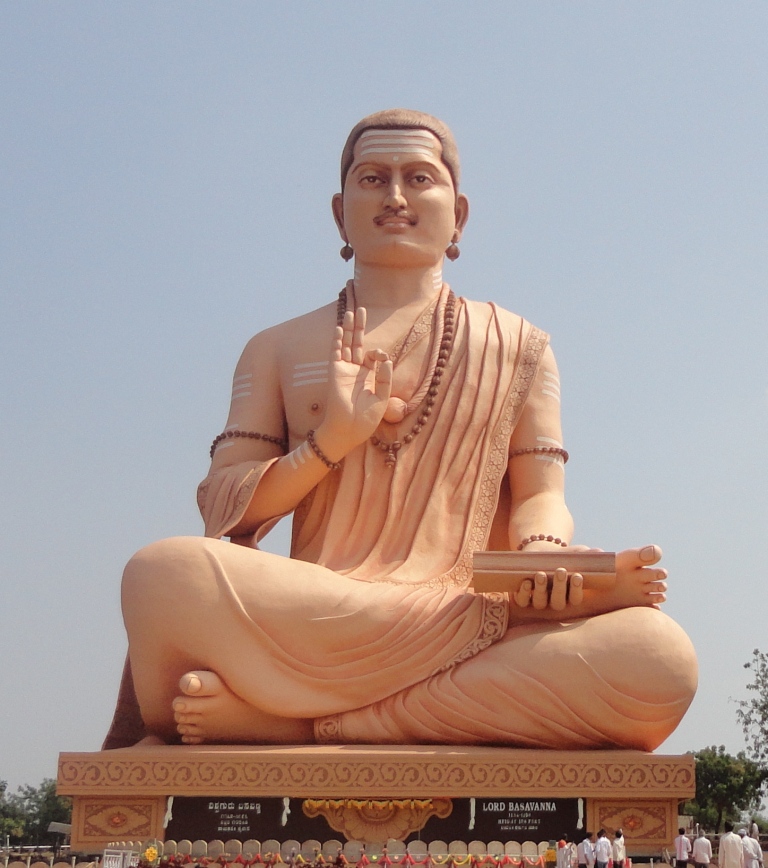 PhilosopherIndianc. 1105 – 1167
Basavanna
Kannada philosopher-reformer of the Lingayat movement who preached that "work is worship" and rejected caste.
- ◆Kayakave Kailasa — work is worship
- ◆Anubhava Mantapa: a hall of open debate
- ◆Against caste and gender hierarchy
Read the full pageBasava (1131–1196), also called Basavēśvara and Basavaṇṇa, was a controversial Indian philosopher, poet, Lingayat social reformer in the Shiva-focused bhakti movement, and a Hindu Shaivite social reformer during the reign of the Kalyani Chalukya and the Kalachuri Dynasty. Basava was active during the rule of both dynasties, but his influence peaked during the reign of King Bijjala II in Karnataka, India. The rise of the Vīraśaiva movement under Basava was also associated with religious persecution of Jains in Karnataka, including the destruction, desecration and appropriation of Jain temples.
Basava spread social awareness through his poetry, popularly known as Vachanaas. He rejected gender or social discrimination, superstitions and rituals but introduced Ishtalinga necklace, with an image of the lingam, to every person regardless of their birth, to be a constant reminder of one's bhakti (devotion) to Shiva. The traditional legends and hagiographic texts state Basavanna to be the founder of the Lingayats. However, modern scholarship relying on historical evidence such as the Kalachuri inscriptions state that Basava was the poet philosopher who revived, refined and energized an already existing tradition. The Basavarajadevara Ragale (13 out of 25 sections are available) by the Kannada poet Harihara (c. 1180) is the earliest available account on the life of the social reformer and is considered important because the author was a near contemporary of his protagonist. A full account of Basava's life and ideas are narrated in a 13th-century Telugu text, the Basava Purana by Palkuriki Somanatha.
Basava literary works include the Vachana Sahitya in Kannada Language. He is also known as Bhaktibhandari (lit. 'the treasurer of devotion') and Basavanna.
- 3
 PhilosopherIndianc. 1398 – 1518
Kabir
Weaver-poet of Varanasi whose sharp, simple verses mocked both Hindu and Muslim ritual and found God within.
- ◆God is within, not in temple or mosque
- ◆Against caste and empty ritual
- ◆Love as the only true scripture
Read the full pageKabir (fl. 15th century) was an Indian devotional mystic poet and saint. His writings influenced Hinduism's Bhakti movement, and his verses are found in Sikhism's scripture Guru Granth Sahib, the Satguru Granth Sahib of Saint Garib Das, and Kabir Sagar of Dharamdas. Today, Kabir is an important personality in Hinduism, Sikhism and in Sufism. He was a disciple of Ramananda, the founder of the Ramanandi Sampradaya.
He was born in the city of Varanasi in what is now Uttar Pradesh, he is known for being critical of organised religions. He questioned what he regarded to be the meaningless and unethical practices of all religions, primarily what he considered to be the wrong practices in Hinduism and Islam. During his lifetime, he was threatened by both Hindus and Muslims for his views. When he died, several Hindus and the Muslims he had inspired claimed him as theirs.
Kabir's suggestion was that "truth" is with the person who is on the path of righteousness, who considers everything, living and non living, as divine, and who is passively detached from the affairs of the world. To know the truth, suggested Kabir, drop the "I", or the ego. Kabir's legacy survives and continues through the Kabir panth ("Path of Kabir"), Sant Mat sect that recognises Kabir as its founder. Its members are known as Kabir panthis.
- 4
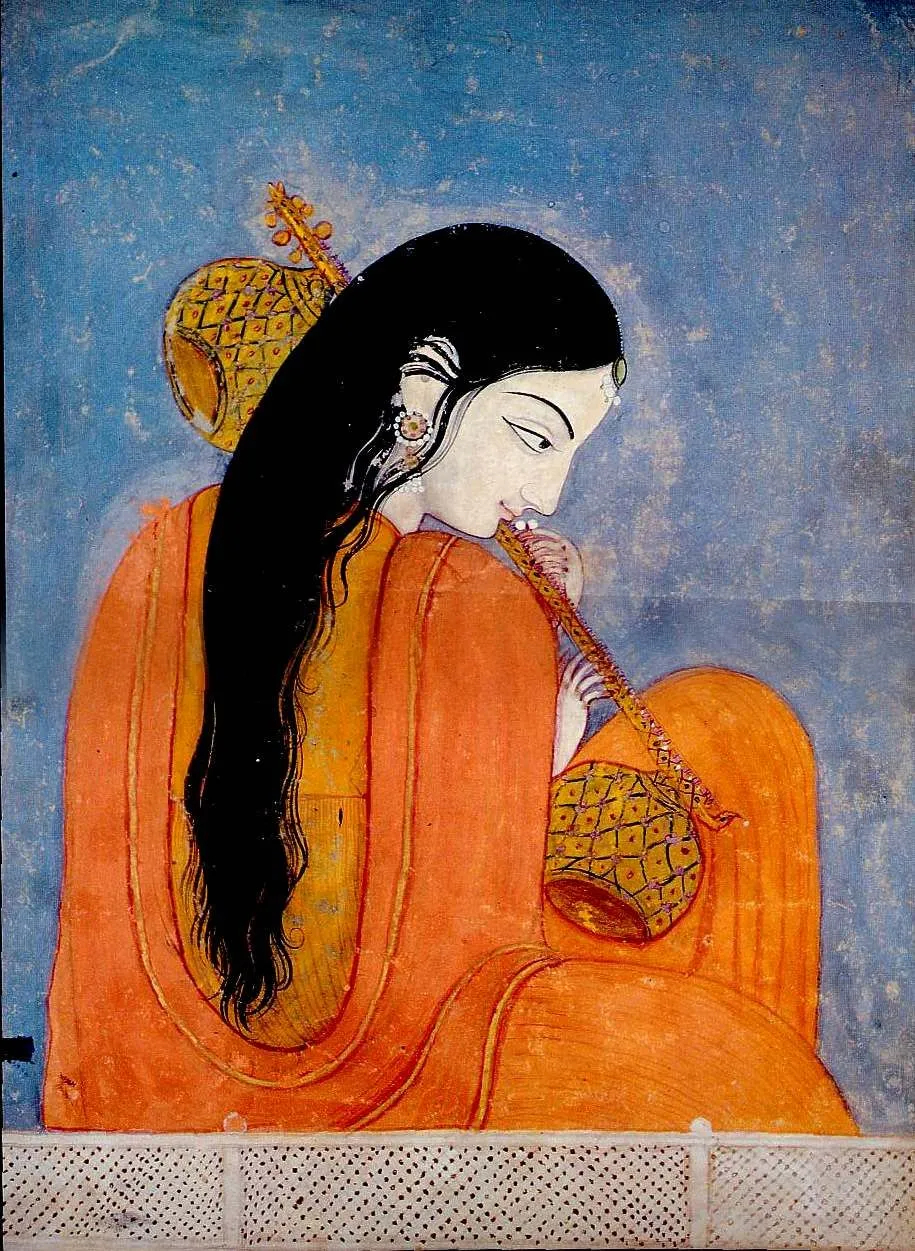 PhilosopherIndianc. 1498 – 1547
Mirabai
Rajput princess and poet-saint whose devotion to Krishna defied caste and royal convention.
- ◆Bhakti
- ◆Krishna
Read the full pageMeera, better known as Meera bai, and venerated as Sant Meerabai, was a 16th-century Hindu mystic poet and devotee of Krishna. She is a celebrated Bhakti saint, particularly in the North Indian Hindu tradition. She is mentioned in Bhaktamal, confirming that she was widely known and a cherished figure in the Bhakti movement by about 1600. In her poems, she expressed the madhurya bhava towards Krishna.
Most legends about Mirabai mention her fearless disregard for social and family conventions, her devotion to Krishna, and her persecution by her in-laws for her religious devotion. Her in-laws never liked her passion for music, through which she expressed her devotion, and they considered it an insult to the upper-caste people. It is said that amongst her in-laws, her husband was the only one to love and support her in her Bhakti, while some believed him to have opposed it. She has been the subject of numerous folk tales and hagiographic legends, which are inconsistent or widely different in details. According to legend, when her in-laws attempted to murder her with poison, Mirabai tied a sacred thread on a murti of Krishna, trusting in His divine protection, through which she was saved by divine intervention. This legend is sometimes cited as the origin of the ritual of tying rakhi on Krishna's murti.
Millions of devotional hymns in passionate praise of Krishna are attributed to Mirabai in the Indian tradition, but just a few hundred are believed to be authentic by scholars, and the earliest written records suggest that, except for two hymns, most were first written down in the 18th century. Many poems attributed to Mirabai were likely composed later by others who admired Mirabai. These hymns, also called Bhajan are very famous across India.
- 5
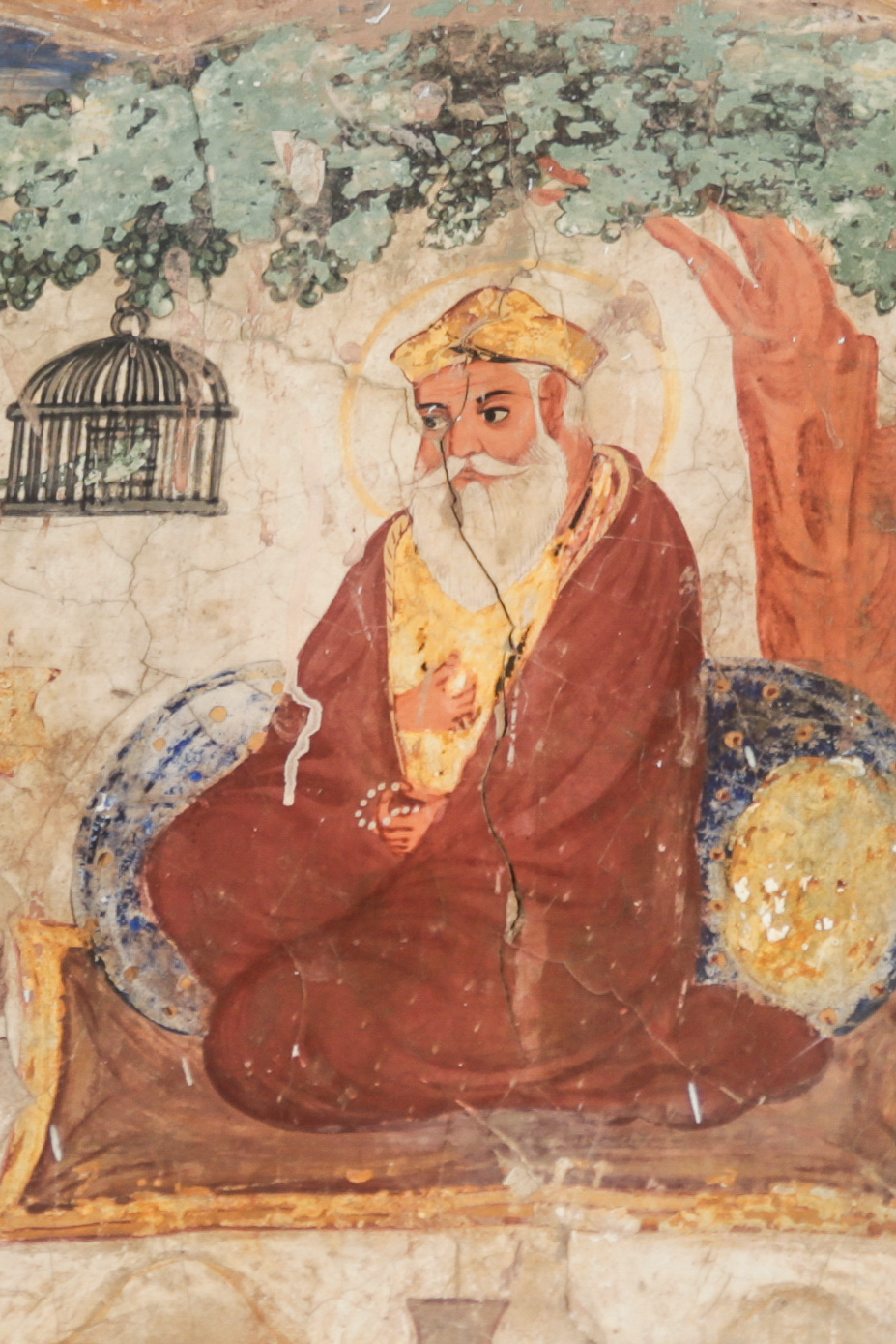 PhilosopherIndian1469 – 1539
Guru Nanak
Founder of Sikhism, who taught one formless God, honest work, sharing with others and the equality of all.
- ◆Ik Onkar — there is one God
- ◆Honest work and sharing
- ◆Equality of all castes and genders
Read the full pageGurū Nānak (15 April 1469 – 22 September 1539; Gurmukhi: ਗੁਰੂ ਨਾਨਕ), also known as Bābā Nānak (Father Nanak), was an Indian spiritual teacher, mystic and poet, who is regarded as the founder of Sikhism and is the first of the ten Sikh gurus.
Nanak is said to have travelled far and wide across Asia teaching people the message of Ik Onkar (ੴ, 'One God'), who dwells in every one of his creations and constitutes the eternal Truth. With this concept, he would set up a unique spiritual, social, and political platform based on equality, fraternal love, goodness, and virtue.
Nanak's words are registered in the form of 974 poetic hymns, or shabda, in the holy religious scripture of Sikhism, the Guru Granth Sahib, with some of the major prayers being the Japji Sahib (jap, 'to recite'; ji and sahib are suffixes signifying respect); the Asa di Var ('Ballad of Hope'); and the Sidh Goshti ('Discussion with the Siddhas'). It is part of Sikh religious belief that the spirit of Nanak's sanctity, divinity, and religious authority had descended upon each of the nine subsequent Gurus when the Guruship was devolved onto them. His birthday is celebrated as Guru Nanak Gurpurab, annually across India.
- 6
 SchoolIndian1500 – present
Sikh philosophy
Guru Nanak's teaching of one formless God (Ik Onkar), honest work, sharing and service, and the equality of all people.
- ◆Ik Onkar — one God
- ◆Naam japna, kirat karni, vand chhakna
- ◆Equality and seva (service)
Read the full pageSikhism, also known as Sikhi, is an Indian religion and philosophy that originated in the Punjab region of the Indian subcontinent around the end of the 15th century CE. It is one of the most recently founded major religions and is followed by 25–30 million adherents, known as Sikhs.
Sikhism developed from the spiritual teachings of Guru Nanak (1469–1539), the faith's first guru, and the nine Sikh gurus who succeeded him. The tenth guru, Guru Gobind Singh (1666–1708), named the Guru Granth Sahib, which is the central religious scripture in Sikhism, as his successor. This brought the line of human gurus to a close. Sikhs regard the Guru Granth Sahib as the 11th and eternally living Guru.
The core beliefs and practices of Sikhism, articulated in the Guru Granth Sahib and other Sikh scriptures, include faith and meditation in the name of the one creator (Ik Onkar), the divine unity and equality of all humankind, engaging in selfless service to others (sevā), striving for justice for the benefit and prosperity of all (sarbat da bhala), and honest conduct and livelihood. Following this standard, Sikhism rejects claims that any particular religious tradition has a monopoly on absolute truth. As a consequence, Sikhs do not actively proselytise, although voluntary converts are generally accepted. Sikhism emphasises meditation and remembrance as a means to feel God's presence (simran), which can be expressed musically through kirtan or internally through naam japna (lit. 'meditation on God's name'). Baptised Sikhs are obliged to wear the five Ks, which are five articles of faith that physically distinguish Sikhs from non-Sikhs. Among these include the kesh (uncut hair). Most religious Sikh men thus do not cut their hair but rather wear a turban.
- 7
 PhilosopherIndianc. 100 BCE – 500 CE
Thiruvalluvar
Tamil sage, author of the Tirukkuṟaḷ — 1,330 couplets on virtue, wealth and love, one of the great works on ethics.
- ◆Virtue (aram), wealth (porul), love (inbam)
- ◆Universal ethics without sectarian creed
Read the full pageThiruvalluvar (commonly known as Valluvar) was an Indian philosopher and a Tamil-language poet of the post-Sangam era. He is best known as the author of the Tirukkuṟaḷ, a collection of couplets on ethics, political and economic matters, and love. The text is considered an exceptional and widely cherished work of Tamil literature.
Almost no authentic information is available about Valluvar, states Kamil Zvelebil – a scholar of Tamil literature. His life and likely background are variously inferred from his literary works by different biographers. There are unauthentic hagiographic and legendary accounts of Valluvar's life, and all major Indian religions, as well as Christian missionaries of the 19th century, have tried to claim him as secretly inspired (crypto-) or originally belonging to their tradition. Little is known with certainty about his family background, religious affiliation, or birthplace. He is believed to have lived at least in the town of Mylapore (a neighbourhood of the present-day Chennai), and his floruit is dated variously from fourth century BCE to early fifth century CE, based on the traditional accounts and the linguistic analyses of his writings. Kamil Zvelebil infers the Tirukkuṟaḷ and Valluvar are best dated to around 500 CE.
Valluvar has influenced a wide range of scholars down the ages since his time across the ethical, social, political, economical, religious, philosophical, and spiritual spheres. He has long been venerated as a great sage, and his literary works a classic of Tamil culture.
