
Sikh philosophy
Guru Nanak's teaching of one formless God (Ik Onkar), honest work, sharing and service, and the equality of all people.
Key ideas
Sikhism, also known as Sikhi, is an Indian religion and philosophy that originated in the Punjab region of the Indian subcontinent around the end of the 15th century CE. It is one of the most recently founded major religions and is followed by 25–30 million adherents, known as Sikhs.
Sikhism developed from the spiritual teachings of Guru Nanak (1469–1539), the faith's first guru, and the nine Sikh gurus who succeeded him. The tenth guru, Guru Gobind Singh (1666–1708), named the Guru Granth Sahib, which is the central religious scripture in Sikhism, as his successor. This brought the line of human gurus to a close. Sikhs regard the Guru Granth Sahib as the 11th and eternally living Guru.
The core beliefs and practices of Sikhism, articulated in the Guru Granth Sahib and other Sikh scriptures, include faith and meditation in the name of the one creator (Ik Onkar), the divine unity and equality of all humankind, engaging in selfless service to others (sevā), striving for justice for the benefit and prosperity of all (sarbat da bhala), and honest conduct and livelihood. Following this standard, Sikhism rejects claims that any particular religious tradition has a monopoly on absolute truth. As a consequence, Sikhs do not actively proselytise, although voluntary converts are generally accepted. Sikhism emphasises meditation and remembrance as a means to feel God's presence (simran), which can be expressed musically through kirtan or internally through naam japna (lit. 'meditation on God's name'). Baptised Sikhs are obliged to wear the five Ks, which are five articles of faith that physically distinguish Sikhs from non-Sikhs. Among these include the kesh (uncut hair). Most religious Sikh men thus do not cut their hair but rather wear a turban.
The religion developed and evolved in times of religious persecution, gaining converts from both Hinduism and Islam. The Mughal emperors of India tortured and executed two of the Sikh gurus—Guru Arjan (1563–1606) and Guru Tegh Bahadur (1621–1675)—after they refused to convert to Islam. The persecution of the Sikhs triggered the founding of the Khalsa by Guru Gobind Singh in 1699 as an order to protect the freedom of conscience and religion, with members expressing the qualities of a sant-sipāhī ("saint-soldier").
Terminology
The majority of Sikh scriptures were originally written in the alphabet of Gurmukhī, a script standardised by Guru Angad out of Laṇḍā scripts historically used in present-day Pakistan and North India. Adherents of Sikhism are known as Sikhs, meaning "students" or "disciples" of the guru. The English word Sikhism derives from the Punjabi word for the religion Sikhi (Punjabi: ਸਿੱਖੀ Sikkhī, [ˈsɪk.kʰiː] , from Punjabi: ਸਿੱਖ, romanised: Sikh, lit. 'disciple'), which connotes the "temporal path of learning" and is rooted in the verb sikhana (lit. 'to learn'). The Global Institute of Sikh Studies translates the term Sikh as meaning "bearers of sikhiā [wisdom]".
Some Sikhs oppose the exonym term Sikhism as they claim the word was coined by the British colonists rather than by Sikhs themselves, and they instead prefer the endonym Sikhi. They argue that an "-ism" connotes a fixed and immutable worldview which is not congruent with the internally fluid nature of the Sikh philosophy. Other terms Sikhs use to name their faith are gursikhi, gurmat, or dharam.
Philosophy and teachings
The basis of Sikhism lies in the teachings of Guru Nanak and his successors. Sikhs emphasise the congruence between spiritual development and everyday moral conduct. Its founder, Guru Nanak, summarised this perspective by saying, "Truth is the highest virtue, but higher still is truthful living." Sikhism emphasises Ėk nūr te sab jag upjiā, 'From the one light, the entire universe welled up.' Guru Nanak also emphasised his teachings to his disciples by giving them real-life examples.
God
Sikhism is a monotheistic and panentheistic religion. Sikhs believe that only one God exists and that God is simultaneously within everything and is all-encompassing. The oneness of God is reflected by the phrase Ik Onkar. In Sikhism, the word for God is Waheguru (lit. 'wondrous teacher'). The Waheguru is considered to be Nirankar ("shapeless"), Akal ("timeless"), Karta Purakh ("the creator being"), Akaal Purkh ("beyond time and death") and Agam Agochar ("incomprehensible and invisible").
In a literal sense, God has no gender in Sikhism, but metaphorically, God is presented as masculine and God's power as feminine. For example, Guru Gobind Singh refers to God as his father and God's creative power as his mother. Similarly, another example is that the Guru Granth Sahib, the primary Sikh scripture, says that all humans are soul-brides who long to unite with their husband Lord. In addition, the gurus also wrote in the Guru Granth Sahib that there are many worlds on which the transcendental God has created life.
The Sikh scripture begins with God as Ik Onkar (ੴ), the 'One Creator', understood in the Sikh tradition as monotheistic unity of God. Ik onkar (sometimes capitalised) is more loosely rendered 'the one supreme reality', 'the one creator', 'the all-pervading spirit', and other ways of expressing a diffused but unified and singular sense of God and creation.
The traditional Mul Mantar goes from ik onkar until Nanak hosee bhee sach. The opening line of the Guru Granth Sahib and each subsequent raga mentions ik onkar:
Worldly illusion
Māyā, defined as a temporary illusion or "unreality", is one of the core deviations from the pursuit of God and salvation: where worldly attractions give only illusory, temporary satisfaction and pain that distracts from the process of devotion to God. However, Nanak emphasised māyā as not a reference to the world's unreality but to its values. In Sikhism, the influences of ego, anger, greed, attachment, and lust, known as the pānj chor ('Five Thieves'), are believed to be particularly distracting and hurtful. Sikhs believe the world is currently in a state of Kali Yuga ('age of darkness') because the world is led astray by the love of and attachment to māyā. The fate of people vulnerable to the five thieves is separation from God, and the situation may be remedied only after intensive and relentless devotion.
Timeless truth
According to Guru Nanak, the supreme purpose of human life is to reconnect with Akal ('The Timeless One'). However, egotism is the most significant barrier to making this connection. Using the Guru's teaching remembrance of nām (the divine Name of the Lord) leads to the end of egotism. Guru Nanak designated the word Guru ('teacher') to mean the voice of "the spirit": the source of knowledge and the guide to salvation. As ik onkar is universally immanent, Guru is indistinguishable from Akal and are one and the same.
Liberation
Guru Nanak's teachings are founded not on a final destination of heaven or hell but on a spiritual union with the Akal, which results in salvation or jivanmukti ('enlightenment/liberation within one's lifetime'), a concept also found in Hinduism. Guru Gobind Singh makes it clear that human birth is obtained with great fortune, and therefore one needs to be able to make the most of this life.
Sikhs accept reincarnation and karma concepts found in Buddhism, Hinduism, and Jainism, but do not necessarily infer a metaphysical soteriology such as a state of "heaven" or "nirvana." Nevertheless, in Sikhism, both karma and liberation are "modified by the concept of God's grace" (nadar, mehar, kirpa, karam, etc.). Guru Nanak states that "the body takes birth because of karma, but salvation is attained through grace." To get closer to God, Sikhs: avoid the evils of maya; keep the everlasting truth in mind; practice shabad kirtan (musical recitation of hymns); meditate on naam; and serve humanity. Sikhs believe that being in the company of the satsang (association with sat, 'true', people) or sadh sangat is one of the key ways to achieve liberation from the cycles of reincarnation. The Sikh community may be seen to correspond to A.D. Smith's definition of a politicised community, sharing common ancestry myths and historical memories of martyrdom and persecution under successive rulers.
Power and devotion (Miri and Piri)
Miri Piri is a doctrine practiced in the Sikh religion since the seventeenth century. The doctrine of the "Mir" (social and political aspects of life) and the "Pir" (guides to the spiritual aspect of life) was revealed by the first guru of Sikhism, Guru Nanak, but propounded by the sixth guru of Sikhism, Guru Hargobind, on 12 June 1606. After the martyrdom of his father, Guru Hargobind was elevated to the Guruship and fulfilled the prophecy that was given by the primal figure of Sikh, Baba Buddha, that the guru will possess spiritual and temporal power. Guru Hargobind introduced the two swords of Miri and Piri, symbolising both worldly (social and political) and spiritual authority. The two kirpan of Miri and Piri are tied together with a khanda in the centre, so the combination of both is considered supreme. This means that all action informed or arising out of the spiritual heart completes one's purpose and meaning in the world of action: spirituality.
Guru Nanak, the first Sikh guru and the founder of Sikhism, was a Bhakti saint. He taught that the most important form of worship is Bhakti (devotion to Waheguru). Guru Arjan, in the Sukhmani Sahib, recommended the true religion as one of loving devotion to God. The Guru Granth Sahib includes suggestions on how a Sikh should perform constant Bhakti. Some scholars call Sikhism a Bhakti sect of Indian traditions, adding that it emphasises "nirguni Bhakti", i.e. loving devotion to a divine without qualities or physical form. However, Sikhism also accepts the concept of saguni, i.e. a divine with qualities and form. While Western scholarship generally places Sikhism as arising primarily within a Hindu Bhakti movement milieu while recognising some Sufi Islamic influences, some Indian Sikh scholars disagree and state that Sikhism transcended the environment it emerged from. The basis of the latter analysis is that Bhakti traditions did not clearly disassociate from Vedic texts and their cosmologies and metaphysical worldview, while the Sikh tradition clearly did disassociate from the Vedic tradition.
Several Sikh sects outside the Punjab region of India, such as those found in Maharashtra and Bihar, practice aarti (the ceremonial use of lamps) during Bhakti observances in a Sikh gurdwara. However, most Sikh gurdwaras forbid aarti during their Bhakti practices. While emphasising Bhakti, the Sikh gurus also taught that the spiritual life and secular householder life are intertwined, and not separate. This logically follows from the panentheistic nature of Sikh philosophy. In Sikh worldview, the everyday world is part of the Infinite Reality, increased spiritual awareness leads to increased and vibrant participation in the everyday world. Guru Nanak described living an "active, creative, and practical life" of "truthfulness, fidelity, self-control and purity" as being higher than the metaphysical truth.
The sixth guru, Guru Hargobind, after Guru Arjan's martyrdom, faced oppression by the Islamic Mughal Empire and affirmed the philosophy that the political/temporal (Miri) and spiritual (Piri) realms are mutually coexistent. According to the ninth Sikh guru, Tegh Bahadur, the ideal Sikh should have both Shakti (power that resides in the temporal), and Bhakti (spiritual meditative qualities). This was developed into the concept of the "saint soldier" by the tenth Sikh guru, Gobind Singh.
The concept of humanity, as elaborated by Guru Nanak, refines and negates the "monotheistic concept of self/God", declaring that "monotheism becomes almost redundant in the movement and crossings of love". Sikh gurus have taught that the human's goal is to end all dualities of "self and other, I and not-I", attain the "attendant balance of separation-fusion, self-other, action-inaction, attachment-detachment, in the course of daily life".
Singing and music
Sikhs refer to the hymns of the gurus as Gurbani (lit. 'Guru's word'). Shabad Kirtan is the singing of Gurbani. The entire Guru Granth Sahib is written in the form of poetry and rhyme to be recited in thirty-one ragas of classical Indian music as specified. However, the exponents of these are rarely to be found amongst the Sikhs who are conversant with all the Ragas in the Guru Granth Sahib. Guru Nanak started the Shabad Kirtan tradition and taught that listening to kirtan is a powerful way to achieve tranquility while meditating, and singing of the glories of the "Supreme Timeless One" (God) with devotion is the most effective way to come in communion with the "Supreme Timeless One". The three morning prayers for Sikhs consist of Japji Sahib, Jaap Sahib, and Tav-Prasad Savaiye. Baptised Sikhs (Amritdharis) rise early and meditate, then recite all the Five Banis of Nitnem, before breakfast. The Five Banis consist of Japji Sahib, Jaap Sahib, Tav-Prasad Savaiye, Chaupai Sahib, and Anand Sahib; recitation of the banis paath is followed by Ardās, in which the Sarbat da Bhala principle is taught by gurus.
Remembrance of the Divine Name
A key practice by Sikhs is remembrance of the Naam (divine name), Waheguru. This contemplation is done through Nām Japō (repetition of the Divine Name) or Simran (remembrance of the Divine Name through recitation). The verbal repetition of the name of God—or a sacred syllable—is an established practice in religious traditions in India; however, Sikhism developed Naam-simran as an important Bhakti practice. Guru Nanak's ideal is the total exposure of one's being to the Divine Name and a conformation to Dharma, the "Divine Order". Nanak described the result of the disciplined application of nām simraṇ as a "growing towards and into God" through a gradual process of five stages. The last of these is Sach Khand (The Realm of Truth): the final union of the spirit with God.
Service and action
The Sikh gurus taught that by constantly remembering the divine name (naam simran) and through selfless service (sēvā), the devotee overcomes egotism (Haumai). This, it states, is the primary root of five evil impulses and the cycle of birth and death.
Service in Sikhism takes three forms: Tan (physical service, i.e. labour), Man (mental service, such as dedicating your heart for service of others), and Dhan (material service, including financial support). Sikhism stresses kirat karō, that is, "honest work". Sikh teachings also stress the concept of sharing, or vaṇḍ chakkō, giving to the needy for the benefit of the community.
Justice and equality
Sikhism regards God as the true emperor, the king of all kings, the one who dispenses justice through the law of karma, a retributive model and divine grace.
The term for justice in the Sikh tradition is Niāyā. It is related to the term dharam, which in Sikhism connotes 'moral order' and righteousness (derived, but distinct, from the etymologically related Hindu concept of dharma). According to the tenth Sikh guru, Guru Gobind Singh, states Pashaura Singh (a professor of Sikh studies), "one must first try all the peaceful means of negotiation in the pursuit of justice" and if these fail then it is legitimate to "draw the sword in defense of righteousness". Sikhism considers "an attack on dharam is an attack on justice, on righteousness, and on the moral order generally" and the dharam "must be defended at all costs". The divine name is its antidote for pain and vices. Forgiveness is taught as a virtue in Sikhism, yet it also teaches its faithful to shun those with evil intentions and to pick up the sword to fight injustice and religious persecution.
Sikhism does not differentiate religious obligations by sex. God in Sikhism has no sex, and the Sikh scripture does not discriminate against women, nor bar them from any roles. Women in Sikhism have been in positions of leadership, including leading in wars and issuing orders or hukamnamas.
Ten Gurus and authority
The term "guru" is derived from the Sanskrit gurū, meaning teacher, enlightener, guide, or mentor. The traditions and philosophy of Sikhism were established by ten gurus from 1469 to 1708. Each guru added to and reinforced the message taught by the previous, resulting in the creation of the Sikh religion. Guru Nanak was the first guru and appointed a disciple as successor. Guru Gobind Singh was the final guru in human form. Before his death, Guru Gobind Singh decreed in 170, that the Gurū Granth Sāhib would be the final and perpetual guru of the Sikhs.
Guru Nanak stated that his guru is God, who is the same from the beginning of time to the end of time. Nanak said to be a God's slave and servant, but maintained that he was only a guide and teacher. Nanak stated that the human guru is mortal, who is to be respected and loved but not worshipped. When guru, or satguru (lit. 'the true guru') is used in Gurban,i, is often refers to the highest expression of truthfulness.
Guru Angad succeeded Guru Nanak. Later, an important phase in the development of Sikhism came with the third successor, Guru Amar Das. Guru Nanak's teachings emphasised the pursuit of salvation; Guru Amar Das began building a cohesive community of followers with initiatives such as sanctioning distinctive ceremonies for birth, marriage, and death. Amar Das also established the manji (comparable to a diocese) system of clerical supervision.
The Sikh gurus established a mechanism which allowed the Sikh religion to react as a community to changing circumstances. The sixth guru, Guru Hargobind, was responsible for the creation of the concept of Akal Takht (throne of the timeless one), which serves as the supreme decision-making centre of Sikhism and sits opposite the Harmandir Sahib. The Akal Takht is located in the city of Amritsar. The leader is appointed by the Shiromani Gurdwara Pabandhak Committee (SGPC). The Sarbat Ḵẖālsā (a representative portion of the Khalsa Panth) historically gathers at the Akal Takht on special festivals such as Vaisakhi or Hola Mohalla and when there is a need to discuss matters that affect the entire Sikh nation. A gurmatā (literally, 'guru's intention') is an order passed by the Sarbat Ḵẖālsā in the presence of the Gurū Granth Sāhib. A gurmatā may only be passed on a subject that affects the fundamental principles of Sikh religion; it is binding upon all Sikhs.
The word guru in Sikhism also refers to Akal Purkh (God), and God and guru can sometimes be synonymous in Gurbani (Sikh writings).
Scripture
There is one primary scripture for the Sikhs: the Guru Granth Sahib. It is sometimes synonymously referred to as the Ādi Granth. Chronologically, however, the Ādi Granth – literally, 'First Volume' – refers to the version of the scripture created by Guru Arjan in 1604. The Guru Granth Sahib is the final expanded version of the scripture compiled by Guru Gobind Singh. While the Guru Granth Sahib is an unquestioned scripture in Sikhism, another important religious text, the Dasam Granth, does not enjoy universal consensus, but is considered a secondary scripture by many Sikhs.
Ādi Granth
The Ādi Granth was compiled primarily by Bhai Gurdas under the supervision of Guru Arjan between the years 1603 and 1604. It is written in the Gurmukhī script, which is a descendant of the Laṇḍā script used in the Punjab at that time. The Gurmukhī script was standardised by Guru Angad, the second guru of the Sikhs, for use in the Sikh scriptures and is thought to have been influenced by the Śāradā and Devanāgarī scripts. An authoritative scripture was created to protect the integrity of hymns and teachings of the Sikh gurus, as well as thirteen Hindu and two Muslim bhagats of the Bhakti movement sant tradition in medieval India. The thirteen Hindu bhagats whose teachings were entered into the text included Ramananda, Namdev, Pipa, Ravidas, Beni, Bhikhan, Dhanna, Jaidev, Parmanand, Sadhana, Sain, Sur, Trilochan, while the two Muslim bhagats were Kabir and Sufi saint Farid. However, the bhagats in context often spoke of transcending their religious labels; Kabir, often attributed to being a Muslim, states in the Ādi Granth, "I am not Hindu nor Muslim." The gurus following this message taught that different methods of devotion are for the same infinite God. The Ādi Granth is an early draft of the Guru Granth Sahib.
Guru Granth Sahib
The Guru Granth Sahib is the holy scripture of the Sikhs and is regarded as the living guru.
Compilation
The Guru Granth Sahib started as a volume of Guru Nanak's poetic compositions. Prior to his death, he passed on his volume to the subsequent guru, Guru Angad. The final version of the Guru Granth Sahib was compiled by Guru Gobind Singh in 1678. It consists of the original Ādi Granth with the addition of Guru Tegh Bahadur's hymns. The predominant bulk of Guru Granth Sahib consists of compositions by seven Sikh gurus: Guru Nanak, Guru Angad, Guru Amar Das, Guru Ram Das, Guru Arjan, Guru Tegh Bahadur, and Guru Gobind Singh. It also contains the traditions and teachings of thirteen Hindu Bhakti movement sants (saints) such as Ramananda, Namdev, Sant kabir among others, and two Muslim saints: the Sufi Sheikh Farid.
The text comprises 6,000 śabads (line compositions), which are poetically rendered and set to rhythmic ancient north Indian classical music. The bulk of the scripture is classified into sixty rāgas, with each Granth rāga subdivided according to length and author. The hymns in the scripture are arranged primarily by the rāgas in which they are read.
Language and script
The primary language used in the scripture is known as Sant Bhāṣā, a language related to both Punjabi and Hindi and used extensively across medieval northern India by proponents of popular devotional religion (bhakti). The text is printed in Gurumukhi script, believed to have been developed by Guru Angad. The language shares the Indo-European roots found in numerous regional languages of India.
Teachings
The vision in the Guru Granth Sahib, states Torkel Brekke, is a society based on divine justice without oppression.
One God exists, truth by name, creative power, without fear, without enmity, timeless form, unborn, self-existent, by the guru's grace.
(Punjabi: ੴ ਸਤਿ ਨਾਮੁ ਕਰਤਾ ਪੁਰਖੁ ਨਿਰਭਉ ਨਿਰਵੈਰੁ ਅਕਾਲ ਮੂਰਤਿ ਅਜੂਨੀ ਸੈਭੰ ਗੁਰ ਪ੍ਰਸਾਦਿ ॥, romanised: Ika ōaṅkāra sati nāmu karatā purakhu nirabha'u niravairu akāla mūrati ajūnī saibhaṅ gura prasādi)
As guru
The tenth guru, Guru Gobind Singh, named the Sikh scripture Guru Granth Sahib as his successor, terminating the line of human gurus and making the scripture the literal embodiment of the eternal, impersonal guru, serving as the spiritual guide for Sikhs.
The Guru Granth Sahib is installed in all Sikh Gurdwaras (temples); many Sikhs bow or prostrate before it when entering the temple. The Guru Granth Sahib is installed every morning and put to bed at night in many Gurdwaras. The Granth is revered as eternal gurbānī and the spiritual authority.
The copies of the Guru Granth Sahib are not regarded as material objects but as living subjects. According to Myrvold, the Sikh scripture is treated with respect like a living person, in a manner similar to the Gospel in early Christian worship. Old copies of the Sikh scripture are not thrown away. Instead, funerary services are performed.
In India, the Guru Granth Sahib is officially recognised by the Supreme Court of India as a judicial person who can receive donations and own land. Yet, some Sikhs also warn that, without proper comprehension of the text, veneration for the text can lead to bibliolatry, with the concrete form of the teachings becoming the object of worship instead of the teachings themselves.
Distinction from other monotheistic religions
The Abrahamic religions do not deny the existence of spiritual beings such as angels, Satan (Iblis), and jinn under the one true God. However, Sikhism does not acknowledge the existence of such spiritual entities; it recognises only the one, formless, omnipotent, and omniscient God (Waheguru), emphasising the directness and oneness of God. Although Sikh scriptures mention angels, devas, Yama, and demons, these references are merely literary metaphors or borrowings, and are not regarded as descriptions of real, existing spiritual beings.
Relation to Hinduism and Islam
The Sikh scriptures use Hindu terminology, with references to the Vedas and the names of gods and goddesses in Hindu bhakti movement traditions, such as Vishnu, Shiva, Brahma, Parvati, Lakshmi, Saraswati, Rama, and Krishna, but not to worship. It also refers to the spiritual concepts in Hinduism (Ishvara, Bhagavan, Brahman) and the idea of God in Islam (Allah) to assert that these are just "alternate names for the Almighty One".
While the Guru Granth Sahib acknowledges the Vedas, Puranas and Quran, it does not imply a syncretic bridge between Hinduism and Islam, but emphasises focusing on nitnem banis like Japu (repeating mantra of the divine Name of God – Waheguru), instead of practices such as praying by prostrating on the ground to God towards a specific direction by Muslims, or Hindu rituals such as wearing thread; the former being, though, a disciplinary aspect of worship, given Dhikr (remembrance of Allah) is similarly emphasised in Islam.
Dasam Granth
The Dasam Granth is a Sikh scripture which contains texts attributed to Guru Gobind Singh. Scholars, on the other hand, attribute the work to after the guru's death, being authored by an unknown poet. The Dasam Granth is important to a great number of Sikhs. However, it does not have the same authority as the Guru Granth Sahib. Some compositions of the Dasam Granth like Jaap Sahib (Amrit Savaiye), and Benti Chaupai are part of the daily prayers (Nitnem) for Sikhs. The first verse of the ardās prayer is from Chandi di Var. The Dasam Granth is largely a version of Hindu mythology from the Puranas: secular stories from a variety of sources called Charitro Pakhyan—tales to protect careless men from the perils of lust.
Many versions of Dasam Granth exist, and the authenticity of the Dasam Granth has, in modern times, become one of the most debated topics within Sikhism. The Akali Nihangs consider the Dasam and Sarbloh Granth as extensions of the Guru Granth Sahib. The text played a significant role in Sikh history, but in modern times parts of the text have seen antipathy and discussion among Sikhs.
Sarbloh Granth
The Sarbloh Granth is a holy text containing 6,500 poetic stanzas traditionally attributed to Guru Gobind Singh. Scholars, on the other hand, attribute the work to after the guru's death, being authored by an unknown poet. This scripture contains, alongside various topics, the Sikh Art and Laws of War. Akali Nihangs largely revere this scripture, and many non-Nihang Sikhs reject it as an authentic work of the 10th Guru. According to Harbans Singh the authenticity of the work is rejected on the grounds of its writing style and mastery of poetry not matching up with Guru Gobind Singh's Dasam Granth work. Also, the text makes mention of a work composed in 1719, much after the death of Guru Gobind Singh. W. H. McLeod dates the work to the late 18th century and believes an unknown poet authored it, which was mistakenly attributed to the tenth guru.
Janamsakhis
The Janamsākhīs (literally birth stories) are writings that profess to be biographies of Guru Nanak. Although not scripture in the strictest sense, they provide a hagiographic look at Guru Nanak's life and the early start of Sikhism.
Observances
Observant Sikhs adhere to long-standing practices and traditions to strengthen and express their faith. The daily recitation of the divine name of God, Waheguru, and from memory of specific passages from the Guru Granth Sahib, like the Japu (or Japjī, literally chant) hymns, is recommended immediately after rising and bathing. Baptised Sikhs recite the five-morning prayers, the evening and night prayer. Family customs include both reading passages from the scripture and attending the gurdwara (also gurduārā, meaning the doorway to God; sometimes transliterated as Gurudwara). There are many gurdwaras prominently constructed and maintained across India, as well as in almost every country where Sikhs reside. Gurdwaras are open to all, regardless of religion, background, caste, or race.
Worship in a gurdwara consists chiefly of the singing of passages from the scripture. Sikhs will commonly prostrate before the holy scripture when entering a gurdwara. The recitation of the eighteenth-century ardās is also customary for attending Sikhs. The ardās recalls past sufferings and glories of the community, invoking divine grace for all humanity.
The gurdwara is also the location for the historic Sikh practice of langar or the community meal. All gurdwaras are open to anyone of any faith for a free meal, which is always vegetarian. People eat together, and the kitchen is maintained and serviced by Sikh community volunteers.
Sikh festivals/events
Guru Amar Das chose festivals for celebration by Sikhs like Vaisakhi, wherein he asked Sikhs to assemble and share the festivities as a community.
Vaisakhi is one of the most important festivals of Sikhs, while other significant festivals commemorate the birth and lives of the gurus and Sikh martyrs. Historically, these festivals have been based on the moon calendar Bikrami calendar. In 2003, the SGPC, the Sikh organisation in charge of upkeep of the historical gurdwaras of Punjab, adopted Nanakshahi calendar. The new calendar is highly controversial among Sikhs and is not universally accepted. Sikh festivals include the following:
Band Chor Diwas has been another important Sikh festival in its history. In recent years, instead of Diwali, the post-2003 calendar released by SGPC has named it the Bandi Chhor Divas.
Hola Mohalla is a tradition started by Guru Gobind Singh. It starts the day after Sikhs celebrate Holi, sometimes referred to as Hola. Guru Gobind Singh modified Holi with a three-day Hola Mohalla extension festival of martial arts. The extension started the day after the Holi festival in Anandpur Sahib, where Sikh soldiers would train in mock battles, compete in horsemanship, athletics, archery, and military exercises.
Ceremonies and customs
Sikhs have also supported and helped develop major pilgrimage traditions to sacred sites such as Harmandir Sahib, Anandpur Sahib, Fatehgarh Sahib, Patna Sahib, Hazur Nanded Sahib, Hemkund Sahi,b and others. Sikh pilgrims and Sikhs of other sects customarily consider these as holy and a part of their Tirath. The Hola Mohalla around the festival of Holi, for example, is a ceremonial and customary gathering every year in Anandpur Sahib attracting over 100,000 Sikhs. Major Sikh temples feature a sarovar where some Sikhs take a customary dip. Some take home the sacred water of the tank,nk particularly for sick friends and relatives, believing that the waters of such sacred sites have restorative powers and the ability to purify one's karma. The various gurus of Sikhism have had different approaches to pilgrimage.
Upon a child's birth, the Guru Granth Sahib is opened at a random point, and the child is named using the first letter in the top-left corner of the left page. All boys are given the last name Singh, and all girls are given the last name Kaur (this was once a title which was conferred on an individual upon joining the Khalsa).
The Sikh marriage ritual includes the anand kāraj ceremony. The marriage ceremony is performed in front of the Guru Granth Sahib by a baptised Khalsa, Granthi of the Gurdwara. Its official recognition and adoption came in 1909, during the Singh Sabha Movement.
Adapted from the Wikipedia article Sikhism, available under CC BY-SA 4.0.
Connections
Founded by
1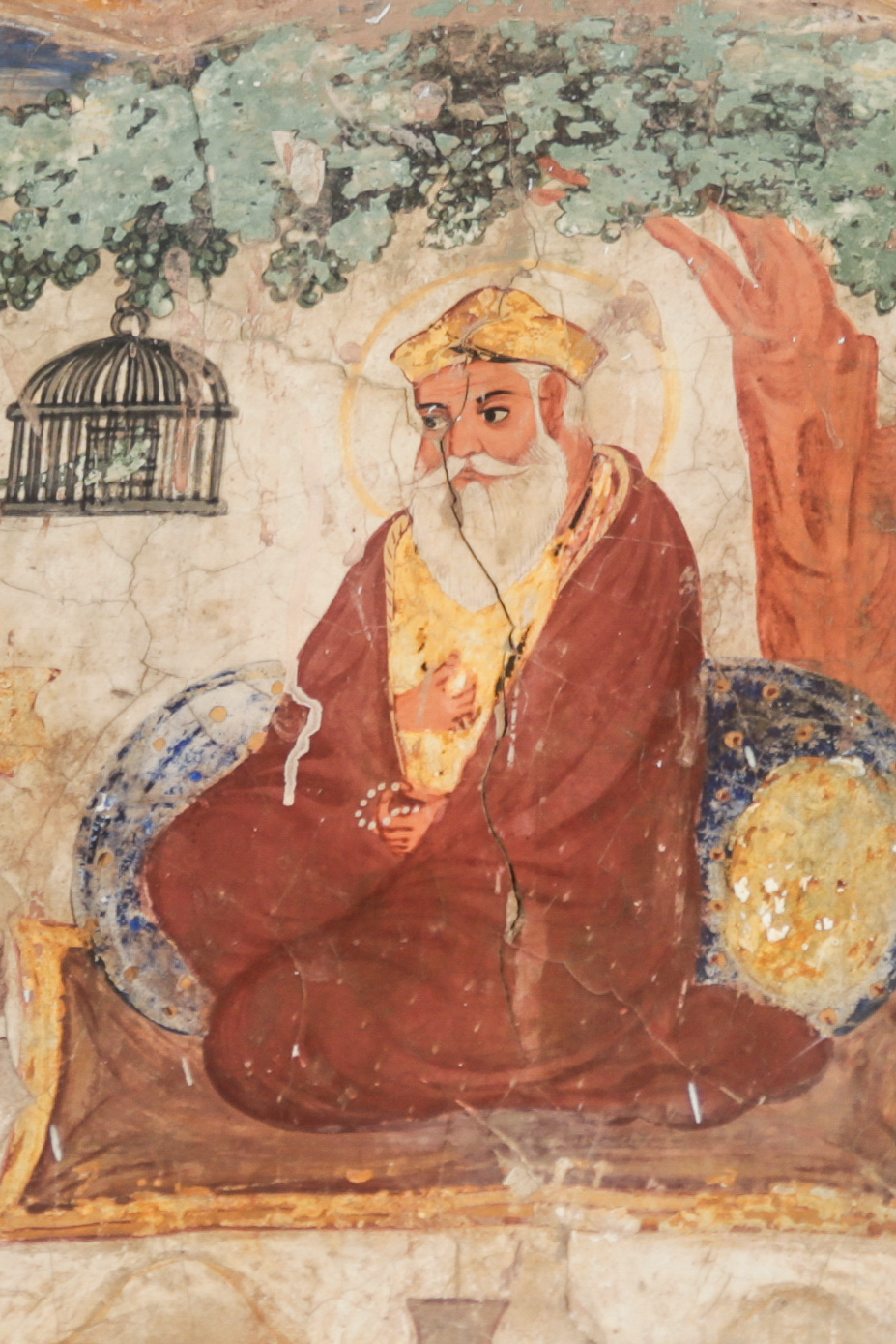
Proposed by
1
You might also explore
 Bhakti movementIndian600 – 1800A devotional revolution across India that put loving devotion above caste, ritual and priesthood — through poet-saints…VedāntaIndian500 BCE – present"The end of the Vedas": schools interpreting the Upaniṣads on the relation between the self (ātman), the world and…CārvākaIndian600 BCE – 1400 CEIndian materialism: only perception is valid; no soul, no afterlife, no karma.SāṃkhyaIndian500 BCE – presentA dualism of pure consciousness (puruṣa) and matter (prakṛti), with its three qualities (guṇas).MīmāṃsāIndian300 BCE – presentInterpretation of Vedic ritual and duty (dharma); a sophisticated philosophy of language.NyāyaIndian200 BCE – presentThe logic school: valid knowledge via perception, inference, comparison and testimony.