
Thiruvalluvar
Tamil sage, author of the Tirukkuṟaḷ — 1,330 couplets on virtue, wealth and love, one of the great works on ethics.
Key ideas
Thiruvalluvar (commonly known as Valluvar) was an Indian philosopher and a Tamil-language poet of the post-Sangam era. He is best known as the author of the Tirukkuṟaḷ, a collection of couplets on ethics, political and economic matters, and love. The text is considered an exceptional and widely cherished work of Tamil literature.
Almost no authentic information is available about Valluvar, states Kamil Zvelebil – a scholar of Tamil literature. His life and likely background are variously inferred from his literary works by different biographers. There are unauthentic hagiographic and legendary accounts of Valluvar's life, and all major Indian religions, as well as Christian missionaries of the 19th century, have tried to claim him as secretly inspired (crypto-) or originally belonging to their tradition. Little is known with certainty about his family background, religious affiliation, or birthplace. He is believed to have lived at least in the town of Mylapore (a neighbourhood of the present-day Chennai), and his floruit is dated variously from fourth century BCE to early fifth century CE, based on the traditional accounts and the linguistic analyses of his writings. Kamil Zvelebil infers the Tirukkuṟaḷ and Valluvar are best dated to around 500 CE.
Valluvar has influenced a wide range of scholars down the ages since his time across the ethical, social, political, economical, religious, philosophical, and spiritual spheres. He has long been venerated as a great sage, and his literary works a classic of Tamil culture.
Life
There is negligible authentic information available about Valluvar's life. In fact, neither his actual name nor the original title of his work can be determined with certainty. Tirukkuṟaḷ itself does not name its author. Monsieur Ariel, a French translator of his work in the 19th century, famously said it is "the book without a name by an author without a name". The name Thiruvalluvar (lit. Saint Valluvar) was first mentioned in the later text Tiruvalluva Maalai.
The speculations about Valluvar's life are largely inferred from his work Tirukkuṟaḷ and other Tamil literature that quote him. According to Zvelebil, Valluvar was "probably a learned Jain with eclectic leanings and intimate acquaintance with the early works of Tamil classical period and some knowledge of the Sanskrit legal and didactic texts (subhashita)".
Traditional biographies
The Shaivite Tamil text Tiruvalluva Maalai contains the earliest known textual reference to the legend of Valluvar, but it remains undated. This text attracted attention in the colonial era because an early 19th-century commentary referred to him as "Valluvan" (Valluvar) whose text presented the "esoteric wisdom of the Vedas to the world". The original text relates the Kural in the context of Sanskrit literature. The commentary includes the gloss that Valluvan was "born in a low caste", but the original text does not. According to Stuart Blackburn, this comment appears to be extra-textual and possibly based on the oral tradition. No other pre-colonial textual sources have been found to support any legends about the life of Valluvar. Starting around the early 19th century, numerous legends on Valluvar in Indian languages and English were published.
Various claims have been made regarding Valluvar's family background and occupation in the colonial era literature, all inferred from selective sections of his text or hagiographies published since the colonial era started in Tamil Nadu. One traditional version claims that he was a Paraiyar weaver. Another theory is that he must have been from the agricultural caste of Vellalars because he extols agriculture in his work. Another version states he was an outcast, born to a Pariayar woman and Brahmin father. Mu Raghava Iyengar speculated that "valluva" in his name is a variation of "vallabha", the designation of a royal officer. S. Vaiyapuri Pillai suggested Valluvar derived his name from "Valluvan" (a Paraiyar caste of royal drummers) and theorized that he was "the chief of the proclaiming boys analogous to a trumpet-major of an army". H. A. Stuart, in his Census Report of 1891, claimed that Valluvans were a priestly class among the Paraiyars and served as priests during Pallava reign, and similarly Robert Caldwell, J. H. A. Tremenheere and Edward Jewitt Robinson, too, claimed that Valluvar was a Paraiyar. Valluvar was likely married to a woman named Vasuki and lived in Mylapore. According to traditional accounts, Valluvar died on the day of Anusham in the Tamil month of Vaikasi.
The poem Kapilar Agaval, purportedly written by Kapilar, describes its author as a brother of Valluvar. It states that they were children of a Pulaya mother named Adi and a Brahmin father named Bhagwan. The poem claims that the couple had seven children, including three sons (Valluvar, Kapilar, and Atikaman) and four sisters (Avvai, Uppai, Uruvai, and Velli). However, this legendary account is spurious. Kamil Zvelebil dates Kapilar Agaval to 15th century CE, based on its language. Various biographies mention the name of Valluvar's wife as Vasuki, but such details are of doubtful authenticity.
The traditional biographies are not only inconsistent, but they also contain claims about Valluvar that are not credible. Along with various versions of his birth circumstances, many state he went to a mountain and met the legendary Agastya and other sages. During his return journey, he sits under a tree whose shadow sits still over Valluvar and does not move the entire day, he kills a demon, performs miracles such as causing floods and making them retreat, he touches a grounded ship which miraculously then floats and sails off, his bride Vasuki cooks sand which comes out as boiled rice, and many more. Scholars consider these and all associated aspects of these hagiographic stories to be fiction and ahistorical, a feature common to "international and Indian folklore". The alleged low birth, high birth, and being a pariah in the traditional accounts are also doubtful.
By 1904, Purnalingam Pillai, an ardent Dravidianist, had analyzed and called these traditional accounts and stories as myths. Pillai's analysis and arguments are robust, according to Blackburn. These fictional accounts of Valluvar's life have become popular because aspects of the traditional accounts were selectively accepted by Christian missionaries such as George Pope and other European writers, were widely published and then became a required reading about Tamil history.
Date
The exact date of Valluvar is unclear. His work Tirukkuṟaḷ has been dated variously from 300 BCE to about the sixth century CE. According to traditional accounts, it was the last work of the third Sangam and was subjected to a divine test (which it passed). The scholars who believe this tradition, such as Somasundara Bharathiar and M. Rajamanickam, date the text to as early as 300 BCE. Historian K. K. Pillay assigned it to the early first-century CE. These early dates such as 300 BCE to 1 BCE are unacceptable and not supported by evidence within the text, states Zvelebil. The diction and grammar of the Tirukkuṟaḷ, his indebtedness to some earlier Sanskrit sources, suggest that he lived after the "early Tamil bardic poets", but before Tamil bhakti poets era.
In 1959, S. Vaiyapuri Pillai assigned the work to around or after the sixth-century CE. His proposal is based on the evidence that the Tirukkuṟaḷ contains a large proportion of Sanskrit loan words, shows awareness and indebtedness to some Sanskrit texts best dated to the first half of the first-millennium CE, and the grammatical innovations in the language of Tirukkuṟaḷ. Pillai published a list of 137 Sanskrit loan words in Tirukkuṟaḷ. Later scholars Thomas Burrow and Murray Barnson Emeneau show that 35 of these are of Dravidian origin, and not Sanskrit loan words. Zvelebil states that an additional few have uncertain etymology and future studies may prove those to be Dravidian. The 102 remaining loan words from Sanskrit are "not negligible", and some of the teachings in the Tirukkuṟaḷ states Zvelebil are "undoubtedly" based on the then extant Sanskrit works such as the Arthashastra and Manusmriti (also called the Manavadharmasastra).
According to Kamil Zvelebil, the Tirukkuṟaḷ does not belong to the (Sangam) period. In the 1970s, Zvelebil dated the text to somewhere between 450 and 500 CE. His estimate is based on the dates of Tamil texts with similar Tamil language features, and by placing it after some of the Tamil and Sanskrit treatises that are evidenced in the Tirukkuṟaḷ. Zvelebil notes that the text features several grammatical innovations, that are absent in the older Sangam literature. The text also features a higher number of Sanskrit loan words compared with these older texts. According to Zvelebil, besides being part of the ancient Tamil literary tradition, the author was also a part of the "one great Indian ethical, didactic tradition", as a few of his verses are "undoubtedly" translations of the verses in Sanskrit classics.
In the 19th century and early 20th century, European writers and missionaries variously dated the text and Valluvar to between 400 and 1000 CE. According to Blackburn, the "current scholarly consensus" dates the text and the author to approximately 500 CE.
In January 1935, the Tamil Nadu government officially recognized 31 BCE as the year of Valluvar. As suggested by Maraimalai Adigal, the Valluvar Year was added to the calendar. Thus, the Valluvar year is calculated by adding 31 to any year of the common era.
Birthplace
Adapted from the Wikipedia article Thiruvalluvar, available under CC BY-SA 4.0.
Connections
Belongs to
1
Influenced
1
Ideas & arguments
2Contributed to
2
You might also explore
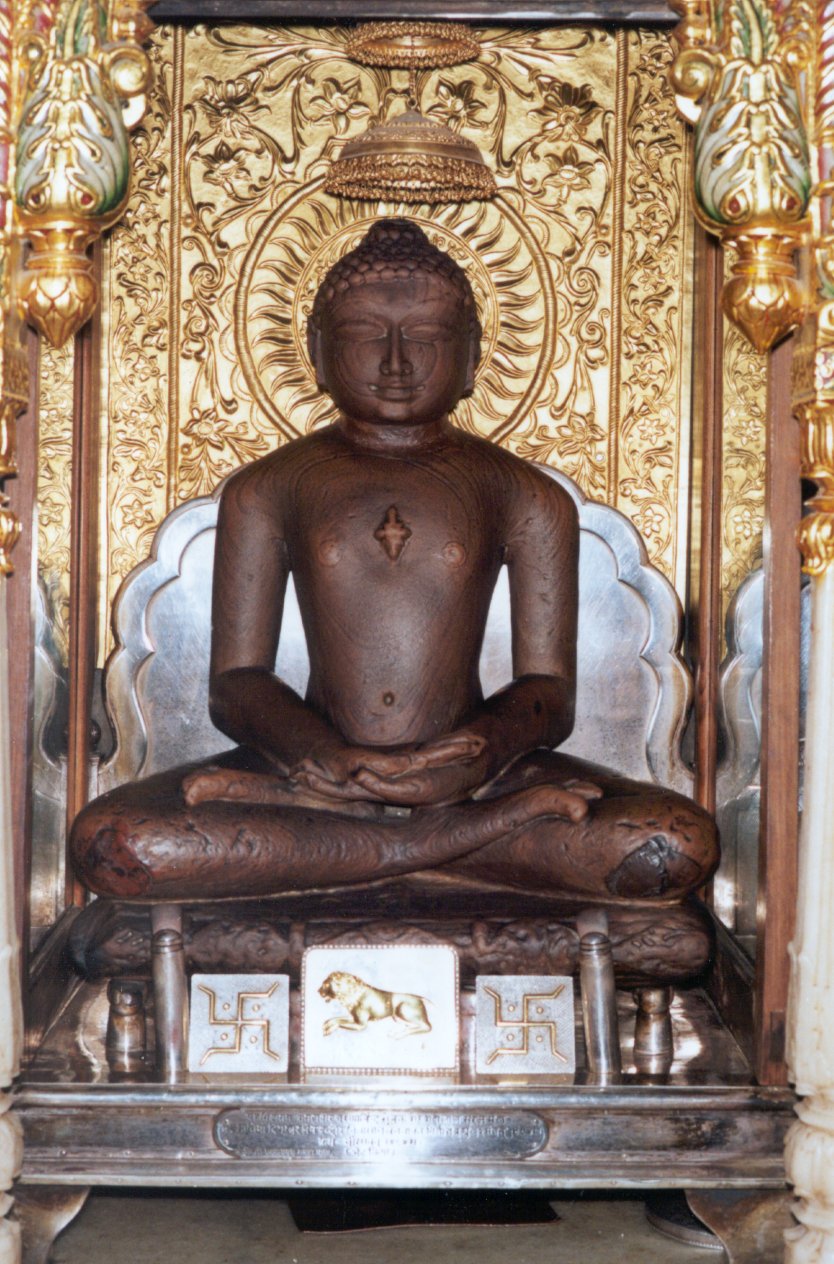 MahāvīraIndianc. 599 – 527 BCEThe 24th Jain tīrthaṅkara, who taught radical non-violence and the many-sidedness of truth.
 Aristotle★Greek & Roman384 – 322 BCEPlato's student and Alexander's tutor, who systematised logic, ethics, biology, metaphysics and politics — "the master…
 Plato★Greek & Romanc. 428 – 348 BCEFounder of the Academy whose dialogues defined Western philosophy's agenda: Forms, justice, the soul, knowledge and the…
 Gautama Buddha★Indianc. 563 – 483 BCEThe awakened one: a prince who renounced his life to find the cause of suffering and taught the Middle Way to its end.
 Socrates★Greek & Roman470 – 399 BCEThe Athenian who wrote nothing yet changed philosophy forever by questioning everyone about how to live — and died for…
 René Descartes★Modern European1596 – 1650The father of modern philosophy: he doubted everything he could and found certainty in "I think, therefore I am".