American philosophy
Emerson and Thoreau found the divine in nature and the self; Peirce, James and Dewey founded pragmatism: the meaning of an idea lies in its consequences.
- 1SchoolAmericas1830 – 1860
Transcendentalism
Emerson and Thoreau's American movement: the divinity of nature, self-reliance and the inner light.
- ◆Self-reliance
- ◆Nature as spiritual teacher
- ◆Civil disobedience
Read the full pageTranscendentalism is a philosophical, spiritual, literary movement that was developed in the late 1820s and 1830s in the New England region of the United States. A core belief is in the inherent goodness of people and nature, and while society and its institutions have corrupted the purity of the individual, people are at their best when truly "self-reliant" and independent. Transcendentalists saw divine experience inherent in the everyday. They thought of physical and spiritual phenomena as part of dynamic processes rather than as discrete entities.
Transcendentalism is one of the first philosophical currents that emerged in the United States; it is therefore a key early point in the history of American philosophy. Emphasizing subjective intuition over objective empiricism, its adherents believe that individuals are capable of generating completely original insights with little attention and deference to past transcendentalists. Its rise was a protest against the general state of intellectualism and spirituality at the time. The doctrine of the Unitarian church as taught at Harvard Divinity School was closely related.
Transcendentalism was thought to originally have emerged from "English and German Romanticism, the Biblical criticism of Johann Gottfried Herder and Friedrich Schleiermacher, the skepticism of David Hume", and the transcendental philosophy of Immanuel Kant and German idealism. Perry Miller and Arthur Versluis regard Emanuel Swedenborg and Jakob Böhme as pervasive influences on transcendentalism.
- 2
 PhilosopherAmericas1803 – 1882
Ralph Waldo Emerson
Leader of Transcendentalism: self-reliance, nature and the Over-Soul.
- ◆Self-reliance
- ◆The Over-Soul
- ◆Nature as symbol of spirit
Read the full pageRalph Waldo Emerson (May 25, 1803 – April 27, 1882), who went by his middle name Waldo, was an American essayist, lecturer, philosopher, minister, abolitionist, and poet who led the transcendentalist movement of the mid-19th century. He was seen as a prescient critic of the countervailing pressures of society and conformity.
Emerson gradually moved away from the religious and social views of his contemporaries, formulating and expressing the philosophy of Transcendentalism in his 1836 essay, Nature. His speech "The American Scholar", given in 1837, was called America's "intellectual Declaration of Independence" by Oliver Holmes.
Emerson wrote most of his important essays as lectures, and then revised them for print. His first two collections of essays, Essays: First Series and Essays: Second Series represent the core of his thinking. They include the well-known essays "Self-Reliance", "The Over-Soul", "Circles", "The Poet", and "Experience". Together with "Nature", these essays made the mid-1830s to the mid-1840s Emerson's most fertile period.
- 3
 PhilosopherAmericas1817 – 1862
Henry David Thoreau
Lived simply at Walden Pond and argued for civil disobedience against unjust laws.
- ◆Simple living
- ◆Civil disobedience
Read the full pageHenry David Thoreau (born David Henry Thoreau; July 12, 1817 – May 6, 1862) was an American naturalist essayist, poet, and philosopher. A leading transcendentalist, he is best known for his book Walden, a reflection upon simple living in natural surroundings, and his essay "Civil Disobedience" (originally published as "Resistance to Civil Government"), an argument in favor of citizen disobedience against an unjust state.
Thoreau's books, journals, and poetry amount to more than 20 volumes. Among his lasting contributions are his writings on natural history and philosophy, in which he anticipated the methods and findings of ecology and environmental history, two sources of modern-day environmentalism. His literary style interweaves close observation of nature, personal experience, pointed rhetoric, symbolic meanings, and historical lore, while displaying a poetic sensibility, philosophical austerity, and attention to practical detail. He was also deeply interested in the idea of survival in the face of hostile elements, historical change, and natural decay; at the same time he advocated abandoning waste and illusion to discover life's true essential needs.
Thoreau was a lifelong abolitionist, delivering lectures that attacked the fugitive slave law while praising the writings of Wendell Phillips and defending the abolitionist John Brown. Thoreau's philosophy of civil disobedience later influenced the political thoughts and actions of notable figures such as Leo Tolstoy, Mahatma Gandhi, and Martin Luther King Jr.
- 4
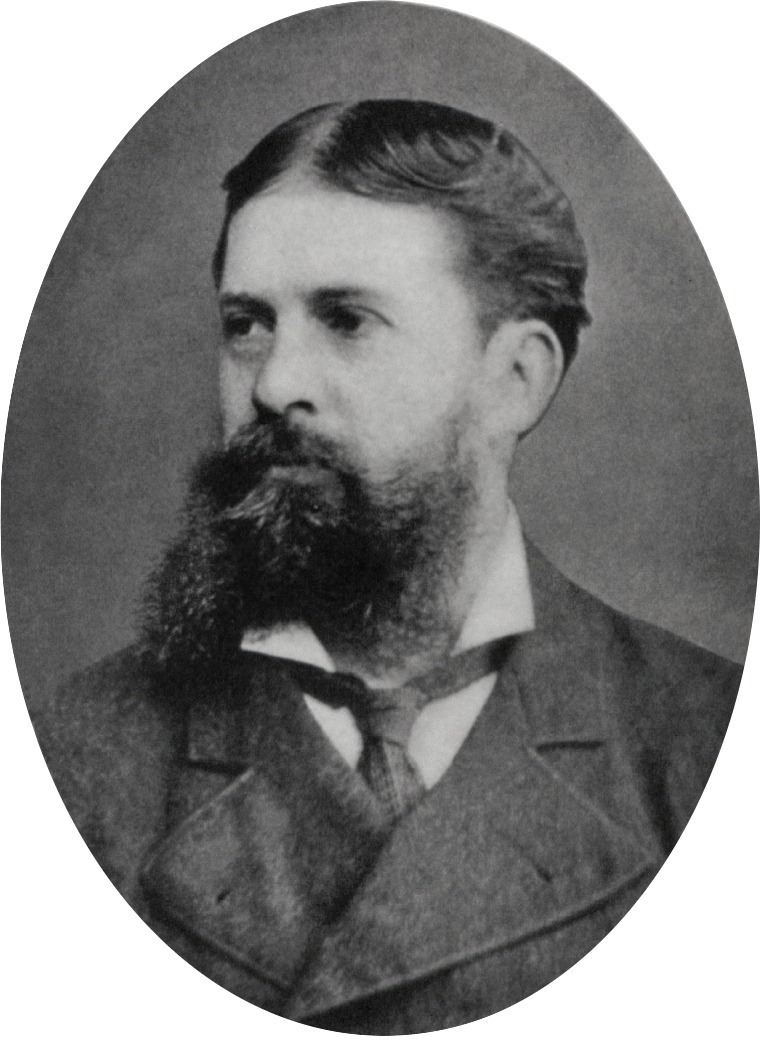 SchoolAmericas1870 – present
Pragmatism
The meaning and truth of ideas lie in their practical consequences.
Read the full pagePragmatism is a philosophical tradition that views language and thought as tools for prediction, problem solving, and action, rather than describing, representing, or mirroring reality. Pragmatists contend that most philosophical topics—such as the nature of knowledge, language, concepts, meaning, belief, and science—are best viewed in terms of their practical uses and successes.
Pragmatism began in the United States in the 1870s. Its origins are often attributed to philosophers Charles Sanders Peirce, William James and John Dewey. In 1878, Peirce described it in his pragmatic maxim: "Consider the practical effects of the objects of your conception. Then, your conception of those effects is the whole of your conception of the object."
Pragmatism as a philosophical movement began in the United States around 1870. Charles Sanders Peirce (and his pragmatic maxim) is given credit for its development,
- 5
 PhilosopherAmericas1839 – 1914
Charles Sanders Peirce
Founder of pragmatism and semiotics; pioneer of abduction and modern logic.
- ◆Pragmatic maxim
- ◆abductive reasoning
- ◆triadic sign relation
Read the full pageCharles Sanders Peirce ( PURSE; September 10, 1839 – April 19, 1914) was an American scientist, mathematician, logician, and philosopher who is sometimes known as "the father of pragmatism". According to philosopher Paul Weiss, writing in 1934, Peirce was "the most original and versatile of America's philosophers and America's greatest logician". Bertrand Russell wrote in 1959, "he was one of the most original minds of the later nineteenth century and certainly the greatest American thinker ever".
Educated as a chemist and employed as a scientist for thirty years, Peirce made major contributions to logic, such as theories of relations and quantification. C. I. Lewis wrote, "The contributions of C. S. Peirce to symbolic logic are more numerous and varied than those of any other writer—at least in the nineteenth century." For Peirce, logic also encompassed much of what is now called epistemology and the philosophy of science. He saw logic as the formal branch of semiotics or study of signs, of which he is a founder, which foreshadowed the debate among logical positivists and proponents of philosophy of language that dominated 20th-century Western philosophy. Peirce's study of signs also included a tripartite theory of predication.
Additionally, he defined the concept of abductive reasoning, as well as rigorously formulating mathematical induction and deductive reasoning. He was one of the founders of statistics. As early as 1886, he saw that logical operations could be carried out by electrical switching circuits. The same idea was used decades later to produce digital computers.
- 6
 PhilosopherAmericas1842 – 1910
William James
Pragmatist and psychologist: truth is what works; the stream of consciousness.
- ◆Will to believe doctrine
- ◆crisis of self-surrender
- ◆pragmatic theory of truth
- ◆radical empiricism
- ◆James–Lange theory
- ◆psychologist's fallacy
Read the full pageWilliam James (January 11, 1842 – August 26, 1910) was an American philosopher and psychologist. The first educator to offer a psychology course in the United States, he is considered to be one of the leading thinkers of the late 19th century, one of the most influential philosophers and is often dubbed the "father of American psychology".
Born into a wealthy family, James was the son of the Swedenborgian theologian Henry James Sr. and the brother of both the prominent novelist Henry James and the diarist Alice James. James trained as a physician and taught anatomy at Harvard, but never practiced medicine. Instead, he pursued his interests in psychology and then philosophy. James wrote widely on many topics, including epistemology, education, metaphysics, psychology, religion, and mysticism. Among his most influential books are The Principles of Psychology, a groundbreaking text in the field of psychology; Essays in Radical Empiricism, an important text in philosophy; and The Varieties of Religious Experience, an investigation of different forms of religious experience, including theories on mind-cure.
Along with Charles Sanders Peirce, James established the philosophical school known as pragmatism, and is also cited as one of the founders of functional psychology. James also developed the philosophical perspective known as radical empiricism. A Review of General Psychology analysis, published in 2002, ranked James as the 14th most eminent psychologist of the 20th century. A survey published in American Psychologist in 1991 ranked James's reputation in second place, after Wilhelm Wundt, who is widely regarded as the founder of experimental psychology. James's work has influenced philosophers and academics such as Hilary Putnam, Richard Rorty, Edmund Husserl, Bertrand Russell, John Dewey, and Ludwig Wittgenstein.
- ◆Reflective thinking
- ◆Functional psychology
- ◆Immediate empiricism
- ◆Practical idealism
- ◆Educational progressivism
- ◆Occupational psychosis
Read the full pageJohn Dewey (; October 20, 1859 – June 1, 1952) was an American philosopher, psychologist, and educational reformer. He was one of the most prominent American scholars in the first half of the twentieth century.
The overriding theme of Dewey's works was his profound belief in democracy, be it in politics, education, or communication and journalism. As Dewey himself stated in 1888, while still at the University of Michigan, "Democracy and the one, ultimate, ethical ideal of humanity are to my mind synonymous." Dewey considered two fundamental elements—schools and civil society—to be major topics needing attention and reconstruction to encourage experimental intelligence and plurality. He asserted that complete democracy was to be obtained not just by extending voting rights but also by ensuring that there exists a fully formed public opinion, accomplished by communication among citizens, experts, and politicians.
Dewey was one of the primary figures associated with the philosophy of pragmatism and is considered one of the founding thinkers of functional psychology. His paper "The Reflex Arc Concept in Psychology", published in 1896, is regarded as the first major work in the (Chicago) functionalist school of psychology. A Review of General Psychology survey, published in 2002, ranked Dewey as the 93rd-most-cited psychologist of the 20th century.
