Great books: renaissance & early modern: The Prince to Pensées
- 1
 WorkModern European1513
The Prince
Machiavelli's handbook of power: it is safer to be feared than loved.
Read the full pageThe Prince (Italian: Il Principe [il ˈprintʃipe]; Latin: De Principatibus) is a 16th-century political treatise written by the Italian diplomat and political philosopher Niccolò Machiavelli in the form of an instruction guide for new princes. Many commentators have viewed that one of the main themes of The Prince is that immoral acts are sometimes necessary to achieve political glory.
From Machiavelli's correspondence, a version was being written in 1513, using a Latin title, De Principatibus (Of Principalities). However, the printed version was not published until 1532, five years after Machiavelli's death. This was carried out with the permission of the Medici pope Clement VII, but "long before then, in fact since the first appearance of The Prince in manuscript, controversy had swirled about his writings".
- 2
 WorkModern European1580
Essays
Montaigne's exploration of himself and the human condition — the birth of the essay.
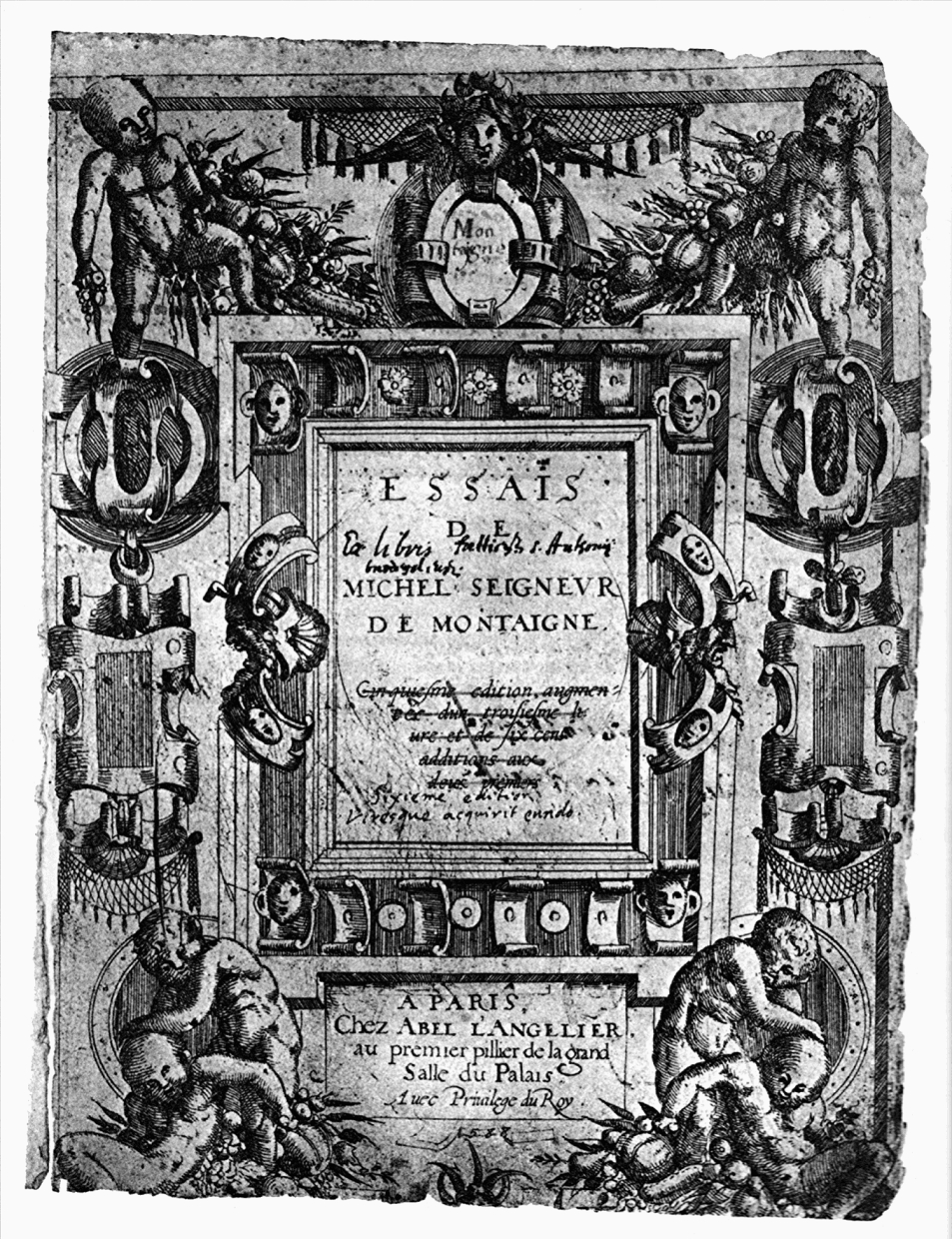
Read the full pageThe Essays of Michel de Montaigne are contained in three books and 107 chapters of varying length. They were originally written in Middle French and published in the Kingdom of France. Montaigne's stated design in writing, publishing and revising the Essays over the period from approximately 1570 to 1592 was to record "some traits of my character and of my humours." The Essays were first published in 1580 and cover a wide range of topics.
The Essais exercised an important influence on both French and English literature, in thought and style.
- Read the full page
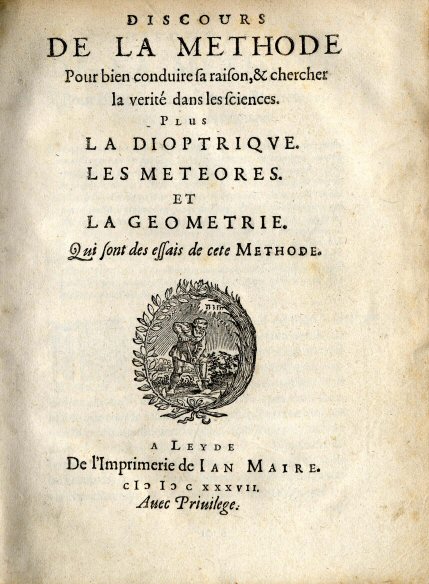
Discourse on the Method of Rightly Conducting One's Reason and of Seeking Truth in the Sciences (French: Discours de la Méthode pour bien conduire sa raison, et chercher la vérité dans les sciences) is a philosophical and autobiographical treatise published by René Descartes in 1637. It is best known as the source of the famous quotation "Je pense, donc je suis" ("I think, therefore I am", or "I am thinking, therefore I exist"), which occurs in Part IV of the work. A similar argument without this precise wording is found in Meditations on First Philosophy (1641), and a Latin version of the same statement, "Cogito, ergo sum", is found in Principles of Philosophy (1644).
Discourse on the Method is one of the most influential works in the history of modern philosophy, and important to the development of natural sciences. In this work, Descartes tackles the problem of skepticism, which had previously been studied by other philosophers. While addressing some of his predecessors and contemporaries, Descartes modified their approach to account for a truth he found to be incontrovertible; he started his line of reasoning by doubting everything, so as to assess the world from a fresh perspective, clear of any preconceived notions.
- 4
 WorkModern European1641
Meditations on First Philosophy
Six meditations from radical doubt to God, mind and body.
Read the full pageMeditations on First Philosophy, in which the existence of God and the immortality of the soul are demonstrated (Latin: Meditationes de Prima Philosophia, in qua Dei existentia et animæ immortalitas demonstratur), often simply called Meditations on First Philosophy or the Meditations, is a philosophical treatise by René Descartes first published in Latin in 1641. The French translation (by the Duke of Luynes with Descartes' supervision) was published in 1647 as Méditations Métaphysiques. The title may contain a misreading by the printer, mistaking animae immaterialitas for animae immortalitas, as suspected by A. Baillet.
The book is made up of six meditations, in which Descartes first discards all belief in things that are not absolutely certain, and then tries to establish what can be known for sure. He wrote the Meditations as if he had meditated for six days: each meditation refers to the last one as "yesterday". (In fact, Descartes began work on the Meditations in 1639.) One of the most influential philosophical texts ever written, it is widely read to this day.
- 5
 WorkModern European1651
Leviathan
Hobbes's case for an absolute sovereign to escape the war of all against all.
Read the full pageLeviathan or The Matter, Forme and Power of a Commonwealth Ecclesiasticall and Civil, commonly referred to as Leviathan, is a work of social and political theory by the English empiricist philosopher and political theorist Thomas Hobbes (1588–1679), published in 1651 (revised Latin edition 1668). Its name derives from the chaotic Leviathan sea serpent of the Hebrew Bible and earlier mythologies.
The work concerns the structure of society and legitimate government, and is regarded as one of the earliest and most influential examples of social contract theory.
- 6WorkAfrican1667
Hatata
Zera Yacob's Ethiopian inquiry into God, reason and the equality of all people.
Read the full pageZara Yaqob (; Ge'ez: ዘርዐ ያዕቆብ; 28 August 1600 – 1693) was an Ethiopian philosopher best known for his treatise, Hatata ("The Inquiry"), which explores themes of reason, morality, and religious tolerance. Forced into exile, he wrote Hatata while living in a cave, where he reflected on questions of faith, ethics, and the nature of truth. Yacob was educated in the Ethiopian Orthodox Christian tradition but developed a distinct philosophical approach that emphasized rational inquiry over religious dogma.
For centuries, Geʽez texts had been written in Ethiopia. Around 1510, Abba Mikael translated and adapted the Arabic Book of the Wise Philosophers, a collection of sayings from the early Greek pre-Socratics, Plato, and Aristotle via the neo-Platonic dialogues, also influenced by Arab philosophy and the Ethiopian discussions.
- Read the full page
The Pensées (Thoughts) is a collection of fragments written by the French 17th-century philosopher and mathematician Blaise Pascal. Pascal's religious conversion led him into a life of asceticism, and the Pensées was in many ways his life's work. It represented Pascal's defense of the Christian religion, and the concept of "Pascal's wager" stems from a portion of this work.
Prior to his death, Pascal was working on a Christian apologetics book which was never completed. When Pascal died in 1662, he left behind several draft notes. They were edited by others, and the notes were first published in the form of Pensées in 1670. The order with which the notes should be read was unclear, and various subsequent editions have attempted to order them by themes or by writing dates. An edition of the Pensées containing notes by Voltaire was placed on the Index Librorum Prohibitorum by a decree of 18 September 1789.