Great books: contemporary
- 1WorkModern European1949
The Second Sex
Beauvoir's analysis of women's oppression, a founding text of modern feminism.
Read the full pageThe Second Sex (French: Le Deuxième Sexe) is a 1949 book by the French existentialist philosopher Simone de Beauvoir, in which the author discusses the treatment of women in the present society as well as throughout all of history. Beauvoir researched and wrote the book in about 14 months between 1946 and 1949. She published the work in two volumes: Facts and Myths, and Lived Experience. Some chapters first appeared in the journal Les Temps modernes.
One of Beauvoir's best-known books, it is also one of the most controversial, even being banned by the Vatican. The Second Sex is regarded as a groundbreaking work of feminist philosophy, and as the starting inspiration point of second-wave feminism.
- 2WorkModern European1951
The Origins of Totalitarianism
Arendt on antisemitism, imperialism and totalitarian rule.
Read the full pageThe Origins of Totalitarianism, published in 1951, was Hannah Arendt's first major work, where she describes and analyzes Nazism and Stalinism as the major totalitarian political movements of the first half of the 20th century.
The Origins of Totalitarianism was first published in English in 1951. A German translation was published in 1955 as Elemente und Ursprünge totaler Herrschaft ("Elements and Origins of Totalitarian Rule"). A second, enlarged edition was published in 1958, which contained an updated Preface and two additional chapters, replacing her original "Concluding Remarks". Chapter Thirteen was titled "Ideology and Terror: A novel form of government", which she had published separately in 1953. Chapter Fourteen dealt with the Hungarian Revolution of 1956, entitled "Epilogue: Reflections on the Hungarian Revolution". Subsequent editions omitted this chapter, which was published separately in English ("Totalitarian Imperialism: Reflections on the Hungarian Revolution") and German (Die ungarische Revolution und der totalitäre Imperialismus) in 1958. In 1967, Arendt wrote Prefaces for each of the book's three Parts, which appeared in subsequent editions.
- 3WorkModern European1953
Philosophical Investigations
Wittgenstein's later philosophy: meaning as use, language games, private language.
Read the full pagePhilosophical Investigations (German: Philosophische Untersuchungen) is a work by the philosopher Ludwig Wittgenstein, published posthumously in 1953.
Philosophical Investigations is divided into two parts, consisting of what Wittgenstein calls, in the preface, Bemerkungen, translated by G. E. M. Anscombe as "remarks".
- 4Read the full page
The Wretched of the Earth (French: Les Damnés de la Terre) is a 1961 book by the philosopher Frantz Fanon, in which the author provides a psychoanalysis of the dehumanising effects of colonisation upon individuals and nations, and discusses the broader social, cultural, and political implications of establishing a social movement for the decolonisation of a person and of a people.
Some believe that the French-language title derives from the opening line of "The Internationale",
- 5WorkAmericas1962
The Structure of Scientific Revolutions
Kuhn's account of paradigms and revolutions in science.
Read the full pageThe Structure of Scientific Revolutions is a 1962 book about the history of science by the philosopher Thomas S. Kuhn. Its publication was a landmark event in the history, philosophy, and sociology of science. Kuhn challenged the then prevailing view of progress in science in which scientific progress was viewed as "development-by-accumulation" of accepted facts and theories. Kuhn argued for an episodic model in which periods of conceptual continuity and cumulative progress, referred to as periods of "normal science", were interrupted by periods of revolutionary science. The discovery of "anomalies" accumulating and precipitating revolutions in science leads to new paradigms. New paradigms then ask new questions of old data, move beyond the mere "puzzle-solving" of the previous paradigm, alter the rules of the game and change the "map" directing new research.
For example, Kuhn's analysis of the Copernican Revolution emphasized that, in its beginning, it did not offer more accurate predictions of celestial events, such as planetary positions, than the Ptolemaic system, but instead appealed to some practitioners based on a promise of better, simpler solutions that might be developed at some point in the future. Kuhn called the core concepts of an ascendant revolution its "paradigms" and thereby launched this word into widespread analogical use in the second half of the 20th century. Kuhn's insistence that a paradigm shift was a mélange of sociology, enthusiasm and scientific promise, but not a logically determinate procedure, caused an uproar in reaction to his work. Kuhn addressed concerns in the 1969 postscript to the second edition. For some commentators The Structure of Scientific Revolutions introduced a realistic humanism into the core of science, while for others the nobility of science was tarnished by Kuhn's introduction of an irrational element into the heart of its greatest achievements.
- 6
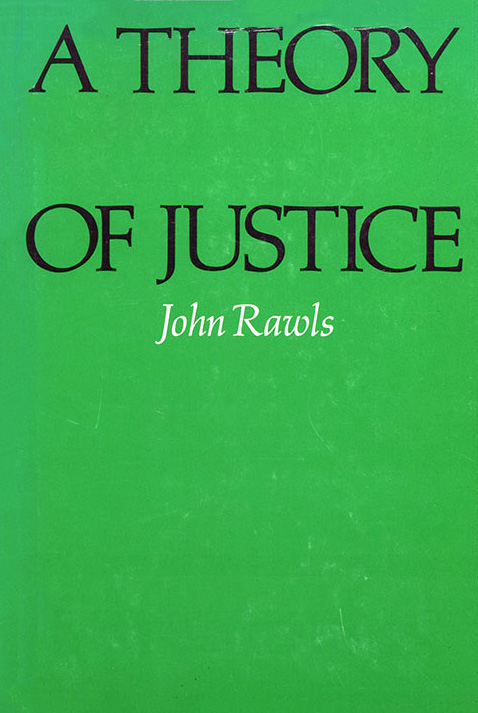 WorkAmericas1971
A Theory of Justice
Rawls's justice as fairness: the original position and the difference principle.
Read the full pageA Theory of Justice is a 1971 work of political philosophy and ethics by the philosopher John Rawls (1921–2002) in which the author attempts to provide a moral theory alternative to utilitarianism and that addresses the problem of distributive justice (the socially just distribution of goods in a society).
The theory uses an updated form of Kantian philosophy and a variant form of conventional social contract theory. Rawls's theory of justice is fully a political theory of justice as opposed to other forms of justice discussed in other disciplines and contexts.
- Read the full page
Anarchy, State, and Utopia (ASU) is a 1974 book by the American philosopher Robert Nozick. A work of analytic philosophy in the libertarian capitalist tradition, it popularised and developed the concepts of the night-watchman state, entitlement theory of property, and Lockean proviso, employing original thought experiments, such as the utility monster, experience machine, Wilt Chamberlain argument, and demoktesis, an experiment with the aim of demonstrating a progressive loss in self-ownership in democratic government.
In opposition to A Theory of Justice (1971) by John Rawls, and in debate with Michael Walzer, Nozick argues in favor of a minimal state, "limited to the narrow functions of protection against force, theft, fraud, enforcement of contracts, and so on".
- 8Read the full page
Animal Liberation: A New Ethics for Our Treatment of Animals is a 1975 book by the Australian philosopher Peter Singer. It is widely considered within the animal liberation movement to be the founding philosophical statement of its ideas. Singer himself rejected the use of the theoretical framework of rights when it comes to human and nonhuman animals. Following Jeremy Bentham, Singer argued that the interests of animals should be considered because of their ability to experience suffering and that the idea of rights was not necessary in order to consider them. He popularized the term "speciesism" in the book, which had been coined by Richard D. Ryder to describe the exploitative treatment of animals.
A revised edition, Animal Liberation Now, was released in 2023.