Islamic thinkers, medieval: Hujwiri to al-Baghdadi
- 1
 PhilosopherIslamic1009 – 1072
Ali Hujwiri
Abu al-Hasan Ali ibn Uthman al-Jullabi al-Hujwiri, better known as Data Sahib (Persian: داتا صاحب, romanized: Dātā Ṣaḥib) and Ali Hujwiri, was a Islamic scholar and mystic who authored Kashf al-Mahjub, the earliest treatise on Sufism in the Persian language. Born in the Ghaznavid Empire, Hujwiri is believed to have con
Read the full pageAbu al-Hasan Ali ibn Uthman al-Jullabi al-Hujwiri (Persian: ابو الحسن علی بن عثمان الجلابی الھجویری, romanized: Abū al-Ḥasan ʿAlī ibn ʿUthmān al-Jullābī al-Hujwīrī; c. 1009-1072/77), better known as Data Sahib (Persian: داتا صاحب, romanized: Dātā Ṣaḥib) and Ali Hujwiri, was a Islamic scholar and mystic who authored Kashf al-Mahjub, the earliest treatise on Sufism in the Persian language. Born in the Ghaznavid Empire, Hujwiri is believed to have contributed "significantly" to the spread of Islam in South Asia through his preaching.
Hujwiri is regarded as the patron saint of Lahore, Pakistan by the Sufis of the area and his tomb-shrine, known as the Data Darbar, is one of the most frequented shrines in South Asia. Currently, it is Pakistan's largest shrine "in numbers of annual visitors and in the size of the shrine complex," and, having been nationalized in 1960, is managed today by the Department of Awqaf and Religious Affairs of the Punjab. The mystic himself remains a "household name" in the daily Islam of South Asia. In 2016, the Government of Pakistan declared 21 November to be a public holiday for the commemoration of the commencement of Ali Hujwiri's three-day death anniversary.
- 2
 PhilosopherIslamic1037 – 1124
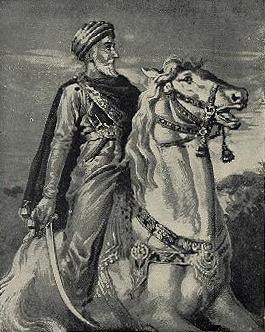
Hasan-i Sabbah
Hasan-i Sabbah, also known as Hasan I of Alamut, was a military leader, scholar, and founder of the Nizari Ismaili movement, popularly known in the West as the Order of Assassins, as well as the Nizari Ismaili state, which he ruled from 1090 until his death in 1124. Very little is known of his early life.
Read the full pageHasan-i Sabbah (c. 1050 – 12 June 1124; AH 518), also known as Hasan I of Alamut, was a military leader, scholar, and founder of the Nizari Ismaili movement, popularly known in the West as the Order of Assassins, as well as the Nizari Ismaili state, which he ruled from 1090 until his death in 1124. Very little is known of his early life.
His followers seized the formidable mountain fortress of Alamūt in 1090 or 1091 (AH 483) and established it as the principal power centre of the Nizari movement. Although the movement later became particularly associated with assassination, al-Sabbah did not introduce assassination as a religious duty, since the practice had already been employed by other sects, and it is not clear that he himself even advocated it. The movement that developed under and after him nevertheless acquired considerable strength and terrorized parts of the Muslim world until Alamūt was captured and destroyed by the Mongols in the 13th century.
- 3
 PhilosopherIslamic1048 – 1131
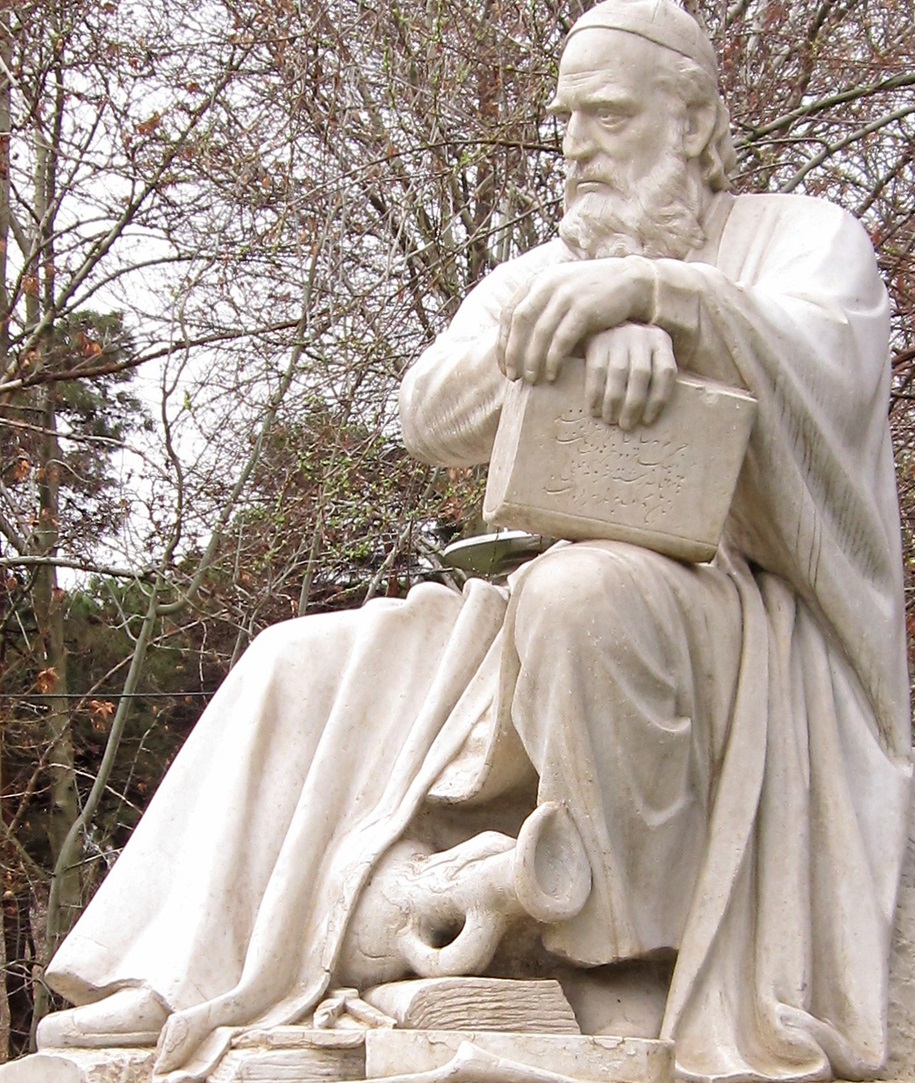
Omar Khayyām
Mathematician-astronomer whose skeptical quatrains question fate, God and the meaning of life.
- ◆Seize the day
- ◆Skepticism about providence
Read the full pageOmar Khayyam (1048–1131) was a Persian poet and polymath, known for his contributions to mathematics, astronomy, philosophy, and Persian literature. He was born in Nishapur, Iran and lived during the Seljuk era, around the time of the First Crusade.
As a mathematician, Omar Khayyam was the first to provide a general solution for all third-degree polynomials by using the intersection of two conic sections, a method often later attributed to Descartes. Unlike Descartes, Khayyam performed these geometric calculations by selecting a unit length while strictly adhering to the rule of homogeneity. Additionally, in his work On the Division of a Quarter of a Circle, he attempted to derive approximate numerical solutions for cubic equations using trigonometric tables. He also contributed to a deeper understanding of Euclid's parallel axiom. The Saccheri quadrilateral is sometimes called a Khayyam–Saccheri quadrilateral to credit Omar Khayyam, who described it in his 11th-century book Risāla fī šarḥ mā aškala min muṣādarāt kitāb Uqlīdis (Explanations of the difficulties in the postulates of Euclid). As an astronomer, he calculated the duration of the solar year with remarkable precision and accuracy, and designed the Jalali calendar, a solar calendar with a very precise 33-year intercalation cycle
- 4
 PhilosopherIslamic1077 – 1155
Al-Khazini
Abū al-Fath Abd al-Rahman Mansūr al-Khāzini or simply al-Khāzini was an Iranian astronomer, mechanician and physicist of Byzantine Greek origin who lived during the Seljuk Empire. His astronomical tables, written under the patronage of Sultan Sanjar, are considered to be one of the major works in mathematical astronomy
Read the full pageAbū al-Fath Abd al-Rahman Mansūr al-Khāzini or simply al-Khāzini (Persian: أبوالفتح عبدالرحمن منصور الخازنی; flourished 1115–1130) was an Iranian astronomer, mechanician and physicist of Byzantine Greek origin who lived during the Seljuk Empire. His astronomical tables, written under the patronage of Sultan Sanjar (Zīj al-Sanjarī, 1115), are considered to be one of the major works in mathematical astronomy of the medieval period. He is considered to have been one of the greatest scientists of his era, among the greatest makers of scientific instruments of any time, and as "the physicist of all physicists".
Al-Khazini is one of the few Islamic astronomers to be known for doing original observations. He provided the positions of fixed stars, and for oblique ascensions and time-equations for the latitude of Marv in which he was based. He also wrote extensively on various calendrical systems and on the various manipulations of the calendars. He also devised the world's most precise instrument for weighing ordinary objects, determining specific gravities, and even examining the composition of alloys. On the basis of his detailed description, it has been possible to reconstruct his complex mechanism, which he dubbed "The Comprehensive Balance". Modern study affirms his claim to its extraordinary accuracy of 1:60,000.
- 5
 PhilosopherIslamic1080 – 1131
Sanai
Hakim Abul-Majd Majdūd ibn Ādam Sanā'ī Ghaznavi (Persian: حکیم ابوالمجد مجدود بن آدم سنایی غزنوی), more commonly known as Sanai, was a renowned Iranian Sufi poet mystic from Ghazni. He is best known for his influential works The Walled Garden of Truth (Hadiqat al-Haqiqa) and The Divan.
Read the full pageHakim Abul-Majd Majdūd ibn Ādam Sanā'ī Ghaznavi (Persian: حکیم ابوالمجد مجدود بن آدم سنایی غزنوی), more commonly known as Sanai, was a renowned Iranian Sufi poet mystic from Ghazni. He is best known for his influential works The Walled Garden of Truth (Hadiqat al-Haqiqa) and The Divan. He is regarded as one of the pioneers of Persian Sufi poetry and had a major influence on later Iranian poets such as Attar and Rumi.
Sanai was an Iranian poet who lived in the late 11th and early 12th century and was associated with Ghazni. He was connected with the court of Bahram Shah. The details of Sanai’s personal life are not well documented, and much of his biography is based on later sources. His surviving poetry is the principal source for understanding his literary and religious ideas.
- 6
 PhilosopherIslamic1095 – 1139
Avempace
Abū Bakr Muḥammad ibn Yaḥya ibn aṣ-Ṣā’igh at-Tūjībī ibn Bājja (Arabic: أبو بكر محمد بن يحيى بن الصائغ التجيبي بن باجة), known simply as Ibn Bajja (Arabic: ابن باجة) or his Latinized name Avempace, was an Arab polymath, whose writings include works regarding astronomy, physics, and music, as well as philosophy, medicine
Read the full pageAbū Bakr Muḥammad ibn Yaḥya ibn aṣ-Ṣā’igh at-Tūjībī ibn Bājja (Arabic: أبو بكر محمد بن يحيى بن الصائغ التجيبي بن باجة), known simply as Ibn Bajja (Arabic: ابن باجة) or his Latinized name Avempace (; c. 1085 – 1138), was an Arab polymath, whose writings include works regarding astronomy, physics, and music, as well as philosophy, medicine, botany, and poetry.
He was the author of the Kitāb an-Nabāt ("The Book of Plants"), a popular work on botany, which defined the sex of plants. His philosophical theories influenced the work of Ibn Rushd (Averroes) and Albertus Magnus. Most of his writings and books were not completed (or well-organized) due to his early death. He had a vast knowledge of medicine, mathematics, and astronomy. His main contribution to Islamic philosophy was his idea on soul phenomenology, which was never completed.
- 7
 PhilosopherIslamic1110 – 1185
Ibn Tufayl
Ibn Ṭufayl was an Arab Andalusian Muslim polymath: a writer, physician, philosopher, theologian, astronomer, and vizier. As a philosopher and novelist, he is most famous for writing the first philosophical novel, Hayy ibn Yaqdhan, considered a major work of Arabic literature emerging from Al-Andalus.
- ◆philosophical novel
- ◆novel
- ◆desert island
- ◆feral child
- ◆coming of age
- ◆autodidacticism
Read the full pageIbn Ṭufayl (c. 1105 – 1185) was an Arab Andalusian Muslim polymath: a writer, physician, philosopher, theologian, astronomer, and vizier. As a philosopher and novelist, he is most famous for writing the first philosophical novel, Hayy ibn Yaqdhan, considered a major work of Arabic literature emerging from Al-Andalus. As a physician, he was an early supporter of dissection and autopsy, which was expressed in his novel.
Born in Guadix, near Granada, Ibn Tufayl was educated by the scholar Ibn Bajjah (Avempace). His family were from the Arab Qays tribe. He was a secretary for several leaders, including the rulers of Ceuta and Tangier, in 1154. He also served as a secretary for the ruler of Granada, and later as vizier and physician for Abu Yaqub Yusuf, the Almohad caliph, to whom he recommended Ibn Rushd (Averroës) as his own future successor in 1169. Ibn Rushd later reports this event and describes how Ibn Tufayl then inspired him to write his famous Aristotelian commentaries:
- 8
 PhilosopherIslamic1143 – 1236
Mu'in al-Din Chishti
Mu'in al-Din Hasan Chishti Sijzi, known reverentially as Khawaja Gharib Nawaz (Persian: خواجه غریب نواز, romanized: Khawāja Gharīb Nawāz), was a Persian Islamic scholar and mystic from Sistan, who eventually ended up settling in the Indian subcontinent in the early 13th-century, where he promulgated the Chishtiyya orde
Read the full pageMu'in al-Din Hasan Chishti Sijzi (Persian: معین الدین چشتی, romanized: Muʿīn al-Dīn Chishtī; 1 February 1143 – 15 March 1236), known reverentially as Khawaja Gharib Nawaz (Persian: خواجه غریب نواز, romanized: Khawāja Gharīb Nawāz), was a Persian Islamic scholar and mystic from Sistan, who eventually ended up settling in the Indian subcontinent in the early 13th-century, where he promulgated the Chishtiyya order of Islamic mysticism. This particular Tariqa (order) became the dominant Islamic spiritual order in medieval India. Most of the Indian Sunni saints are Chishti in their affiliation, including Nizamuddin Awliya (d. 1325) and Amir Khusrow (d. 1325).
Having arrived in the Delhi Sultanate during the reign of the Sultan Iltutmish (d. 1236), Muʿīn al-Dīn moved from Delhi to Ajmer shortly thereafter, at which point he became increasingly influenced by the writings of the Sunni Hanbali scholar and mystic ʿAbdallāh Anṣārī (d. 1088), whose work on the lives of the early Islamic saints, the Ṭabāqāt al-ṣūfiyya, may have played a role in shaping Muʿīn al-Dīn's worldview. It was during his time in Ajmer that Muʿīn al-Dīn acquired the reputation of being a charismatic and compassionate spiritual preacher and teacher; and biographical accounts of his life written after his death report that he received the gifts of many "spiritual marvels (karāmāt), such as miraculous travel, clairvoyance, and visions of angels" in these years of his life. Muʿīn al-Dīn seems to have been unanimously regarded as a great saint after his death.
- 9
 PhilosopherIslamic1145 – 1221
Attar of Nishapur
Faridoddin Abu Hamed Mohammad Attar Nishapuri, better known by his pen-names Faridoddin (فریدالدین) and Attar of Nishapur (عطار نیشاپوری), or simply Attar (meaning apothecary), was a Persian poet, theoretician of Sufism, and hagiographer from Nishapur who had an immense and lasting influence on Persian poetry, on poet
Read the full pageFaridoddin Abu Hamed Mohammad Attar Nishapuri (Persian: فریدالدین ابوحامد محمد عطار نیشابوری; c. 1145 – c. 1221), better known by his pen-names Faridoddin (فریدالدین) and Attar of Nishapur (عطار نیشاپوری), or simply Attar (meaning apothecary), was a Persian poet, theoretician of Sufism, and hagiographer from Nishapur who had an immense and lasting influence on Persian poetry, on poet Rumi, and on Sufism. He wrote a collection of lyrical poems and number of long poems in the philosophical tradition of Islamic mysticism, as well as a prose work with biographies and sayings of famous Muslim mystics. The Conference of the Birds, Book of the Divine, and Memorial of the Saints are among his best known works.
Information about Attar's life is scarce and has been mythologised over the centuries. However, Attar was born to an Iranian family and he practised the profession of apothecary, and personally attended to a very large number of customers. He is mentioned by only two of his contemporaries, Aufi and Tusi. However, all sources confirm that he was from Nishapur, a major city of medieval Khorasan (located in northeastern Iran), and according to Aufi, he was a poet of the Seljuk era.
- 10PhilosopherIslamic1150 – 1210
Fakhr al-Din al-Razi
Fakhr al-Dīn al-Rāzī, also known as Fakhruddin Razi and by the sobriquet Sultan of the Theologians, was a prominent Muslim theologian, philosopher, polymath, and scientist. He wrote extensively on theology, philosophy, ontology, jurisprudence, medicine, chemistry, physics, astronomy, cosmology, history, and literature,
Read the full pageFakhr al-Dīn al-Rāzī (Arabic: فخر الدين الرازي; Persian: فخر الدين رازی; 1149 or 1150 – 1209; AH 543–606), also known as Fakhruddin Razi and by the sobriquet Sultan of the Theologians, was a prominent Muslim theologian, philosopher, polymath, and scientist. He wrote extensively on theology, philosophy, ontology, jurisprudence, medicine, chemistry, physics, astronomy, cosmology, history, and literature, was among the pioneers of inductive logic, and was the author of the major Qur'anic commentary Tafsir al-Kabir.
Al-Rāzī was born in Ray and eventually died in Herat, in present-day Afghanistan. He opposed the Muʿtazilites and was eventually compelled into exile, ultimately settling in Herat. There he founded a madrasa, attracted numerous pupils, and received the title Shaykh al-Islām. His effort to demonstrate that theology and philosophy could be reconciled led some contemporaries to accuse him of betraying Islam, and his death may have resulted from poisoning. His philosophical and theological writings show the influence of Avicenna, Abū al-Barakāt al-Baghdādī, and al-Ghazālī. Among his most important philosophical works are Mabāḥith al-mashriqiyya fī ʿilm al-ilāhiyyāt wa-l-ṭabīʿiyyāt ("Eastern Studies in Metaphysics and Physics") and al-Maṭālib al-ʿāliya ("The Higher Issues").
- 11PhilosopherIslamic1162 – 1231
Abd al-Latif al-Baghdadi
ʿAbd al-Laṭīf al-Baghdādī, short for Muwaffaq al-Dīn Abu Muḥammad ʿAbd al-Laṭīf ibn Yūsuf al-Baghdādī (Arabic: موفق الدين ابو محمد عبد اللطيف بن يوسف البغدادي), was a physician, philosopher, historian, Arabic grammarian and traveller, and one of the most voluminous writers of his time.
- ◆Physician
- ◆Historian
- ◆Arabic grammar
- ◆Egyptologist
Read the full pageʿAbd al-Laṭīf al-Baghdādī (Arabic: عبداللطيف البغدادي; 1162, Baghdad – 1231, Baghdad), short for Muwaffaq al-Dīn Abu Muḥammad ʿAbd al-Laṭīf ibn Yūsuf al-Baghdādī (Arabic: موفق الدين ابو محمد عبد اللطيف بن يوسف البغدادي), was a physician, philosopher, historian, Arabic grammarian and traveller, and one of the most voluminous writers of his time.
Many details of ʿAbd al-Laṭīf al-Baghdādī's life are known from his autobiography as presented in Ibn Abī Uṣaybiʿah's literary history of medicine. As a young man, he studied grammar, law, tradition, medicine, alchemy and philosophy. He focused his studies on ancient authors, in particular Aristotle, after first adopting Avicenna (Ibn Sīnā) as his philosophical mentor at the suggestion of a wandering scholar from the Maghreb. He travelled extensively and resided in Mosul (in 1189) where he studied the works of al-Suhrawardi before travelling on to Damascus (1190) and the camp of Saladin outside Acre (1191). It was at this last location that he met Baha al-Din ibn Shaddad and Imad al-Din al-Isfahani and acquired the Qadi al-Fadil's patronage. He went on to Cairo, where he met Abu'l-Qasim al-Shari'i, who introduced him to the works of al-Farabi, Alexander of Aphrodisias, and Themistius and (according to al-Latif) turned him away from Avicenna and alchemy.