Islamic thinkers, medieval: al-Razi to Sīdah
- 1
 PhilosopherIslamic866 – 925
Abu Bakr al-Razi
Abū Bakr al-Rāzī, also known as Rhazes, was a Persian Muslim physician, philosopher, alchemist, and pre-eminent medical writer of the Islamic Golden Age, widely regarded as one of the most important figures in the history of medicine. In addition to medicine and philosophy, he wrote on logic, astronomy, and grammar.
- ◆obstetrics
- ◆ophthalmology
- ◆pediatrics
- ◆inorganic
- ◆organic chemistry
Read the full pageAbū Bakr al-Rāzī, also known as Rhazes (full name: أبو بکر محمد بن زکریاء الرازي, Abū Bakr Muḥammad ibn Zakariyyāʾ al-Rāzī, 864 or 865 – 925 or 935 CE), was a Persian Muslim physician, philosopher, alchemist, and pre-eminent medical writer of the Islamic Golden Age, widely regarded as one of the most important figures in the history of medicine. In addition to medicine and philosophy, he wrote on logic, astronomy, and grammar.
Al-Rāzī studied medicine in Baghdad, where he spent much of his career, and became a successful physician who served as chief physician of hospitals in Baghdad and Ray. He was an early proponent of experimental medicine and made numerous medical advances through observation and discovery. As a teacher he attracted students of differing backgrounds and interests and was reputed to be compassionate and devoted to patients irrespective of whether they were rich or poor. Together with Thābit ibn Qurra (836–901), he was among the first physicians to distinguish clinically between smallpox and measles. He recognized the complexity of the causes of disease and the importance of the patient's own disposition or will in recovery, observing that this influence could be sufficiently strong for even charlatans sometimes to bring about apparent cures, while also acknowledging the limitations of physicians themselves.
- 2
 PhilosopherIslamic893 – 944
Abu Mansur al-Maturidi
Imam Abu Mansur al-Maturidi was a Hanafi jurist and theologian, and the eponymous founder of the Maturidi school of kalam in Sunni Islam. A contemporary of al-Ashʿarī, he established an important school of orthodox, conservative theology that accorded a significant, though not paramount, role to human reason.
- ◆Maturidism
Read the full pageImam Abu Mansur al-Maturidi (Arabic: أبو منصور الماتريدي, romanized: Abū Manṣūr al-Māturīdī; 853–944; AH 333) was a Hanafi jurist and theologian, and the eponymous founder of the Maturidi school of kalam in Sunni Islam. A contemporary of al-Ashʿarī, he established an important school of orthodox, conservative theology that accorded a significant, though not paramount, role to human reason. His nisba derives from Māturīd, a district of Samarkand. His works include Tafsir al-Maturidi, a classical exegesis of the Qur'an, and Kitāb al-Tawḥīd. The theological school associated with him remains one of the three principal Sunni schools of theology alongside Ash'arism and Atharism.
Al-Maturidi opposed the Muʿtazilites, employing forms of rational argument similar to their own in order to contest their doctrines. The differences between the Ashʿarite and Maturidite schools were traditionally reckoned at thirteen, the most substantial concerning divine and human agency: Ashʿarism emphasized the absolute power of the will of Allah, whereas Maturidism emphasized human freedom and responsibility. In this connection, the Ashʿarites were characterized as saying, "I am a believer if God wills" (in shāʾ Allāh), while the Muʿtazilites could say, "I know with truth [ḥaqqan] that I am a believer". Al-Ashʿarī nevertheless accepted a somewhat different doctrine of acquisition (kasb).
- 3PhilosopherIslamic913 – 992
Abu al-Hassan al-Amiri
Abu al-Hassan Muhammad ibn Yusuf al-Amiri (Persian: ابوالحسن محمد بن ابی ذر یوسف عامری نیشابوری, romanized: Abu’l-Ḥasan Muḥammad Ibn Abi Dharr Yūsuf ʻĀmirī Neyshābūrī) (Arabic: أبو الحسن محمد ابن يوسف العامري) was a Muslim theologian and philosopher who attempted to reconcile philosophy with religion, and Sufism with c
Read the full pageAbu al-Hassan Muhammad ibn Yusuf al-Amiri (Persian: ابوالحسن محمد بن ابی ذر یوسف عامری نیشابوری, romanized: Abu’l-Ḥasan Muḥammad Ibn Abi Dharr Yūsuf ʻĀmirī Neyshābūrī) (Arabic: أبو الحسن محمد ابن يوسف العامري) (died 992) was a Muslim theologian and philosopher who attempted to reconcile philosophy with religion, and Sufism with conventional Islam. While al-'Amiri believed the revealed truths of Islam were superior to the logical conclusions of philosophy, he argued that the two did not contradict each other. Al-'Amiri consistently sought to find areas of agreement and synthesis between disparate Islamic sects. However, he believed Islam to be morally superior to other religions, specifically Zoroastrianism and Manicheism.
Al-Amiri was the most prominent Muslim philosopher following the tradition of Kindi in Islamic Philosophy. He was a contemporary of Ibn Miskawayh as well as his friend, and lived in the half century between Al-Farabi and Ibn Sina. He was a polymath who wrote on "...logic, physics, psychology, metaphysics, ethics, biology and medicine, different religions, Sufism and interpretation of the Qurʾān, as well as of dreams".
- 4
 PhilosopherIslamic932 – 1030
Ibn Miskawayh
Ibn Miskuyah, (Arabic: مِسْكَوَيْه، أبو علي محمد بن أحمد بن يعقوب مسكويه الرازي) full name Abū ʿAlī Aḥmad ibn Muḥammad ibn Yaʿqūb Miskawayh al-Rāzī was a Persian chancery official of the Buyid era, and philosopher and historian from Parandak, Iran. As a Neoplatonist, his influence on Islamic philosophy is primarily in
Read the full pageIbn Miskuyah (Persian: مُسْکُـوْيَه Muskūyah, 932–1030), (Arabic: مِسْكَوَيْه، أبو علي محمد بن أحمد بن يعقوب مسكويه الرازي) full name Abū ʿAlī Aḥmad ibn Muḥammad ibn Yaʿqūb Miskawayh al-Rāzī was a Persian chancery official of the Buyid era, and philosopher and historian from Parandak, Iran. As a Neoplatonist, his influence on Islamic philosophy is primarily in the area of ethics. He was the author of the first major Islamic work on philosophical ethics entitled the Refinement of Character (تهذيب الأخلاق Tahdhīb al-Akhlāq), focusing on practical ethics, conduct, and the refinement of character. He separated personal ethics from the public realm, and contrasted the liberating nature of reason with the deception and temptation of nature. Miskawayh was a prominent figure in the intellectual and cultural life of his time.
Miskawayh was born in Rey, then under Ziyarid control. Miskawayh may have been a Zoroastrian convert to Islam, but it seems more likely that it was one of his ancestors who converted. During his early career, he spent his life in Baghdad, where he served as the secretary of Muhallabi, the vizier of the Buyid emir Mu'izz al-Dawla. He was fluent enough in Middle Persian to have translated some pre-Islamic texts in that language into Arabic. After a long service to the Buyids of Iraq, Miskawayh moved to the court of Rukn al-Dawla, where he spent seven years working there with the Buyid vizier Abu 'l-Fadl ibn al-'Amid. In 966, a group of ghazi marched towards the Library of Rey, but Miskawayh managed to save it. After the death of Abu'l-Fadl ibn al-'Amid in 970, Miskawayh continued to serve the latter's son, Abu'l-Fath. In 975, he, along with him, left for Baghdad.
- 5PhilosopherIslamic932 – 1000
Abu Sulayman Sijistani
Abu Sulayman Muhammad al-Sijistani, (Arabic: أبو محمد سليمان السجستاني) nicknamed al-Mantiqi ('the Logician'; Arabic: المنطقي), c. 912 – c. 985 CE, named for his origins in the Sijistan or Sistan region in present-day Eastern Iran and Southern Afghanistan, was a leading Islamic humanist philosopher in Baghdad. Deeply r
Read the full pageAbu Sulayman Muhammad al-Sijistani, (Arabic: أبو محمد سليمان السجستاني) nicknamed al-Mantiqi ('the Logician'; Arabic: المنطقي), c. 912 – c. 985 CE, named for his origins in the Sijistan or Sistan region in present-day Eastern Iran and Southern Afghanistan, was a leading Islamic humanist philosopher in Baghdad.
Deeply religious, he regarded both religion and philosophy as valid and true, but separate, concerned with different issues, and proceeding by different means. He thus rejected the claims of the theologians employing Ilm al-Kalam as having built a theology "proved" by rationality and of the Brethren of Purity as offering a synthesis of philosophy and religion.
- 6
 PhilosopherIslamic973 – 1048
Al-Biruni
Abu Reyhan Muhammad ibn Ahmad al-Biruni, known as Biruni (بیرونی), was an Iranian Khwarazmian polymath of the Islamic Golden Age. Well versed in physics, mathematics, astronomy and the natural sciences, he also distinguished himself as a historian, chronologist and linguist, and has been described as the first anthropo
- ◆The Remaining Signs of Past Centuries
- ◆Tārīkh al-Hind
Read the full pageAbu Reyhan Muhammad ibn Ahmad al-Biruni (Persian: ابوریحان محمد بن احمد بیرونی, romanized: Abū-Reyhān Bīrūnī; Arabic: أبو الريحان محمد بن أحمد البيروني; c. 973 – c. 1050), known as Biruni (بیرونی), was an Iranian Khwarazmian polymath of the Islamic Golden Age. Well versed in physics, mathematics, astronomy and the natural sciences, he also distinguished himself as a historian, chronologist and linguist, and has been described as the first anthropologist and a founding figure in comparative religion, geodesy and Indology.
Born in Kath in Khwarazm, al-Biruni spent the first twenty-five years of his life there before moving, after the fall of the Afrighids in 995, between the courts of Bukhara, Tabaristan and Gurganj. Around 1000 he completed his first major work, al-Āthār al-bāqiya ʿan al-qurūn al-khāliya, on historical and scientific chronology. From 1017 he lived at Ghazni under Mahmud of Ghazni, serving as court astrologer and accompanying Mahmud's campaigns in the Indian subcontinent; the resulting Tārīkh al-Hind, finished around 1030, is the work on which his reputation as an Indologist chiefly rests. He died at Ghazni around 1050.
- 7
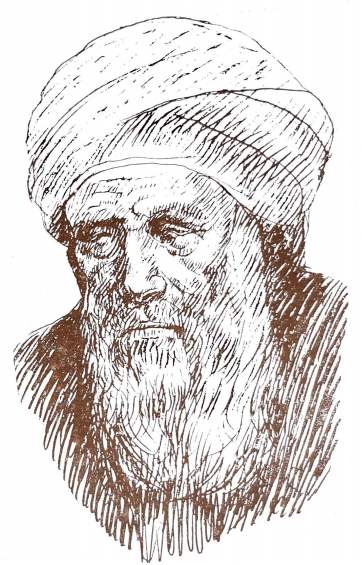 PhilosopherIslamic973 – 1057
al-Ma'arri
Abu al-Ala al-Ma'arri, also known by his Latin name Abulola Moarrensis, was an Arab philosopher, poet, and writer from Ma'arrat al-Nu'man, Emirate of Aleppo (in present day Syria). Al-Ma'arri's religious beliefs and philosophical worldview have been the subject of extensive historical and modern academic debate.
- ◆Veganism
Read the full pageAbu al-Ala al-Ma'arri (Arabic: أبو العلاء المعري; December 973 – May 1057), also known by his Latin name Abulola Moarrensis, was an Arab philosopher, poet, and writer from Ma'arrat al-Nu'man, Emirate of Aleppo (in present day Syria). Al-Ma'arri's religious beliefs and philosophical worldview have been the subject of extensive historical and modern academic debate. While his critical poetry led detractors and early Western scholars to characterize him as a deist, freethinker, or one of the "foremost atheists" of his time, this categorization has been disputed by other scholars and complicated by Al-Ma'arri's seemingly contradictory writings.
Born in the city of al-Ma'arra (present-day Ma'arrat al-Nu'man, Syria) during the later Abbasid era, he became blind at a young age from smallpox but nonetheless studied in nearby Aleppo, then in Tripoli and Antioch. Producing popular poems in Baghdad, he refused to sell his texts. In 1010, he returned to Syria after his mother began declining in health, and continued writing, which gained him local respect.
- 8
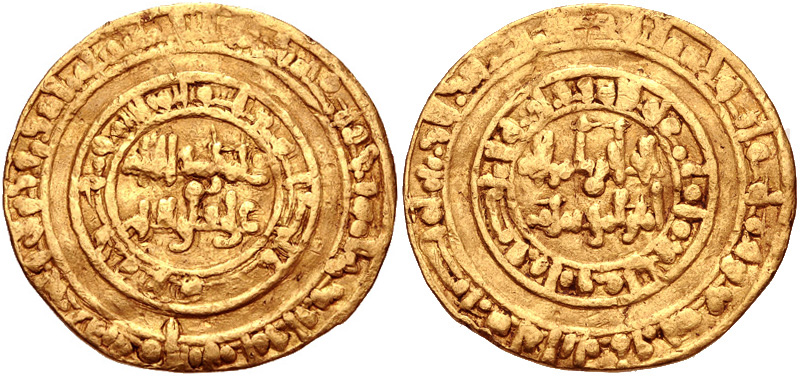 PhilosopherIslamic985 – 1021
Al-Hakim bi-Amr Allah
Abu Ali al-Mansur, better known by his regnal name al-Hakim bi-Amr Allah (Arabic: الحاكم بأمر الله, romanized: al-Ḥākim bi-Amr Allāh, lit. 'The Ruler by the Order of God'), was the sixth Fatimid caliph and 16th Ismaili imam. Al-Hakim is an important figure in a number of Shia Ismaili sects, such as the world's 15 milli
Read the full pageAbu Ali al-Mansur (Arabic: أبو علي المنصور, romanized: Abū ʿAlī al-Manṣūr; 13 August 985 – 13 February 1021), better known by his regnal name al-Hakim bi-Amr Allah (Arabic: الحاكم بأمر الله, romanized: al-Ḥākim bi-Amr Allāh, lit. 'The Ruler by the Order of God'), was the sixth Fatimid caliph and 16th Ismaili imam (996–1021). Al-Hakim is an important figure in a number of Shia Ismaili sects, such as the world's 15 million Nizaris and 1–2 million Musta'lis, in addition to 2 million Druze.
Histories of al-Hakim can prove controversial, as conflicting views of his life and legacy exist. Historian Paul Walker writes "Ultimately, both views of him, the mad and despotic tyrant (like Germanic and Roman despots) irrationally given to killing those around him on a whim, and the ideal supreme ruler, divinely ordained and chosen, whose every action was just and righteous, were to persist, the one among his enemies and those who rebelled against him, and the other in the hearts of true believers, who, while perhaps perplexed by events, nonetheless remained avidly loyal to him to the end." Appraisals of the more controversial accounts of al-Hakim's life and rule have earned him such monikers as "the Nero of Egypt", and "the Mad Caliph".
- 9
 PhilosopherIslamic994 – 1064
Ibn Hazm
Ibn Ḥazm was an Andalusi Muslim polymath, historian, traditionist, jurist, philosopher, and theologian, born in the Córdoban Caliphate, present-day Spain. Described as one of the strictest hadith interpreters, Ibn Hazm was a leading proponent and codifier of the Zahiri school of Islamic jurisprudence, and produced a re
Read the full pageIbn Ḥazm (Arabic: ابن حزم; November 994 – 15 August 1064) was an Andalusi Muslim polymath, historian, traditionist, jurist, philosopher, and theologian, born in the Córdoban Caliphate, present-day Spain. Described as one of the strictest hadith interpreters, Ibn Hazm was a leading proponent and codifier of the Zahiri school of Islamic jurisprudence, and produced a reported 400 works, of which 40 still survive.
In all, his written works amounted to some 80,000 pages. Also described as one of the fathers of comparative religion, the Encyclopaedia of Islam refers to him as having been one of the leading thinkers of the Muslim world.
- 10
 PhilosopherIslamic1004 – 1088
Nāṣir Khusraw
Persian poet and Ismaili philosopher of reason and travel.
Read the full pageAbu Mo'in Nasir ibn Khusraw ibn Harith Qubodiyani Balkhi, known as Nasir Khusraw (Persian: ناصرخسرو; 1004 – between 1072–1088), was an Persian-speaking Isma'ili poet, philosopher, traveler, and missionary (da'i and later Ḥujjah of Imam al-Mustansir Billah) for the Isma'ili Fatimid Caliphate. He was born in Qubodiyon, Khorasan and died in Yamgan, Badakhshan. His resting place is in Balkh, Afghanistan.
Despite being one of the most prominent Isma'ili philosophers and theologians of the Fatimids and the writer of many philosophical works intended for only the inner circle of the Isma'ili community, Nasir is best known to the general public as a poet and writer who ardently supported his native Persian tongue as an artistic and scientific language. All of Nasir's philosophical Isma'ili works are in Persian, a rarity in the Isma'ili literature of the Fatimids, which primarily used Arabic.
- 11PhilosopherIslamic1007 – 1066
ʻAlī ibn Ismāʻīl Ibn Sīdah
Abū’l-Ḥasan ʻAlī ibn Ismāʻīl (أبو الحسن على بن اسماعيل), known as Ibn Sīdah (ابن سيده), or Ibn Sīdah'l-Mursī (ابن سيده المرسي),, was a linguist, philologist and lexicographer of Classical Arabic from Andalusia. He compiled the encyclopedia al-Kitāb al-Mukhaṣṣaṣ (المخصص) (Book of Customs) and the Arabic-language diction
Read the full pageAbū’l-Ḥasan ʻAlī ibn Ismāʻīl (أبو الحسن على بن اسماعيل), known as Ibn Sīdah (ابن سيده), or Ibn Sīdah'l-Mursī (ابن سيده المرسي), (c.1007-1066), was a linguist, philologist and lexicographer of Classical Arabic from Andalusia. He compiled the encyclopedia al-Kitāb al-Mukhaṣṣaṣ (المخصص) (Book of Customs) and the Arabic-language dictionary Al-Muḥkam wa-al-muḥīt al-aʻẓam (المحكم والمحيط الأعظم) ("the great and comprehensive arbiter"). His contributions to language, literature, and logic were considerable.
Ibn Sīdah was born in Murcia in eastern Andalusia. The historian Khalaf ibn ʻAbd al-Malik Ibn Bashkuwāl (ابن بشكوال) (1183-1101) in his book Kitāb aṣ-Ṣilah (كتاب الصلة) (Book of Relations) gives Ismāʻīl as the name of his father, in agreement with name given in the Mukhassas. However Al-Fath ibn Khaqan in mathmah al-anfus (مطمح الأنفس) has the name Aḥmad. Yaqut al-Hamawi in The Lexicon of Literature, says Ibn Sīdah ('son of a woman') was his nickname. Remarkably both he and his father were blind. His father was a sculptor although it seems the disciplines he devoted his life to, philology and lexicography, had been in his family.