Islamic thinkers, medieval: Climacus to Al-Hallaj
- 1
 PhilosopherIslamic579 – 649
John Climacus
John Climacus, also known as John of the Ladder, John Scholasticus and John Sinaites, was a 6th–7th century Christian monk at the monastery on Mount Sinai. He is revered as a saint by the Eastern Orthodox Church and Catholic Church.
Read the full pageJohn Climacus (Ancient Greek: Ἰωάννης τῆς Κλίμακος; Latin: Ioannes Climacus; Arabic: يوحنا السلمي, romanized: Yuḥana al-Sêlmi; c. 579 – 649), also known as John of the Ladder, John Scholasticus and John Sinaites, was a 6th–7th century Christian monk at the monastery on Mount Sinai. He is revered as a saint by the Eastern Orthodox Church and Catholic Church.
Few details on his life are known. There exists an ancient vita (life) of the saint by a monk named Daniel of the Raithu monastery, which is the principal source about the life of John. Daniel, though claiming to be a contemporary, admits to no knowledge of John's origins—any detail on John's birth is the result of much later speculation, and is confined to references in the Menologion. Daniel also does not provide any chronology and his knowledge of the life of John is both scanty and vague. If Daniel's Life is trustworthy (there is nothing against which to judge its accuracy), then John came to the Vatos Monastery at Mount Sinai, now Saint Catherine's Monastery, and became a novice when he was about 16 years old. He was taught about the spiritual life by the more senior monk, Martyrius. After the death of Martyrius, John, wishing to practice greater asceticism, withdrew to a hermitage at the foot of the mountain. In this isolation he lived for some twenty years, constantly studying the lives of the saints and thus becoming one of the most learned Church Fathers.
- 2
 PhilosopherIslamic626 – 680
Husayn ibn Ali
Husayn ibn Ali was an Alid political and religious leader. The second son of Ali and Fatima and a grandson of the Islamic prophet Muhammad, as well as a younger brother of Hasan ibn Ali, Husayn is regarded as the third Imam in Shia Islam after his brother, Hasan, and before his son, Ali al-Sajjad.
Read the full pageHusayn ibn Ali (Arabic: حسين ابن علي, romanized: Ḥusayn ibn ʿAlī; 11 January 626 – 10 October 680 CE) was an Alid political and religious leader. The second son of Ali and Fatima and a grandson of the Islamic prophet Muhammad, as well as a younger brother of Hasan ibn Ali, Husayn is regarded as the third Imam in Shia Islam after his brother, Hasan, and before his son, Ali al-Sajjad. Husayn is a prominent member of the Ahl al-Bayt and is also considered to be a member of the Ahl al-Kisa and a participant in the event of the mubahala. Muhammad described him and his brother, Hasan, as the leaders of the youth of paradise.
During the caliphate of Ali, Husayn accompanied him in the military campaigns of the First Fitna. After the assassination of Ali, he obeyed his brother in recognizing the Hasan–Mu'awiya treaty, despite being suggested to do otherwise. In the nine-year period between Hasan's abdication in AH 41 (660) and his death in AH 49 or 50 (669 or 670), Hasan and Husayn retreated to Medina, trying to keep aloof from political involvement for or against Mu'awiya I. After the death of Hasan, when Kufans turned to Husayn, concerning an uprising, Husayn instructed them to wait as long as Mu'awiya was alive due to Hasan's peace treaty with him.
- 3
 PhilosopherIslamic707 – 774
Abd al-Rahman al-Awza'i
Abū ʿAmr ʿAbd al-Raḥmān ibn ʿAmr al-Awzāʿī was a Sunni Muslim scholar, jurist, theologian, and the chief representative and eponym of the Awza'i school of Islamic jurisprudence.
- ◆Awza'i school
Read the full pageAbū ʿAmr ʿAbd al-Raḥmān ibn ʿAmr al-Awzāʿī (Arabic: أَبُو عَمْرو عَبْد ٱلرَّحْمَٰن بْن عَمْرو ٱلْأَوْزَاعِيّ; 707–774) was a Sunni Muslim scholar, jurist, theologian, and the chief representative and eponym of the Awza'i school of Islamic jurisprudence.
Awzāʿī, of Sindhi origin, was born in Baalbek (in modern-day Lebanon) in 707. He was referred to by his nisbah Awzā (الأوزاع), part of Banu Hamdan. The biographer and historian al-Dhahabī reports on the authority of Abū Zurʿa al-Dimashqī that Awzāʿī was from al-Sind, and was a mawali of ʾAwzā tribe in his early life; Ibn ʿAsākir gives same account from Aḥmad ibn Kāmil al-Qāḍī. He may have been of Jat origin. Very little of al-Awzāʿī's writings survive, but his style of Islamic jurisprudence (usul al-fiqh) is preserved in Abu Yusuf's book Al-radd ʿala siyar al-Awzāʿī, in particular his reliance on the "living tradition," or the uninterrupted practice of Muslims handed down from preceding generations. For Awzāʿī, this was the true Sunnah of Muhammad. Awzāʿī's school flourished in Syria, the Maghreb, and al-Andalus but was eventually overcome and replaced by the Maliki school of Islamic law in the 9th century. He died in 774 and was buried near Beirut, Lebanon, where his tomb is still visited. Reflecting his standing and relations in Beirut, historical accounts note that his funeral and burial were attended by a large, mixed crowd that included local Christians.
- 4
 PhilosopherIslamic710 – 801
Rabia of Basri
Rābiʼa al-ʼAdawiyya al-Qaysiyya or Rabia Basri was a poet, one of the earliest Sufi mystics and an influential religious figure from Basra. Her kunya was Umm ʿAmr (or Umm al-Khayr), her wilāya was al-ʿAtakiyyah, and her nisba was al-ʿAdawiyya or al-Qaysīyya because she was a freed slave of the tribe of Qays ibn ʿAdī.
- ◆Divine love
Read the full pageRābiʼa al-ʼAdawiyya al-Qaysiyya (Arabic: رابعة العدوية القيسية; c. 716 – 801 CE) or Rabia Basri was a poet, one of the earliest Sufi mystics and an influential religious figure from Basra. Her kunya was Umm ʿAmr (or Umm al-Khayr), her wilāya was al-ʿAtakiyyah, and her nisba was al-ʿAdawiyya or al-Qaysīyya because she was a freed slave of the tribe of Qays ibn ʿAdī. She is regarded as one of the three preeminent Qalandars of the world.
Very little is known about the life of Rabi'a, notes Rkia Elaroui Cornell.
- 5
 PhilosopherIslamic711 – 795
Malik ibn Anas
Malik ibn Anas was a Muslim scholar, jurist, muhaddith and traditionalist who is the eponym of the Maliki school, one of the four schools of Islamic jurisprudence in Sunni Islam. Born in Medina into the clan of Humayr which belonged to the Banu Taym of Quraysh, Malik studied under Hisham ibn Urwa, Ibn Shihab al-Zuhri,
- ◆Maliki school
Read the full pageMalik ibn Anas (Arabic: مَالِك بْن أَنَس, romanized: Mālik ibn ʾAnas; c. 711–795) was a Muslim scholar, jurist, muhaddith and traditionalist who is the eponym of the Maliki school, one of the four schools of Islamic jurisprudence in Sunni Islam.
Born in Medina into the clan of Humayr which belonged to the Banu Taym of Quraysh, Malik studied under Hisham ibn Urwa, Ibn Shihab al-Zuhri, Ja'far al-Sadiq, Nafi ibn Sarjis and others. He rose to become the premier scholar of hadith in his day, Referred to as the Imam of Medina by his contemporaries, his views in matters of jurisprudence became highly cherished both in his own life and afterward, becoming the eponym of the Maliki school, one of the four major schools of Islamic jurisprudence. His school became the normative rite for Sunni practice in much of North Africa, al-Andalus (until the expulsion of medieval native Iberian Muslims), a vast portion of Egypt, some parts of Syria, Yemen, Sudan, Iraq, and Khorasan, and the prominent orders in Sufism, the Shadili and Tijani.
- 6
 PhilosopherIslamic767 – 820
Al-Shafi'i
Al-Shafi'i was a Muslim scholar, jurist, muhaddith, traditionist, theologian, and ascetic, and the founder and eponym of the Shāfiʿī school of Sunni Islamic jurisprudence. He played a formative role in the systematization of the principles of Islamic jurisprudence (uṣūl al-fiqh) and is regarded as its founder.
- ◆Shafi'i school
- ◆Principles of Islamic jurisprudence
Read the full pageAl-Shafi'i was a Muslim scholar, jurist, muhaddith, traditionist, theologian, and ascetic, and the founder and eponym of the Shāfiʿī school of Sunni Islamic jurisprudence. He played a formative role in the systematization of the principles of Islamic jurisprudence (uṣūl al-fiqh) and is regarded as its founder. His al-Risāla was among the earliest works devoted to the subject and gave Islamic legal theory a systematic form, thereby "fundamentally influencing the succeeding generations which are under his direct and obvious impact," and "beginning a new phase of the development of legal theory."
Al-Shafi'i was born in Gaza, Palestine, into the Banu Muttalib clan of the Quraysh tribe. At the age of two he was taken to Mecca, where he was raised. He subsequently lived in Medina, Yemen, Baghdad, and Egypt, and for a period served as a judge in Najran.
- 7
 PhilosopherIslamic780 – 855
Ahmad ibn Hanbal
Ahmad ibn Hanbal was an Arab jurist and founder of the Hanbali school who is widely recognized as the scholar who memorized the most Hadiths in Islamic history. One of the most venerated Islamic intellectual figures, Ibn Hanbal is notable for his unmatched memorization of over one million prophetic narrations, an unpre
- ◆Hanbali school
Read the full pageAhmad ibn Hanbal (Arabic: أحمد ابن حنبل, romanized: Aḥmad ibn Ḥanbal; 780 – 855) was an Arab jurist and founder of the Hanbali school who is widely recognized as the scholar who memorized the most Hadiths in Islamic history. One of the most venerated Islamic intellectual figures, Ibn Hanbal is notable for his unmatched memorization of over one million prophetic narrations, an unprecedented number that has never been claimed by any other muhaddith. Ibn Hanbal also compiled the largest hadith collection, al-Musnad, which has continued to exercise considerable influence on the field of hadith studies up to the present time,
shaping the methodological framework later employed in both Sahih Bukhari and Sahih Muslim. Imam al-Dhahabi described him as “the true Imam, the proof of the religion, the master of hadith, and the leader of the Sunnah”. Imam Ali ibn al-Madini said: “Truly, Allah supported this religion through two men, to whom there is no third: Abu Bakr during the Ridda Wars, and Ahmad ibn Hanbal during the Mihna”.
- 8
 PhilosopherIslamic787 – 886
Abu Ma'shar al-Balkhi
Abu Ma‘shar al-Balkhi, Latinized as Albumasar, was an early Persian Muslim astrologer, thought to be the greatest astrologer of the Abbasid court in Baghdad. While he was not a major innovator, his practical manuals for training astrologers profoundly influenced Muslim intellectual history and, through translations, th
Read the full pageAbu Ma‘shar al-Balkhi, Latinized as Albumasar (also Albusar, Albuxar, Albumazar; full name Abū Maʿshar Jaʿfar ibn Muḥammad ibn ʿUmar al-Balkhī ابومَعْشَر جعفر بن محمد بن عمر بلخی;
10 August 787 – 9 March 886, AH 171–272), was an early Persian Muslim astrologer, thought to be the greatest astrologer of the Abbasid court in Baghdad. While he was not a major innovator, his practical manuals for training astrologers profoundly influenced Muslim intellectual history and, through translations, that of western Europe and Byzantium.
- 9
 PhilosopherIslamic810 – 870
Muḥammad ibn Ismā‘īl al-Bukhārī
Abū ʿAbd Allāh Muḥammad ibn Ismāʿīl ibn Ibrāhīm al-Juʿfī al-Bukhārī, commonly known as al-Bukhārī, was a Persian 9th-century Muslim muhaddith and one of the foremost authorities on hadith, widely regarded as the most important hadith scholar in the history of Sunni Islam. Born in Bukhara, in present-day Uzbekistan, he
Read the full pageAbū ʿAbd Allāh Muḥammad ibn Ismāʿīl ibn Ibrāhīm al-Juʿfī al-Bukhārī (Arabic: أبو عبد الله محمد بن إسماعيل بن إبرهيم الجعفي البخاري; 21 July 810 C.E – 1 September 870; AH 194–256), commonly known as al-Bukhārī, was a Persian 9th-century Muslim muhaddith and one of the foremost authorities on hadith, widely regarded as the most important hadith scholar in the history of Sunni Islam.
Born in Bukhara, in present-day Uzbekistan, he began studying hadith at the age of ten and became noted for his exceptional memory. He travelled extensively throughout the Abbasid Caliphate in search of traditions and studied under numerous influential contemporary scholars. He is said to have interviewed about a thousand shaykhs and examined more than 200,000 hadiths, rejecting many after careful scrutiny at a time when numerous spurious traditions were in circulation.
- 10
 PhilosopherIslamic830 – 911
Junayd of Baghdad
Junayd of Baghdad, also known as Abū l-Qāsim al-Junaid, was a Muslim mystic, Sufi teacher, and one of the most renowned early Islamic saints. He was a major figure in the development of Sufi doctrine, laid foundations for much of the subsequent development of Sufism, and occupies a central position in the spiritual lin
- ◆Ishq
Read the full pageJunayd of Baghdad (Persian: جُنیدِ بَغدادی; Arabic: الجنيد البغدادي; c. 830–910; AH 298), also known as Abū l-Qāsim al-Junaid, was a Muslim mystic, Sufi teacher, and one of the most renowned early Islamic saints. He was a major figure in the development of Sufi doctrine, laid foundations for much of the subsequent development of Sufism, and occupies a central position in the spiritual lineages of many Sufi orders. He taught in Baghdad throughout his life and was widely revered by his students and disciples and frequently cited by later mystics. Because of his importance in Sufi theology, he was often referred to as the "Sultan".
Junayd studied within the Shāfiʿī school of law in Baghdad and first encountered Sufism through his uncle, Sarīʿ al-Saqaṭī. He was subsequently instructed by al-Muḥāsibī. From both teachers he derived a strong insistence that Sufi experience should remain governed by religious law and orthodox belief and conduct. He consequently distanced himself from the more extreme pronouncements associated with mystics such as al-Ḥallāj, whom he nevertheless influenced, and became known as an advocate of "sober Sufism".
- 11
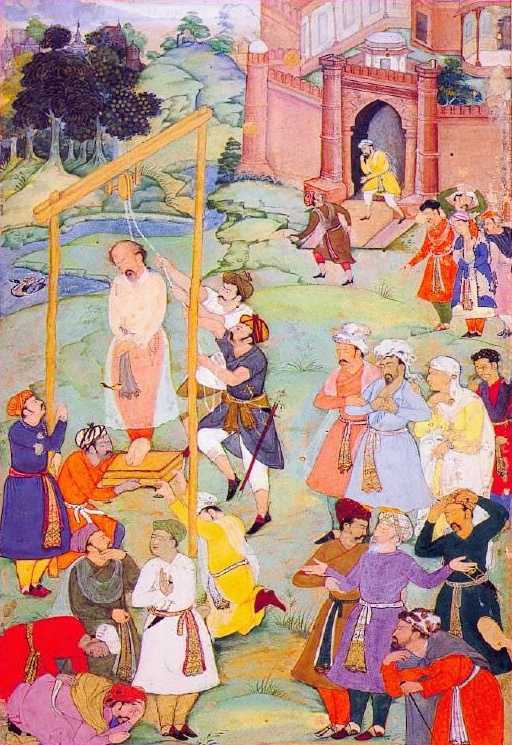 PhilosopherIslamic858 – 922
Mansur Al-Hallaj
Mansour al-Hallaj (Arabic: ابو المغيث الحسين بن منصور الحلاج, romanized: Abū 'l-Muġīth al-Ḥusayn ibn Manṣūr al-Ḥallāj), also known as Mansour Hallaj, was a Muslim Iranian mystic, poet, preacher, and teacher of Sufism, and one of the most controversial figures in Islamic history. During his lifetime he attracted a large
Read the full pageMansour al-Hallaj (Arabic: ابو المغيث الحسين بن منصور الحلاج, romanized: Abū 'l-Muġīth al-Ḥusayn ibn Manṣūr al-Ḥallāj), also known as Mansour Hallaj (Persian: منصور حلاج, romanized: Mansūr-e Hallāj; c. 858 – 26 March 922; c. 244 AH – 309 AH), was a Muslim Iranian mystic, poet, preacher, and teacher of Sufism, and one of the most controversial figures in Islamic history. During his lifetime he attracted a large popular following and was acclaimed as a saint by many ordinary believers, while Muslim jurists condemned him as a heretic. Most of his contemporary Sufis likewise disapproved of his actions, although he later became a major figure in the Sufi tradition.
Al-Hallaj was associated with the doctrine of fanāʾ, the extinction of individual consciousness, and with ideas described as ḥulūl, or union and identity with God. His mystical teaching sought to overcome the perceived gulf between the human being and God, expressing the relationship between the mystic and the divine in terms of an intimate union of lover and beloved. His most famous utterance, anā al-Ḥaqq ("I am the Truth"), was interpreted by many as a claim to divinity, while others understood it as an expression of the annihilation of the individual ego in which God, rather than the individual self, speaks through the mystic. To contemporary jurists, however, such teaching appeared blasphemously incompatible with the Islamic doctrine of tanzīh, the transcendence of God, and was also perceived as potentially threatening to the social order.