Modern European thinkers, renaissance & early modern: Regius to Clauberg
- 1
 PhilosopherModern European1598 – 1679
Henricus Regius
Henricus Regius was a Dutch philosopher, physician, and professor of medicine at the University of Utrecht from 1638.
Read the full pageHenricus Regius (; July 29, 1598 – February 19, 1679) was a Dutch philosopher, physician, and professor of medicine at the University of Utrecht from 1638.
Regius was born in Utrecht, and was also known by his birth name, Hendrik de Roy, or by its French rendering, Henri Le Roy. He studied liberal arts at the University of Franeker and medicine at Groningen University, Leiden University, and subsequently at the Universities of Montpellier and Padua.
- 2
 PhilosopherModern European1603 – 1663
Joseph of Cupertino
Joseph of Cupertino was an Italian Conventual Franciscan friar and mystic and venerated as a saint. According to traditional Franciscan accounts, he was "remarkably unclever", but experienced miraculous levitation and ecstatic visions throughout his life which made him the object of scorn.
Read the full pageJoseph of Cupertino (Italian: Giuseppe da Copertino; 17 June 1603 – 18 September 1663) was an Italian Conventual Franciscan friar and mystic and venerated as a saint. According to traditional Franciscan accounts, he was "remarkably unclever", but experienced miraculous levitation and ecstatic visions throughout his life which made him the object of scorn.
He applied to the Conventual Franciscan friars, but was rejected due to his lack of education. He then pleaded with them to serve in their stables. After several years of working there, he had impressed the friars so much with the devotion and simplicity of his life that in 1625 he was admitted to their Order, destined to become a priest.
- 3
 PhilosopherModern European1604 – 1658
Baltasar Gracián
Baltasar Gracián y Morales, better known as Baltasar Gracián, was a Spanish Jesuit priest and Baroque prose writer and philosopher. He was born in Belmonte, near Calatayud (Aragón).
Read the full pageBaltasar Gracián y Morales (Spanish: [baltaˈsaɾ ɣɾaˈθjan]; 8 January 1601 – 6 December 1658), better known as Baltasar Gracián, was a Spanish Jesuit priest and Baroque prose writer and philosopher. He was born in Belmonte, near Calatayud (Aragón). His writings were lauded by Schopenhauer and Nietzsche.
He is best known for his book The Art of Worldly Wisdom (1647), but his novel El Criticón (1651-57) is considered his greatest work.
- 4
 PhilosopherModern European1605 – 1682
Thomas Browne
Sir Thomas Browne was an English polymath and author of varied works which reveal his wide learning in diverse fields including science, medicine, religion and the esoteric. His writings display a deep curiosity towards the natural world, influenced by the Scientific Revolution of Baconian enquiry and are permeated by
- ◆Religio Medici
- ◆Urne-Burial
- ◆The Garden of Cyrus
- ◆Pseudodoxia Epidemica
- ◆Christian Morals
Read the full pageSir Thomas Browne ( "brown"; 19 October 1605 – 19 October 1682) was an English polymath and author of varied works which reveal his wide learning in diverse fields including science, medicine, religion and the esoteric. His writings display a deep curiosity towards the natural world, influenced by the Scientific Revolution of Baconian enquiry and are permeated by references to Classical and Biblical sources as well as the idiosyncrasies of his own personality. Although often described as suffused with melancholia, Browne's writings are also characterised by wit and subtle humour, while his literary style is varied, according to genre, resulting in a rich, unique prose which ranges from rough notebook observations to polished Baroque eloquence.
Thomas Browne was born in the parish of St Michael, Cheapside, in London on 19 October 1605. He was the youngest child of Thomas Browne, a silk merchant from Upton, Cheshire, and Anne Browne, the daughter of Paul Garraway of Lewes, Sussex. He had an elder brother and two elder sisters. The family, who had lived at Upton for several generations, were "evidently people of some importance" who "intermarried with families of position in that neighbourhood", and were armigerous. Browne's paternal grandmother, Elizabeth, was the daughter of Henry Birkenhead, Clerk of the Green Cloth to Elizabeth I of England and Clerk of the Crown for the counties of Cheshire and Flintshire. Browne's father died while he was young, and his mother married Sir Thomas Dutton of Gloucester and Isleworth, Middlesex, by whom she had two daughters.
- 5
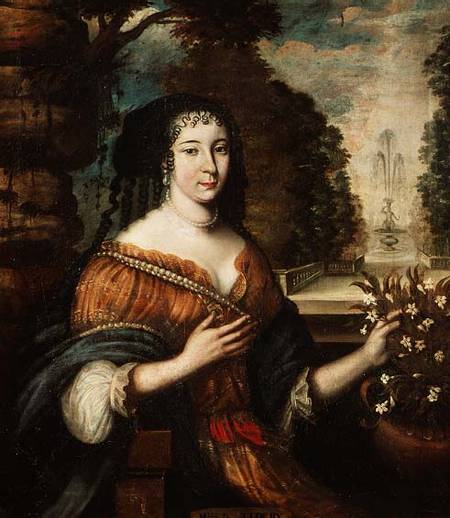 PhilosopherModern European1607 – 1701
Madeleine de Scudéry
Madeleine de Scudéry, often known simply as Mademoiselle de Scudéry ([madmwazɛl də skydeʁi]), was a French writer. Her works demonstrate such comprehensive knowledge of ancient history that it is suspected she had received instruction in Greek and Latin.
Read the full pageMadeleine de Scudéry (French: [madlɛn də skydeʁi]; 15 November 1607 – 2 June 1701), often known simply as Mademoiselle de Scudéry ([madmwazɛl də skydeʁi]), was a French writer.
Her works demonstrate such comprehensive knowledge of ancient history that it is suspected she had received instruction in Greek and Latin. In 1637, following the death of her uncle, Scudéry established herself in Paris with her brother, Georges de Scudéry, who became a playwright. Madeleine often used her older brother's name, George, to publish her works. She was at once admitted to the Hôtel de Rambouillet coterie of préciosité, and afterwards established a salon of her own under the title of the Société du samedi (Saturday Society). For the last half of the 17th century, under the pseudonym of Sapho or her own name, she was acknowledged as the first bluestocking of France and of the world. She formed a close romantic relationship with Paul Pellisson which was only ended by his death in 1693. She never married.
- 6
 PhilosopherModern European1607 – 1678
Anna Maria van Schurman
Anna Maria van Schurman (AN-uh muh-REE-uh van SHUR-muhn) was a Dutch painter, engraver, poet, classical scholar, philosopher, and feminist writer who is best known for her exceptional learning and her defense of female education. She was a highly educated woman, who excelled in art, music, and literature, and became a
Read the full pageAnna Maria van Schurman (AN-uh muh-REE-uh van SHUR-muhn) (November 5,1607 – May 4,1678) was a Dutch painter, engraver, poet, classical scholar, philosopher, and feminist writer who is best known for her exceptional learning and her defense of female education. She was a highly educated woman, who excelled in art, music, and literature, and became a polyglot proficient in fourteen languages, including Latin, Ancient Greek, Biblical Hebrew, Arabic, Syriac, Aramaic, and Ethiopic, as well as various contemporary European languages. She was the first woman to study, unofficially, at a Dutch university.
Anna Maria van Schurman was born on 5 November 1607 in Cologne, then part of the Holy Roman Empire, to Frederik van Schurman and Eva von Harff de Dreiborn. She learned to read by the age of four. By six, she was making intricate paper cut-outs, and at ten she reportedly learned embroidery in three hours. She also experimented with wax sculpture, later writing that she had been obliged to discover techniques that nobody could teach her. According to one account, a wax self-portrait she made included a necklace so realistic that her friend, the Princess of Nassau, pricked it with a pin to determine whether it was real.
- 7PhilosopherModern European1610 – 1678
Robert Desgabets
Robert Desgabets was a French Cartesian philosopher and Benedictine prior, born in Ancemont. He published two book-length philosophical works in his lifetime, Considérations sur l'état présent de la controverse touchant le T.
Read the full pageRobert Desgabets (French: [deɡabɛ]; 1610–1678) was a French Cartesian philosopher and Benedictine prior, born in Ancemont. He published two book-length philosophical works in his lifetime, Considérations sur l'état présent de la controverse touchant le T. S. Sacrement de l'autel (Considerations on the present state of the controversy concerning the Eucharist) in 1671 and Critique de la critique de la recherche de la verité (Critique of the critique of the search for truth) in 1675.
In July 1658, Desgabets introduced the concept of blood transfusion (human-to-human) or xenotransfusion (animal-to-human) at a meeting of Henri Louis Habert de Montmor's scientific society, which would later become the French Academy of Sciences. He would later publish Discours de la communication ou transfusion du sang (Discourse on the Communication or Transfusion of Blood) in 1668.
- 8
 PhilosopherModern European1611 – 1677
James Harrington
James Harrington was an English political theorist known for his contributions to classical republican thought. He is best known for The Commonwealth of Oceana, an exposition of an ideal republican constitution, based on Aristotle's theories of constitutional stability and revolution, conceived as a model for the Commo
Read the full pageJames Harrington (or Harington; 3 January 1611 – 11 September 1677) was an English political theorist known for his contributions to classical republican thought. He is best known for The Commonwealth of Oceana (1656), an exposition of an ideal republican constitution, based on Aristotle's theories of constitutional stability and revolution, conceived as a model for the Commonwealth of England that had emerged following the execution of Charles I of England in 1649.
The reaction to the book by Oliver Cromwell was unfavourable, and it was initially pulled out of print. The restored monarchy of Charles II had Harrington imprisoned, and he ultimately succumbed to various ailments, possibly contracted while in prison many years earlier.
- 9
 PhilosopherModern European1614 – 1702
Margaret Fell
Margaret Fell or Margaret Fox was a founder and leading member of the Religious Society of Friends. Known popularly as the "mother of Quakerism," she is considered one of the Valiant Sixty early Quaker preachers and missionaries.
- ◆Religious Society of Friends
Read the full pageMargaret Fell or Margaret Fox (née Askew, formerly Fell; 1614 – 23 April 1702) was a founder and leading member of the Religious Society of Friends. Known popularly as the "mother of Quakerism," she is considered one of the Valiant Sixty early Quaker preachers and missionaries. Her daughters Isabel (Fell) Yeamans and Sarah Fell were also leading Quakers.
She was born Margaret Askew at the family seat of Marsh Grange in the parish of Kirkby Ireleth, Lancashire (now in Cumbria). She married Thomas Fell, a barrister, in 1632, and became the lady of Swarthmoor Hall. In 1641, Thomas became a Justice of the Peace for Lancashire, and in 1645 a member of the Long Parliament. He ceased to be a member from 1647 to 1649, disapproving of Oliver Cromwell's assumption of authority. Margaret and Thomas had seven daughters and one son; only Thomas and their son were not convinced to the Quaker faith perspective.
- 10
 PhilosopherModern European1617 – 1688
Ralph Cudworth
Ralph Cudworth was an English Anglican clergyman, Christian Hebraist, classicist, theologian and philosopher, and a leading figure among the Cambridge Platonists who became 11th Regius Professor of Hebrew, 26th Master of Clare Hall, and 14th Master of Christ's College. A leading opponent of Hobbes's political and philo
Read the full pageRalph Cudworth (; 1617 – 26 June 1688) was an English Anglican clergyman, Christian Hebraist, classicist, theologian and philosopher, and a leading figure among the Cambridge Platonists who became 11th Regius Professor of Hebrew (1645–1688), 26th Master of Clare Hall (1645–1654), and 14th Master of Christ's College (1654–1688). A leading opponent of Hobbes's political and philosophical views, his magnum opus was his The True Intellectual System of the Universe (1678).
Cudworth's family reputedly originated in Cudworth (near Barnsley), Yorkshire, moving to Lancashire with the marriage (c.1377) of John de Cudworth (died 1384) and Margery (died 1384), daughter of Richard de Oldham (living 1354), lord of the manor of Werneth, Oldham. The Cudworths of Werneth Hall, Oldham, were lords of the manor of Werneth/Oldham, until 1683. Ralph Cudworth (the philosopher)'s father, Ralph Cudworth (Snr), was the posthumous-born second son of Ralph Cudworth (d.1572) of Werneth Hall, Oldham.
- 11
 PhilosopherModern European1618 – 1680
Elisabeth of Bohemia
Princess whose letters posed the sharpest early challenge to Descartes's dualism.
Read the full pageElisabeth of the Palatinate (German: Elisabeth von der Pfalz; 26 December 1618 – 11 February 1680), also known as Elisabeth of Bohemia (Elisabeth von Böhmen), Princess Elisabeth of the Palatinate, or Princess-Abbess of Herford Abbey, was the eldest daughter of Frederick V, Elector Palatine (who was briefly King of Bohemia), and Elizabeth Stuart. Elisabeth of the Palatinate was a philosopher best known for her correspondence with René Descartes. She was critical of Descartes's dualistic metaphysics and her work anticipated the metaphysical concerns of later philosophers.
Elisabeth Simmern van Pallandt was born on December 26, 1618, in Heidelberg. She was the third of thirteen children and eldest daughter of Frederick V, Elector Palatine, and Elizabeth Stuart, daughter of James VI of Scotland and I of England and sister of Charles I.
- 12
 PhilosopherModern European1622 – 1665
Johannes Clauberg
Johannes Clauberg was a German philosopher and theologian. Clauberg was the founding Rector of the first University of Duisburg, where he taught from 1655 to 1665.
Read the full pageJohannes Clauberg (24 February 1622 – 31 January 1665) was a German philosopher and theologian. Clauberg was the founding Rector of the first University of Duisburg, where he taught from 1655 to 1665. He is known as a "scholastic cartesian".
He was born in Solingen, and educated in the Aristotelian tradition in Köln, Moers and Bremen, then in Groningen, where he discovered what came to be called the reformed variation of Aristotelianism. He gave his first disputations in Groningen under the supervision of Tobias Andreae. His first treatise in metaphysics was written in those student years: Elementa philosophiae sive Ontosophia (1647). Travelling in France and England, he came to study the Cartesian philosophy under Johannes de Raey at Leiden. In 1649, he became professor of philosophy and theology at Herborn, but subsequently (1651), in consequence of the jealousy of his colleagues, accepted an invitation to a similar post at Duisburg.