Modern European thinkers, renaissance & early modern: Pascal to Pufendorf
- 1
 PhilosopherModern European1623 – 1662
Blaise Pascal
Mathematician and religious thinker, author of the Pensées and Pascal's Wager.
- ◆Probability theory
- ◆Pascal distribution
- ◆Pascal's wager
- ◆Pascal's triangle
- ◆Pascal's law
- ◆Pascal's rule
Read the full pageBlaise Pascal (19 June 1623 – 19 August 1662) was a French mathematician, physicist, inventor, philosopher, and Catholic writer.
Pascal was a child prodigy who was educated by his father Étienne Pascal, a tax collector in Rouen. His earliest mathematical work was on projective geometry; he wrote a significant treatise on the subject of conic sections at the age of 16. He later corresponded with Pierre de Fermat on probability theory, strongly influencing the development of modern economics and social science. In 1642, he started some pioneering work on calculating machines (called Pascal's calculators and later Pascalines), establishing him as one of the first two inventors of the mechanical calculator.
- 2
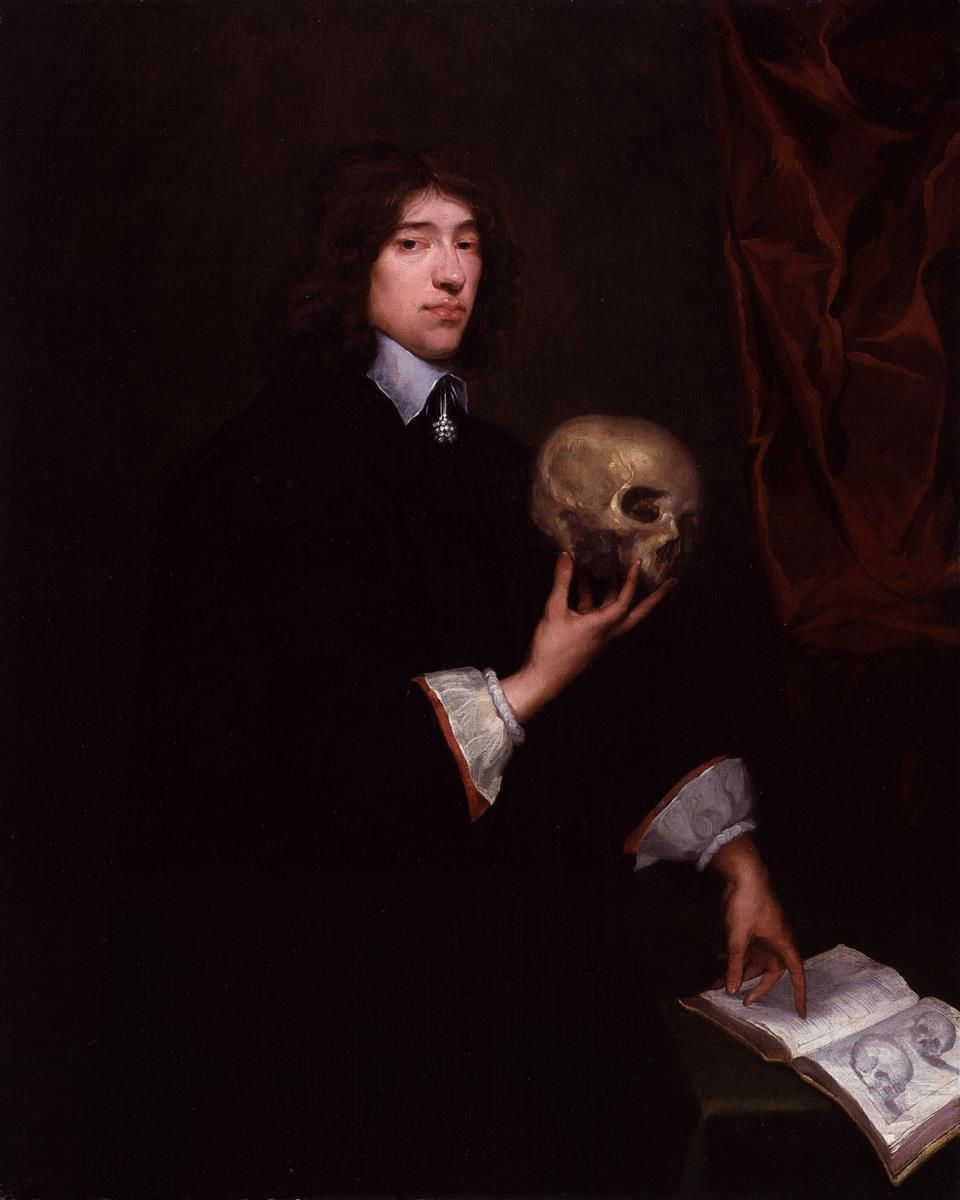 PhilosopherModern European1623 – 1687
William Petty
Sir William Petty was an English economist, physician, scientist and philosopher. He first became prominent serving Oliver Cromwell and the Commonwealth in Ireland.
- ◆Division of labour
- ◆fiscal theory
- ◆monetary theory
- ◆national income accounting
- ◆economic statistics
- ◆gross domestic product
Read the full pageSir William Petty (26 May 1623 – 16 December 1687) was an English economist, physician, scientist and philosopher. He first became prominent serving Oliver Cromwell and the Commonwealth in Ireland. He developed efficient methods to survey the land that was to be confiscated and given to Cromwell's soldiers. He also remained a significant figure under King Charles II and King James II, as did many others who had served Cromwell. Petty was also a scientist, inventor, and merchant, a charter member of the Royal Society, and briefly a member of the Parliament of England. However, he is best remembered for his theories on economics and his methods of political arithmetic. He was knighted in 1661.
Petty was born in Romsey, where his father and grandfather were clothiers. He was a precocious and intelligent youth and in 1637 became a cabin boy. His readiness to provide caricatures of fellow crew members won him few friends. He also learnt of his defective sight when he failed to spot a landmark he had been told to look for. The captain, who had by this time seen the landmark from the deck for himself "drubbed him with a cord". He was subsequently set ashore in Normandy after breaking his leg on board. After this setback, he applied in Latin to study with the Jesuits in Caen, supporting himself by teaching English. After a year, he returned to England, and had by now a thorough knowledge of Latin, Greek, French, mathematics, and astronomy.
- 3
 PhilosopherModern European1623 – 1673
Margaret Cavendish, Duchess of Newcastle-upon-Tyne
Margaret Cavendish, Duchess of Newcastle-upon-Tyne was an English natural philosopher, poet, fiction writer, and playwright. She was a prolific writer, publishing over a dozen original texts under her name at a time when women were largely excluded from publishing.
Read the full pageMargaret Cavendish, Duchess of Newcastle-upon-Tyne (née Lucas; 1623 – 16 December 1673) was an English natural philosopher, poet, fiction writer, and playwright. She was a prolific writer, publishing over a dozen original texts under her name at a time when women were largely excluded from publishing. Cavendish was a materialist, creating her doctrine of complete blending that established three kinds of matter that make up nature: rational animate matter, sensitive animate matter, and inanimate matter. She also rejected dualism, arguing that the mind and body are connected, with the mind being corporeal as it resides within the body.
Although many would credit author Mary Shelley as the inventor of science fiction, Margaret Cavendish can also be counted as an essential pioneer. Her book The Blazing World is one of the first to fall into the science fiction genre. As a well-connected natural philosopher, Cavendish engaged with some of the most influential minds of her time, including René Descartes, Thomas Hobbes, and Henry More.
- 4
 PhilosopherModern European1624 – 1669
Arnold Geulincx
Arnold Geulincx, also known by his pseudonym Philaretus, was a Flemish philosopher, metaphysician, and logician. He was one of the followers of René Descartes who tried to work out more detailed versions of a generally Cartesian philosophy.
Read the full pageArnold Geulincx (Dutch: [ˈɑrnɔlt ˈɣøːlɪŋks]; 31 January 1624 – November 1669), also known by his pseudonym Philaretus, was a Flemish philosopher, metaphysician, and logician. He was one of the followers of René Descartes who tried to work out more detailed versions of a generally Cartesian philosophy. Samuel Beckett cited Geulincx as a key influence and interlocutor because of Geulincx's emphasis on the powerlessness and ignorance of the human condition.
Geulincx was born in Antwerp. He studied philosophy and theology at the University of Leuven and was made professor of philosophy there in 1646. He lost his post in 1658, possibly for religious reasons, or (as has been suggested) a combination of unpopular views and his marriage in that year. In September 1658, Geulincx became a medical doctor. He then moved north to the University of Leiden and converted to Calvinism. Initially he gave private lessons in philosophy. He was appointed reader in logic there in 1662 and professor by special appointment in 1665. Until 1662, Geulincx lived in poverty. He died in Leiden in November 1669, leaving most of his works, all written in Latin, to be published after his death. They were edited by Cornelis Bontekoe.
- 5
 PhilosopherModern European1626 – 1684
Géraud de Cordemoy
Géraud de Cordemoy was a French philosopher, historian and lawyer. He is mainly known for his works in metaphysics and for his theory of language.
Read the full pageGéraud de Cordemoy (French: [ʒeʁo də kɔʁdəmwa]; 6 October 1626 – 15 October 1684) was a French philosopher, historian and lawyer. He is mainly known for his works in metaphysics and for his theory of language.
Géraud de Cordemoy was a member of a family of ancient nobility originating from Auvergne (from the town of Royat), but was born and died in Paris. He was the third of four children. His father was a master in arts at the University of Paris named Géraud de Cordemoy who died when he was nine years old. His mother was named Nicole de Cordemoy. As for Géraud, he was a private tutor and a linguist and practised as a lawyer.
- 6
 PhilosopherModern European1627 – 1691
Robert Boyle
Robert Boyle was an Anglo-Irish chemist, alchemist, physicist, theologian, and inventor. Boyle is largely regarded today as the first modern chemist, and therefore one of the founders of modern chemistry, and one of the pioneers of modern experimental scientific method.
- ◆Boyle's law
- ◆Boyle temperature
- ◆Corpuscularianism
- ◆Pneumatic chemistry
Read the full pageRobert Boyle (; 25 January 1627 – 31 December 1691) was an Anglo-Irish chemist, alchemist, physicist, theologian, and inventor. Boyle is largely regarded today as the first modern chemist, and therefore one of the founders of modern chemistry, and one of the pioneers of modern experimental scientific method.
He is best known for Boyle's law, which describes the inversely proportional relationship between the absolute pressure and volume of a gas, if the temperature is kept constant within a closed system.
- 7
 PhilosopherModern European1627 – 1704
Jacques Bénigne Bossuet
Jacques-Bénigne Lignel Bossuet was a French Catholic prelate and theologian who served as Bishop of Meaux from 1681 until his death in 1704. Renowned for his sermons, addresses and literary works, he is regarded as a brilliant orator and literary stylist of the French language.
Read the full pageJacques-Bénigne Lignel Bossuet (French: [bɔsɥɛ]; 27 September 1627 – 12 April 1704) was a French Catholic prelate and theologian who served as Bishop of Meaux from 1681 until his death in 1704. Renowned for his sermons, addresses and literary works, he is regarded as a brilliant orator and literary stylist of the French language.
A native of Dijon, Bossuet was educated at a Jesuit school before enrolling in the College of Navarre in Paris, where he studied philosophy and theology. In 1652, he was ordained a priest and became a Doctor of Divinity. He spent the next seven years at Metz, where he honed his skills in oratory and politics, before returning to Paris and establishing his reputation as a great preacher. By the early 1660s, Bossuet was preaching regularly before the court of King Louis XIV at Versailles. He was appointed tutor to the Dauphin in 1670 and elected to the Académie Française a year later.
- 8
 PhilosopherModern European1628 – 1688
John Bunyan
John Bunyan was an English writer and nonconformist preacher. He is best remembered as the author of the Christian allegory The Pilgrim's Progress, which also became an influential literary model.
Read the full pageJohn Bunyan (; 1628 – 31 August 1688) was an English writer and nonconformist preacher. He is best remembered as the author of the Christian allegory The Pilgrim's Progress, which also became an influential literary model. In addition to The Pilgrim's Progress, Bunyan wrote nearly sixty titles, many of them expanded sermons.
Bunyan came from the village of Elstow, near Bedford. He had some schooling and, at the age of sixteen, joined the Parliamentary Army at Newport Pagnell during the first stage of the English Civil War. After three years in the army, he returned to Elstow and took up the trade of tinker, which he had learned from his father. He became interested in religion after his marriage, attending first the parish church and then joining the Bedford Meeting, a nonconformist group in St John's church in Bedford, and later became a preacher. After the restoration of the monarchy in 1660, when the freedom of nonconformists was curtailed, Bunyan was arrested and spent the next twelve years in prison because he refused to give up preaching. During this time, he wrote a spiritual autobiography, Grace Abounding to the Chief of Sinners, and began work on his most famous book, The Pilgrim's Progress.
- 9PhilosopherModern European1629 – 1699
Antoine Le Grand
Antoine Le Grand was a French Recollect and Cartesian philosopher.
Read the full pageAntoine Le Grand (French: [ɑ̃twan lə ɡʁɑ̃]; 1629 – 7 August 1699) was a French Recollect and Cartesian philosopher.
Born in Douai, Spanish Netherlands, he was attached at an early age to the English community of St. Bonaventure's convent there, and became a Franciscan Recollect friar, and taught philosophy and divinity. Sent on the English mission, he resided for many years in Oxfordshire, and in 1695 he was tutor in the family of Henry Fermor of Tusmore. His advocacy of Cartesianism met with strong resistance from Samuel Parker, who would become bishop of Oxford. Towards the close of his life, he engaged in sharp controversies on metaphysical topics with John Sergeant, a secular priest. At the twenty-third chapter of his order, assembled in London on 9 July 1693, he was elected provincial, and he held that office till his death on 9 August 1699.
- 10
 PhilosopherModern European1630 – 1677
Isaac Barrow
Isaac Barrow was an English Christian theologian and mathematician who is generally given credit for his early role in the development of infinitesimal calculus; in particular, for a proof of the fundamental theorem of calculus. His work centered on the properties of the tangent; Barrow was the first to calculate the t
- ◆Fundamental theorem of calculus
- ◆Optics
Read the full pageIsaac Barrow (October 1630 – 4 May 1677) was an English Christian theologian and mathematician who is generally given credit for his early role in the development of infinitesimal calculus; in particular, for a proof of the fundamental theorem of calculus. His work centered on the properties of the tangent; Barrow was the first to calculate the tangents of the kappa curve. He is also notable for being the inaugural holder of the prestigious Lucasian Professorship of Mathematics at the University of Cambridge, a post later held by his student, Isaac Newton.
Barrow was born in London. He was the son of Thomas Barrow, a linen draper by trade. In 1624, Thomas married Ann, daughter of William Buggin of North Cray, Kent and their son Isaac was born in 1630. It appears that Barrow was the only child of this union—certainly the only child to survive infancy. Ann died around 1634, and the widowed father sent the lad to his grandfather, Isaac, the Cambridgeshire J.P., who resided at Spinney Abbey. Within two years, however, Thomas remarried; the new wife was Katherine Oxinden, sister of Henry Oxinden of Maydekin, Kent. From this marriage, he had at least one daughter, Elizabeth (born 1641), and a son, Thomas, who apprenticed to Edward Miller, skinner, and won his release in 1647, emigrating to Barbados in 1680.
- 11
 PhilosopherModern European1631 – 1679
Anne Conway
Anne Conway was an English philosopher of the seventeenth century, whose work was in the tradition of the Cambridge Platonists. Conway's thought is a deeply original form of rationalist philosophy.
Read the full pageAnne Conway (also known as Viscountess Conway; née Finch; 14 December 1631 – 23 February 1679) was an English philosopher of the seventeenth century, whose work was in the tradition of the Cambridge Platonists. Conway's thought is a deeply original form of rationalist philosophy. Conway rejected Cartesian substance dualism and instead, argued that nature is constituted by one substance. Against the mechanists, she argued that matter is not passive, but has self-motion, perception, and life.
Anne Finch was born to Sir Heneage Finch (who had held the posts of the Recorder of London and Speaker of the House of Commons under Charles I) and his second wife, Elizabeth (daughter of William Cradock of Staffordshire). Her father died the week before her birth. She was the youngest child. Anne grew up in the house now known as Kensington Palace, which her family owned at the time. In her younger years, she was educated by tutors. She studied Latin, and later learned Greek and Hebrew. Her half-brother, John Finch, encouraged her interests in philosophy and theology. He introduced Anne to one of his tutors at Christ's College, Cambridge, the Platonist Henry More. This led to a lifelong correspondence and close friendship between Henry and Anne. In their correspondence, the pair discussed René Descartes' philosophy. Eventually, Anne grew from More's informal pupil to his intellectual equal. When speaking about her, More said that he had "scarce ever met with any Person, Man or Woman, of better Natural parts than Lady Conway" (quoted in Richard Ward's The Life of Henry More (1710) p. 193), and that "in the knowledge of things as well Natural and Divine, you have not only out-gone all of your own Sex, but even of that other also."
- 12
 PhilosopherModern European1632 – 1694
Samuel von Pufendorf
Samuel von Pufendorf was a German jurist, political philosopher, economist and historian. He was born Samuel Pufendorf and ennobled in 1694; he was made a baron by Charles XI of Sweden a few months before his death at age 62.
- ◆Natural law as a secular discipline
- ◆Michael Seidler
- ◆''The Stanford Encyclopedia of Philosophy''
- ◆Metaphysics Research Lab
- ◆Stanford University.
Read the full pageSamuel von Pufendorf (; German: [ˈpuːfəndɔʁf]; 8 January 1632 – 26 October 1694) was a German jurist, political philosopher, economist and historian. He was born Samuel Pufendorf and ennobled in 1694; he was made a baron by Charles XI of Sweden a few months before his death at age 62. Among his achievements are his commentaries and revisions of the natural law theories of Thomas Hobbes and Hugo Grotius.
His political concepts are part of the cultural background of the American Revolution. Pufendorf is seen as an important precursor of the German Enlightenment. He was involved in constant quarrels with clerical circles and frequently had to defend himself against accusations of heresy, despite holding largely traditional Christian views on matters of dogma and doctrine.