Modern European thinkers, renaissance & early modern: Calvin to Sales
- 1
 PhilosopherModern European1509 – 1564
John Calvin
John Calvin was a French theologian, pastor and reformer in Geneva during the Protestant Reformation. He was the principal figure in the development of the system of Christian theology later called Calvinism, including its doctrines of predestination and of God's absolute sovereignty in the salvation of the human soul
- ◆Predestination
- ◆Regulative principle of worship
- ◆Monergism
- ◆Covenantalism
- ◆Imputed righteousness
Read the full pageJohn Calvin (; Middle French: Jehan Cauvin; French: Jean Calvin [ʒɑ̃ kalvɛ̃]; 10 July 1509 – 27 May 1564) was a French theologian, pastor and reformer in Geneva during the Protestant Reformation. He was the principal figure in the development of the system of Christian theology later called Calvinism, including its doctrines of predestination and of God's absolute sovereignty in the salvation of the human soul from death and eternal damnation. Calvinist doctrines were influenced by and elaborated upon Augustinian and other Christian traditions. Various Reformed Church movements, including Continental Reformed, Congregationalism, Presbyterianism, Waldensians, Baptist Reformed, Calvinist Methodism, and Reformed Anglican Churches, which look to Calvin as the chief expositor of their beliefs, have spread throughout the world.
Calvin was a dedicated polemicist and apologetic writer who generated much controversy. He also exchanged cordial and supportive letters with many reformers, including Philipp Melanchthon and Heinrich Bullinger. In addition to his seminal Institutes of the Christian Religion, Calvin wrote commentaries on most books of the Bible, confessional documents, and various other theological treatises.
- 2
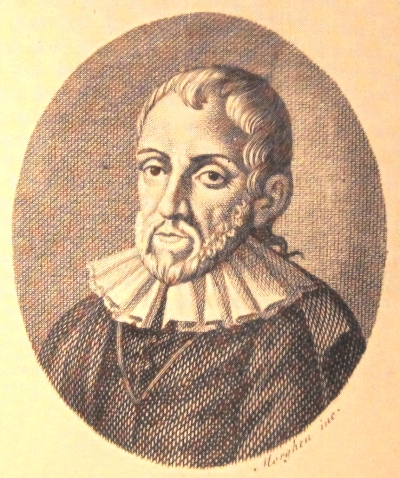 PhilosopherModern European1509 – 1588
Bernardino Telesio
Bernardino Telesio was an Italian philosopher and natural scientist. While his natural theories were later disproven, his emphasis on observation made him the "first of the moderns" who eventually developed the scientific method.
Read the full pageBernardino Telesio (Italian: [bernarˈdiːno teˈlɛːzjo]; 7 November 1509 – 2 October 1588) was an Italian philosopher and natural scientist. While his natural theories were later disproven, his emphasis on observation made him the "first of the moderns" who eventually developed the scientific method.
Telesio was born of noble parentage in Cosenza, a city in Calabria, Southern Italy (Kingdom of Naples). He was educated in Milan by his uncle, Antonio, himself a scholar and a poet of eminence, and afterwards in Rome and Padua. His studies included a wide range of subjects, classics, science and philosophy, which constituted the curriculum of the Renaissance savants. Thus equipped, he began his attack upon the medieval Aristotelianism which then flourished in Padua and Bologna and he wrote some short poems, brought back to light by Luca Irwin Fragale in 2010. In 1553 he married and settled in Cosenza, becoming the founder of the Cosentian Academy. From 1544 to 1550 and after 1565 he lived in the household of Alfonso III Carafa, Duke of Nocera.
- 3
 PhilosopherModern European1519 – 1603
Andrea Cesalpino
Andrea Cesalpino (Latinized as Andreas Cæsalpinus) was a Florentine physician, philosopher and botanist. In his works he classified plants according to their fruits and seeds, rather than alphabetically or by medicinal properties.
- ◆''Quaestionum peripateticarum libri V'' (1569)
- ◆''De plantis libri XVI'' (1583)
Read the full pageAndrea Cesalpino (Latinized as Andreas Cæsalpinus) (1524/1525 – 23 February 1603) was a Florentine physician, philosopher and botanist.
In his works he classified plants according to their fruits and seeds, rather than alphabetically or by medicinal properties. In 1555, he succeeded Luca Ghini as director of the botanical garden in Pisa. The botanist Pietro Castelli was one of his students. Cesalpino also did limited work in the field of plant and animal physiology. In medicine, he envisioned a "chemical circulation" consisting of repeated evaporation and condensation of blood, and for this reason historians have conceived him as a forerunner of William Harvey (1578–1657), who theorized the "physical circulation" of blood in 1628.
- 4
 PhilosopherModern European1530 – 1596
Jean Bodin
Jean Bodin was a French jurist and political philosopher, member of the Parlement of Paris and professor of law at the University of Toulouse. Bodin lived during the aftermath of the Protestant Reformation and wrote against the background of religious conflict in France.
- ◆Quantity theory of money
- ◆absolute sovereignty
Read the full pageJean Bodin (; French: [ʒɑ̃ bɔdɛ̃]; c. 1530 – 1596) was a French jurist and political philosopher, member of the Parlement of Paris and professor of law at the University of Toulouse. Bodin lived during the aftermath of the Protestant Reformation and wrote against the background of religious conflict in France. He seemed to be a nominal Catholic throughout his life but was critical of papal authority over governments. Known for his theory of sovereignty, he favoured the strong central control of a national monarchy as an antidote to factional strife.
Towards the end of his life, he wrote a dialogue among different religions, including representatives of Judaism, Islam and natural theology in which all agreed to coexist in concord, but was not published. He was also an influential writer on demonology, as his later years were spent during the peak of the early modern witch trials.
- 5
 PhilosopherModern European1535 – 1615
Giambattista della Porta
Giambattista della Porta, also known as Giovanni Battista Della Porta, was an Italian scholar, polymath and playwright who lived in Naples at the time of the Renaissance, Scientific Revolution and Counter-Reformation. Giambattista della Porta spent the majority of his life on scientific endeavours.
- ◆Magia Naturalis
- ◆De Furtivis Literarum Notis
Read the full pageGiambattista della Porta (Italian: [dʒambatˈtista della ˈpɔrta]; 1535 – 4 February 1615), also known as Giovanni Battista Della Porta, was an Italian scholar, polymath and playwright who lived in Naples at the time of the Renaissance, Scientific Revolution and Counter-Reformation.
Giambattista della Porta spent the majority of his life on scientific endeavours. He benefited from an informal education of tutors and visits from renowned scholars. His most famous work, first published in 1558, is entitled Magia Naturalis (Natural Magic). In this book he covered a variety of the subjects he had investigated, including occult philosophy, astrology, alchemy, mathematics, meteorology, and natural philosophy. He was also referred to as "professor of secrets".
- 6
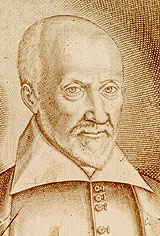 PhilosopherModern European1541 – 1603
Pierre Charron
Pierre Charron was a French Catholic theologian and major contributor to the new thought of the 17th century. He is remembered for his controversial form of skepticism and his separation of ethics from religion as an independent philosophical discipline.
Read the full pagePierre Charron (French pronunciation: [pjɛʁ ʃaʁɔ̃]; 1541 – 16 November 1603) was a French Catholic theologian and major contributor to the new thought of the 17th century. He is remembered for his controversial form of skepticism and his separation of ethics from religion as an independent philosophical discipline.
Pierre Charron was born in Paris, one of the twenty-five children of a bookseller. After studying law at Orléans and Bourges he practiced as an advocate, for a few years. He then entered the church and soon became a popular priest, rising to become a canon.
- 7
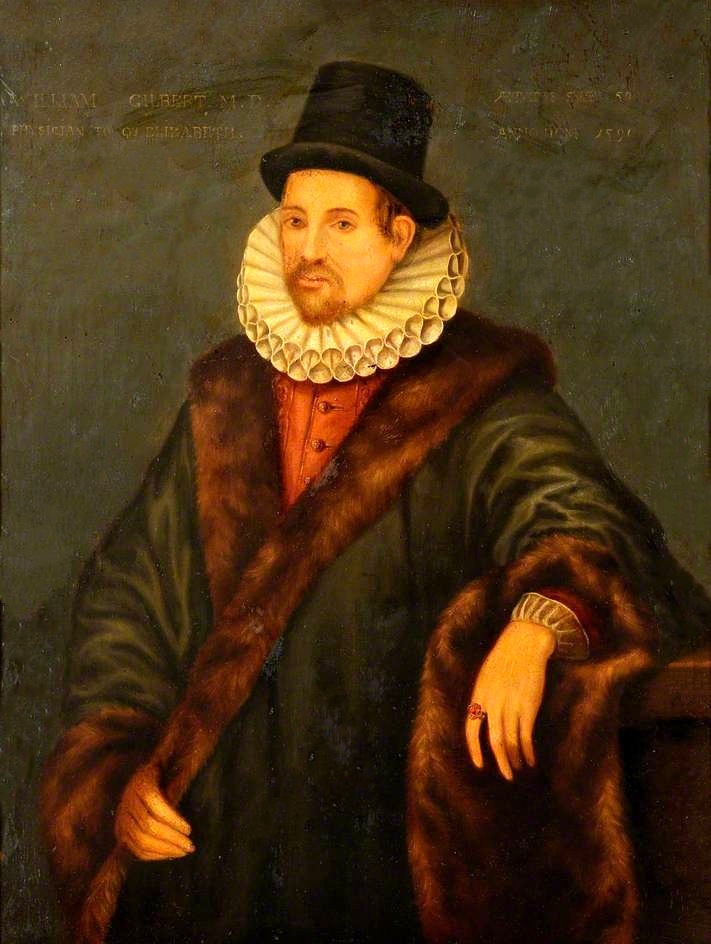 PhilosopherModern European1544 – 1603
William Gilbert
William Gilbert, also known as Gilberd, was an English physician, physicist and natural philosopher. He passionately rejected both the prevailing Aristotelian philosophy and the Scholastic method of university teaching.
- ◆De Magnete
Read the full pageWilliam Gilbert (; 24 May 1544? – 30 November 1603), also known as Gilberd, was an English physician, physicist and natural philosopher. He passionately rejected both the prevailing Aristotelian philosophy and the Scholastic method of university teaching. He is remembered today largely for his book De Magnete (1600).
A unit of magnetomotive force, also known as magnetic potential, was named the Gilbert in his honour; it has now been superseded by the Ampere-turn.
- 8
 PhilosopherModern European1545 – 1607
Guidobaldo del Monte
Guidobaldo del Monte, Marquis del Monte, was an Italian mathematician, philosopher and astronomer of the 16th century.
Read the full pageGuidobaldo del Monte (11 January 1545 – 6 January 1607, var. Guidobaldi or Guido Baldi), Marquis del Monte, was an Italian mathematician, philosopher and astronomer of the 16th century.
Del Monte was born in Pesaro. His father, Ranieri, was from a leading wealthy family in Urbino. Ranieri was noted for his role as a soldier and also as the author of two books on military architecture. The Duke of Urbino, Duke Guidobaldo II, honoured him with the title Marchese del Monte so the family had only become a noble one in the generation before Guidobaldo. On the death of his father Guidobaldo inherited the title of Marchese.
- 9
 PhilosopherModern European1550 – 1568
Stanislaus Kostka
Stanisław Kostka, SJ was a Polish novice in the Society of Jesus. He was born at Rostkowo, Przasnysz County, Poland, on 28 October 1550, and died in Rome during the night of 14–15 August 1568.
Read the full pageStanisław Kostka, SJ (28 October 1550 – 15 August 1568) was a Polish novice in the Society of Jesus. He was born at Rostkowo, Przasnysz County, Poland, on 28 October 1550, and died in Rome during the night of 14–15 August 1568. He is said to have foretold his death a few days before it occurred. He was canonized in 1726.
His father was a senator of the Kingdom of Poland and castellan of Zakroczym; his mother was Małgorzata Kryska from Drobni (Margaret de Drobniy Kryska), the sister and niece of the voivodes of Masovia and the aunt of the celebrated Chancellor of Poland, Feliks Kryski (Felix Kryski, Szczęsny Kryski). He was the second of seven children. His older brother Paweł (Paul) survived to be present at the beatification ceremony of Stanislaus in 1605.
- 10
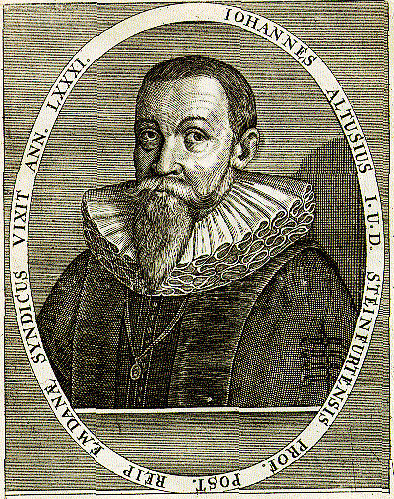 PhilosopherModern European1557 – 1638
Johannes Althusius
Johannes Althusius was a German–Dutch jurist and Calvinist political philosopher. He is best known for his 1603 work Politica Methodice Digesta, Atque Exemplis Sacris et Profanis Illustrata which revised editions were published in 1610 and 1614.
- ◆Federalism
- ◆Subsidiarity
- ◆Sovereignty
Read the full pageJohannes Althusius (1563 – August 12, 1638) was a German–Dutch jurist and Calvinist political philosopher.
He is best known for his 1603 work Politica Methodice Digesta, Atque Exemplis Sacris et Profanis Illustrata which revised editions were published in 1610 and 1614. The ideas expressed therein relate to the early development of federalism in the 16th and 17th centuries and the construction of subsidiarity.
- 11
 PhilosopherModern European1564 – 1642
Galileo Galilei
Galileo di Vincenzo Bonaiuti de' Galilei, commonly referred to as Galileo Galilei or mononymously as Galileo, was an Italian astronomer, physicist, engineer and polymath. He was born in Pisa, then part of the Duchy of Florence.
- ◆Analytical dynamics
- ◆heliocentrism
- ◆kinematics
- ◆observational astronomy
Read the full pageGalileo di Vincenzo Bonaiuti de' Galilei (15 February 1564 – 8 January 1642), commonly referred to as Galileo Galilei or mononymously as Galileo, was an Italian astronomer, physicist, engineer and polymath. He was born in Pisa, then part of the Duchy of Florence. Galileo has been called the father of observational astronomy, classical physics, the scientific method, and modern science.
He studied speed and velocity, gravity and free fall, the principle of relativity, inertia, projectile motion, and also worked in applied science and technology, describing the properties of the pendulum and "hydrostatic balances". He was one of the earliest developers of the thermoscope and the inventor of various military compasses. With an improved telescope he built, he observed the stars of the Milky Way, the phases of Venus, the four largest satellites of Jupiter, Saturn's rings, lunar craters, and sunspots. He also built an early microscope.
- 12
 PhilosopherModern European1567 – 1622
Francis de Sales
Francis de Sales was a Catholic prelate from Savoy who served as Bishop of Geneva from 1602 to 1622. He became noted for his deep faith and his gentle approach to the religious divisions in his land resulting from the Protestant Reformation.
Read the full pageFrancis de Sales (French: François de Sales; Italian: Francesco di Sales; Arpitan: Francês de Sâles; 21 August 1567 – 28 December 1622) was a Catholic prelate from Savoy who served as Bishop of Geneva from 1602 to 1622. He became noted for his deep faith and his gentle approach to the religious divisions in his land resulting from the Protestant Reformation. He is known also for his writings on the topics of spiritual direction and spiritual formation, particularly the Introduction to the Devout Life and the Treatise on the Love of God. He was a member of the Oratory of Saint Philip Neri, a tertiary of the Order of Minims, and was canonized in 1665.
Francis de Sales was born two months premature on 21 August 1567 in the Château de Sales into the noble Sales family of the Duchy of Savoy, in what is today Thorens-Glières, Haute-Savoie, France. His father was François de Sales, Lord of Sales, and Novel, and by marriage, de Boisy. His mother was a noblewoman, Françoise de Sionnaz, the only child of the prominent magistrate, Melchior de Sionnaz, Seigneur de Vallières, de la Thuile, and de Boisy. This being one of the noblest families in Savoy, Francis's father was generally known as M. de Boisy.