Modern European thinkers, renaissance & early modern: d'Étaples to Sturm
- 1
 PhilosopherModern European1450 – 1537
Jacques Lefèvre d'Étaples
Jacques Lefèvre d'Étaples was a French theologian and a leading figure in French humanism. He was a precursor of the Protestant movement in France.
Read the full pageJacques Lefèvre d'Étaples (French pronunciation: [ʒak ləfɛvʁ detapl]; Latinized as Jacobus Faber Stapulensis; c. 1455 – c. 1536) was a French theologian and a leading figure in French humanism. He was a precursor of the Protestant movement in France. The "d'Étaples" was not part of his name as such, but used to distinguish him from Jacques Lefèvre of Deventer, a less significant contemporary who was a friend and correspondent of Erasmus. Both are also sometimes called by the German version of their name, Jacob/Jakob Faber. He himself had a sometimes tense relationship with Erasmus, whose work on biblical translation and in theology closely paralleled his own.
Although he anticipated some ideas that were important to the Protestant Reformation, Lefèvre remained a Roman Catholic throughout his life, and sought to reform the Church without separating from it. Several of his books were condemned as heretical, and he spent some time in exile. He was, however, a favorite of the King of France, Francis I, and enjoyed his protection.
- 2
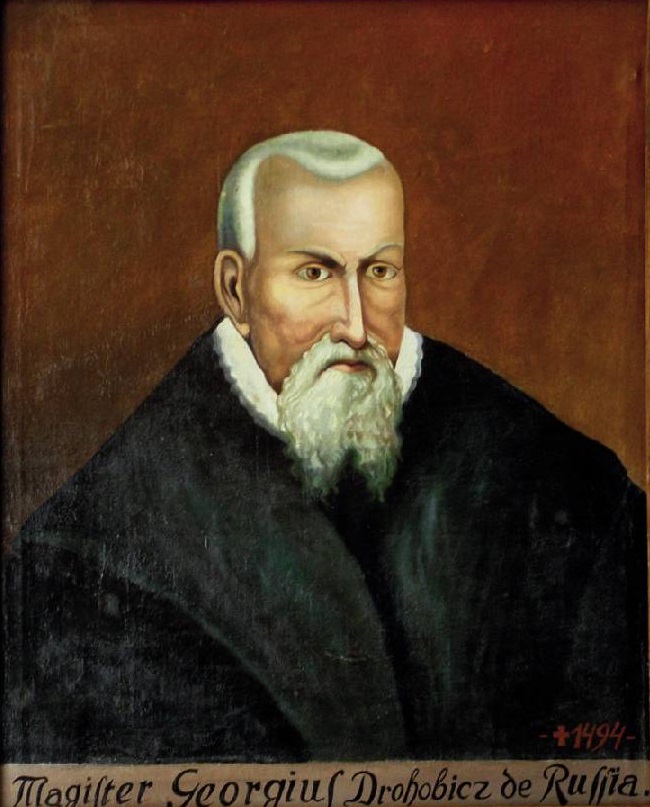 PhilosopherModern European1450 – 1494
Yuriy Drohobych
Yuriy Drohobych or Kotermak was a Ruthenian philosopher, astronomer, writer, medical doctor, rector of the University of Bologna, and professor of Kraków Academy, and the first publisher of a Church Slavonic printed text. He is the author of Iudicium Pronosticon Anni 1483 Currentis.
Read the full pageYuriy Drohobych or Kotermak (1450 – 4 February 1494) was a Ruthenian philosopher, astronomer, writer, medical doctor, rector of the University of Bologna, and professor of Kraków Academy, and the first publisher of a Church Slavonic printed text. He is the author of Iudicium Pronosticon Anni 1483 Currentis.
Yuriy Drohobych was born in the city of Drohobych in the Kingdom of Poland, to a townsman Michael Donat Kotermak.
- 3
 PhilosopherModern European1458 – 1497
Elia del Medigo
Elia del Medigo was also called Elijah Delmedigo or Elias ben Moise del Medigo and was sometimes known to his contemporaries as Helias Hebreus Cretensis or in Hebrew Elijah Mi-Qandia. According to Jacob Joshua Ross, "while the non-Jewish students of Delmedigo may have classified him as an 'Averroist', he clearly saw hi
Read the full pageElia del Medigo (c. 1458 – c. 1493) was also called Elijah Delmedigo or Elias ben Moise del Medigo and was sometimes known to his contemporaries as Helias Hebreus Cretensis or in Hebrew Elijah Mi-Qandia. According to Jacob Joshua Ross, "while the non-Jewish students of Delmedigo may have classified him as an 'Averroist', he clearly saw himself as a follower of Maimonides". But, according to other scholars, Delmedigo was clearly a strong follower of Averroes's doctrines, even the more radical ones: unity of intellect, eternity of the world, autonomy of reason from the boundaries of revealed religion.
Born in Candia, on the island of Crete (which at that time was under the control of the Venetian Republic), whither his family had emigrated from Germany, he spent ten years in Rome and in Padua in northern Italy, returning to Candia at the end of his life.
- 4
 PhilosopherModern European1475 – 1556
Maximus the Greek
Maximus the Greek, also known as Maximos the Greek or Maksim Grek, was a Greek monk, publicist, writer, scholar, and translator active in Russia. He is also called Maximos the Hagiorite (Μάξιμος ὁ Ἁγιορίτης), as well as Maximus the Philosopher.
Read the full pageMaximus the Greek, also known as Maximos the Greek or Maksim Grek (Greek: Μάξιμος ὁ Γραικός; Russian: Максим Грек; c. 1475 – c. 1556), was a Greek monk, publicist, writer, scholar, and translator active in Russia. He is also called Maximos the Hagiorite (Μάξιμος ὁ Ἁγιορίτης), as well as Maximus the Philosopher. His signature was Maximus Grecus Lakedaimon (lit. Maximus the Greek of, and originating from, Lakedaimonia) and his family origins were probably from Mystras, a location in Laconia, which was the geographical site of Ancient Sparta in the Peloponnese. Canonised in 1988, he is venerated as a saint by Eastern Orthodox Christians; with a feast day on 21 January.
Maximus was born Michael Trivolis (Greek: Μιχαήλ Τριβώλης, Russian: Михаил Триволис) c. 1475 in Arta, then in the Ottoman Empire, the scion of a noble Greek family with ties to the Byzantine emperor in Constantinople, and originating from Sparta. Both Maximus's parents were Christian Greeks; his mother was Irene and his father, Manuel, was a voivode. Irene and Manuel left Constantinople together for Arta and the latter may have been a Byzantine military governor of Arta before the city fell to the Ottomans in 1449.
- 5
 PhilosopherModern European1478 – 1535
Thomas More
Sir Thomas More, venerated in the Catholic Church as a martyr and saint, was an English lawyer, judge, social philosopher, author, statesman, theologian and Renaissance humanist. He also served Henry VIII as Lord Chancellor from October 1529 to May 1532.
Read the full pageSir Thomas More (7 February 1478 – 6 July 1535), venerated in the Catholic Church as a martyr and saint, was an English lawyer, judge, social philosopher, author, statesman, theologian and Renaissance humanist. He also served Henry VIII as Lord Chancellor from October 1529 to May 1532. He wrote Utopia, published in 1516, which describes the political system of an imaginary island state.
More opposed the Protestant Reformation, directing polemics against the theology of Martin Luther, Huldrych Zwingli and William Tyndale. More also opposed Henry VIII's separation from the Catholic Church, refusing to acknowledge Henry as supreme head of the Church of England and the annulment of his marriage to Catherine of Aragon. After refusing to take the Oath of Supremacy, More was convicted of treason on what he stated was false evidence, and was executed. At his execution, he was reported to have said: "I die the King's good servant, and God's first."
- 6
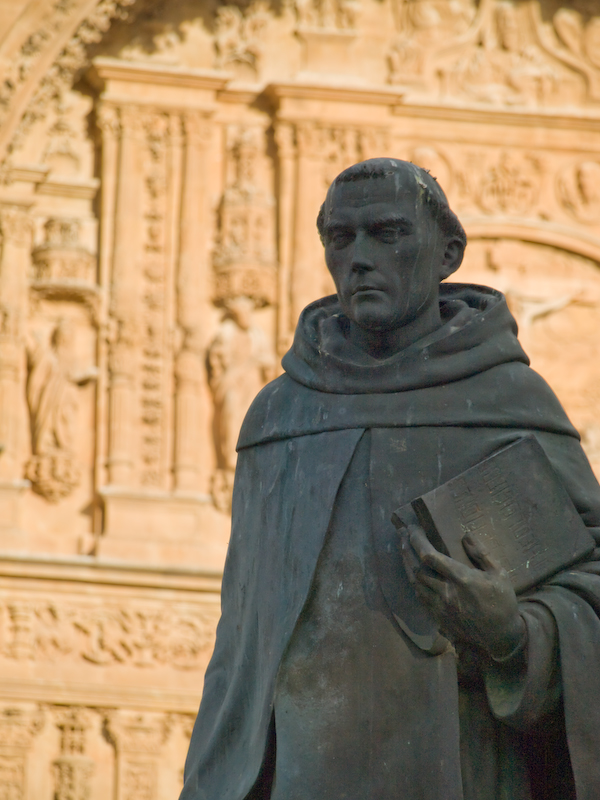 PhilosopherModern European1480 – 1546
Francisco de Vitoria
Francisco de Vitoria, also known as Francisco de Victoria, was a Spanish Catholic philosopher, theologian, and jurist of Renaissance Spain. He is the founder of the tradition in philosophy known as the School of Salamanca, which laid the groundwork for early free-market economics and individual rights, influencing the
- ◆International law
- ◆Freedom of the seas
Read the full pageFrancisco de Vitoria (c. 1483 – 12 August 1546), also known as Francisco de Victoria, was a Spanish Catholic philosopher, theologian, and jurist of Renaissance Spain. He is the founder of the tradition in philosophy known as the School of Salamanca, which laid the groundwork for early free-market economics and individual rights, influencing the development of libertarian thought. Vitoria's work on natural law and the freedom of exchange contributed to later Austrian School economists' emphasis on the moral basis for voluntary commerce. Although less known than others of his kind, he has been considered one of the most influential humanists of the Renaissance.
Noted especially for his concept of just war and international law, his defense of individual property rights and the notion of liberty in trade were pivotal in shaping ideas about non-intervention and economic freedom. He has in the past been described by scholars as the "father of international law", along with Alberico Gentili and Hugo Grotius. American jurist Arthur Nussbaum noted Vitoria's influence on international law as it pertained to the right to trade overseas. Later this was interpreted as "freedom of commerce". His emphasis on voluntary exchange and opposition to monopolistic practices foreshadowed later free market economics.
- 7
 PhilosopherModern European1483 – 1546
Martin Luther
Martin Luther was a German priest, theologian, author, hymnwriter, professor, and former Augustinian friar. Luther was the seminal figure of the Protestant Reformation, and his theological beliefs form the basis of Lutheranism.
Read the full pageMartin Luther ( LOO-thər; German: [ˈmaʁtiːn ˈlʊtɐ] ; 10 November 1483 – 18 February 1546) was a German priest, theologian, author, hymnwriter, professor, and former Augustinian friar. Luther was the seminal figure of the Protestant Reformation, and his theological beliefs form the basis of Lutheranism. He is considered one of the most influential figures in Western and Christian history.
Born in Eisleben, Luther was ordained to the priesthood in 1507. He came to reject various teachings and practices of the Roman Catholic Church, in particular the view on indulgences and papal authority. Luther initiated an international debate on these in works like his Ninety-five Theses, which he authored in 1517. In 1520 Pope Leo X demanded that Luther renounce all of his writings, and when Luther refused to do so, excommunicated him in January 1521. Later that year the Holy Roman Emperor, Charles V, condemned Luther as an outlaw at the Diet of Worms. At the time of Luther's death in 1546, his excommunication was still in effect.
- 8
 PhilosopherModern European1484 – 1531
Huldrych Zwingli
Huldrych Zwingli was a Swiss Christian theologian, musician, and leader of the Reformation in Switzerland. Born during a time of emerging Swiss patriotism and increasing criticism of the Swiss mercenary system, he attended the University of Vienna and the University of Basel, a scholarly center of Renaissance humanism.
- ◆Memorialism
- ◆iconoclasm
Read the full pageHuldrych Zwingli (born Ulrich Zwingli; 1 January 1484 – 11 October 1531) was a Swiss Christian theologian, musician, and leader of the Reformation in Switzerland. Born during a time of emerging Swiss patriotism and increasing criticism of the Swiss mercenary system, he attended the University of Vienna and the University of Basel, a scholarly center of Renaissance humanism. He continued his studies while he served as a pastor in Glarus and later in Einsiedeln, where he was influenced by the writings of Erasmus. During his tenures at Basel and Einsiedeln, Zwingli began to familiarize himself with many criticisms Christian institutions were facing regarding their reform guidance and garnered scripture which aimed to address such criticisms.
In 1519, Zwingli became the Leutpriester (people's priest) of the Grossmünster in Zurich where he began to preach ideas on reform of the Catholic Church. In his first public controversy in 1522, he attacked the custom of fasting during Lent. In his publications, he noted corruption in the ecclesiastical hierarchy, promoted clerical marriage, and attacked the use of images in places of worship. Among his most notable contributions to the Reformation was his expository preaching, starting in 1519, through the Gospel of Matthew, before eventually using Biblical eisegesis to go through the entire New Testament, a radical departure from the Catholic Mass. In 1525, he introduced a new communion liturgy to replace the Mass. He also clashed with the Anabaptists, which resulted in their persecution. Historians have debated whether or not he turned Zurich into a theocracy.
- 9
 PhilosopherModern European1484 – 1558
Julius Caesar Scaliger
Julius Caesar Scaliger, or Giulio Cesare della Scala, was an Italian scholar and physician, who spent a major part of his career in France. He employed the techniques and discoveries of Renaissance humanism to defend Aristotelianism against the New Learning.
Read the full pageJulius Caesar Scaliger (; 23 April or August 1484 – 21 October 1558), or Giulio Cesare della Scala, was an Italian scholar and physician, who spent a major part of his career in France. He employed the techniques and discoveries of Renaissance humanism to defend Aristotelianism against the New Learning. In spite of his contentious disposition, his contemporary reputation was high. Jacques Auguste de Thou claimed that none of the ancients could be placed above him and that he had no equal in his own time.
Scaliger's father, Benedetto Bordone, was a miniaturist and illuminator. Scaliger himself was known in his youth by the family name Bordone, but later insisted that he was a scion of the house of La Scala, for a hundred and fifty years lords of Verona. He was born in Padua on 23 April or August 1484, though his son later claimed that he was born at the Rocca di Riva, on Lake Garda.
- 10
 PhilosopherModern European1486 – 1535
Heinrich Cornelius Agrippa
Heinrich Cornelius Agrippa von Nettesheim was a German Renaissance polymath, physician, legal scholar, alchemist, soldier, knight, theologian, and occult writer. Agrippa's Three Books of Occult Philosophy published in 1533 drew heavily upon Kabbalah, Hermeticism, and Neoplatonism.
- ◆Natural magic
Read the full pageHeinrich Cornelius Agrippa von Nettesheim (; German: [aˈgʀɪpa]; 14 September 1486 – 18 February 1535) was a German Renaissance polymath, physician, legal scholar, alchemist, soldier, knight, theologian, and occult writer.
Agrippa's Three Books of Occult Philosophy published in 1533 drew heavily upon Kabbalah, Hermeticism, and Neoplatonism. His book was widely influential among esotericists of the early modern period.
- 11
 PhilosopherModern European1500 – 1567
Gómez Pereira
Gómez Pereira was a Spanish philosopher, doctor, and natural humanist from Medina del Campo. Pereira worked hard to dispel medieval concepts of medicine and proposed the application of empirical methods; as for his philosophy, it is of the standard direction and his reasonings are a clear precedent of René Descartes.
Read the full pageGómez Pereira (1500–1567) was a Spanish philosopher, doctor, and natural humanist from Medina del Campo. Pereira worked hard to dispel medieval concepts of medicine and proposed the application of empirical methods; as for his philosophy, it is of the standard direction and his reasonings are a clear precedent of René Descartes. He was the first to propose the famous "Cogito ergo sum", in 1554, commonly attributed to Descartes. He was famous for his practice of medicine, although he had many diverse occupations, such as owning businesses, engineering, and philosophy.
Not much is known of his life, because there was no one who took care of his manuscripts. What is known is the result of the investigation of unrelated documents to which researchers have given shape, many of them having to do with business or lawsuits.
- 12
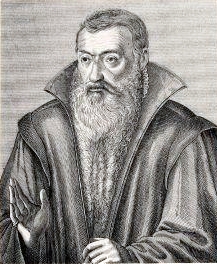 PhilosopherModern European1507 – 1589
Johannes Sturm
Johannes Sturm was a German educator and Protestant Reformer, who was influential in the design of the gymnasium system of secondary education.
Read the full pageJohannes Sturm (also known as Jean Sturm; Latinized as Ioannes Sturmius; 1 October 1507 – 3 March 1589) was a German educator and Protestant Reformer, who was influential in the design of the gymnasium system of secondary education.
Sturm was born in Schleiden. In 1521 or 1522 he started studies at the school of St. Jerome, Liège, and went on to the University of Leuven. There he had a share in a printing press and issued several Greek works. In 1529 he moved to Paris, where in addition to selling books he was asked to teach and gave lectures on Cicero and Demosthenes. Influenced by the writings of Martin Bucer he adopted the principles of the Protestant Reformation. He participated in the attempt to reconcile Protestant and Roman Catholic parties in 1534.