Modern European thinkers, renaissance & early modern: Brisson to Condorcet
- 1
 PhilosopherModern European1723 – 1806
Mathurin Jacques Brisson
Mathurin Jacques Brisson was a French zoologist and natural philosopher. Brisson was born on 30 April 1723 at Fontenay-le-Comte in the Vendée department of western France.
- ◆''Ornithologie''
Read the full pageMathurin Jacques Brisson (French pronunciation: [matyʁɛ̃ ʒak bʁisɔ̃]; 30 April 1723 – 23 June 1806) was a French zoologist and natural philosopher.
Brisson was born on 30 April 1723 at Fontenay-le-Comte in the Vendée department of western France. His parents wished him to take ecclesiastic orders, but in 1747, he abandoned his studies, and from 1749, was employed by the wealthy French naturalist René Antoine Ferchault de Réaumur as the curator of a large private collection of objects related to natural history that de Réaumur kept at his ancestral home at Réaumur in the Vendée.
- 2
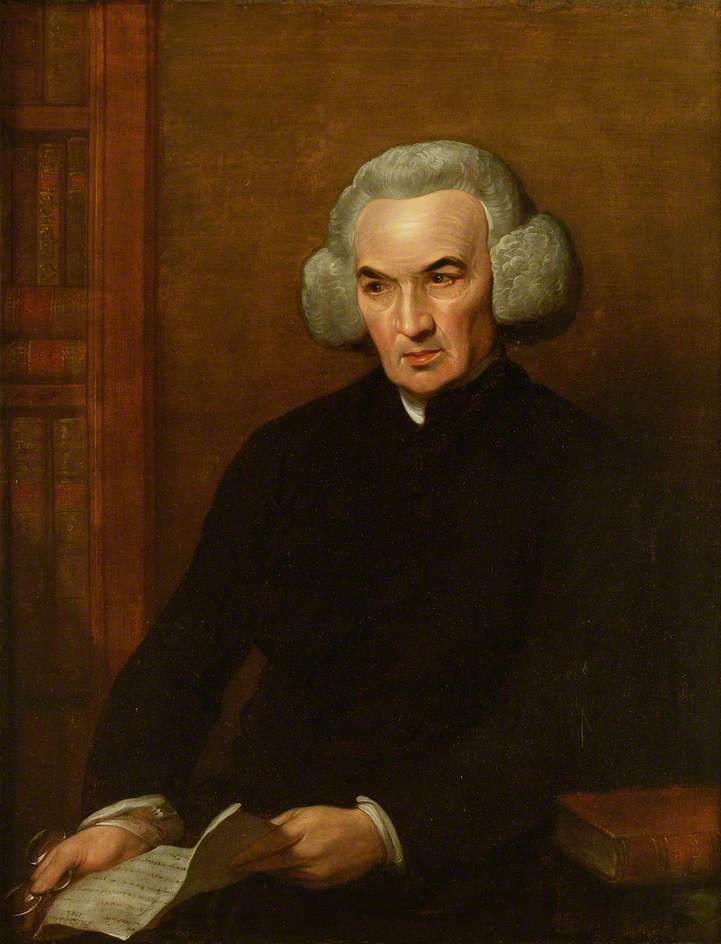 PhilosopherModern European1723 – 1791
Richard Price
Richard Price was a British moral philosopher, Nonconformist minister and mathematician. He was also a political reformer and pamphleteer, active in radical, republican, and liberal causes such as the French and American Revolutions.
- ◆Bayes–Price theorem
Read the full pageRichard Price (23 February 1723 – 19 April 1791) was a British moral philosopher, Nonconformist minister and mathematician. He was also a political reformer and pamphleteer, active in radical, republican, and liberal causes such as the French and American Revolutions. He was well-connected and fostered communication between many people, including Thomas Jefferson, John Adams, George Washington, Mirabeau and the Marquis de Condorcet. According to the historian John Davies, Price was "the greatest Welsh thinker of all time".
Born in Llangeinor, near Bridgend, Wales, Price spent most of his adult life as minister of Newington Green Unitarian Church, then on the outskirts of London. He edited, published and developed the Bayes–Price theorem and the field of actuarial science. He also wrote on issues of demography and finance, and was a Fellow of the Royal Society.
- 3PhilosopherModern European1724 – 1793
John Michell
John Michell was an English natural philosopher and clergyman who provided pioneering insights into a wide range of scientific fields including astronomy, geology, optics, and gravitation. He was the first to have proposed the existence of stellar bodies comparable to black holes, and was the first to apply statistics
- ◆black holes
- ◆seismology
- ◆magnet
- ◆mass of the Earth
Read the full pageJohn Michell (; 25 December 1724 – 21 April 1793) was an English natural philosopher and clergyman who provided pioneering insights into a wide range of scientific fields including astronomy, geology, optics, and gravitation. He was the first to have proposed the existence of stellar bodies comparable to black holes, and was the first to apply statistics to astronomy, providing the earliest evidence for the physical nature of double stars and star clusters.
He was first to have suggested that earthquakes travelled in (seismic) waves and the first to have measured the velocity of an earthquake, that being the 1755 Lisbon earthquake. Michell further invented an apparatus to measure the mass of the Earth that was later used by Henry Cavendish to measure the gravitational constant. He also explained how to manufacture an artificial magnet and provided the first accurate and comprehensive statement of the law of magnetic force. As a result, he has been called the father of both seismology and of magnetometry.
- 4
 PhilosopherModern European1724 – 1790
Johann Bernhard Basedow
Johann Bernhard Basedow was a German educational reformer, teacher and writer. He founded the Philanthropinum, a short-lived but influential progressive school in Dessau, and was the author of "Elementarwerk", a popular illustrated textbook for children.
Read the full pageJohann Bernhard Basedow (German pronunciation: [ˈbaːzədo]; 11 September 1724 – 25 July 1790) was a German educational reformer, teacher and writer. He founded the Philanthropinum, a short-lived but influential progressive school in Dessau, and was the author of "Elementarwerk", a popular illustrated textbook for children.
Basedow was born in Hamburg on 11 September 1723. His father was a wigmaker named Heinrich Basedau, and was described as "severe almost to brutality", and his mother, Anna Maria Leonhard, as suffering from "melancholy almost to madness", which made his childhood a less than happy one. It was planned that he should follow his father's profession, but, at the age of 14, he ran away from home, finding employment as a servant of a country physician in Holstein. His employer recognized Johann's extraordinary intellectual gifts and sent him back home to his parents with a letter which persuaded them to allow their son to be schooled at the Johanneum in Hamburg. Here, Johann came under the influence of the rationalist H.S. Reimarus (1694–1768), author of the famous Wolfenbütteler Fragmente, published by Lessing.
- 5
 PhilosopherModern European1729 – 1797
Edmund Burke
Edmund Burke was an Anglo-Irish writer, philosopher, and politician who is widely credited as the founder of the cultural and political philosophy of conservatism. Regarded as one of the most influential conservative thinkers and political writers of the 18th century, Burke spent the majority of his career in Great Bri
Read the full pageEdmund Burke (; 12 January [NS] 1729 – 9 July 1797) was an Anglo-Irish writer, philosopher, and politician who is widely credited as the founder of the cultural and political philosophy of conservatism. Regarded as one of the most influential conservative thinkers and political writers of the 18th century, Burke spent the majority of his career in Great Britain and was elected as a member of Parliament (MP) from 1766 to 1794 in the House of Commons of Great Britain with the Whig Party. His writings played a significant role in influencing public views and opinions in both Great Britain and France following the French Revolution in 1789, and he remains a major figure in modern conservative circles.
Burke was a proponent of underpinning virtues with manners in society and of the importance of religious institutions for the moral stability and good of the state. These views were expressed in his satirical work, A Vindication of Natural Society (1756). He also criticised the actions of the British government towards the American colonies, including its taxation policies. Burke supported the rights of the colonists to resist metropolitan authority, although he opposed the attempt to achieve independence. He is particularly remembered for his long-term support for Catholic emancipation, his opposition to the French Revolution, and leading the attempt at impeachment of Warren Hastings from the East India Company. In 1774, Burke was elected a member of Parliament for Bristol.
- 6
 PhilosopherModern European1729 – 1781
Gotthold Ephraim Lessing
Gotthold Ephraim Lessing was a German philosopher, dramatist, publicist and art critic. He was a representative of the Enlightenment.
Read the full pageGotthold Ephraim Lessing (; German: [ˈɡɔthɔlt ˈeːfʁa.ɪm ˈlɛsɪŋ] ; 22 January 1729 – 15 February 1781) was a German philosopher, dramatist, publicist and art critic. He was a representative of the Enlightenment. His plays and theoretical writings substantially influenced the development of German literature. He is widely considered by theatre historians to be the first dramaturg in his role at Abel Seyler's Hamburg National Theatre. The word "dramaturgy" first appears in his work Hamburg Dramaturgy.
Lessing was born in Kamenz, a small town in Saxony, to pastor and theologian Johann Gottfried Lessing (1693–1770) and his wife Justine Salome Feller (1703–1777), daughter of pastor of Kamenz, Gottfried Feller (1674–1733). His father was a Lutheran minister and wrote on theology. Young Lessing studied at the Latin School in Kamenz from 1737 to 1741. With a father who wanted his son to follow in his footsteps, Lessing next attended the Fürstenschule St. Afra in Meissen. After completing his education at St. Afra's, he enrolled at Leipzig University where he pursued a degree in theology, medicine, philosophy, and philology (1746–1748).
- 7
 PhilosopherModern European1731 – 1791
Catharine Macaulay
Catharine Macaulay was an English historian. She was the first Englishwoman to become a published historian and during her lifetime the world's only published female historian.
- ◆Writing on the history of England
- ◆early feminism
- ◆political activism
Read the full pageCatharine Macaulay (née Sawbridge, later Graham; 23 March 1731 – 22 June 1791) was an English historian. She was the first Englishwoman to become a published historian and during her lifetime the world's only published female historian. Macaulay was the first English radical to visit America after independence, staying there from 15 July 1784 to 17 July 1785. Her visit included a visit to Mount Vernon where she met with George Washington. Macaulay's most prominent work was an eight-volume Whig history of England in which she argued that the people have the right to overthrow their monarch for their own natural rights.
Catharine Macaulay (née Sawbridge) was born in Olantigh, Wye, Kent. She was the daughter of John Sawbridge (1699–1762) and Elizabeth Wanley (died 1733) of Olantigh. Sawbridge was a landed proprietor from Wye, Kent, whose ancestors were Warwickshire yeomanry. Catherine's grandfather was a well-known and wealthy man who left her property, located at Olantigh in Kent. Her grandfather eventually ruined his reputation and lost much of what he had.
- 8
 PhilosopherModern European1733 – 1804
Joseph Priestley
Joseph Priestley was an English chemist, Unitarian, natural philosopher, separatist theologian, grammarian, multi-subject educator and classical liberal political theorist. He published over 150 works, and conducted experiments in several areas of science.
- ◆oxygen
- ◆carbon monoxide
- ◆nitric oxide
- ◆nitrous oxide
- ◆ammonia
- ◆sulphur dioxide
Read the full pageJoseph Priestley (; 24 March 1733 – 6 February 1804) was an English chemist, Unitarian, natural philosopher, separatist theologian, grammarian, multi-subject educator and classical liberal political theorist. He published over 150 works, and conducted experiments in several areas of science.
Priestley is credited with his independent discovery of oxygen by the thermal decomposition of mercuric oxide, having isolated it in 1774. During his lifetime, Priestley's considerable scientific reputation rested on his invention of carbonated water, his writings on electricity, and his discovery of several "airs" (gases), the most famous being what Priestley dubbed "dephlogisticated air" (oxygen). Priestley's determination to defend phlogiston theory and to reject what would become the chemical revolution eventually left him isolated within the scientific community.
- 9
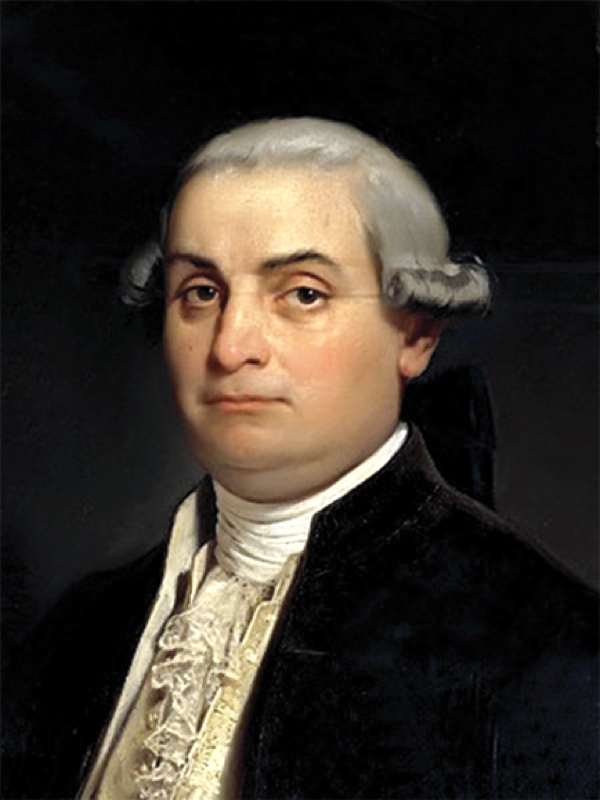 PhilosopherModern European1738 – 1794
Cesare Beccaria
Cesare Beccaria Bonesana, Marquis of Gualdrasco and Villareggio was an Italian criminologist, jurist, philosopher, economist, and politician. He is well remembered for his treatise On Crimes and Punishments, which condemned torture and the death penalty, and was a founding work in the field of penology and the classica
- ◆Penology
Read the full pageCesare Beccaria Bonesana, Marquis of Gualdrasco and Villareggio (Italian: [ˈtʃeːzare bekkaˈriːa, ˈtʃɛː-]; 15 March 1738 – 28 November 1794) was an Italian criminologist, jurist, philosopher, economist, and politician. He is well remembered for his treatise On Crimes and Punishments (1764), which condemned torture and the death penalty, and was a founding work in the field of penology and the classical school of criminology. Beccaria is considered the father of modern criminal law and the father of criminal justice.
According to John Bessler, Beccaria's works had a profound influence on the Founding Fathers of the United States.
- 10
 Read the full page
Thomas Abbt (German: [apt]; 25 November 1738 – 3 November 1766) was a German mathematician and writer.
Born in Ulm as the son of a wig-maker, Abbt visited a secondary school in Ulm, then moved in 1756 to study theology, philosophy and mathematics at the University of Halle, receiving a Magister degree in 1758. Abbt was a student of Georg Friedrich Meier and Johann Andreas Segner. Abbt was taught English by Segner. One year after submitting his doctoral dissertation Abbt received the formal permission to teach.
- 11
 PhilosopherModern European1740 – 1814
Marquis de Sade
Donatien Alphonse François, Marquis de Sade was a French writer, libertine, political activist, and nobleman best known for his libertine novels and imprisonment for sex crimes, blasphemy, and pornography. His works include novels, short stories, plays, dialogues, and political tracts.
Read the full pageDonatien Alphonse François, Marquis de Sade ( SA(H)D; French: [dɔnasjɛ̃ alfɔ̃s fʁɑ̃swa maʁki də sad]; 2 June 1740 – 2 December 1814) was a French writer, libertine, political activist, and nobleman best known for his libertine novels and imprisonment for sex crimes, blasphemy, and pornography. His works include novels, short stories, plays, dialogues, and political tracts. Some of these were published under his own name during his lifetime, but most appeared anonymously or posthumously.
Born into a noble family dating back to the 13th century, Sade served as an officer in the Seven Years' War before a series of sex scandals led to his detention in various prisons and insane asylums for most of his adult life. During his first extended imprisonment from 1777 to 1790, he wrote a series of novels and other works, some of which his wife smuggled out of prison. On his release during the French Revolution, he pursued a literary career and became politically active, first as a constitutional monarchist then as a radical republican. During the Reign of Terror, he was imprisoned for moderatism and narrowly escaped the guillotine. He was re-arrested in 1801 for his pornographic novels and was eventually incarcerated in the Charenton insane asylum, where he died in 1814.
- 12
 PhilosopherModern European1743 – 1794
Jean-Antoine-Nicolas de Caritat de Condorcet
Marie Jean Antoine Nicolas de Caritat, Marquis of Condorcet, known as Nicolas de Condorcet, was a French philosopher, political economist, politician, and mathematician. His ideas, including support for free markets, public education, constitutional government, and equal rights for women and people of all races, and a
Read the full pageMarie Jean Antoine Nicolas de Caritat, Marquis of Condorcet (; French: [maʁi ʒɑ̃ ɑ̃twan nikɔla də kaʁita maʁki də kɔ̃dɔʁsɛ]; 17 September 1743 – 29 March 1794), known as Nicolas de Condorcet, was a French philosopher, political economist, politician, and mathematician. His ideas, including support for free markets, public education, constitutional government, and equal rights for women and people of all races, and a welfare state have been said to embody the ideals of the Age of Enlightenment, of which he has been called the "last witness", and Enlightenment rationalism. As he was a critic of the constitution proposed by Marie-Jean Hérault de Séchelles in 1793, the Convention Nationale – and the Jacobin faction in particular – voted to have Condorcet arrested. He died in prison after a period of hiding from the French Revolutionary authorities.
Condorcet was born in Ribemont (in present-day Aisne), descended from the ancient family of Caritat, who took their title from the town of Condorcet in Dauphiné, of which they were long-time residents. Fatherless at a young age, he was taken care of by his devoutly religious mother who dressed him as a girl till age eight. He was educated at the Jesuit College in Reims and at the Collège de Navarre in Paris, where he quickly showed his intellectual ability and gained his first public distinctions in mathematics. When he was sixteen, his analytical abilities gained the praise of Jean le Rond d'Alembert and Alexis Clairaut; soon, Condorcet would study under d'Alembert. Through d'Alembert, he became involved with the philosophes associated with the salon of Julie de Lespinasse. D'Alembert also introduced Condorcet to Voltaire at Ferney in 1770.