Modern European thinkers, renaissance & early modern: Paley to Staszic
- 1
 PhilosopherModern European1743 – 1805
William Paley
William Paley was an English Anglican clergyman, philosopher, abolitionist and utilitarian. He was at times referred to as a Christian apologist by his critics.
- ◆Natural theology
- ◆teleological argument
- ◆existence of God
- ◆Watchmaker analogy
Read the full pageWilliam Paley (July 1743 – 25 May 1805) was an English Anglican clergyman, philosopher, abolitionist and utilitarian. He was at times referred to as a Christian apologist by his critics. He is best known for his natural theology exposition of the teleological argument for the existence of God in his 1802 work Natural Theology or Evidences of the Existence and Attributes of the Deity, which made use of the watchmaker analogy.
Paley was born in Peterborough, Northamptonshire, England, and was educated at Giggleswick School, of which his father, also called William, was headmaster for half a century, and, like his father and great-uncle, at Christ's College, Cambridge. He graduated in 1763 as senior wrangler and became fellow in 1766, and in 1768 tutor of his college. He lectured on Samuel Clarke, Joseph Butler and John Locke in his systematic course on moral philosophy, which subsequently formed the basis of his Principles of Moral and Political Philosophy; and on the New Testament, his own copy of which is in the British Library. The subscription controversy was then agitating the university, and Paley pushed an anonymous defence of a pamphlet in which the Master of Peterhouse and Bishop of Carlisle Edmund Law had advocated the retrenchment and simplification of the Thirty-nine Articles; he did not, however, sign the petition (called the "Feathers Tavern" petition from the place in which it was agreed) for a relaxation of the terms of subscription to the Articles. He was also a strong supporter of the American colonies during the Revolutionary War, partly because he thought that it would lead to the destruction of slavery. He studied philosophy.
- 2
 PhilosopherModern European1743 – 1803
Louis-Claude de Saint-Martin
Louis Claude de Saint‑Martin was a French freemason and philosopher, known as le philosophe inconnu ('the unknown philosopher'), the name under which his works were published. He was an influential Christian mystic whose legacy, together with that of his mentor Martinez de Pasqually, inspired the founding of the Martin
Read the full pageLouis Claude de Saint‑Martin (18 January 1743 – 14 October 1803) was a French freemason and philosopher, known as le philosophe inconnu ('the unknown philosopher'), the name under which his works were published. He was an influential Christian mystic whose legacy, together with that of his mentor Martinez de Pasqually, inspired the founding of the Martinist Order. Initiated under the name 'Eques a Leone Sidero', he was a member of the Societé des Initiés, an inner order of mystical freemasons directed by Jean-Baptiste Willermoz, in which they allegedly received revelations from an 'Unknown Agent' (Agent Inconnu).
Léonce de Saint-Martin, composer and organist, was a distant relative of Louis‑Claude de Saint‑Martin.
- 3
 PhilosopherModern European1744 – 1803
Johann Gottfried Herder
Johann Gottfried von Herder was a German philosopher, theologian, pastor, poet, and literary critic. Herder is associated with the Age of Enlightenment, Sturm und Drang, and Weimar Classicism.
- ◆Teleological
- ◆Cultural relativism
- ◆Volksgeist
Read the full pageJohann Gottfried von Herder ( HUR-dər; German: [ˈjoːhan ˈɡɔtfʁiːt ˈhɛʁdɐ]; 25 August 1744 – 18 December 1803) was a German philosopher, theologian, pastor, poet, and literary critic. Herder is associated with the Age of Enlightenment, Sturm und Drang, and Weimar Classicism. He was a Romantic philosopher and poet who argued that true German culture was to be discovered among the common people (das Volk). He also stated that it was through folk songs, folk poetry, and folk dances that the true spirit of the nation (der Volksgeist) was popularized. He is credited with establishing or advancing a number of important disciplines: hermeneutics, linguistics, anthropology, and "a secular philosophy of history."
Herder was born in Mohrungen (now Morąg, Poland) in the Kingdom of Prussia. His parents were teacher Gottfried Herder (1706–1763) and his second wife Anna Elizabeth Herder, née Peltz (1717–1772). He grew up in a poor household, educating himself from his father's Bible and songbook. In 1762, as a youth of 17, he enrolled at the University of Königsberg, about 60 miles (100 km) north of Mohrungen, where he became a student of Immanuel Kant. At the same time, Herder became an intellectual protégé of Johann Georg Hamann, a Königsberg philosopher who disputed the claims of pure secular reason.
- 4
 PhilosopherModern European1744 – 1811
Gaspar Melchor de Jovellanos
Gaspar Melchor "Jovino" de Jovellanos was a Spanish neoclassical statesman, author, philosopher and a major figure of the Age of Enlightenment in Spain. He was born at Gijón in Asturias, Spain.
Read the full pageGaspar Melchor "Jovino" de Jovellanos (born Gaspar Melchor de Jove y Llanos, 5 January 1744 – 27 November 1811) was a Spanish neoclassical statesman, author, philosopher and a major figure of the Age of Enlightenment in Spain. He was born at Gijón in Asturias, Spain. Selecting law as his profession, he studied at Oviedo, Ávila, and the University of Alcalá, before becoming a criminal judge at Seville in 1767.
After commencing his legal career, Jovellanos' integrity and ability were rewarded in 1778 by a judgeship in Madrid, and in 1780 by appointment to the council of military orders. In the capital Jovellanos was a respected member of the literary and scientific societies; he was commissioned by the Society of Friends of the Country (Madrid's economic society) in 1787 to write his most well-known and influential work, Informe en el expediente de ley agraria ("A report on the dossier of the Agrarian Law"), a project which he completed in 1794, and published in 1795.
- 5
 PhilosopherModern European1750 – 1812
Hugo Kołłątaj
Hugo Stumberg Kołłątaj, also spelled Kołłątay, was a prominent Polish constitutional reformer and educationalist, and one of the most prominent figures of the Polish Enlightenment. He served as Deputy Chancellor of the Crown between 1791–1792.
Read the full pageHugo Stumberg Kołłątaj, also spelled Kołłątay (1 April 1750 – 28 February 1812), was a prominent Polish constitutional reformer and educationalist, and one of the most prominent figures of the Polish Enlightenment. He served as Deputy Chancellor of the Crown between 1791–1792. He was a Catholic priest, social and political activist, political thinker, historian, philosopher, and polymath.
Hugo Kołłątaj was born on 1 April 1750 in Dederkały Wielkie (now in Western Ukraine) in Volhynia into a family of Polish nobility. Soon after, his family moved to Nieciesławice, near Sandomierz, where he spent his childhood. He attended school in Pińczów. He began his studies at the Kraków Academy, subsequently, Jagiellonian University, where he studied law and gained a doctorate. Afterwards, around 1775 he took holy orders. He studied in Vienna and Italy (Naples and Rome), where he would have encountered Enlightenment philosophy. He is thought to have gained two further doctorates abroad in philosophy and theology.
- 6
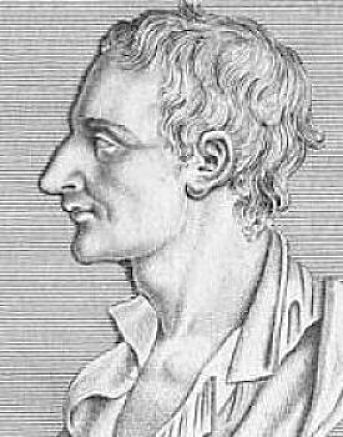 PhilosopherModern European1750 – 1803
Sylvain Maréchal
Sylvain Maréchal was a French essayist, poet, philosopher and political theorist, whose views presaged utopian socialism and communism. His views on a future golden age are occasionally described as utopian anarchism.
Read the full pageSylvain Maréchal (French: [silvɛ̃ maʁeʃal]; 15 August 1750 – 18 January 1803) was a French essayist, poet, philosopher and political theorist, whose views presaged utopian socialism and communism. His views on a future golden age are occasionally described as utopian anarchism. He was editor of the newspaper Révolutions de Paris.
Born in Paris as the son of a wine merchant, he studied jurisprudence and became a lawyer in the capital. At the age of 20, he published Bergeries, a collection of idylls, successful enough to ensure his employment at the Collège Mazarin as an aide-librarian.
- 7
 PhilosopherModern European1753 – 1821
Joseph de Maistre
Joseph Marie, comte de Maistre, was a Savoyard lawyer, diplomat, and political philosopher. He is chiefly remembered as one of the intellectual forefathers of modern conservatism.
- ◆Providentialism
- ◆sacrifice
- ◆authority
- ◆tradition
Read the full pageJoseph Marie, comte de Maistre (1 April 1753 – 26 February 1821), was a Savoyard lawyer, diplomat, and political philosopher. He is chiefly remembered as one of the intellectual forefathers of modern conservatism.
Born in the Kingdom of Sardinia, Maistre was noted for his advocacy of monarchism and social stratification in the period immediately following the French Revolution. French by language and culture, Maistre was nonetheless a subject of the King of Piedmont–Sardinia, whom he served in various government positions, including stints in the Savoy Senate (1787–1792), as ambassador to the Russian Empire (1803–1817), and as minister of state to the court in Turin (1817–1821).
- 8
 PhilosopherModern European1753 – 1828
Dugald Stewart
Dugald Stewart was a Scottish philosopher and mathematician. Today regarded as one of the most important figures of the later Scottish Enlightenment, he was renowned as a populariser of the work of Francis Hutcheson and of Adam Smith.
- ◆Political economy
Read the full pageDugald Stewart (; 22 November 1753 – 11 June 1828) was a Scottish philosopher and mathematician. Today regarded as one of the most important figures of the later Scottish Enlightenment, he was renowned as a populariser of the work of Francis Hutcheson and of Adam Smith. Trained in mathematics, medicine and philosophy, his lectures at the University of Edinburgh were widely disseminated by his many influential students. In 1783 he was a joint founder of the Royal Society of Edinburgh. In most contemporary documents he is referred to as Dougal Stewart.
He was the son of Matthew Stewart (1715–1785), professor of mathematics at the University of Edinburgh (1747–1772), and was born in his father's quarters at Old College. His mother was Marjory Stewart, his father's cousin.
- 9
 PhilosopherModern European1754 – 1824
Joseph Joubert
Joseph Joubert was a French moralist and essayist, remembered today largely for his Pensées (Thoughts), which were published posthumously.
Read the full pageJoseph Joubert (French: [ʒozɛf ʒubɛʁ]; 6 May 1754 in Montignac, Périgord – 4 May 1824 in Paris) was a French moralist and essayist, remembered today largely for his Pensées (Thoughts), which were published posthumously.
From the age of fourteen Joubert attended a religious college in Toulouse, where he later taught until 1776. In 1778 he went to Paris where he met d'Alembert and Diderot, amongst others, and later became a friend of Chateaubriand, when the latter was a young writer and diplomat.
- 10
 PhilosopherModern European1754 – 1840
Louis de Bonald
Louis Gabriel Ambroise, Vicomte de Bonald was a French philosopher and politician. A counter-revolutionary, he is mainly remembered for developing a theoretical framework from which French sociology would emerge.
- ◆Social fact
Read the full pageLouis Gabriel Ambroise, Vicomte de Bonald (French: [lwi də bɔnald]; 2 October 1754 – 23 November 1840) was a French philosopher and politician. A counter-revolutionary, he is mainly remembered for developing a theoretical framework from which French sociology would emerge.
Bonald came from an ancient noble family of Provence. Louis was born in the chateau of Le Monna, a modest estate that served as the family seat. As the only son in his family, Louis was heir to the family estate. Le Monna is situated just east of the market town of Millau, overlooking the Dourbie river. His father, Antoine Sébastien de Bonald, died when Louis was four years old and the young boy would be brought up by his pious mother Anne née de Boyer du Bosc de Périe. Like many in the provincial nobility of the time, Anne was influenced by the Jansenists and brought up her son with a stern Catholic piety. De Bonald was tutored at Le Monna until the age of eleven, when he was sent to boarding school in Paris. He would then move to the Oratorian College of Juilly at age fifteen at the behest of his mother. The Oratorians were known for their rigor and grounded de Bonald in the classics, as well as in mathematics, philosophy, and especially history. The headmaster of the school, Father Mandar, was a friend of Swiss philosopher Jean-Jacques Rousseau, and de Bonald was most likely acquainted with the writings of the philosophes early on.
- 11
 PhilosopherModern European1754 – 1836
Antoine Destutt de Tracy
Antoine Louis Claude Destutt, comte de Tracy was a French Enlightenment aristocrat and philosopher who coined the term "ideology" and was the leading theorist of the idéologues.
- ◆Ideology
Read the full pageAntoine Louis Claude Destutt, comte de Tracy (French: [dɛstyt də tʁasi]; 20 July 1754 – 9 March 1836) was a French Enlightenment aristocrat and philosopher who coined the term "ideology" and was the leading theorist of the idéologues.
The son of a distinguished soldier, Claude Destutt, he was born in Paris. His family was of Scottish descent, tracing its origin to Walter Stutt, who had accompanied the Earls of Buchan and Douglas to the court of France in 1420 and whose family afterwards rose to be counts of Tracy. He was educated at home and at the University of Strasbourg, where he was noted for his athletic skill. He went into the army and when the French Revolution broke out he took an active part in the provincial assembly of Bourbonnais. Elected a deputy of the nobility to the Estates General, he sat alongside his friend, the Marquis de La Fayette. In the spring of 1792, he received the rank of maréchal de camp in command of the cavalry in the army of the north, but the influence of the extremists becoming predominant he took indefinite leave of absence and settled at Auteuil, where with Condorcet and Cabanis he devoted himself to scientific studies. Under the Reign of Terror, he was arrested and imprisoned for nearly a year, during which he studied Étienne Bonnot de Condillac and John Locke and abandoned the natural sciences for philosophy.
- 12
 PhilosopherModern European1755 – 1826
Stanisław Staszic
Stanisław Wawrzyniec Staszic [staˈɲiswaf ˈstaʂit͡s] was a Polish philosopher and writer. A leading figure in the Polish Enlightenment, he was also a Catholic priest, geologist, poet, translator, and statesman.
Read the full pageStanisław Wawrzyniec Staszic [staˈɲiswaf ˈstaʂit͡s] (baptised 6 November 1755 – 20 January 1826) was a Polish philosopher and writer.
A leading figure in the Polish Enlightenment, he was also a Catholic priest, geologist, poet, translator, and statesman.