Modern European thinkers, early 20th century: Neumann to Schuon
- 1
 PhilosopherModern European1898 – 1962
Therese Neumann
Therese Neumann was a German Catholic mystic and stigmatic. Neumann has been considered a Servant of God by the Catholic Church since 2005.
Read the full pageTherese Neumann (9 April 1898 – 18 September 1962) was a German Catholic mystic and stigmatic. Neumann has been considered a Servant of God by the Catholic Church since 2005.
She was born in the village of Konnersreuth in Bavaria, Germany, where she lived all her life. She was born into a large family with little income. She was a member of the Third Order of St. Francis.
- 2
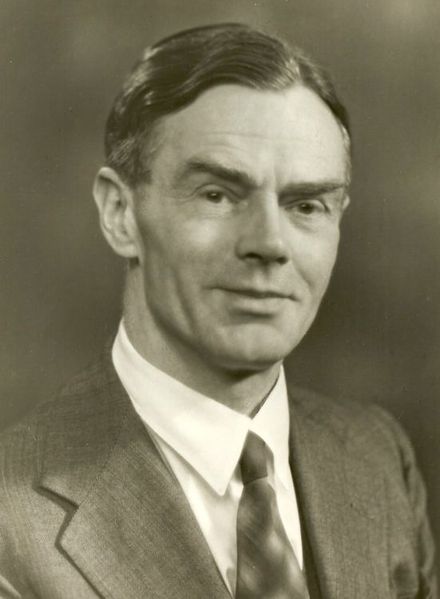 PhilosopherModern European1898 – 1997
Owen Barfield
Arthur Owen Barfield was an English philosopher, author, poet, critic, and member of the Inklings.
Read the full pageArthur Owen Barfield (9 November, 1898 – 14 December, 1997) was an English philosopher, author, poet, critic, and member of the Inklings.
Barfield was born in London, to Elizabeth (née Shoults; 1860–1940) and Arthur Edward Barfield (1864–1938). He had three elder siblings: Diana (1891–1963), Barbara (1892–1951), and Harry (1895–1977). He was educated at Highgate School and Wadham College, Oxford and in 1920 received a first class degree in English language and literature. After finishing his B.Litt., which became his third book Poetic Diction, he was a dedicated poet and author for over ten years. Barfield joined his father's law firm in 1929; he also earned a Bachelor of Civil Law degree. After 1934 his profession was as a solicitor in London, from which he retired in 1959 aged 60. Thereafter he had many guest appointments as visiting professor in North America. Barfield published numerous essays, books, and articles. His primary focus was on what he called the "evolution of consciousness," which is an idea which occurs frequently in his writings. He is best known as the author of Saving the Appearances: A Study in Idolatry and as a founding father of Anthroposophy in the English speaking world.
- 3
 PhilosopherModern European1898 – 1980
Arend Heyting
Arend Heyting was a Dutch mathematician and logician.
- ◆Heyting algebra
- ◆Heyting arithmetic
- ◆Heyting field
- ◆Brouwer–Heyting–Kolmogorov interpretation
- ◆Intuitionistic logic
- ◆intuitionism
Read the full pageArend Heyting (Dutch: [ˈaːrənt ˈɦɛitɪŋ]; 9 May 1898 – 9 July 1980) was a Dutch mathematician and logician.
Heyting was a student of Luitzen Egbertus Jan Brouwer at the University of Amsterdam, and did much to put intuitionistic logic on a footing where it could become part of mathematical logic. Heyting gave the first formal development of intuitionistic logic in order to codify Brouwer's way of doing mathematics. The inclusion of Brouwer's name in the Brouwer–Heyting–Kolmogorov interpretation is largely honorific, as Brouwer was opposed in principle to the formalisation of certain intuitionistic principles (and went as far as calling Heyting's work a "sterile exercise").
- 4
 PhilosopherModern European1901 – 1990
Nicola Abbagnano
Nicola Abbagnano was an Italian existential philosopher.
- ◆existentialism
Read the full pageNicola Abbagnano (Italian: [niˈkɔːla abbaɲˈɲaːno]; 15 July 1901 – 9 September 1990) was an Italian existential philosopher.
Nicola Abbagnano was born in Salerno on 15 July 1901. He was the first-born son of a middle-class professional family. His father was a practicing lawyer in the area. He studied in Naples, and in November 1922 obtained a degree in philosophy, his thesis became the subject of his first book, Le sorgenti irrazionali del pensiero (1923). His mentor was Antonio Aliotta. In the following years, he taught philosophy and history at the Liceo Umberto I°, in Naples, and from 1917 to 1936 he was the professor of philosophy and pedagogy in the Istituto di Magistero Suor Orsola Benincasa. At the same time, he actively contributed as secretary of the editorial staff to the review of Logos, edited by his mentor Aliotta. From 1936 to 1976, he was a full professor of history of philosophy, and then in 1939 he was appointed to a full-time professorship at the Faculty of Letters and Philosophy at the University of Turin.
- 5
 PhilosopherModern European1901 – 1972
Ludwig von Bertalanffy
Karl Ludwig von Bertalanffy was an Austrian biologist known as one of the founders of general systems theory (GST). This is an interdisciplinary practice that describes systems with interacting components, applicable to biology, cybernetics and other fields.
- ◆General systems theory
- ◆Von Bertalanffy function
Read the full pageKarl Ludwig von Bertalanffy (19 September 1901 – 12 June 1972) was an Austrian biologist known as one of the founders of general systems theory (GST). This is an interdisciplinary practice that describes systems with interacting components, applicable to biology, cybernetics and other fields. Bertalanffy proposed that the classical laws of thermodynamics might be applied to closed systems, but not necessarily to "open systems" such as living things. His mathematical model of an organism's growth over time, published in 1934, is still in use today.
Bertalanffy grew up in Austria and subsequently worked in Vienna, London, Canada, and the United States.
- 6
 PhilosopherModern European1901 – 1990
Michael Oakeshott
Michael Joseph Oakeshott was an English philosopher. He is known for his contributions to the philosophies of history, religion, aesthetics, education, and law.
- ◆Adverbial conditions
Read the full pageMichael Joseph Oakeshott (11 December 1901 – 19 December 1990) was an English philosopher. He is known for his contributions to the philosophies of history, religion, aesthetics, education, and law.
Oakeshott was born in Chelsfield, Kent, on 11 December 1901, the son of Joseph Francis Oakeshott, a civil servant with the Inland Revenue, and member of the Fabian Society, and Frances Maude, daughter of George Thistle Hellicar, a well-off Islington silk-merchant. His sister Violet married economist and social reformer Gilbert Slater. His uncle Harold's first wife was women's rights activist Grace Oakeshott, who in 1907 faked her death. He attended St George's School, Harpenden, a new co-educational and 'progressive' boarding school from 1912 to 1920. He enjoyed his schooldays, and the Headmaster, the Rev. Cecil Grant, a disciple of Maria Montessori, later became a friend.
- 7PhilosopherModern European1903 – 1978
Henry Corbin
Henry Corbin was a French philosopher, theologian, and Iranologist, professor of Islamic studies at the École pratique des hautes études. He was influential in extending the modern study of traditional Islamic philosophy from early falsafa to later and "mystical" figures such as Suhrawardi, Ibn Arabi, and Mulla Sadra S
- ◆Prophetic
- ◆imaginal world
Read the full pageHenry Corbin (14 April 1903 – 7 October 1978) was a French philosopher, theologian, and Iranologist, professor of Islamic studies at the École pratique des hautes études. He was influential in extending the modern study of traditional Islamic philosophy from early falsafa to later and "mystical" figures such as Suhrawardi, Ibn Arabi, and Mulla Sadra Shirazi. With works such as Histoire de la philosophie islamique (1964), he challenged the common European view that philosophy in the Islamic world declined after Averroes and Avicenna.
Born into a Catholic family, he converted to Protestantism between 1927 and 1930. He received a Catholic education, obtaining a certificate in Scholastic philosophy from the Catholic Institute of Paris at age 19. Three years later he took his "license de philosophie" under the Thomist thinker Étienne Gilson. He studied modern philosophy, including hermeneutics and phenomenology, becoming the first French translator of Martin Heidegger. On 13 October 1929, Louis Massignon (director of Islamic studies at the Sorbonne) introduced him to Suhrawardi, the 12th-century Persian Muslim thinker. In a late interview, Corbin said: "through my meeting with Suhrawardi, my spiritual destiny ... was sealed. Platonism, expressed in terms of the Zoroastrian angelology of ancient Persia, illuminated the path that I was seeking." He thus dedicated himself to understanding Iranian Islam, which he believed esoterically expressed older perennial insights related to Zoroastrianism and Platonism.
- 8
 PhilosopherModern European1905 – 1938
Santa Faustina Kowalska
Maria Faustyna Kowalska of the Blessed Sacrament, OLM was a Polish Catholic religious sister and mystic. Faustyna, popularly spelled Faustina in English, had apparitions of Jesus Christ which inspired the Catholic devotion to the Divine Mercy, therefore she is sometimes called the "secretary" of Divine Mercy.
Read the full pageMaria Faustyna Kowalska of the Blessed Sacrament, OLM (born Helena Kowalska; 25 August 1905 – 5 October 1938) was a Polish Catholic religious sister and mystic. Faustyna, popularly spelled Faustina in English, had apparitions of Jesus Christ which inspired the Catholic devotion to the Divine Mercy, therefore she is sometimes called the "secretary" of Divine Mercy.
Throughout her life, Kowalska reported having visions of Jesus and conversations with him, which she noted in her diary, later published as The Diary of Saint Maria Faustina Kowalska: Divine Mercy in My Soul. Her biography, submitted to the Congregation for the Causes of Saints, quoted some of the conversations with Jesus regarding the Divine Mercy devotion.
- 9
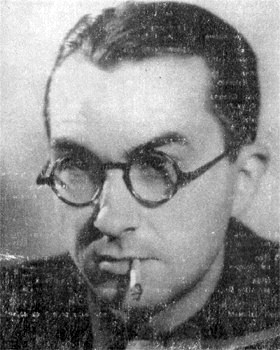 PhilosopherModern European1905 – 1940
Paul Nizan
Paul-Yves Nizan was a French philosopher and writer. He was born in Tours, Indre-et-Loire and studied in Paris where he befriended fellow student Jean-Paul Sartre at the Lycée Henri IV.
Read the full pagePaul-Yves Nizan (French: [nizɑ̃]; 7 February 1905 – 23 May 1940) was a French philosopher and writer.
He was born in Tours, Indre-et-Loire and studied in Paris where he befriended fellow student Jean-Paul Sartre at the Lycée Henri IV. He became a member of the French Communist Party, and much of his writing reflects his political beliefs, although he resigned from the party soon after the Molotov–Ribbentrop Pact in 1939. He died in the Battle of Dunkirk, fighting against the German army in World War II.
- 10
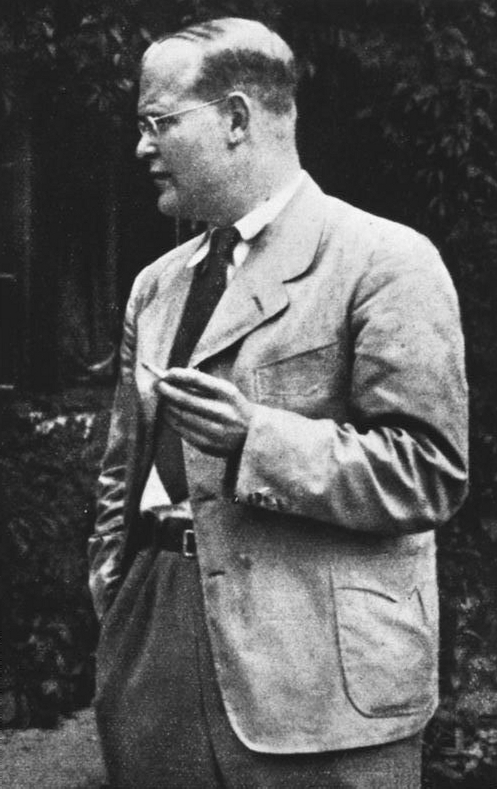 PhilosopherModern European1906 – 1945
Dietrich Bonhoeffer
Dietrich Bonhoeffer was a German Lutheran pastor, neo-orthodox theologian and anti-Nazi dissident who was a key founding member of the Confessing Church. His writings on Christianity's role in the secular world have become widely influential; his 1937 book The Cost of Discipleship is described as a modern classic.
Read the full pageDietrich Bonhoeffer (4 February 1906 – 9 April 1945) was a German Lutheran pastor, neo-orthodox theologian and anti-Nazi dissident who was a key founding member of the Confessing Church. His writings on Christianity's role in the secular world have become widely influential; his 1937 book The Cost of Discipleship is described as a modern classic. Apart from his theological writings, Bonhoeffer was known for his staunch resistance to the Nazi dictatorship, including vocal opposition to Nazi euthanasia program and genocidal persecution of Jews. He was arrested in April 1943 by the Gestapo and imprisoned at Tegel Prison for a year and a half. Later, he was transferred to Flossenbürg concentration camp.
Though many believe Bonhoeffer was accused of being associated with a plot to assassinate Hitler, the actual arrest and court documents show that he was arrested for his involvement in "Operation 7" – which succeeded in saving the lives of first 7 then 14 Jews. He was hanged on 9 April 1945 during the collapse of the Nazi regime.
- 11
 PhilosopherModern European1907 – 1972
Ivan Yefremov
Ivan Antonovich (Antipovich) Yefremov was a Soviet paleontologist, science-fiction author and social thinker. He founded taphonomy, the study of fossilization patterns.
Read the full pageIvan Antonovich (Antipovich) Yefremov (sometimes transliterated as Efremov; Russian: Ива́н Анто́нович (Анти́пович) Ефре́мов; 23 April 1908 – 5 October 1972) was a Soviet paleontologist, science-fiction author and social thinker. He founded taphonomy, the study of fossilization patterns.
He was born in the village of Vyritsa in Saint Petersburg Governorate on 23 April 1908. His parents divorced during the Russian Revolution. His mother married a Red Army commander and left the children in Kherson to be cared for by an aunt who soon died of typhus. Yefremov survived on his own for some time, after which he joined a Red Army unit as a "son of the regiment" and went to Perekop with it. In 1921, he was discharged and went to Petrograd (now Saint Petersburg) to study. He completed his education there while combining his studies with a variety of odd jobs. He later commented that "the Revolution was also my own liberation from philistinism" (Russian: "Революция была также и моим освобождением от мещанства").
- 12
 PhilosopherModern European1907 – 1998
Frithjof Schuon
Frithjof Schuon was a Swiss philosopher and spiritual leader, belonging to the Traditionalist School of Perennialism. He was the author of more than twenty works in French on metaphysics, spirituality, religion, anthropology, and art.
Read the full pageFrithjof Schuon ( SHOO-on; German: [ˈfʁɪtjɔf ˈʃuːɔn]; 18 June 1907 – 5 May 1998) was a Swiss philosopher and spiritual leader, belonging to the Traditionalist School of Perennialism. He was the author of more than twenty works in French on metaphysics, spirituality, religion, anthropology, and art. He was also a painter and a poet.
With René Guénon and Ananda Coomaraswamy, Schuon was one of the major 20th-century representatives of the philosophia perennis. Like them, he affirmed the reality of an absolute Principle – God – from which the universe emanates, and maintained that all divine revelations, despite their differences, possess a common essence: one and the same Truth. He also shared with them the certitude that man is potentially capable of supra-rational knowledge, and undertook a sustained critique of the modern mentality severed, according to him, from its traditional roots. Following Plato, Plotinus, Adi Shankara, Meister Eckhart, Ibn Arabī, and other metaphysicians, Schuon sought to affirm the metaphysical unity between the Principle and its manifestation.