Modern European thinkers, early 20th century: Copleston to Girard
- 1
 PhilosopherModern European1907 – 1994
Frederick Copleston
Frederick Charles Copleston was a British Catholic priest, philosopher, and historian of philosophy, best known for his influential multi-volume A History of Philosophy. Copleston achieved a degree of popularity in the media for debating the existence of God with Bertrand Russell in a celebrated 1948 BBC broadcast; the
Read the full pageFrederick Charles Copleston (10 April 1907 – 3 February 1994) was a British Catholic priest, philosopher, and historian of philosophy, best known for his influential multi-volume A History of Philosophy (1946–75).
Copleston achieved a degree of popularity in the media for debating the existence of God with Bertrand Russell in a celebrated 1948 BBC broadcast; the following year he debated logical positivism and the meaningfulness of religious language with his friend the analytic philosopher A. J. Ayer.
- 2
 PhilosopherModern European1909 – 1985
Uku Masing
Uku Masing was an Estonian polymath who contributed to theology, oriental studies, philosophy, poetry, folklore and to the field of ethnology. He was a significant figure in Estonian religious philosophy.
Read the full pageUku Masing (born Hugo Albert Masing, 11 August 1909 – 25 April 1985) was an Estonian polymath who contributed to theology, oriental studies, philosophy, poetry, folklore and to the field of ethnology. He was a significant figure in Estonian religious philosophy. Masing also wrote poetry, mostly on religious issues. Masing authored one novel, Rapanui vabastamine ehk Kajakad jumalate kalmistul (Liberation of Rapa Nui, or Seagulls at the Cemetery of Gods) in the late 1930s, which was published posthumously in 1989. As a folklorist, he was a distinguished researcher of fairy tales, contributing to the international Encyclopedia of the Folktale. He was awarded the Righteous Among The Nations by Yad Vashem and the Israeli Supreme Court for his participation during the Holocaust in helping a Jew in Estonia escape capture from 1941 until the end of the war. His actions exposed him to great danger during this period requiring him to meet with his friend as well as lying to the Gestapo.
Masing was born in the village of Lipa on 11 August 1909 as Hugo Albert Masing. His parents were Ado Masing and Anna Masing. He had one sibling, a younger sister named Agnes Masing (married surname, Saag) born in 1911. A gifted polyglot, he was able to speak four languages by the end of secondary school and forty by the end of his life. He started to study theology at the University of Tartu in 1926. During his time there and after his graduation he published numerous poems, translations, and essays. His most famous work was in 1935 with the publication of Promontories into the Gulf of Rains (Estonian: Neemed vihmade lahte).
- 3
 PhilosopherModern European1912 – 1954
Alan Turing
Alan Mathison Turing was an English mathematician and logician widely regarded as the father of theoretical computer science. He formalised the concepts of algorithm and computation with the Turing machine, a model of a general-purpose computer, and his contributions to cryptanalysis helped the Allies of World War II d
- ◆Cryptanalysis of the Enigma
- ◆Turing's proof
- ◆Turing machine
- ◆Turing test
- ◆Unorganized machine
- ◆Turing pattern
Read the full pageAlan Mathison Turing (; 23 June 1912 – 7 June 1954) was an English mathematician and logician widely regarded as the father of theoretical computer science. He formalised the concepts of algorithm and computation with the Turing machine, a model of a general-purpose computer, and his contributions to cryptanalysis helped the Allies of World War II decipher messages encrypted by the German Enigma machine. He also contributed the Turing test to philosophy of artificial intelligence and the Turing pattern concept to mathematical and theoretical biology.
Born in London and raised in southern England, Turing graduated from King's College, Cambridge, and earned a doctorate from Princeton University in 1938. During World War II, he worked at the Government Code and Cypher School at Bletchley Park, Britain's codebreaking centre, and focused on decrypting German naval messages as the head of Hut 8. His techniques improved on the pre-war Polish bomba method and hastened cryptanalysis of the Enigma ciphering system. The resulting intelligence, known as Ultra, proved helpful in the Battle of the Atlantic. After the war, Turing joined the National Physical Laboratory, where he designed the Automatic Computing Engine, an early stored-program computer.
- 4
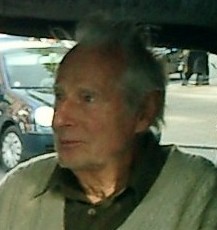 PhilosopherModern European1912 – 2009
Arne Næss
Arne Dekke Eide Næss was a Norwegian philosopher who coined the term "deep ecology", an important intellectual and inspirational figure within the environmental movement of the late twentieth century, and a prolific writer on many other philosophical issues. Næss cited Rachel Carson's 1962 book Silent Spring as being a
- ◆Deep ecology
- ◆ecosophy
Read the full pageArne Dekke Eide Næss ( AR-nə NESS; Urban East Norwegian: [ˈɑ̂ːɳə ˈdɛ̂kːə ˈæ̂ɪdə ˈnɛsː]; 27 January 1912 – 12 January 2009) was a Norwegian philosopher who coined the term "deep ecology", an important intellectual and inspirational figure within the environmental movement of the late twentieth century, and a prolific writer on many other philosophical issues. Næss cited Rachel Carson's 1962 book Silent Spring as being a key influence in his vision of deep ecology. Næss combined his ecological vision with Gandhian nonviolence and on several occasions participated in direct action.
Næss averred that while western environmental groups of the early post–World War II period had raised public awareness of the environmental issues of the time, they had largely failed to have insight into and address what he argued were the underlying cultural and philosophical background to these problems. Næss believed that the environmental crisis of the twentieth century had arisen due to certain unspoken philosophical presuppositions and attitudes within modern western developed societies which remained unacknowledged.
- 5
 PhilosopherModern European1912 – 1978
Jean Améry
Jean Améry, born Hans Chaim Maier, was an Austrian-born essayist who wrote about his experiences surviving the Holocaust. His most celebrated work, At the Mind's Limits: Contemplations by a Survivor on Auschwitz and Its Realities, suggests that torture was "the essence" of the Third Reich.
Read the full pageJean Améry (31 October 1912 – 17 October 1978), born Hans Chaim Maier, was an Austrian-born essayist who wrote about his experiences surviving the Holocaust. His most celebrated work, At the Mind's Limits: Contemplations by a Survivor on Auschwitz and Its Realities (1966), suggests that torture was "the essence" of the Third Reich. Other notable works included On Aging (1968) and On Suicide: A Discourse on Voluntary Death (1976). He adopted the pseudonym Jean Améry after 1945. Améry died by suicide in 1978.
Formerly a philosophy and literature student in Vienna, Améry's participation in organized resistance against the Nazi occupation of Belgium resulted in his detainment and torture by the German Gestapo at Fort Breendonk, and several years of imprisonment in concentration camps. Améry survived internments in Auschwitz and Buchenwald, and was finally liberated at Bergen-Belsen in 1945. After the war he settled in Belgium.
- 6PhilosopherModern European1913 – 2012
Roger Garaudy
Roger Garaudy was a French philosopher, French resistance fighter and a communist author. He converted to Islam in 1982.
Read the full pageRoger Garaudy (French: [ʁɔʒe gaʁodi]; 17 July 1913 – 13 June 2012) was a French philosopher, French resistance fighter and a communist author. He converted to Islam in 1982.
Roger Garaudy was born in Marseille to working class Catholic parents. At the age of 14, Garaudy converted to Protestantism. He fought during World War II and received the Croix de Guerre. After a period as a prisoner of war of Vichy France in Algeria, Garaudy joined the French Resistance working for resistance radio and the newspaper Liberté.
- 7
 PhilosopherModern European1913 – 1978
Roger Caillois
Roger Caillois was a French intellectual and prolific writer whose original work brought together literary criticism, sociology, poetry, ludology and philosophy by focusing on very diverse subjects such as games, surrealism, south-American literature, the mineral world, dreams and images, ethnology, the history of reli
Read the full pageRoger Caillois (French: [ʁɔʒe kajwa]; 3 March 1913 – 21 December 1978) was a French intellectual and prolific writer whose original work brought together literary criticism, sociology, poetry, ludology and philosophy by focusing on very diverse subjects such as games, surrealism, south-American literature, the mineral world, dreams and images, ethnology, the history of religions and the sacred. He was also instrumental in introducing Latin American authors such as Jorge Luis Borges, Pablo Neruda and Miguel Ángel Asturias to the French public. After his death, the French Literary award Prix Roger Caillois was named after him in 1991.
Caillois was born in Reims in 1913 which he left for Paris at the age of 16. There he completed his secondary studies at the Lycée Louis-le-Grand, an elite school where students prepared for entry examinations to France's most prestigious École Normale Supérieure. Caillois' efforts paid off: he graduated as a normalien in 1933 before entering the École Pratique des Hautes Études, where he came into contact with such eminent linguists as Georges Dumézil and Alexandre Kojève. During these formative years Caillois extended his circle of friends that came to include many influential figures of the French intelligentsia like André Breton, Jacques Lacan, Michel Leiris or George Bataille.
- 8
 PhilosopherModern European1913 – 1975
Andrzej Mostowski
Andrzej Mostowski was a Polish mathematician. He worked primarily in logic and foundations of mathematics and is perhaps best remembered for the Mostowski collapse lemma.
- ◆Kleene–Mostowski hierarchy
- ◆Mostowski collapse lemma
- ◆Mostowski model
- ◆Ehrenfeucht–Mostowski theorem
- ◆Permutation model
Read the full pageAndrzej Mostowski (Polish: [mɔsˈtɔfskʲi]; 1 November 1913 – 22 August 1975) was a Polish mathematician. He worked primarily in logic and foundations of mathematics and is perhaps best remembered for the Mostowski collapse lemma. He was a member of the Polish Academy of Sciences and a representative of the Warsaw School of Mathematics.
Born in Lemberg, Austria-Hungary, Mostowski entered the University of Warsaw in 1931. He was influenced by Kuratowski, Lindenbaum, and Tarski. In 1938, he obtained his doctorate on the basis of his dissertation O niezależności definicji skończoności w systemie logiki (On the Independence of Finitenesss Definitions in a System of Logic). It was officially supervised by Kazimierz Kuratowski but in practice by Alfred Tarski who was a young lecturer at that time.
- 9
 PhilosopherModern European1920 – 1991
Vilém Flusser
Vilém Flusser was a Czech-born Brazilian philosopher, writer and journalist, best known for his contributions to media studies, communication theory, and the philosophy of language. He lived for a long period in São Paulo (where he became a Brazilian citizen) and later in France, and his works are written in many diffe
Read the full pageVilém Flusser (May 12, 1920 – November 27, 1991) was a Czech-born Brazilian philosopher, writer and journalist, best known for his contributions to media studies, communication theory, and the philosophy of language. He lived for a long period in São Paulo (where he became a Brazilian citizen) and later in France, and his works are written in many different languages.
His early work was marked by discussion of the thought of Martin Heidegger, and by the influence of existentialism and phenomenology. Phenomenology would play a major role in the transition to the later phase of his work, in which he turned his attention to the philosophy of communication and of artistic production. He contributed to the dichotomy logic theory through history: the period of image worship, and period of text worship, with deviations consequently into idolatry and "textolatry".
- 10PhilosopherModern European1920 – 1996
Hans Blumenberg
Hans Blumenberg was a German philosopher and intellectual historian who studied philosophy, German studies, and the classics. He created metaphorology, theorizing that what lies under metaphors and language modisms is closer to truth and further from ideology.
Read the full pageHans Blumenberg (German: [ˈbluːmənˌbɛʁk]; 13 July 1920, Lübeck – 28 March 1996, Altenberge) was a German philosopher and intellectual historian who studied philosophy, German studies, and the classics (1939–47, interrupted by World War II).
He created metaphorology, theorizing that what lies under metaphors and language modisms is closer to truth and further from ideology. His last works, especially Care Crosses the River, are attempts to apprehend human reality through metaphors and involuntary expressions. Digging under apparently meaningless anecdotes of the history of occidental thought and literature, he mapped expressions, examples, and gestures that flourished in discussions of greater matters. His readings were idiosyncratic and full of signs, indications, and suggestions, sometimes ironic, to warn against the force of revealed truth and for the beauty of a world in confusion.
- 11
 PhilosopherModern European1921 – 2006
Stanisław Lem
Stanisław Herman Lem was a Polish writer. He was the author of many novels, short stories, and essays on various subjects, including philosophy, futurology, and literary criticism.
Read the full pageStanisław Herman Lem (Polish: [staˈɲiswaf ˈlɛm] ; 12 September 1921 – 27 March 2006) was a Polish writer. He was the author of many novels, short stories, and essays on various subjects, including philosophy, futurology, and literary criticism. Many of his science fiction stories are of satirical and humorous character. Lem's books have been translated into more than 50 languages and have sold more than 45 million copies. Worldwide, he is best known as the author of the 1961 novel Solaris. In 1976, Theodore Sturgeon wrote that Lem was the most widely read science fiction writer in the world.
Lem was the author of the fundamental philosophical work Summa Technologiae, in which he anticipated the creation of virtual reality, artificial intelligence, and also developed the ideas of human autoevolution, the creation of artificial worlds, and many others. Lem's science fiction works explore philosophical themes through speculations on technology, the nature of intelligence, the impossibility of communication with and understanding of alien intelligence, despair about human limitations, and humanity's place in the universe. His essays and philosophical books cover these and many other topics. Translating his works is difficult due to Lem's elaborate neologisms and idiomatic wordplay.
- 12
 PhilosopherModern European1923 – 2015
René Girard
René Noël Théophile Girard was a French academic best known for developing mimetic theory, which posits that human desire is fundamentally imitative, leading to rivalry, violence and the scapegoat mechanism as foundations of religion and culture. Holding academic appointments primarily in literature departments in the
- ◆Fundamental anthropology
- ◆Mimetic theory
- ◆Mimetic double bind
- ◆Scapegoat mechanism
- ◆Girard's theory of group conflict
Read the full pageRené Noël Théophile Girard (; French: [ʁəne nɔɛl teɔfil ʒiʁaʁ]; 25 December 1923 – 4 November 2015) was a French academic best known for developing mimetic theory, which posits that human desire is fundamentally imitative, leading to rivalry, violence and the scapegoat mechanism as foundations of religion and culture. Holding academic appointments primarily in literature departments in the United States, his interdisciplinary work influenced fields ranging from theology to economics to psychology and cultural studies.
Girard first outlined the foundations of mimetic theory in his debut book Deceit, Desire, and the Novel (1961), a work of literary criticism, and extended it to anthropology in Violence and the Sacred (1972). Things Hidden Since the Foundation of the World (1978), considered his magnum opus, synthesized these ideas while applying them to a reinterpretation of Christian scriptures. Later accessible works, such as The Scapegoat (1982) and I See Satan Fall Like Lightning (1999) further elaborated his biblical insights.