Modern European thinkers, early 20th century: Ogden to Lewis
- 1PhilosopherModern European1889 – 1957
Charles Kay Ogden
Charles Kay Ogden was a British linguist, philosopher, and writer. Described as a polymath but also an eccentric and outsider, he took part in many ventures related to literature, politics, the arts, and philosophy, having a broad effect particularly as an editor, translator, and activist on behalf of a reformed versio
- ◆Semantic triangle
- ◆Basic English
Read the full pageCharles Kay Ogden (; 1 June 1889 – 20 March 1957) was a British linguist, philosopher, and writer. Described as a polymath but also an eccentric and outsider, he took part in many ventures related to literature, politics, the arts, and philosophy, having a broad effect particularly as an editor, translator, and activist on behalf of a reformed version of the English language. He is typically defined as a linguistic psychologist, and is now mostly remembered as the inventor and propagator of Basic English.
Charles Kay Ogden was born at Rossall School in Fleetwood, Lancashire, on 1 June 1889 to Charles Burdett Ogden (13 July 1849 – 10 December 1923) and Fanny Hart (1850 – 21 December 1944), who were married in 1888 at Chorlton, Lancashire. His father was employed in various capacities at the Rossall School during the years 1873–1909.
- 2
 PhilosopherModern European1890 – 1963
Kazimierz Ajdukiewicz
Kazimierz Ajdukiewicz was a Polish philosopher and logician, a prominent figure in the Lwów–Warsaw school of logic. He taught at the University of Lwów, Adam Mickiewicz University, and the University of Warsaw.
- ◆Categorial grammar
- ◆Radical conventionalism
Read the full pageKazimierz Ajdukiewicz (Polish: [kaˈʑimjɛʂ ajduˈkʲɛvʲit͡ʂ]; 12 December 1890 – 12 April 1963) was a Polish philosopher and logician, a prominent figure in the Lwów–Warsaw school of logic. He taught at the University of Lwów, Adam Mickiewicz University, and the University of Warsaw.
He originated many novel ideas in semantics. Among these was categorial grammar, a highly flexible framework for the analysis of natural language syntax and, indirectly, semantics that remains a major influence on work in formal linguistics. Ajdukiewicz's fields of research centered on model theory and the philosophy of science.
- 3PhilosopherModern European1890 – 1946
Dion Fortune
Dion Fortune was a British occultist, ceremonial magician, and writer. She was a co-founder of the Fraternity of the Inner Light, an occult organisation that promoted philosophies which she claimed had been taught to her by spiritual entities known as the Ascended Masters.
Read the full pageDion Fortune (born Violet Mary Firth, 6 December 1890 – 6 or 8 January 1946) was a British occultist, ceremonial magician, and writer. She was a co-founder of the Fraternity of the Inner Light, an occult organisation that promoted philosophies which she claimed had been taught to her by spiritual entities known as the Ascended Masters. A prolific writer, she produced a large number of articles and books on her occult ideas and also authored seven novels, several of which expound occult themes.
Fortune was born in Llandudno, Caernarfonshire, North Wales, to a wealthy upper middle-class English family, although little is known of her early life. By her teenage years she was living in England's West Country, where she wrote two books of poetry. After time spent at a horticultural college she began studying psychology and psychoanalysis at the University of London before working as a counsellor in a psychotherapy clinic. During the First World War she joined the Women's Land Army and established a company selling soy milk products. She became interested in esotericism through the teachings of the Theosophical Society, before joining an occult lodge led by Theodore Moriarty and then the Alpha et Omega occult organisation.
- 4
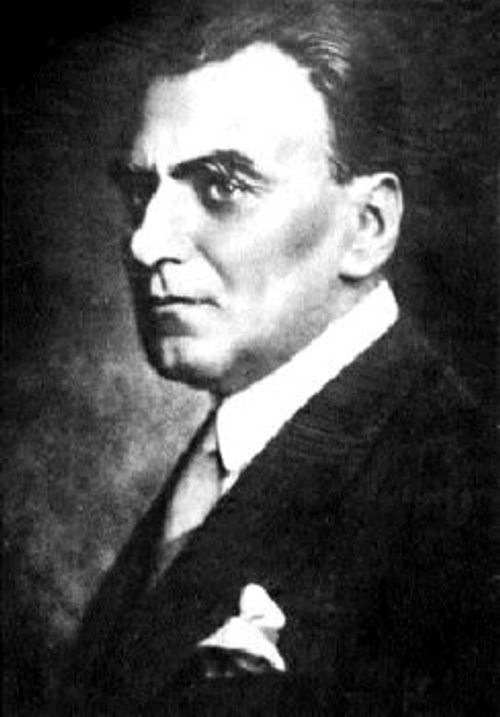 PhilosopherModern European1890 – 1940
Nae Ionescu
Nae Ionescu was a Romanian philosopher, logician, mathematician, professor, and journalist.
- ◆Trăirism
Read the full pageNae Ionescu (Romanian: [ˈna.e joˈnesku], born Nicolae C. Ionescu; 16 June [O.S. 4 June] 1890 – 15 March 1940) was a Romanian philosopher, logician, mathematician, professor, and journalist.
Born in Brăila, Ionescu studied Letters at the University of Bucharest until 1912. Upon graduation, he was appointed teacher at the Matei Basarab High School in Bucharest. When World War I began, he traveled to Germany for additional studies at the University of Göttingen. Romania's entry into the war on the Entente side prevented him from returning, but he was awarded a doctorate in philosophy in 1919 from the Ludwig-Maximilians-Universität München. His thesis was entitled Die Logistik als Versuch einer neuen Begründung der Mathematik (Formal logic as an attempt at a new foundation of mathematics).
- 5
 PhilosopherModern European1891 – 1976
Michael Polanyi
Michael Polanyi was a Hungarian-British polymath active as a physical chemist, philosopher and physician, contributing to fields including materials science, thermodynamics, theoretical biology, economics, sociology, psychology and philosophy of science. Polanyi argued that positivism is a false account of knowing.
- ◆Polanyi's paradox
- ◆Polanyi's sphere
- ◆Polanyi potential theory
- ◆Bell–Evans–Polanyi principle
- ◆Eyring–Polanyi equation
- ◆Flow plasticity theory
Read the full pageMichael Polanyi ( poh-LAN-yee; Hungarian: Polányi Mihály; 11 March 1891 – 22 February 1976) was a Hungarian-British polymath active as a physical chemist, philosopher and physician, contributing to fields including materials science, thermodynamics, theoretical biology, economics, sociology, psychology and philosophy of science. Polanyi argued that positivism is a false account of knowing.
His wide-ranging research in physical science included chemical kinetics, x-ray diffraction, and adsorption of gases. He pioneered the theory of fibre diffraction analysis in 1921, and the dislocation theory of plastic deformation of ductile metals and other materials in 1934. He emigrated to Germany, in 1926 becoming a chemistry professor at the Kaiser Wilhelm Institute in Berlin, and then in 1933 to England, becoming first a chemistry professor, and then a social sciences professor at the University of Manchester. Two of his students won the Nobel Prize, as did his son. In 1944 Polanyi was elected to the Royal Society.
- 6
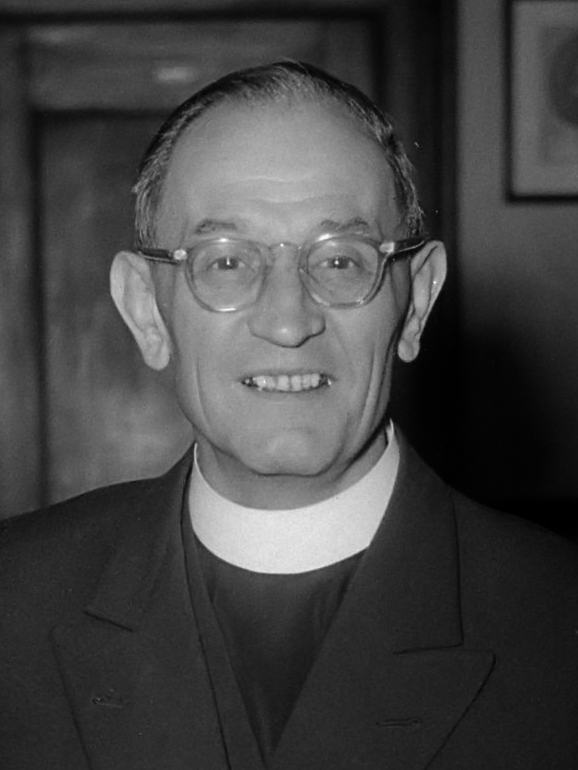 PhilosopherModern European1892 – 1984
Martin Niemöller
Friedrich Gustav Emil Martin Niemöller was a German theologian and Lutheran pastor. He opposed the Nazi regime during the late 1930s, and was sent to a concentration camp for his affiliation with the Confessing Church and his opposition to state involvement in Church.
- ◆Confessing Church
Read the full pageFriedrich Gustav Emil Martin Niemöller (German: [ˈmaʁtiːn ˈniːmœlɐ] ; 14 January 1892 – 6 March 1984) was a German theologian and Lutheran pastor. He opposed the Nazi regime during the late 1930s, and was sent to a concentration camp for his affiliation with the Confessing Church and his opposition to state involvement in Church. After the war, he went on tour around the world to condemn the Nazi cause and educate people about the importance of human rights. In 1946 he published the confessional piece "First They Came".
Niemöller was a national conservative and initially a supporter of Adolf Hitler, and was a self-identified antisemite. He became one of the founders of the Confessing Church, which opposed the Nazification of German Protestant churches. He opposed the Nazis' Aryan Paragraph. For his opposition to the Nazis' state control of the churches, Niemöller was imprisoned in Sachsenhausen concentration camp and Dachau concentration camps from 1938 to 1945. He narrowly escaped execution.
- 7PhilosopherModern European1893 – 1947
Karl Mannheim
Karl Mannheim was a Hungarian sociologist and a key figure in classical sociology as well as one of the founders of the sociology of knowledge. Mannheim is best known for his book Ideology and Utopia, in which he distinguishes between partial and total ideologies, the latter representing comprehensive worldviews distin
- ◆Sociology of culture
- ◆Sociology of knowledge
- ◆Theory of ideology
- ◆Relationism
- ◆Free-floating intellectuals
Read the full pageKarl Mannheim (born Károly Manheim, 27 March 1893 – 9 January 1947) was a Hungarian sociologist and a key figure in classical sociology as well as one of the founders of the sociology of knowledge. Mannheim is best known for his book Ideology and Utopia (1929/1936), in which he distinguishes between partial and total ideologies, the latter representing comprehensive worldviews distinctive to particular social groups, and also between ideologies that provide support for existing social arrangements, and utopias, which look to the future and propose a transformation of society.
Karl Mannheim was born 27 March 1893 in Budapest, to a Hungarian father, a textile merchant, and German mother, both of Jewish descent. His early education was in that city, he studied philosophy and literature at the University of Budapest, though he also went to Berlin (where he studied with Georg Simmel) and Paris to further his education, returning to Hungary around the start of the First World War. He obtained a PhD from the University of Budapest, and further qualifications from the University of Heidelberg.
- 8
 PhilosopherModern European1893 – 1979
Georges Florovsky
Georges Vasilievich Florovsky was a Russian Orthodox priest, theologian, and historian. Born in the Russian Empire, he spent his working life in Paris and New York.
Read the full pageGeorges Vasilievich Florovsky (Russian: Гео́ргий Васи́льевич Флоро́вский; 9 September [O.S. 28 August] 1893 – August 11, 1979) was a Russian Orthodox priest, theologian, and historian.
Born in the Russian Empire, he spent his working life in Paris (1920–1949) and New York (1949–1979). With Sergei Bulgakov, Vladimir Lossky, Justin Popović and Dumitru Stăniloae he was one of the more influential Eastern Orthodox Christian theologians of the mid-20th century. He was particularly concerned that modern Christian theology might receive inspiration from the lively intellectual debates of the patristic traditions of the undivided Church rather than from later Scholastic or Reformation categories of thought.
- 9
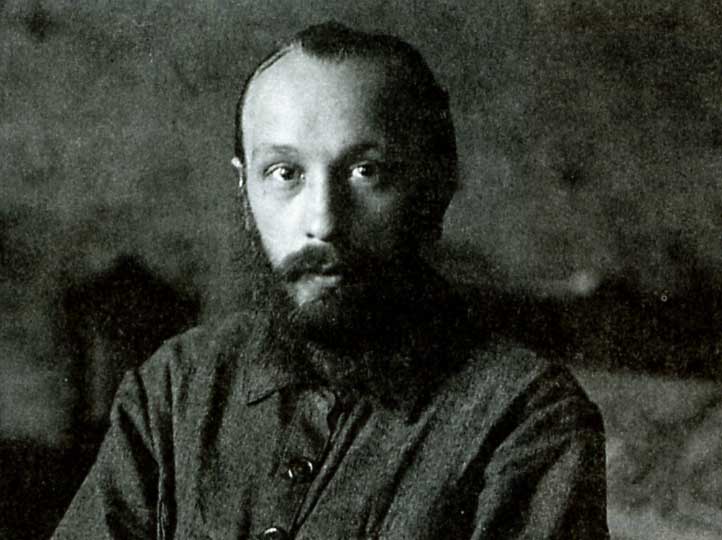 PhilosopherModern European1895 – 1975
Mikhail Bakhtin
Mikhail Mikhailovich Bakhtin was a Russian philosopher and literary critic who worked on the philosophy of language, ethics, and literary theory. His writings, on a variety of subjects, inspired scholars working in a number of different traditions (Marxism, semiotics, structuralism, religious criticism) and in discipli
- ◆Heteroglossia
- ◆dialogue
- ◆chronotope
- ◆carnivalesque
- ◆polyphony
Read the full pageMikhail Mikhailovich Bakhtin was a Russian philosopher and literary critic who worked on the philosophy of language, ethics, and literary theory. His writings, on a variety of subjects, inspired scholars working in a number of different traditions (Marxism, semiotics, structuralism, religious criticism) and in disciplines as diverse as literary criticism, history, philosophy, sociology, anthropology, and psychology. Although Bakhtin was active in the debates on aesthetics and literature that took place in the Soviet Union in the 1920s, his distinctive position did not become well known until he was rediscovered by Soviet scholars in the 1960s.
Bakhtin was born in Oryol, Russia, to an old family of the nobility. His father was a bank manager who worked in several cities. For this reason Bakhtin spent his early childhood years in Oryol, in Vilnius, and then in Odessa, where in 1913 he joined the historical and philological faculty at the local university (the Odessa University). Katerina Clark and Michael Holquist write: "Odessa..., like Vilnius, was an appropriate setting for a chapter in the life of a man who was to become the philosopher of heteroglossia and carnival. The same sense of fun and irreverence that gave birth to Babel's Rabelaisian gangster or to the tricks and deceptions of Ostap Bender, the picaro created by Ilf and Petrov, left its mark on Bakhtin." He later transferred to Petrograd Imperial University to join his brother Nikolai. It is here that Bakhtin was greatly influenced by the classicist F. F. Zelinsky, whose works contain the beginnings of concepts elaborated by Bakhtin.
- 10
 PhilosopherModern European1896 – 1980
Jean Piaget
Jean William Fritz Piaget was a Swiss psychologist known for his work on child development. Piaget's theory of cognitive development and epistemological view are together called genetic epistemology.
- ◆Constructivism
- ◆Genevan School
- ◆genetic epistemology
- ◆theory of cognitive development
- ◆object permanence
- ◆egocentrism
Read the full pageJean William Fritz Piaget (9 August 1896 – 16 September 1980) was a Swiss psychologist known for his work on child development. Piaget's theory of cognitive development and epistemological view are together called genetic epistemology.
Piaget placed great importance on the education of children. As the Director of the International Bureau of Education, he declared in 1934 that "only education is capable of saving our societies from possible collapse, whether violent, or gradual". His theory of child development has been studied in pre-service education programs. Nowadays, educators and theorists working in the area of early childhood education persist in incorporating constructivist-based strategies.
- 11
 PhilosopherModern European1897 – 1963
Thích Quảng Đức
Thích Quảng Đức was a Vietnamese Mahayana Buddhist monk who is best known for his death by self-immolation at a busy Saigon road intersection on 11 June 1963. Quảng Đức was protesting against the persecution of Buddhists by the South Vietnamese government of Ngô Đình Diệm, a staunch Roman Catholic.
Read the full pageThích Quảng Đức (born Lâm Văn Túc; c. 1897 – 11 June 1963) was a Vietnamese Mahayana Buddhist monk who is best known for his death by self-immolation at a busy Saigon road intersection on 11 June 1963. Quảng Đức was protesting against the persecution of Buddhists by the South Vietnamese government of Ngô Đình Diệm, a staunch Roman Catholic. Photographs of his self-immolation circulated around the world, drawing attention to the policies of the Diệm government. John F. Kennedy said of one photograph, "No news picture in history has generated so much emotion around the world as that one". Malcolm Browne won the World Press Photo of the Year for his photograph of the monk's death.
Quảng Đức's act increased international pressure on Diệm and led him to promise reforms with the intention of mollifying the Buddhists. The reforms were not implemented, leading to a deterioration in the dispute. As protests continued, the ARVN Special Forces loyal to Diệm's brother, Ngô Đình Nhu, began the Xá Lợi Pagoda raids on Buddhist pagodas, seizing Quảng Đức's heart and causing deaths and widespread damage. Several Buddhist monks followed Quảng Đức's example. Eventually, a US-backed coup toppled Diệm, who was assassinated on 2 November 1963.
- 12
 PhilosopherModern European1898 – 1963
C. S. Lewis
Clive Staples Lewis was a British author, literary scholar and Anglican lay theologian. He held academic positions in English literature at both Magdalen College, Oxford, and Magdalene College, Cambridge.
Read the full pageClive Staples Lewis (29 November 1898 – 22 November 1963) was a British author, literary scholar and Anglican lay theologian. He held academic positions in English literature at both Magdalen College, Oxford (1925–1954), and Magdalene College, Cambridge (1954–1963). He is best known as the author of The Chronicles of Narnia, but he is also noted for his other works of fiction, such as The Screwtape Letters and The Space Trilogy, and for his non-fiction Christian apologetics, including Mere Christianity, Miracles and The Problem of Pain.
Lewis was a close friend of J. R. R. Tolkien, the author of The Lord of the Rings. Both men served on the English faculty at the University of Oxford and were active in the informal Oxford literary group known as the Inklings. According to Lewis's 1955 memoir Surprised by Joy, he was baptized in the Church of Ireland but lost his faith and became an atheist during adolescence. Lewis returned to Anglicanism at the age of 32, owing to the influence of Tolkien and other friends, and he became an "ordinary layman of the Church of England". Lewis's faith profoundly affected his work, and his wartime radio broadcasts on the subject of Christianity brought him wide acclaim.