Modern European thinkers, early 20th century: Scholz to Collingwood
- 1
 PhilosopherModern European1884 – 1956
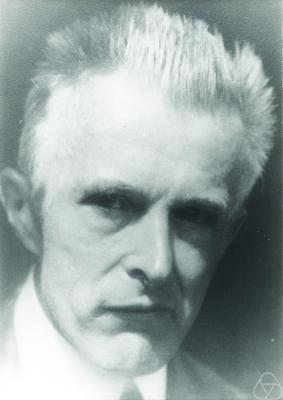
Heinrich Scholz
Heinrich Scholz was a German logician, philosopher, and Protestant theologian. He was a peer of Alan Turing who mentioned Scholz when writing with regard to the reception of "On Computable Numbers, with an Application to the Entscheidungsproblem": "I have had two letters asking for reprints, one from Braithwaite at Kin
- ◆seminar
- ◆computer science
- ◆Alan Turing
Read the full pageHeinrich Scholz (German: [ʃɔlts]; 17 December 1884 – 30 December 1956) was a German logician, philosopher, and Protestant theologian. He was a peer of Alan Turing who mentioned Scholz when writing with regard to the reception of "On Computable Numbers, with an Application to the Entscheidungsproblem": "I have had two letters asking for reprints, one from Braithwaite at King's and one from a professor [sic] in Germany... They seemed very much interested in the paper. [...] I was disappointed by its reception here."
Scholz had an extraordinary career (he was considered an outstanding scientist of national importance) but was not considered a brilliant logician, for example on the same level as Gottlob Frege or Rudolf Carnap. He provided a suitable academic environment for his students to thrive. He founded the Institute of Mathematical Logic and Fundamental Research at the University of Münster in 1936, which can be said enabled the study of logic at the highest international level after World War II up until the present day.
- 2
 PhilosopherModern European1885 – 1955
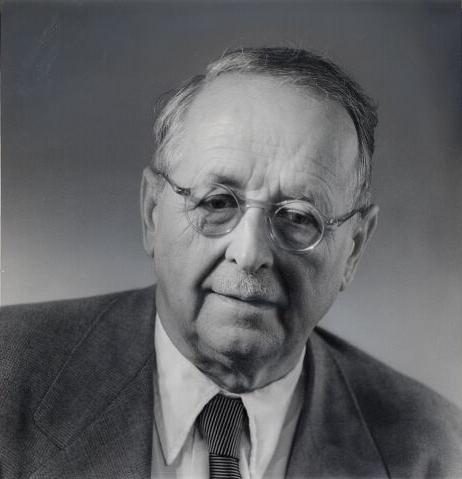
Hermann Weyl
Hermann Klaus Hugo Weyl was a German mathematician, theoretical physicist, logician, philosopher and polymath. Widely regarded as one of the most significant mathematicians of the twentieth century, he made major contributions to differential geometry, Lie group theory, representation theory, number theory, mathematica
- ◆List of topics named after Hermann Weyl
- ◆Ontic structural realism
- ◆Stanford Encyclopedia of Philosophy
- ◆Weyl equation
- ◆Weyl group
- ◆Peter–Weyl theorem
Read the full pageHermann Klaus Hugo Weyl ( VILE; German: [vaɪl]; 9 November 1885 – 8 December 1955) was a German mathematician, theoretical physicist, logician, philosopher and polymath. Widely regarded as one of the most significant mathematicians of the twentieth century, he made major contributions to differential geometry, Lie group theory, representation theory, number theory, mathematical physics and foundations of mathematics. His work was instrumental to the transition from classical mathematics, founded on the real number, to modern mathematics, founded on the notion of structure.
Weyl made significant contributions to an exceptionally wide range of intellectual fields, including mathematics, physics, philosophy and logic, with interests extending to the nature of space, time, matter and symmetry, as well as the history of mathematics. His work on Lie groups and their representations helped establish group theory as a central tool in modern mathematics and theoretical physics, particularly in the mathematical formulation of quantum mechanics. He developed a systematic theory of the invariants and representations of classical groups, bringing classical invariant theory into the framework of modern algebra, while his work on the foundations of mathematics has been regarded as the opening chapter in the development of the field of predicative mathematics. His work on group theory and symmetry also helped lay the foundations for structuralist approaches to the philosophy of science, and has been regarded as an important precursor of ontic structural realism.
- 3
 PhilosopherModern European1885 – 1977
Ernst Bloch
Ernst Simon Bloch was a German Marxist philosopher. Bloch was influenced by Georg Wilhelm Friedrich Hegel and Karl Marx, as well as by apocalyptic and religious thinkers such as Thomas Müntzer, Paracelsus, and Jacob Böhme.
- ◆The principle of hope
- ◆non-simultaneity
Read the full pageErnst Simon Bloch (; German: [ɛʁnst ˈblɔx]; 8 July 1885 – 4 August 1977) was a German Marxist philosopher. Bloch was influenced by Georg Wilhelm Friedrich Hegel and Karl Marx, as well as by apocalyptic and religious thinkers such as Thomas Müntzer, Paracelsus, and Jacob Böhme. He established friendships with György Lukács, Bertolt Brecht, Kurt Weill, Walter Benjamin, and Theodor W. Adorno. Bloch's work focuses on an optimistic teleology of the history of mankind.
Bloch was born in Ludwigshafen, the son of a Jewish railway employee. After studying philosophy, he married Else von Stritzky, daughter of a Baltic brewer in 1913, who died in 1921. His second marriage with Linda Oppenheimer lasted only a few years. His third wife was Karola Piotrowska, a Polish architect, whom he married in 1934 in Vienna. When the Nazis came to power, the couple had to flee, first to Switzerland, then to Austria, France, Czechoslovakia, and finally to the United States. He lived briefly in New Hampshire before settling in Cambridge, Massachusetts. It was there, in the reading room of Harvard's Widener Library, that Bloch wrote the lengthy three-volume work The Principle of Hope. He originally planned to publish it there under the title Dreams of a Better Life.
- 4
 PhilosopherModern European1885 – 1968
Romano Guardini
Romano Guardini was an Italian–German Catholic priest, philosopher and theologian. His sainthood cause was opened in 2017.
Read the full pageRomano Guardini (17 February 1885 – 1 October 1968) was an Italian–German Catholic priest, philosopher and theologian. His sainthood cause was opened in 2017.
Romano Michele Antonio Maria Guardini was born in Verona in 1885 and was baptized in the Church of San Nicolò all'Arena. His father, Romano Tullo (1857–1919), was a poultry wholesaler. Guardini had three younger brothers. The family moved to Mainz when he was one year old, and he lived in Germany for the rest of his life. He attended the Rabanus-Maurus-Gymnasium. Guardini wrote that as a young man he was “always anxious and very scrupulous.”
- 5
 PhilosopherModern European1886 – 1968
Karl Barth
Karl Barth was a Swiss Reformed theologian. Barth is best known for his commentary The Epistle to the Romans, his involvement in the Confessing Church, including his authorship (except for a single phrase) of the Barmen Declaration, and especially his unfinished multi-volume theological summa the Church Dogmatics.
Read the full pageKarl Barth (; Swiss Standard German: [bart]; (1886-05-10)10 May 1886 – (1968-12-10)10 December 1968) was a Swiss Reformed theologian. Barth is best known for his commentary The Epistle to the Romans, his involvement in the Confessing Church, including his authorship (except for a single phrase) of the Barmen Declaration, and especially his unfinished multi-volume theological summa the Church Dogmatics (published between 1932 and 1967). Barth's influence expanded well beyond the academic realm to mainstream culture, leading him to be featured on the cover of Time on 20 April 1962.
Like many Protestant theologians of his generation, Barth was educated in a liberal theology influenced by Adolf von Harnack, Friedrich Schleiermacher and others. His pastoral career began in the rural Swiss town of Safenwil, where he was known as the "Red Pastor from Safenwil". There he became increasingly disillusioned with the liberal Christianity in which he had been trained. This led him to write the first edition of his The Epistle to the Romans (a.k.a. Romans I), published in 1919, in which he resolved to read the New Testament differently.
- 6PhilosopherModern European1886 – 1950
Olaf Stapledon
William Olaf Stapledon was an English philosopher and author of science fiction. In 2014, he was inducted into the Science Fiction and Fantasy Hall of Fame.
Read the full pageWilliam Olaf Stapledon (10 May 1886 – 6 September 1950) was an English philosopher and author of science fiction. In 2014, he was inducted into the Science Fiction and Fantasy Hall of Fame.
Stapledon was born in Cheshire, but he lived in Port Said, Egypt throughout his early childhood. Following his college studies, he worked in shipping offices in Liverpool and Port Said from 1910 to 1912. During the First World War, he served as a conscientious objector. Stapledon became an ambulance driver with the Friends' Ambulance Unit in France and Belgium from July 1915 to January 1919; he was awarded the Croix de Guerre for bravery. His wartime experiences influenced his pacifist beliefs. Stapledon was awarded a PhD degree in philosophy from the University of Liverpool in 1925 and used his doctoral thesis as the basis for his first published prose book, A Modern Theory of Ethics (1929). However, he soon turned to fiction in the hope of presenting his ideas to a wider public.
- 7
 PhilosopherModern European1886 – 1964
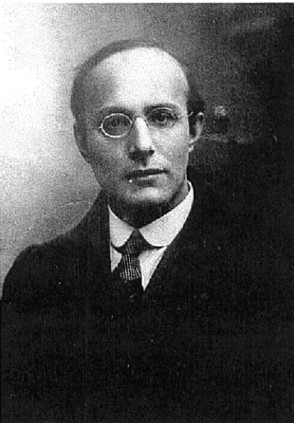
Karl Polanyi
Karl Paul Polanyi was an Austro-Hungarian economic historian, economic sociologist, and politician, best known for his book The Great Transformation, which questions the conceptual validity of self-regulating markets. In his writings, Polanyi advances the concept of the Double Movement, which refers to the dialectical
Read the full pageKarl Paul Polanyi (; Hungarian: Polányi Károly [ˈpolaːɲi ˈkaːroj]; 25 October 1886 – 23 April 1964) was an Austro-Hungarian economic historian, economic sociologist, and politician, best known for his book The Great Transformation, which questions the conceptual validity of self-regulating markets. In his writings, Polanyi advances the concept of the Double Movement, which refers to the dialectical process of marketization and push for social protection against that marketization. He argues that market-based societies in modern Europe were not inevitable but historically contingent. Polanyi is remembered best as the originator of substantivism, a cultural version of economics, which emphasizes the way economies are embedded in society and culture. This opinion is counter to mainstream economics but is popular in anthropology, economic history, economic sociology and political science.
Polanyi's approach to the ancient economies has been applied to a variety of cases, such as Pre-Columbian America and ancient Mesopotamia, although its utility to the study of ancient societies in general has been questioned. Polanyi's The Great Transformation became a model for historical sociology. His theories eventually became the foundation for the economic democracy movement.
- 8
 PhilosopherModern European1886 – 1939
Stanisław Leśniewski
Stanisław Leśniewski was a Polish mathematician, philosopher and logician. A professor of mathematics at the University of Warsaw, he was a leading representative of the Lwów–Warsaw School of Logic and is known for coining and introducing the concept of mereology as part of a comprehensive framework for logic and mathe
- ◆Calculus of names
- ◆Mereology
Read the full pageStanisław Leśniewski (Polish: [lɛɕˈɲɛfskʲi]; 30 March 1886 – 13 May 1939) was a Polish mathematician, philosopher and logician. A professor of mathematics at the University of Warsaw, he was a leading representative of the Lwów–Warsaw School of Logic and is known for coining and introducing the concept of mereology as part of a comprehensive framework for logic and mathematics.
Leśniewski was born on 28 March 1886 at Serpukhov, near Moscow, to father Izydor, an engineer working on the construction of the Trans-Siberian Railway, and mother Helena (née Palczewska). Leśniewski went to a high school in Irkutsk. Later he attended lectures by Hans Cornelius at the Ludwig-Maximilians-Universität München and lectures by Wacław Sierpiński at Lviv University.
- 9
 PhilosopherModern European1887 – 1968
Padre Pio
Pio of Pietrelcina, widely known as Padre Pio ("Father Pio"), Latin: Pater Pius) was an Italian friar of the Order of Friars Minor Capuchin, priest, stigmatist and mystic. He is venerated as a saint in the Catholic Church, and the Palmarian Church; his feast day is celebrated on 23 September.
Read the full pagePio of Pietrelcina (born Francesco Forgione; 25 May 1887 – 23 September 1968), widely known as Padre Pio ("Father Pio"), Latin: Pater Pius) was an Italian friar of the Order of Friars Minor Capuchin, priest, stigmatist and mystic. He is venerated as a saint in the Catholic Church, and the Palmarian Church; his feast day is celebrated on 23 September.
Francesco joined the Capuchins at 15, and spent most of his religious life in the monastery of San Giovanni Rotondo. As Padre Pio, he was known throughout his life for numerous instances of supernatural phenomena, most notably stigmata—wounds like those of Jesus Christ at his crucifixion—on his hands and feet and side. Several investigations into the phenomena were conducted by the Vatican; and although they led to temporary sanctions on his ministry, his reputation for sanctity continued to increase during his lifetime. He was also renowned for other mystical phenomena, and many other forms of spiritual outreach to individuals.
- 10
 PhilosopherModern European1887 – 1975
Julian Huxley
Sir Julian Sorell Huxley was an English evolutionary biologist, eugenicist and internationalist. He was a proponent of natural selection, and a leading figure in the mid-twentieth-century modern synthesis.
Read the full pageSir Julian Sorell Huxley (22 June 1887 – 14 February 1975) was an English evolutionary biologist, eugenicist and internationalist. He was a proponent of natural selection, and a leading figure in the mid-twentieth-century modern synthesis. He was secretary of the Zoological Society of London (1935–1942), the first director of UNESCO, a founding member of the World Wildlife Fund, the president of the British Eugenics Society (1959–1962), and the first president of the British Humanist Association.
Huxley was well known for his presentation of science in books and articles, and on radio and television. He directed an Oscar-winning wildlife film. He was awarded UNESCO's Kalinga Prize for the popularisation of science in 1953, the Darwin Medal of the Royal Society in 1956, and the Darwin–Wallace Medal of the Linnaean Society in 1958. He was also knighted in the 1958 New Year Honours, a hundred years after Charles Darwin and Alfred Russel Wallace announced the theory of evolution by natural selection. In 1956 he received a Special Award from the Lasker Foundation in the category Planned Parenthood – World Population.
- 11
 PhilosopherModern European1888 – 1935
Fernando Pessoa
Fernando António Nogueira de Seabra Pessoa was a Portuguese poet, writer, literary critic, translator, and publisher. He has been described as one of the most significant literary figures of the 20th century and one of the greatest poets in the Portuguese literature.
Read the full pageFernando António Nogueira de Seabra Pessoa (; Portuguese: [fɨɾˈnɐ̃du pɨˈsoɐ]; 13 June 1888 – 30 November 1935) was a Portuguese poet, writer, literary critic, translator, and publisher. He has been described as one of the most significant literary figures of the 20th century and one of the greatest poets in the Portuguese literature. He also wrote in and translated from English and French.
Pessoa was a prolific writer both in his own name and approximately seventy-five other names, of which three stand out: Alberto Caeiro, Álvaro de Campos, and Ricardo Reis. He did not define these as pseudonyms because he felt that this did not capture their true independent intellectual life and instead called them heteronyms, a term he invented. These imaginary figures sometimes held unpopular or extreme views.
- 12
 PhilosopherModern European1889 – 1943
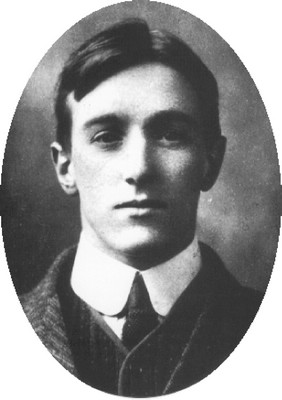
R. G. Collingwood
Robin George Collingwood was an English philosopher, historian and archaeologist. He is best known for his philosophical works, including The Principles of Art and the posthumously published The Idea of History.
- ◆historicism
- ◆Karl Wilhelm Friedrich Schlegel
- ◆Oxford University Press
- ◆Aesthetic expressivism
Read the full pageRobin George Collingwood (; 22 February 1889 – 9 January 1943) was an English philosopher, historian and archaeologist. He is best known for his philosophical works, including The Principles of Art (1938) and the posthumously published The Idea of History (1946).
Collingwood was born on 22 February 1889 in Cartmel, Grange-over-Sands, then in Lancashire (now Cumbria), the son of the artist and archaeologist W. G. Collingwood, who acted as John Ruskin's private secretary in the final years of Ruskin's life. Collingwood's mother was also an artist and a talented pianist. He was educated at Rugby School and University College, Oxford, where he gained a First in Classical Moderations (Greek and Latin) in 1910 and a congratulatory First in Greats (Ancient History and Philosophy) in 1912. Prior to graduation, he was elected a fellow of Pembroke College, Oxford.