Modern European thinkers, early 20th century: Weininger to Gilson
- 1
 PhilosopherModern European1880 – 1903
Otto Weininger
Otto Weininger was an Austrian philosopher who in 1903 published the book Geschlecht und Charakter (Sex and Character), which gained popularity after his suicide at the age of 23. Weininger had a strong influence on Ludwig Wittgenstein, August Strindberg, and, via his lesser-known work Über die letzten Dinge, on James
- ◆principle of identity
Read the full pageOtto Weininger (German: [ˈvaɪnɪŋɐ]; 3 April 1880 – 4 October 1903) was an Austrian philosopher who in 1903 published the book Geschlecht und Charakter (Sex and Character), which gained popularity after his suicide at the age of 23. Weininger had a strong influence on Ludwig Wittgenstein, August Strindberg, and, via his lesser-known work Über die letzten Dinge, on James Joyce.
Otto Weininger was born on 3 April 1880 in Vienna, a son of the Jewish goldsmith Leopold Weininger and his wife Adelheid. After attending primary school and graduating from secondary school in July 1898, Weininger registered at the University of Vienna in October of the same year. He studied philosophy and psychology but took courses in natural sciences and medicine as well. Weininger learned Greek, Latin, French and English very early, later also Spanish and Italian, and acquired passive knowledge of Swedish, Danish and Norwegian. While he was at the university, he would attend the Philosophical Society, where he heard, among others, Richard Wagner's son-in-law Houston Stewart Chamberlain, who was regarded as an outsider but an original thinker.
- 2
 PhilosopherModern European1880 – 1946
Hermann von Keyserling
Hermann Alexander Graf von Keyserling was a Baltic German philosopher from the Keyserlingk family. His grandfather, Alexander von Keyserling, was a notable geologist of Imperial Russia.
Read the full pageHermann Alexander Graf von Keyserling (20 July [O.S. 8 July] 1880 – 26 April 1946) was a Baltic German philosopher from the Keyserlingk family. His grandfather, Alexander von Keyserling, was a notable geologist of Imperial Russia.
Keyserling was born to a wealthy aristocratic family in the Könno Manor, Kreis Pernau in Governorate of Livonia, Russian Empire, now in Estonia. After his education at the universities of Dorpat (Tartu), Heidelberg, and Vienna, he took a trip around the world. He married Countess Maria Goedela von Bismarck-Schönhausen, granddaughter of Otto von Bismarck. His son Arnold von Keyserling followed his fathers footsteps and became a renowned philosopher.
- 3
 PhilosopherModern European1880 – 1956
Nikolaj Velimirović
Nikolaj Velimirović was a Serbian Orthodox prelate who served as Bishop of Ohrid and Žiča from 1920 to 1956. An influential theological writer and a gifted orator, he was often referred to as the "new John Chrysostom".
Read the full pageNikolaj Velimirović (Serbian Cyrillic: Николај Велимировић; 4 January 1881 [O.S. 23 December 1880] – 18 March [O.S. 5 March] 1956) was a Serbian Orthodox prelate who served as Bishop of Ohrid and Žiča from 1920 to 1956. An influential theological writer and a gifted orator, he was often referred to as the "new John Chrysostom". According to a number of historians he is one of the most influential bishops of the Serbian Orthodox Church in the twentieth century.
As a young man, he came close to dying of dysentery and decided that he would dedicate his life to God if he survived. He lived and was tonsured as a monk under the name Nikolaj in 1909. He was ordained into the clergy, and quickly became an important leader and spokesman for the Serbian Orthodox Church, especially in its relations with the West. When Nazi Germany occupied Yugoslavia in World War II, Velimirović was imprisoned and eventually taken to Dachau concentration camp. After being released by Germans in December 1944, Velimirović spent time in Slovenia, where he blessed anti-communist volunteers such as Dimitrije Ljotić and other Nazi collaborators. After the war, he moved to the United States in 1946, where he remained until his death in 1956. He strongly supported the unity of all Eastern Orthodox churches and established particularly good relationships with the Anglican and Episcopal Churches.
- 4
 PhilosopherModern European1881 – 1955
Pierre Teilhard de Chardin
Pierre Teilhard de Chardin, S.J. was a French Jesuit priest, scientist, paleontologist, philosopher, mystic and teacher. He investigated the theory of evolution from a perspective influenced by Henri Bergson and Christian mysticism, writing scientific and religious works on the subject.
- ◆Omega Point
- ◆Noosphere
Read the full pagePierre Teilhard de Chardin, S.J. (French: [pjɛʁ tɛjaʁ də ʃaʁdɛ̃] ; 1 May 1881 – 10 April 1955) was a French Jesuit priest, scientist, paleontologist, philosopher, mystic and teacher. He investigated the theory of evolution from a perspective influenced by Henri Bergson and Christian mysticism, writing scientific and religious works on the subject. His mainstream scientific achievements include his paleontological research in China, taking part in the discovery of the significant Peking Man fossils from the Zhoukoudian cave complex, near Beijing.
His more speculative ideas, sometimes criticized as pseudoscientific, have included a vitalist conception of the Omega Point. Along with Vladimir Vernadsky, he contributed to the development of the concept of the noosphere. In 1962, the Holy Office issued a warning regarding Teilhard's works, alleging ambiguities and doctrinal errors without specifying them. Some eminent Catholic figures, including Pope Benedict XVI and Pope Francis, have made positive comments on some of his ideas since. The response to his writings by scientists has been divided. He received several citations, and was awarded the Médaille militaire and the Legion of Honour, the highest French order of merit, both military and civil.
- 5
 PhilosopherModern European1881 – 1966
Luitzen Egbertus Jan Brouwer
Luitzen Egbertus Jan "Bertus" Brouwer was a Dutch mathematician and philosopher who worked in topology, set theory, measure theory and complex analysis. Regarded as one of the greatest mathematicians of the 20th century, he is known as one of the founders of modern topology, particularly for establishing his fixed-poin
- ◆Brouwer–Hilbert controversy
- ◆Brouwer fixed-point theorem
- ◆Brouwer–Heyting–Kolmogorov interpretation
- ◆Jordan-Brouwer separation theorem
- ◆Kleene–Brouwer order
- ◆Phragmen–Brouwer theorem
Read the full pageLuitzen Egbertus Jan "Bertus" Brouwer (27 February 1881 – 2 December 1966) was a Dutch mathematician and philosopher who worked in topology, set theory, measure theory and complex analysis. Regarded as one of the greatest mathematicians of the 20th century, he is known as one of the founders of modern topology, particularly for establishing his fixed-point theorem and the topological invariance of dimension.
Brouwer also became a major figure in the philosophy of intuitionism, a constructivist school of mathematics which argues that mathematics is a cognitive construct rather than a type of objective truth. This position led to the Brouwer–Hilbert controversy, in which Brouwer sparred with his formalist colleague David Hilbert. Brouwer's ideas were subsequently taken up by his student Arend Heyting and Hilbert's former student Hermann Weyl. In addition to his mathematical work, Brouwer also published the short philosophical tract Life, Art, and Mysticism (1905).
- 6
 PhilosopherModern European1882 – 1973
Jacques Maritain
Jacques Maritain was a French Catholic philosopher and theologian. An author of more than 60 books, he helped to revive Thomas Aquinas for modern times, and was influential in the development and drafting of the Universal Declaration of Human Rights.
- ◆humanism
- ◆Catholic
- ◆feminism
Read the full pageJacques Maritain (French: [ʒak maʁitɛ̃]; 18 November 1882 – 28 April 1973) was a French Catholic philosopher and theologian. An author of more than 60 books, he helped to revive Thomas Aquinas for modern times, and was influential in the development and drafting of the Universal Declaration of Human Rights. Pope Paul VI presented his "Message to Men of Thought and of Science" at the close of Vatican II to Maritain, his long-time friend and mentor. The same pope had seriously considered making him a lay cardinal, but Maritain rejected it.
Maritain's interest and works spanned many aspects of philosophy, including aesthetics, political theory, philosophy of science, metaphysics, the nature of education, liturgy and ecclesiology.
- 7
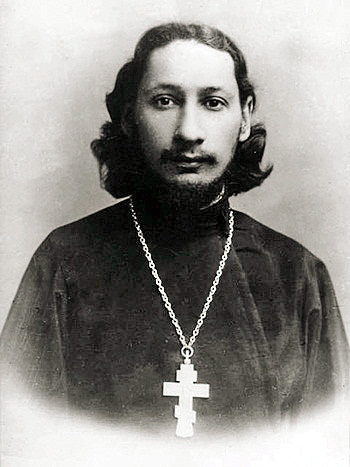 PhilosopherModern European1882 – 1937
Pavel Florensky
Pavel Alexandrovich Florensky was a Russian Orthodox theologian, priest, philosopher, mathematician, physicist, electrical engineer, inventor, polymath, neomartyr and folk saint. During the later twentieth century, statements had appeared noting a recognition by the Russian Orthodox Church of him as a saint, though it
- ◆Antinomy
- ◆Russian icon
- ◆reverse perspective
Read the full pagePavel Alexandrovich Florensky (also P. A. Florenskiĭ, Florenskii, Florenskij; Russian: Павел Александрович Флоренский; Armenian: Պավել Ֆլորենսկի, romanized: Pavel Florenski; 21 January [O.S. 9 January] 1882 – December 8, 1937) was a Russian Orthodox theologian, priest, philosopher, mathematician, physicist, electrical engineer, inventor, polymath, neomartyr and folk saint. During the later twentieth century, statements had appeared noting a recognition by the Russian Orthodox Church of him as a saint, though it was later firmly noted that no such decision had been made.
Pavel Aleksandrovich Florensky was born on 21 January [O.S. 9 January] 1882 in the town of Yevlakh in Elisabethpol Governorate (in present-day Azerbaijan) into the family of a railroad engineer, Aleksandr Florensky. His father came from a family of Russian Orthodox priests while his mother Olga (Salomia) Saparova (Saparyan, Sapharashvili) was of the Tbilisi Armenian nobility in Georgia. His maternal grandmother Sofia Paatova (Paatashvili) was from an Armenian family from Karabakh, living in Bolnisi, Georgia. Florensky "always searched for the roots of his Armenian family" and noted that they came from Karabakh.
- 8
 PhilosopherModern European1883 – 1957
Nikos Kazantzakis
Nikos Kazantzakis was a Greek writer, journalist, politician, poet and philosopher. Widely considered a giant of modern Greek literature, he was nominated for the Nobel Prize in Literature in nine different years, and remains the most translated Greek author worldwide.
Read the full pageNikos Kazantzakis (; Greek: Νίκος Καζαντζάκης [ˈnikos kazanˈd͡zakis]; 2 March [OS 18 February] 1883 – 26 October 1957) was a Greek writer, journalist, politician, poet and philosopher. Widely considered a giant of modern Greek literature, he was nominated for the Nobel Prize in Literature in nine different years, and remains the most translated Greek author worldwide.
Kazantzakis's novels include Zorba the Greek (published in 1946 as Life and Times of Alexis Zorbas), Christ Recrucified (1948), Captain Michalis (1950, translated as Freedom or Death), and The Last Temptation of Christ (1955). He also wrote plays, travel books, memoirs, and philosophical essays, such as The Saviors of God: Spiritual Exercises. His fame spread in the English-speaking world due to cinematic adaptations of Zorba the Greek (1964) and The Last Temptation of Christ (1988).
- 9
 PhilosopherModern European1883 – 1954
Ivan Ilyin
Ivan Alexandrovich Ilyin was a Russian jurist, religious and political philosopher, publicist, orator, and a far-right thinker. Ilyin began his career as a political writer during the failed 1905 Russian Revolution; by the February Revolution of 1917, which he later saw as a "temporary disorder", he shifted towards lib
Read the full pageIvan Alexandrovich Ilyin (Russian: Иван Александрович Ильин, romanized: Ivan Aleksandrovich Il'in; 9 April [O.S. 28 March] 1883 – 21 December 1954) was a Russian jurist, religious and political philosopher, publicist, orator, and a far-right thinker.
Ilyin began his career as a political writer during the failed 1905 Russian Revolution; by the February Revolution of 1917, which he later saw as a "temporary disorder", he shifted towards liberalism, and by October he became a radical right opponent of democracy. The October Revolution, in his view, marked a "national catastrophe". This conviction led him to oppose the Bolshevik regime. As a white émigré journalist, he aligned himself with Slavophile beliefs and emerging as a key ideologue of the Russian All-Military Union. This organization firmly believed that force stood as the sole means through which the Soviet regime could be toppled.
- 10PhilosopherModern European1883 – 1917
Adolf Reinach
Adolf Bernhard Philipp Reinach was a German philosopher associated with the Munich phenomenology school.
- ◆states of affairs
- ◆Barry Smith
Read the full pageAdolf Bernhard Philipp Reinach (; German: [ˈʁaɪnax]; 23 December 1883 – 16 November 1917) was a German philosopher associated with the Munich phenomenology school.
Adolf Reinach was born into a prominent Jewish family in Mainz, Germany, on 23 December 1883.
- 11
 PhilosopherModern European1884 – 1976
Rudolf Bultmann
Rudolf Karl Bultmann was a German Lutheran theologian and professor of the New Testament at the University of Marburg. He was one of the major figures of early 20th-century biblical studies.
Read the full pageRudolf Karl Bultmann (; German: [ˈbʊltman]; 20 August 1884 – 30 July 1976) was a German Lutheran theologian and professor of the New Testament at the University of Marburg. He was one of the major figures of early 20th-century biblical studies. A prominent critic of liberal theology, Bultmann instead argued for an existentialist interpretation of the New Testament. His hermeneutical approach to the New Testament led him to be a proponent of dialectical theology.
Bultmann is known for his belief that the historical analysis of the New Testament is both futile and unnecessary, given that the earliest Christian literature showed little interest in specific locations. Bultmann argued that all that matters is the "thatness," not the "whatness" of Jesus, i.e. only that Jesus existed, preached, and died by crucifixion matters, not what happened throughout his life.
- 12
 PhilosopherModern European1884 – 1978
Étienne Gilson
Étienne Henri Gilson was a French Catholic philosopher and historian of philosophy. A scholar of medieval philosophy, he originally specialised in the thought of Descartes; he also philosophized in the "existential" tradition of Thomas Aquinas, although he did not consider himself a neo-Thomist philosopher.
- ◆Thomistic
- ◆being
- ◆essence
- ◆mathematicism
- ◆The Unity of Philosophical Experience
Read the full pageÉtienne Henri Gilson (French: [ʒilsɔ̃]; 13 June 1884 – 19 September 1978) was a French Catholic philosopher and historian of philosophy. A scholar of medieval philosophy, he originally specialised in the thought of Descartes; he also philosophized in the "existential" tradition of Thomas Aquinas, although he did not consider himself a neo-Thomist philosopher. In 1946, he attained the distinction of being elected an "Immortal" (member) of the Académie française. He was nominated for the Nobel Prize in Literature.
In 2009, the International Étienne Gilson Society was created "to promote the thought of Étienne Gilson and classical philosophy in the academy and culture." It publishes a journal, Studia Gilsoniana.