Modern European thinkers, 19th century: Vaihinger to Alexander
- 1
 PhilosopherModern European1852 – 1933
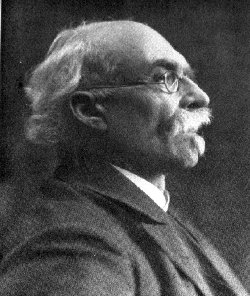
Hans Vaihinger
Hans Vaihinger was a German philosopher, best known as a Kant scholar and for his Die Philosophie des Als Ob (The Philosophy of 'As if'), published in 1911 although its statement of basic principles had been written more than thirty years earlier.
- ◆Fictionalism
Read the full pageHans Vaihinger (; German: [ˈhans ˈfaɪ.ɪŋɐ]; September 25, 1852 – December 18, 1933) was a German philosopher, best known as a Kant scholar and for his Die Philosophie des Als Ob (The Philosophy of 'As if'), published in 1911 although its statement of basic principles had been written more than thirty years earlier.
Vaihinger was born in Nehren, Württemberg, Germany, near Tübingen, and raised in what he described as a "very religious atmosphere". He was educated at the University of Tübingen (the Tübinger Stift), Leipzig University, and the University of Berlin.
- 2
 PhilosopherModern European1853 – 1900
Vladimir Solovyov
Vladimir Sergeyevich Solovyov was a Russian philosopher, theologian, poet, pamphleteer, and literary critic, who played a significant role in the development of Russian philosophy and poetry at the end of the 19th century and in the spiritual renaissance of the early 20th century.
- ◆Sophiology
- ◆Christian universalism
- ◆ecumenism
Read the full pageVladimir Sergeyevich Solovyov (Russian: Владимир Сергеевич Соловьёв; 28 January [O.S. 16 January] 1853 – 13 August [O.S. 31 July] 1900) was a Russian philosopher, theologian, poet, pamphleteer, and literary critic, who played a significant role in the development of Russian philosophy and poetry at the end of the 19th century and in the spiritual renaissance of the early 20th century.
Vladimir Solovyov was born in Moscow; the second son of the historian Sergey Mikhaylovich Solovyov (1820–1879); his elder brother Vsevolod (1849–1903), became a historical novelist, and his younger sister, Polyxena (1867–1924), became a poet. Vladimir Solovyov's mother Polyxena Vladimirovna (née Romanova, d. 1909) belonged to a family of Polish and Ukrainian origin and among her ancestors was the philosopher Gregory Skovoroda (1722–1794).
- 3
 PhilosopherModern European1853 – 1920
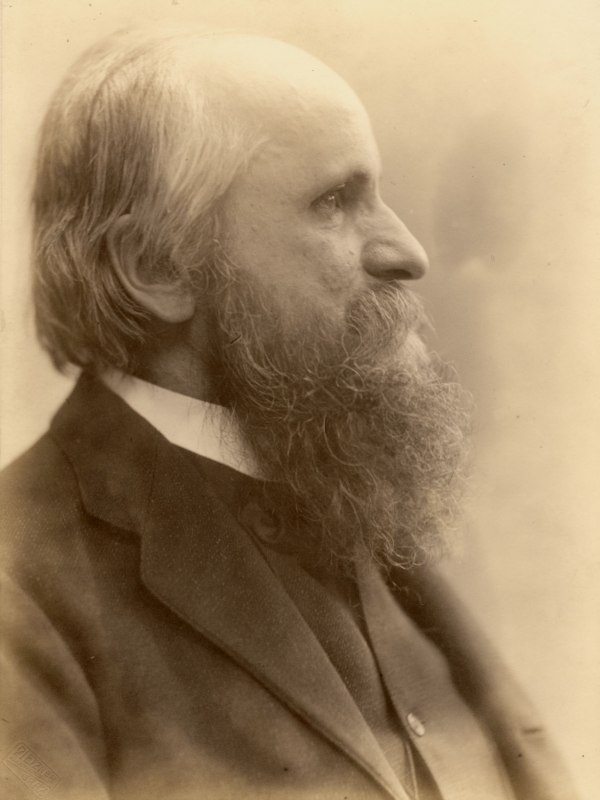
Alexius Meinong
Alexius Meinong von Handschuchsheim was an Austrian philosopher, a realist known for his unique ontology and theory of objects. He also made contributions to philosophy of mind and theory of value.
- ◆Theory of objects
- ◆nonexistent object
- ◆Meinong's jungle
- ◆nuclear vs. extranuclear (constitutive vs. extra-constitutive)
- ◆properties
- ◆Akademische Druck- und Verlagsanstalt
Read the full pageAlexius Meinong von Handschuchsheim (German: [ˈmaɪnɔŋ]; 17 July 1853 – 27 November 1920) was an Austrian philosopher, a realist known for his unique ontology and theory of objects. He also made contributions to philosophy of mind and theory of value.
Alexius Meinong's father was officer Anton von Meinong (1799–1870), who was granted the hereditary title of Ritter in 1851 and reached the rank of Major General in 1858 before retiring in 1859.
- 4
 PhilosopherModern European1854 – 1888
Jean-Marie Guyau
Jean-Marie Guyau was a French philosopher and poet. Guyau was inspired by the philosophies of Epicurus, Epictetus, Plato, Immanuel Kant, Herbert Spencer, and Alfred Fouillée, and the poetry and literature of Pierre Corneille, Victor Hugo, and Alfred de Musset.
- ◆Morality
Read the full pageJean-Marie Guyau (28 October 1854 – 31 March 1888) was a French philosopher and poet.
Guyau was inspired by the philosophies of Epicurus, Epictetus, Plato, Immanuel Kant, Herbert Spencer, and Alfred Fouillée, and the poetry and literature of Pierre Corneille, Victor Hugo, and Alfred de Musset.
- 5
 PhilosopherModern European1854 – 1924
Paul Natorp
Paul Gerhard Natorp was a German philosopher and educationalist, considered one of the co-founders of the Marburg school of neo-Kantianism. He was known as an authority on Plato.
- ◆Anti-psychologism
Read the full pagePaul Gerhard Natorp (; German: [ˈnaːtoːrp]; 24 January 1854 – 17 August 1924) was a German philosopher and educationalist, considered one of the co-founders of the Marburg school of neo-Kantianism. He was known as an authority on Plato.
Paul Natorp was born in Düsseldorf, the son of the Protestant minister Adelbert Natorp and his wife Emilie Keller. From 1871 he studied music, history, classical philology and philosophy in Berlin, Bonn and Strasbourg. He completed his doctoral dissertation in 1876 at the University of Strasbourg under the supervision of the philosopher Ernst Laas and in 1881 completed his Habilitation under the neo-Kantian Hermann Cohen. In 1885 he became an extraordinary professor and in 1893 became an ordinary professor in philosophy and pedagogy at Marburg University, a position he retained until his retirement in 1922. In the winter semester of 1923–24 Natorp conducted an intensive exchange of ideas with Martin Heidegger, who had been called to Marburg and whose work on Duns Scotus Natorp had read very early on.
- 6
 PhilosopherModern European1855 – 1936
Ferdinand Tönnies
Ferdinand Tönnies was a German sociologist, economist, and philosopher. He was a significant contributor to sociological theory and field studies, best known for distinguishing between two types of social groups, Gemeinschaft and Gesellschaft (community and society).
- ◆social group
- ◆Gemeinschaft and Gesellschaft
Read the full pageFerdinand Tönnies (German: [ˈtœniːs]; 26 July 1855 – 8 April 1936) was a German sociologist, economist, and philosopher. He was a significant contributor to sociological theory and field studies, best known for distinguishing between two types of social groups, Gemeinschaft and Gesellschaft (community and society). He co-founded the German Sociological Association together with Max Weber and Georg Simmel and many other founders. He was president of the society from 1909 to 1933, after which he was ousted for having criticized the Nazis. Tönnies was regarded as the first proper German sociologist and published over 900 works, contributing to many areas of sociology and philosophy. Tönnies, Max Weber, and Georg Simmel are considered the founding fathers of classical German sociology. Though there has been a resurgence of interest in Weber and Simmel, Tönnies has not drawn as much attention.
Ferdinand Tönnies was born on 26 July 1855 on the Haubarg "De Reap", Oldenswort on the Eiderstedt Peninsula into a wealthy farmer's family in North Frisia, Duchy of Schleswig, then under Danish rule. Tönnies was the only sociologist of his generation who came from the countryside. He was the third child of church chief and farmer August Ferdinand Tönnies (1822–1883), and his wife, Ida Frederica (born Mau, 1826–1915), came from a theological family from East Holstein. His father, of Frisian ancestry, was a successful farmer and cattle rancher, while his mother hailed from a line of Lutheran ministers. The two had seven children, four sons and three daughters. On the day he was born, Ferdinand Tönnies received the baptismal name of Ferdinand Julius and moved to Husum, on the North Sea, after his father retired in 1864.
- 7
 PhilosopherModern European1855 – 1927
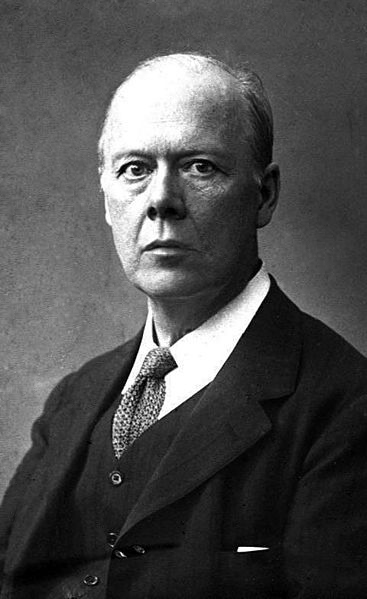
Houston Stewart Chamberlain
Houston Stewart Chamberlain was a British-German-French philosopher. His writings on political philosophy and natural science influenced Adolf Hitler, among many others, attributing all world accomplishments to the Germanic race.
Read the full pageHouston Stewart Chamberlain (; 9 September 1855 – 9 January 1927) was a British-German-French philosopher. His writings on political philosophy and natural science influenced Adolf Hitler, among many others, attributing all world accomplishments to the Germanic race. Chamberlain promoted German ethnonationalism, antisemitism, scientific racism, and Nordicism; he has been described as a "racialist writer". His best-known book, the two-volume Die Grundlagen des neunzehnten Jahrhunderts (The Foundations of the Nineteenth Century), published in 1899, became highly influential in the pan-Germanic Völkisch movements of the early 20th century, and later influenced the antisemitism of Nazi racial policy. In the early 1920s, Chamberlain met and encouraged Hitler.
Born in Hampshire, he immigrated to Dresden in adulthood out of an adoration for composer Richard Wagner. He married Eva von Bülow, Wagner's biological daughter, in December 1908, twenty-five years after Wagner's death. As a long admirer of French culture, he settled in Paris in 1884. He was later naturalised as a French citizen in 1914. During World War I, Chamberlain sided with Germany against his country of birth. He took German citizenship in 1916.
- 8
 PhilosopherModern European1857 – 1919
Karl Adolph Gjellerup
Karl Adolph Gjellerup was a Danish poet and novelist who together with his compatriot Henrik Pontoppidan won the Nobel Prize in Literature in 1917. He is associated with the Modern Breakthrough period of Scandinavian literature.
Read the full pageKarl Adolph Gjellerup (Danish: [ˈkʰɑˀl ˈɛːˌtʌlˀf ˈkelˀəʁɔp]; 2 June 1857 – 11 October 1919) was a Danish poet and novelist who together with his compatriot Henrik Pontoppidan won the Nobel Prize in Literature in 1917. He is associated with the Modern Breakthrough period of Scandinavian literature. He occasionally used the pseudonym Epigonos.
Gjellerup was the son of a vicar in Zealand who died when his son was three years. Karl Gjellerup was raised then by the uncle of Johannes Fibiger, he grew up in a national and romantic idealistic atmosphere. In the 1870s he broke with his background and at first he became an enthusiastic supporter of the naturalist movement and Georg Brandes, writing audacious novels about free love and atheism. Strongly influenced by his origin he gradually left the Brandes line and 1885 he broke totally with the naturalists, becoming a new romanticist. A central trace of his life was his Germanophile attitude, he felt himself strongly attracted to German culture (his wife was a German) and 1892 he finally settled in Germany, which made him unpopular in Denmark on both the right and left wing. As years passed he totally identified with the German Empire, including its war aims 1914–18.
- 9
 PhilosopherModern European1857 – 1939
Lucien Lévy-Bruhl
Lucien Lévy-Bruhl was a French scholar trained in philosophy who furthered anthropology with his contributions to the budding fields of sociology and ethnology. His primary field interest was ways of thinking.
Read the full pageLucien Lévy-Bruhl (French: [levi bʁyl]; 10 April 1857 – 13 March 1939) was a French scholar trained in philosophy who furthered anthropology with his contributions to the budding fields of sociology and ethnology. His primary field interest was ways of thinking.
Born in Paris, Lévy-Bruhl wrote about the mind in his work How Natives Think (1910), where he posited, as the two basic mindsets of mankind, the "primitive" and the "modern". The primitive mind does not differentiate the supernatural from reality but uses "mystical participation" to manipulate the world. According to Lévy-Bruhl, the primitive mind does not address contradictions. The modern mind, by contrast, uses reflection and logic.
- 10
 PhilosopherModern European1858 – 1918
Georg Simmel
Georg Simmel was a German sociologist, philosopher, and critic. A founding figure of sociology, his neo-Kantian approach helped establish sociological antipositivism, asking "What is society?" in analogy to Kant's "What is nature?".
- ◆Formal sociology
- ◆triadic closure
Read the full pageGeorg Simmel (; German: [ˈzɪml̩]; 1 March 1858 – 26 October 1918) was a German sociologist, philosopher, and critic. A founding figure of sociology, his neo-Kantian approach helped establish sociological antipositivism, asking "What is society?" in analogy to Kant's "What is nature?". He pioneered analyses of individuality and social fragmentation.
Simmel discussed social and cultural phenomena in terms of "forms" and "contents" with a transient relationship, wherein form becomes content, and vice versa dependent on context. In this sense, Simmel was a forerunner to structuralist styles of reasoning in the social sciences and heralded relational sociology.
- 11
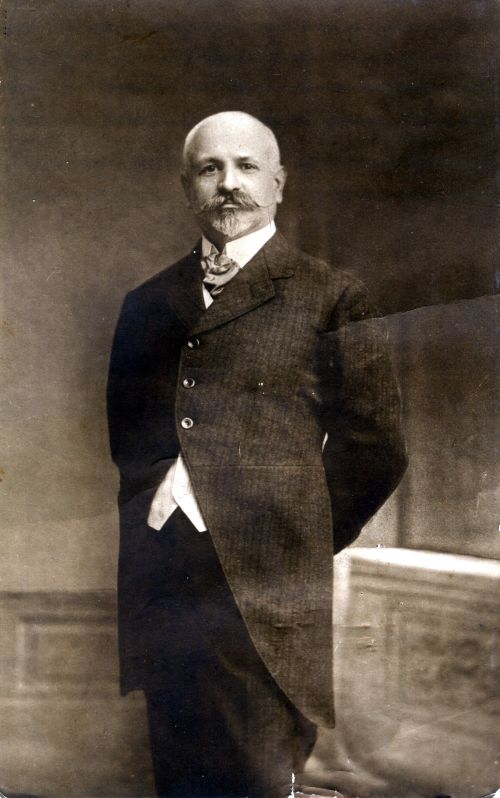 PhilosopherModern European1859 – 1909
Francisco Ferrer
Francesc Ferrer i Guàrdia, widely known as Francisco Ferrer (Spanish pronunciation: [fɾanˈθisko feˈreɾ]), was a Spanish radical freethinker, anarchist, and educationist behind a network of secular, private, libertarian schools in and around Barcelona. His execution, following a revolt in Barcelona, propelled Ferrer int
- ◆Escola Moderna
Read the full pageFrancesc Ferrer i Guàrdia (Catalan pronunciation: [fɾənˈsɛsk fəˈrej ˈɣwaɾði.ə]; January 14, 1859 – October 13, 1909), widely known as Francisco Ferrer (Spanish pronunciation: [fɾanˈθisko feˈreɾ]), was a Spanish radical freethinker, anarchist, and educationist behind a network of secular, private, libertarian schools in and around Barcelona. His execution, following a revolt in Barcelona, propelled Ferrer into martyrdom and grew an international movement of radicals and libertarians, who established schools in his model and promoted his schooling approach.
Ferrer was raised on a farm near Barcelona, where he developed republican and anti-clerical convictions. As a train conductor, he transmitted messages for the republican leader Manuel Ruiz Zorrilla, exiled in France. Following a failed republican uprising in 1885, Ferrer, too, moved to Paris with his family, where they stayed for 16 years. Ferrer began to explore anarchism and education. At the turn of the century, Ferrer had resolved to open a libertarian school modeled on Paul Robin's Prévost orphanage school. A large inheritance from a Parisian tutee provided the means to do so.
- 12
 PhilosopherModern European1859 – 1938
Samuel Alexander
Samuel Alexander was an Australian-born British philosopher. He was the first Jewish fellow of an Oxbridge college.
- ◆Emergent evolution
Read the full pageSamuel Alexander (6 January 1859 – 13 September 1938) was an Australian-born British philosopher. He was the first Jewish fellow of an Oxbridge college. He is now best known as an advocate of emergentism in biology.
He was born into a Jewish family at 436 George Street, Sydney, Australia, the third son of Samuel Alexander, a prosperous saddler, and Eliza née Sloman. His father died around the time he was born, of tuberculosis. Eliza moved the family to St Kilda, Victoria in 1863 or 1864, and Alexander was tutored, and placed at a private school. In 1871, he was sent to Wesley College, Melbourne, then under the headmastership of Martin Howy Irving.