
Paul Natorp
Paul Gerhard Natorp was a German philosopher and educationalist, considered one of the co-founders of the Marburg school of neo-Kantianism. He was known as an authority on Plato.
Paul Gerhard Natorp (; German: [ˈnaːtoːrp]; 24 January 1854 – 17 August 1924) was a German philosopher and educationalist, considered one of the co-founders of the Marburg school of neo-Kantianism. He was known as an authority on Plato.
Biography
Paul Natorp was born in Düsseldorf, the son of the Protestant minister Adelbert Natorp and his wife Emilie Keller. From 1871 he studied music, history, classical philology and philosophy in Berlin, Bonn and Strasbourg. He completed his doctoral dissertation in 1876 at the University of Strasbourg under the supervision of the philosopher Ernst Laas and in 1881 completed his Habilitation under the neo-Kantian Hermann Cohen. In 1885 he became an extraordinary professor and in 1893 became an ordinary professor in philosophy and pedagogy at Marburg University, a position he retained until his retirement in 1922. In the winter semester of 1923–24 Natorp conducted an intensive exchange of ideas with Martin Heidegger, who had been called to Marburg and whose work on Duns Scotus Natorp had read very early on.
In 1887 he married his cousin Helene Natorp; they had five children. Natorp was an ambitious composer, who wrote chiefly chamber music (including a cello sonata, a violin sonata, and a piano trio). He also wrote some 100 songs and two choral works. He conducted a correspondence with Johannes Brahms, who dissuaded him from becoming a professional composer.
He was an influence on the early work of Hans-Georg Gadamer and had a profound effect on the thought of Edmund Husserl, the "father" of phenomenology. His students included the philosopher and historian Ernst Cassirer, the theologian Karl Barth and the author of Doctor Zhivago, Boris Pasternak.
Adapted from the Wikipedia article Paul Natorp, available under CC BY-SA 4.0.
Connections
Teachers
1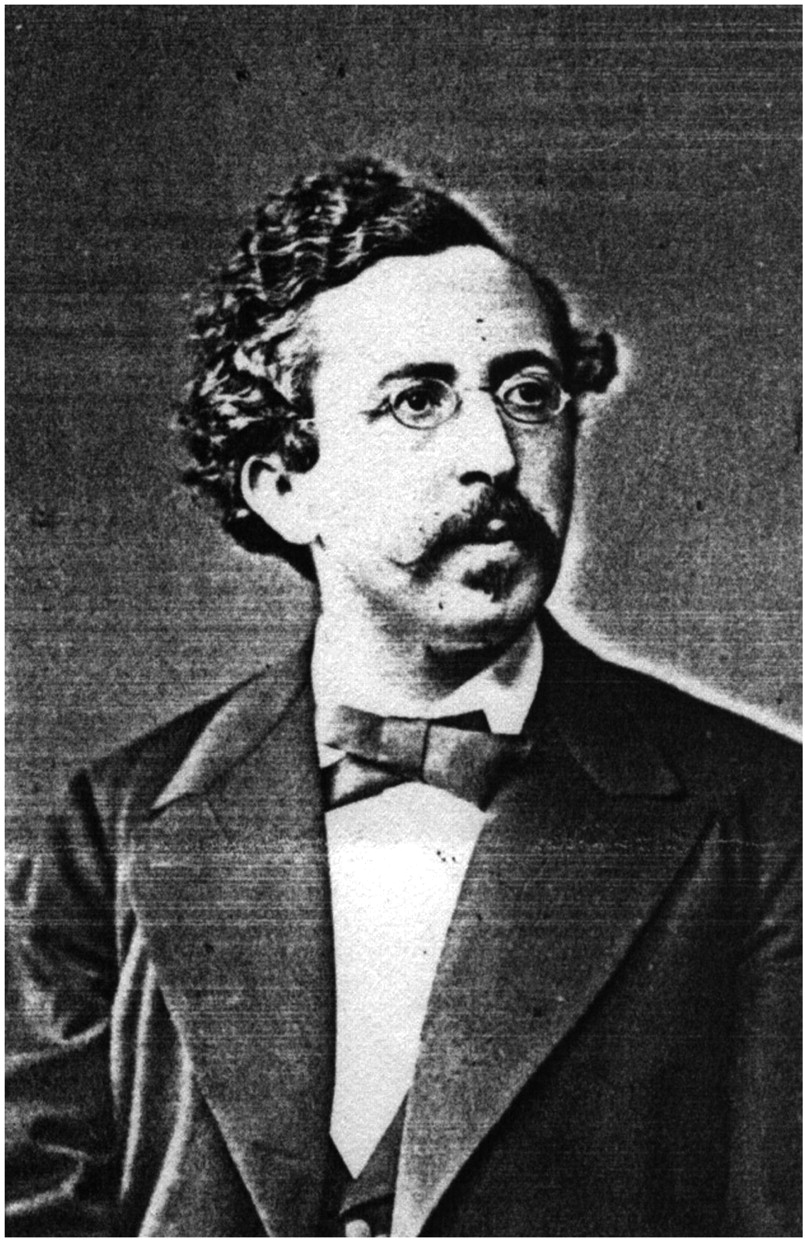


Ideas & arguments
1Contributed to
1You might also explore
 Plato★Greek & Romanc. 428 – 348 BCEFounder of the Academy whose dialogues defined Western philosophy's agenda: Forms, justice, the soul, knowledge and the…
 G. W. F. Hegel★Modern European1770 – 1831Systematic idealist for whom history is the dialectical self-realisation of Spirit and freedom.
 Martin Heidegger★Modern European1889 – 1976Asked the question of the meaning of Being; analysed human existence (Dasein) as being-in-the-world and…
 Hermann LotzeModern European1817 – 1881Rudolf Hermann Lotze was a German philosopher and logician. He also had a medical degree and was well versed in biology.
 Aristotle★Greek & Roman384 – 322 BCEPlato's student and Alexander's tutor, who systematised logic, ethics, biology, metaphysics and politics — "the master…
 René Descartes★Modern European1596 – 1650The father of modern philosophy: he doubted everything he could and found certainty in "I think, therefore I am".