Modern European thinkers, 19th century: Ehrenfels to Merezhkovsky
- 1PhilosopherModern European1859 – 1932
Christian von Ehrenfels
Christian von Ehrenfels was an Austrian philosopher, and is known as one of the founders and precursors of Gestalt psychology.
- ◆Gestalt psychology
- ◆Gestalt qualities
- ◆polygyny
- ◆eugenic
Read the full pageChristian von Ehrenfels (Austrian German: [ˈeːrənfɛls]; born Maria Christian Julius Leopold Freiherr von Ehrenfels; 20 June 1859 – 8 September 1932) was an Austrian philosopher, and is known as one of the founders and precursors of Gestalt psychology.
Maria Christian Julius Leopold Freiherr von Ehrenfels was born on 20 June 1859 in Rodaun near Vienna and grew up at his father's castle Brunn am Walde in Lower Austria. He joined secondary school in Krems and first studied at the Hochschule für Bodenkultur in Vienna and then changed to the University of Vienna.
- 2
 PhilosopherModern European1861 – 1937
Lou Andreas-Salomem
Lou Andreas-Salomé was a Russian-born psychoanalyst and a well-traveled author, narrator, and essayist from a French Huguenot-German family. Her diverse intellectual interests led to friendships with a broad array of distinguished thinkers, including Friedrich Nietzsche, Sigmund Freud, Paul Rée, and Rainer Maria Rilke.
Read the full pageLou Andreas-Salomé (born either Louise von Salomé or Luíza Gustavovna Salomé or Lioulia von Salomé, Russian: Луиза Густавовна Саломе; 12 February 1861 – 5 February 1937) was a Russian-born psychoanalyst and a well-traveled author, narrator, and essayist from a French Huguenot-German family. Her diverse intellectual interests led to friendships with a broad array of distinguished thinkers, including Friedrich Nietzsche, Sigmund Freud, Paul Rée, and Rainer Maria Rilke.
Lou Salomé was born in St. Petersburg to Gustav Ludwig von Salomé (1807–1878), and Louise von Salomé (née Wilm) (1823–1913). Lou was their youngest child and only daughter; they had five sons. Although she would later be attacked by the Nazis as a "Finnish Jew", her parents were of French Huguenot and Northern German descent. She grew up in a wealthy and well-cultured household, with all children learning Russian, German, and French; Salomé was allowed to attend her brothers' classes.
- 3
 PhilosopherModern European1861 – 1949
Maurice Blondel
Maurice Blondel was a French philosopher, whose most influential works, notably L'Action, aimed at establishing the correct relationship between autonomous philosophical reasoning and Christian belief. He was a proponent of French spiritualism.
- ◆Philosophy of action
Read the full pageMaurice Blondel (; French: [blɔ̃dɛl]; 2 November 1861 – 4 June 1949) was a French philosopher, whose most influential works, notably L'Action (1893), aimed at establishing the correct relationship between autonomous philosophical reasoning and Christian belief. He was a proponent of French spiritualism. His work was influential within the Catholic Church, particularly during the Second Vatican Council. The Catholic Church declared him a Servant of God in 2025.
Blondel was born in Dijon, France, on 2 November 1861. He came from a family who was traditionally connected to the legal profession, but chose early in life to follow a career in philosophy. In 1881, he gained admission to the École Normale Supérieure of Paris. In 1893, he finished his thesis L'Action (Action), 'an essay on a critique of life and a science of practice'. He was at this time refused a teaching post (as would have been his due) because his philosophical conclusions were deemed to be too Christian and, therefore, "compromising" of philosophical reason. In 1895, however, with the help of his former teacher Émile Boutroux, he became a Maître de Conférences at Lille, then shortly after at Aix-en-Provence, where he became a professor in 1897. He would remain in Aix-en-Provence for the rest of his career.
- 4
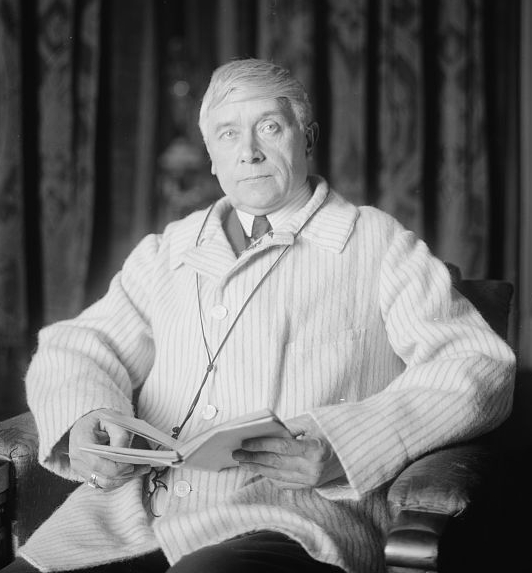 PhilosopherModern European1862 – 1949
Maurice Maeterlinck
Maurice Polydore Marie Bernard Maeterlinck, also known as Count/Comte Maeterlinck from 1932, was a Belgian playwright, poet, and essayist who was Flemish but wrote in French. He was awarded the Nobel Prize in Literature in 1911 "in appreciation of his many-sided literary activities, and especially of his dramatic works
Read the full pageMaurice Polydore Marie Bernard Maeterlinck (29 August 1862 – 6 May 1949), also known as Count/Comte Maeterlinck from 1932, was a Belgian playwright, poet, and essayist who was Flemish but wrote in French. He was awarded the Nobel Prize in Literature in 1911 "in appreciation of his many-sided literary activities, and especially of his dramatic works, which are distinguished by a wealth of imagination and by a poetic fancy, which reveals, sometimes in the guise of a fairy tale, a deep inspiration, while in a mysterious way they appeal to the readers' own feelings and stimulate their imaginations". The main themes in his work are death and the meaning of life. He was a leading member of the group La Jeune Belgique, and his plays form an important part of the Symbolist movement. In later life, Maeterlinck faced credible accusations of plagiarism.
Maeterlinck was born in Ghent, Belgium, to a wealthy, French-speaking family. His mother, Mathilde Colette Françoise (née Van den Bossche), came from a wealthy family. His father, Polydore, was a notary who enjoyed tending the greenhouses on their property.
- 5PhilosopherModern European1862 – 1915
Oswald Külpe
Theodor Oswald Rudolph Külpe was a German structural psychologist of the late 19th and early 20th century. Külpe, who is less well-known than his German mentor, Wilhelm Wundt, revolutionized experimental psychology at his time.
- ◆Würzburg School
Read the full pageTheodor Oswald Rudolph Külpe (German: [ˈkʏlpə]; 3 August 1862 – 30 December 1915) was a German structural psychologist of the late 19th and early 20th century. Külpe, who is less well-known than his German mentor, Wilhelm Wundt, revolutionized experimental psychology at his time. In his obituary, Aloys Fischer wrote that, “undoubtedly Külpe was the second founder of experimental psychology on German soil; for with every change of base he made it a requirement that an experimental laboratory should be provided.”
Külpe studied as a doctoral student and assistant to Wundt at the University of Leipzig, though his ideas differed from Wundt's as he developed his own research (Boring, 1961). Külpe made significant contributions to the field of psychology, some of which are still relevant, including the systematic experimental introspection, imageless thoughts, mental sets, and abstraction.
- 6
 PhilosopherModern European1862 – 1929
Antoni Lange
Antoni Lange was a Polish poet, philosopher, polyglot (15 languages), writer, novelist, science-writer, reporter and translator. A representative of Polish Parnassianism and symbolism, he is also regarded as belonging to the Decadent movement.
Read the full pageAntoni Lange (28 April 1862 – 17 March 1929) was a Polish poet, philosopher, polyglot (15 languages), writer, novelist, science-writer, reporter and translator. A representative of Polish Parnassianism and symbolism, he is also regarded as belonging to the Decadent movement. He was an expert on Romanticism, French literature and a popularizer of Eastern cultures.
His most popular novel is Miranda.
- 7
 PhilosopherModern European1863 – 1942
Francis Younghusband
Lieutenant Colonel Sir Francis Edward Younghusband was a British Army officer, explorer and spiritual writer. He is remembered for his travels in the Far East and Central Asia; especially the 1904 British expedition to Tibet, led by him, and for his writings on Asia and foreign policy.
Read the full pageLieutenant Colonel Sir Francis Edward Younghusband (31 May 1863 – 31 July 1942) was a British Army officer, explorer and spiritual writer. He is remembered for his travels in the Far East and Central Asia; especially the 1904 British expedition to Tibet, led by him, and for his writings on Asia and foreign policy. Younghusband held positions including British commissioner to Tibet and president of the Royal Geographical Society.
Francis Younghusband was born on 31 May 1863 to a British military family at Murree, Punjab, British India (now Pakistan), the second son of Major-General John William Younghusband and his wife Clara Jane Shaw who were married at Freshford, Somerset near Bath, Somerset in 1856. His maternal uncle, Robert Shaw, was a noted explorer of Central Asia. His paternal uncle, Lieutenant-General Charles Younghusband CB FRS, was a British Army officer and meteorologist. His brother was Major-General George Younghusband. Many other members of his family were serving army officers in India.
- 8
 PhilosopherModern European1863 – 1936
Heinrich Rickert
Heinrich John Rickert was a German philosopher, a leading neo-Kantian of the Baden school.
- ◆Heinrich Rickert
- ◆2012
- ◆pp. 384–395.
Read the full pageHeinrich John Rickert (; German: [ˈʁɪkɐt]; 25 May 1863 – 25 July 1936) was a German philosopher, a leading neo-Kantian of the Baden school.
Rickert was born in Danzig, Prussia (now Gdańsk, Poland) to the journalist and later politician Heinrich Edwin Rickert and Annette née Stoddart. He was professor of philosophy at the University of Freiburg (1894–1915, succeeded by Edmund Husserl) and the University of Heidelberg (1915–1932, succeeding Wilhelm Windelband). He died in Heidelberg amid Nazi Germany.
- 9
 PhilosopherModern European1864 – 1937
Ferdinand Canning Scott Schiller
Ferdinand Canning Scott Schiller, usually cited as F. C.
- ◆formal logic
- ◆axioms
- ◆hypotheses
- ◆pragmatism
- ◆intelligent design
- ◆eugenics
Read the full pageFerdinand Canning Scott Schiller (German: [ˈʃɪlɐ]; 16 August 1864 – 6 August 1937), usually cited as F. C. S. Schiller, was a German-British philosopher. Born in Altona, Holstein (at that time a member of the German Confederation, but under Danish administration), Schiller studied at the University of Oxford, later became a professor there, after being invited back after a brief time at Cornell University. Later in his life, he taught at the University of Southern California. In his lifetime, he was well known as a philosopher; after his death, his work was largely forgotten.
Schiller's philosophy was very similar to and often aligned with the pragmatism of William James, although Schiller referred to it as "humanism". He argued vigorously against ideas like logical positivism, absolute idealism (such as F. H. Bradley), and the type of determinism written about by Bertrand Russell.
- 10
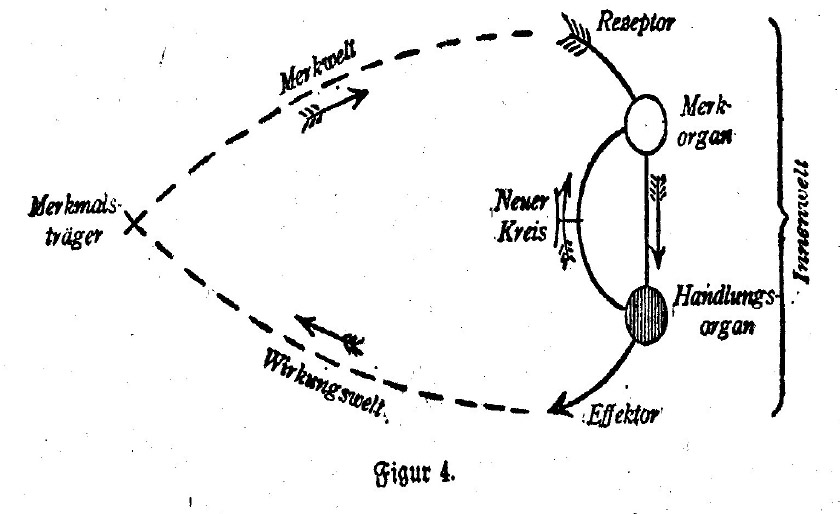 PhilosopherModern European1864 – 1944
Jakob von Uexküll
Jakob Johann Freiherr von Uexküll was a Baltic German biologist who worked in the fields of muscular physiology and animal behaviour studies and was an influence on the cybernetics of life. However, his most notable contribution is the notion of Umwelt, used by semiotician Thomas Sebeok and philosopher Martin Heidegger
- ◆Umgebung
- ◆Umwelt
- ◆Lebensphilosophie
- ◆Biosemiotics
Read the full pageJakob Johann Freiherr von Uexküll (; German: [ˈʏkskʏl]; 8 September [O.S. 27 August] 1864 – 25 July 1944) was a Baltic German biologist who worked in the fields of muscular physiology and animal behaviour studies and was an influence on the cybernetics of life. However, his most notable contribution is the notion of Umwelt, used by semiotician Thomas Sebeok and philosopher Martin Heidegger. His works established biosemiotics as a field of research.
The son of Baron Alexander von Uexküll and Sophie von Hahn, Jakob von Uexküll was born in the Keblas estate, Sankt Michaelis, Governorate of Estonia. His aristocratic family lost most of their fortune by expropriation during the Russian Revolution. Needing to support himself, Uexküll in 1924 took a job as professor at the University of Hamburg where he founded the Institut für Umweltforschung.
- 11
 PhilosopherModern European1864 – 1944
Peter Deunov
Peter Dunov, also known by his spiritual name Beinsa Douno (Bulgarian: Беинса Дуно [bɛinˈsа duˈnɔ]), and often titled Uchitelyat ("the Teacher") by his followers, was a Bulgarian philosopher and spiritual teacher who developed a form of Esoteric Christianity known as the Universal White Brotherhood. He is widely known
Read the full pagePeter Dunov ( DUN-ov; Bulgarian: Петър Дънов [ˈpɛtɐr ˈdɤnof]; July 11, 1864 – December 27, 1944), also known by his spiritual name Beinsa Douno (Bulgarian: Беинса Дуно [bɛinˈsа duˈnɔ]), and often titled Uchitelyat ("the Teacher") by his followers, was a Bulgarian philosopher and spiritual teacher who developed a form of Esoteric Christianity known as the Universal White Brotherhood. He is widely known in Bulgaria, where he was voted second by the public in the Great Bulgarians TV show on Bulgarian National Television (2006–2007). Dunov is also featured in Pantev and Gavrilov's The 100 Most Influential Bulgarians in Our History (ranked in 37th place). According to Petrov, Peter Dunov is “the most published Bulgarian author to this day.”
Peter Dunov was born on 11 July 1864 [O.S. 29 June] in the village of Hadarcha (now Nikolaevka in Suvorovo Municipality) near Varna, Bulgaria (at that time in the Ottoman Empire), the third child of Konstantin Dunoffsky and Dobra Atanasova Georgieva. His father was the first Bulgarian teacher in the region before becoming a Bulgarian Orthodox priest. He was one of the first to present the liturgy in Bulgarian, the language of the local people, instead of the imposed Greek language.
- 12
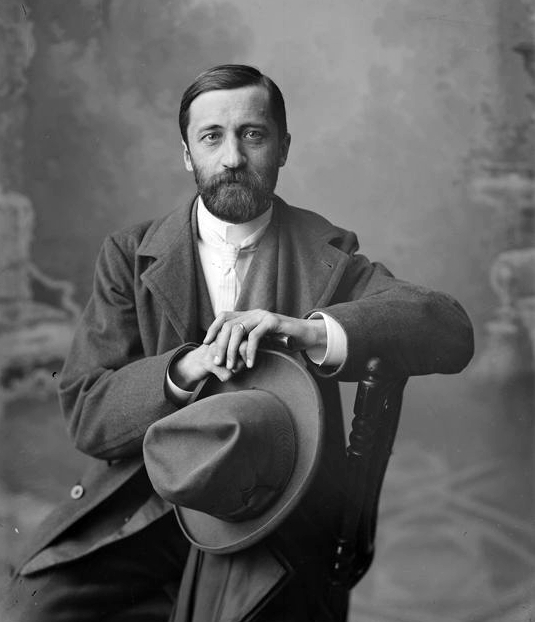 PhilosopherModern European1865 – 1941
Dmitry Merezhkovsky
Dmitry Sergeyevich Merezhkovsky was a Russian novelist, poet, religious thinker, and literary critic. A seminal figure of the Silver Age of Russian Poetry, regarded as a co-founder of the Symbolist movement, Merezhkovsky – with his wife, the poet Zinaida Gippius – was twice forced into political exile.
Read the full pageDmitry Sergeyevich Merezhkovsky was a Russian novelist, poet, religious thinker, and literary critic. A seminal figure of the Silver Age of Russian Poetry, regarded as a co-founder of the Symbolist movement, Merezhkovsky – with his wife, the poet Zinaida Gippius – was twice forced into political exile. During his second exile (1918–1941), he continued publishing successful novels and gained recognition as a critic of the Soviet Union. Known both as a self-styled religious prophet with his own slant on apocalyptic Christianity, and as the author of philosophical historical novels which combined fervent idealism with literary innovation, Merezhkovsky was nominated nine times for the Nobel Prize in Literature, which he came closest to winning in 1933. However, due to contested claims that he expressed regard for Fascism as a lesser evil than Communism during the outbreak of war between Germany and the USSR shortly prior to his death, his work largely fell into neglect after World War II
Dmitry Sergeyevich Merezhkovsky was born on 14 August [O.S. 2 August] 1865, in Saint Petersburg, the sixth son in his family. His father, Sergey Ivanovich Merezhkovsky, served as a senior official in several Russian local governors' cabinets (including that of I.D. Talyzin in Orenburg) before entering Emperor Alexander II's court office as a Privy Councillor. His mother Varvara Vasilyevna Merezhkovskaya (née Chesnokova) was a daughter of a senior Saint Petersburg security official. Fond of arts and literature, she was what Dmitry Merezhkovsky later remembered as the guiding light of his rather lonely childhood (despite the presence of his five brothers and three sisters). There were only three people Merezhkovsky had any affinity with in his whole lifetime, and his mother, a woman "of rare beauty and angelic nature" according to biographer Yuri Zobnin, was the first and the most important of those.