Modern European thinkers, 19th century: Marković to Lipps
- 1
 PhilosopherModern European1846 – 1875
Svetozar Marković
Svetozar Marković was a Serbian political activist, literary critic and socialist philosopher. He developed an activistic anthropological philosophy with a definite program of social change.
Read the full pageSvetozar Marković was a Serbian political activist, literary critic and socialist philosopher. He developed an activistic anthropological philosophy with a definite program of social change.
Marković was born in the town of Zaječar on 9 September 1846, the son of a police clerk. He claimed to partially be of Albanian origin. Marković's childhood was spent in the village of Rekovac and then the town of Jagodina. The family moved to Kragujevac in 1856. He reached adolescence at about the time Mihailo Obrenović became the Prince of Serbia. In 1860 he began to study at the gymnasium in Belgrade and in 1863 at the Velika škola of Belgrade, the highest educational body in Serbia at that time, founded in 1808.
- 2
 PhilosopherModern European1846 – 1878
Mariam Baouardy
Mariam Baouardy, OCD was a Palestinian Discalced Carmelite nun of the Melkite Greek Catholic Church. Born to parents from the town of Hurfiesh in the upper Galilee, she later moved to I’billin and was known for her service to the poor.
Read the full pageMariam Baouardy, OCD (Arabic: مريم بواردي; religious name Mary of Jesus Crucified; 5 January 1846 – 26 August 1878) was a Palestinian Discalced Carmelite nun of the Melkite Greek Catholic Church. Born to parents from the town of Hurfiesh in the upper Galilee, she later moved to I’billin and was known for her service to the poor. In addition, she was a Christian mystic who suffered the stigmata. She was beatified by Pope John Paul II on 13 November 1983 and canonized on 17 May 2015 by Pope Francis.
Baouardy was born on 5 January 1846 (the eve of Epiphany) in the Galilean village of Hurfeish, and later moved to I'billin, in the Ottoman Empire. Her ancestors originated in Damascus. Her father was Giries (George) Baouardy and her mother was Mariam Chahine. Mariam was their 13th child and first daughter, and none of her preceding brothers had survived infancy. She was born after the couple made a pilgrimage on foot to Bethlehem, some 70 miles away, out of desperation after the loss of their children. When they were later blessed with the birth of a daughter, they named her after the Virgin Mary, out of gratitude. She was joined by a new brother, Boulos, two years later.
- 3
 PhilosopherModern European1847 – 1933
Annie Besant
Annie Besant was an English socialist, theosophist, freemason, educationist, and activist involved in women's rights, Home Rule, and Indian nationalism. She supported Irish and Indian self-rule.
- ◆Theosophist
- ◆women's rights
Read the full pageAnnie Besant (; née Wood; 1 October 1847 – 20 September 1933) was an English socialist, theosophist, freemason, educationist, and activist involved in women's rights, Home Rule, and Indian nationalism. She supported Irish and Indian self-rule. She became the first female president of the Indian National Congress in 1917.
She became a prominent speaker for the National Secular Society (NSS), a writer, and a close friend of Charles Bradlaugh. In 1877 they were prosecuted for publishing a book by birth control campaigner Charles Knowlton. Thereafter, she became involved with union actions, including the Bloody Sunday demonstration and the London matchgirls strike of 1888. She was a leading speaker for both the Fabian Society and the Marxist Social Democratic Federation (SDF). She was also elected to the London School Board for Tower Hamlets, topping the poll, even though few women were qualified to vote then.
- 4
 PhilosopherModern European1847 – 1914
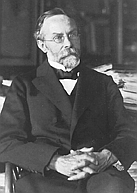
Anton Marty
Martin Anton Maurus Marty was a Swiss-born Austrian philosopher. He specialized in philosophy of language, philosophy of psychology, and ontology.
- ◆Descriptive
- ◆semasiology
- ◆Stanford Encyclopedia of Philosophy
Read the full pageMartin Anton Maurus Marty (Swiss Standard German: [ˈmarti]; 18 October 1847 – 1 October 1914) was a Swiss-born Austrian philosopher. He specialized in philosophy of language, philosophy of psychology, and ontology.
Marty was a student and follower of Franz Brentano, his teacher at the University of Würzburg in 1868–70. He was ordained in 1870, but resigned from the priesthood in 1872.
- 5
 PhilosopherModern European1848 – 1915
Wilhelm Windelband
Wilhelm Windelband was a German philosopher of the Baden school.
- ◆nomothetic
- ◆idiographic
Read the full pageWilhelm Windelband (; German: [ˈvɪndl̩bant]; 11 May 1848 – 22 October 1915) was a German philosopher of the Baden school.
Windelband was born the son of a Prussian state secretary for the Province of Brandenburg in Potsdam. He studied at the University of Jena in which he attended lectures by Kuno Fischer. He later studied in the university of Berlin and of Göttingen. In 1870 he presented his Dr. phil. dissertation under the direction of Hermann Lotze, which was entitled Die Lehren vom Zufall (The Theories of Chance). In the following year Windelband served as a soldier in the Franco-Prussian War. In 1873 he returned to academia and obtained his Dr. phil. habil. at the University of Leipzig, which was entitled Die Gewissheit der Erkenntnis: eine psychologisch-erkenntnisstheoretische Studie (On the Certainty of Knowledge: A Psychological-Epistemological Study). In 1874 he married Martha Wichgraf, with whom he had four children.
- 6
 PhilosopherModern European1848 – 1910
Kurd Lasswitz
Kurd Lasswitz was a German author, scientist, and philosopher. He has been called "the father of German science fiction".
Read the full pageKurd Lasswitz (German: Kurd Laßwitz; 20 April 1848 – 17 October 1910) was a German author, scientist, and philosopher. He has been called "the father of German science fiction". He sometimes used the pseudonym Velatus.
Lasswitz studied mathematics and physics at the University of Breslau and the University of Berlin, and earned his doctorate in 1873. He spent most of his career as a teacher at the Ernestine Gymnasium in Gotha (1876–1908).
- 7
 PhilosopherModern European1848 – 1923
Bernard Bosanquet
Bernard Bosanquet was an English philosopher and political theorist, and an influential figure on matters of political and social policy in the late 19th and early 20th centuries. His work influenced but was later subject to criticism by many thinkers, notably Bertrand Russell, John Dewey, William James and Ludwig Witt
- ◆Idealist
Read the full pageBernard Bosanquet (; 14 June 1848 – 8 February 1923) was an English philosopher and political theorist, and an influential figure on matters of political and social policy in the late 19th and early 20th centuries. His work influenced but was later subject to criticism by many thinkers, notably Bertrand Russell, John Dewey, William James and Ludwig Wittgenstein. Bernard was the husband of Helen Bosanquet, the leader of the Charity Organisation Society, and the brother of scientist and music theorist Robert Bosanquet and Admiral Day Bosanquet.
Born at Rock Hall near Alnwick, Bosanquet was the son of Robert William Bosanquet, a Church of England clergyman. He was educated at Harrow School and Balliol College, Oxford. He gained first class honours in Classical Moderations (Greek and Latin), 1868, and in Literae Humaniores (a combination of philosophy and ancient history), 1870. After graduation, he was elected to a Fellowship at University College, Oxford, but, after receiving a substantial inheritance upon the death of his father in 1880, resigned it in order to devote himself to philosophical research. He moved to London in 1881, where he became an active member of the London Ethical Society and the Charity Organisation Society. Both were positive demonstrations of Bosanquet's ethical philosophy. Bosanquet published on a wide range of topics, such as logic, metaphysics, aesthetics and political philosophy. In his metaphysics, he is regarded as a key representative (with F. H. Bradley) of absolute idealism, although it is a term that he abandoned in favour of "speculative philosophy".
- 8
 PhilosopherModern European1848 – 1922
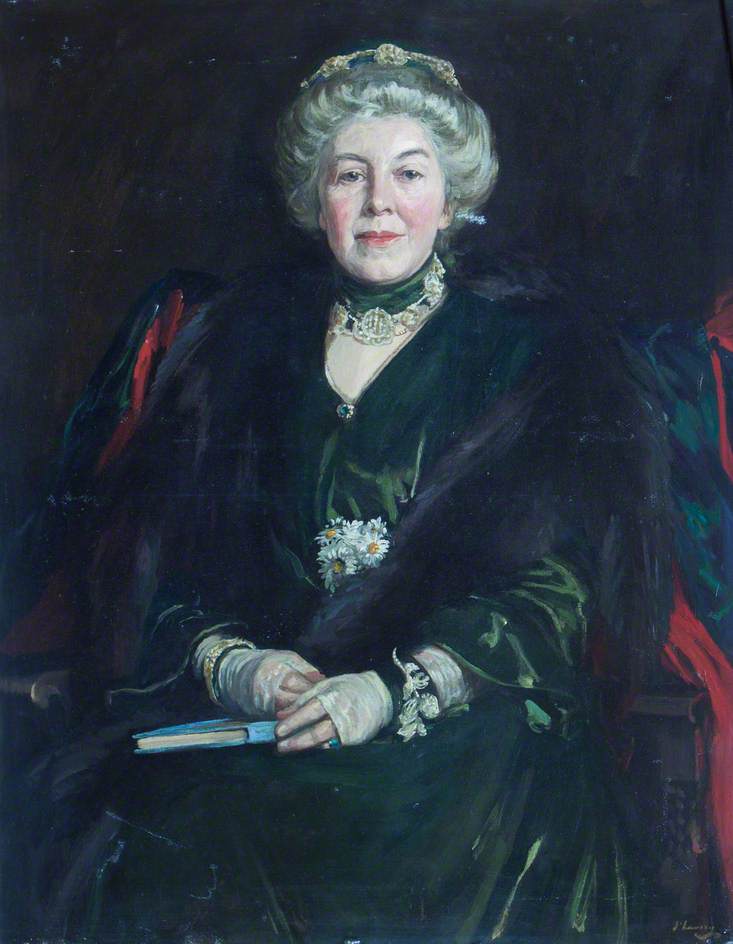
Emily Elizabeth Constance Jones
Emily Elizabeth Constance Jones, better known as Constance Jones or E. E.
Read the full pageEmily Elizabeth Constance Jones (19 February 1848 – 9 April 1922), better known as Constance Jones or E. E. Constance Jones, was an English philosopher and educator. She worked in logic and ethics and served as mistress of Girton College, Cambridge from 1903 to 1916.
Emily Elizabeth Constance Jones was born at Langstone Court, Llangarron, Herefordshire, to John Jones and his wife, Emily, daughter of Thomas Oakley JP, of Monmouthshire. She was the eldest of ten children. Constance was mostly tutored at home. She spent her early teenage years with her family in Cape Town, South Africa, and when they returned to England in 1865 she attended a small school, Miss Robinson's, in Cheltenham, for a year.
- 9
 PhilosopherModern European1849 – 1915
John Cook Wilson
John Cook Wilson was an English philosopher, Wykeham Professor of Logic and Fellow of New College.
- ◆Knowledge as undefinable
Read the full pageJohn Cook Wilson (6 June 1849 – 11 August 1915) was an English philosopher, Wykeham Professor of Logic and Fellow of New College.
John Cook Wilson was born in Nottingham, England, in 1849. He was the son of James Wilson, a Methodist minister, and Hannah Cook. After studying at Derby Grammar School, 1862–67, Cook Wilson went up with a scholarship to Balliol College in 1868, where he read both Classics under H. W. Chandler and Mathematics under H. J. S. Smith. He graduated with a double 'double-first', gaining both firsts in Mathematical (1869) and Classical Moderations (1870), and then firsts in Mathematics (1871) and Literae Humaniores or 'Greats' (1872). He received the Conington Prize in 1882. He studied logic under Hermann Lotze at the University of Göttingen.
- 10
 PhilosopherModern European1850 – 1937
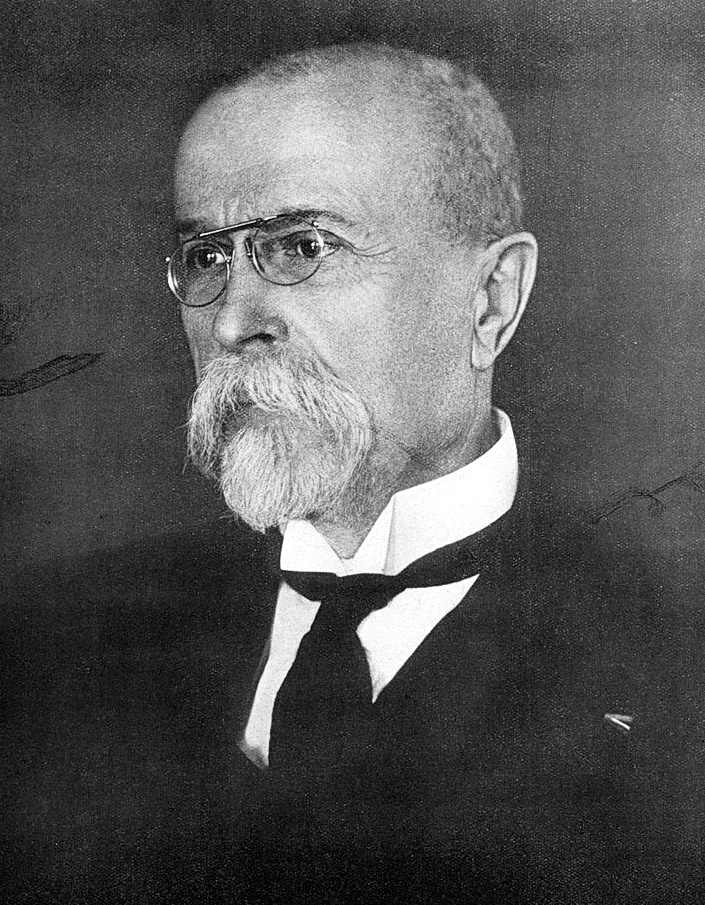
Tomáš Garrigue Masaryk
Tomáš Garrigue Masaryk was a Czechoslovak statesman, political activist and philosopher who served as the first president of Czechoslovakia from 1918 to 1935. He is regarded as the founding father of Czechoslovakia.
Read the full pageTomáš Garrigue Masaryk (7 March 1850 – 14 September 1937) was a Czechoslovak statesman, political activist and philosopher who served as the first president of Czechoslovakia from 1918 to 1935. He is regarded as the founding father of Czechoslovakia.
Born in Hodonín, Moravia (then part of the Austrian Empire), Masaryk obtained a doctorate at the University of Vienna and was a professor of philosophy at the Czech Charles-Ferdinand University in Prague. He began his political career as a deputy of the Austrian Reichsrat, serving from 1891 to 1893 and from 1907 to 1914. He was an advocate of restructuring the Austro-Hungarian Empire into a federal state, but by the outbreak of the First World War, he had become a supporter of Czech and Slovak independence. He went into exile, and travelled around Europe to organise and promote the Czechoslovak cause. He played a pivotal role in the establishment of the Czechoslovak Legion, which fought against the Central Powers during the war. In 1918, Masaryk, along with his protégés Edvard Beneš and Milan Rastislav Štefánik, travelled to the United States to obtain support from President Woodrow Wilson and Secretary of State Robert Lansing. Their negotiations resulted in the Washington Declaration, which proclaimed the independence of a Czechoslovak state.
- 11
 PhilosopherModern European1850 – 1904
Sami Frashëri
Sami bey Frashëri or Şemseddin Sâmi was an Albanian writer, lexicographer, philosopher, playwright and a prominent figure of the Albanian National Awakening, together with his two brothers Abdyl and Naim. He also supported Turkish nationalism against its Ottoman counterpart, along with secularism (anti-clericalism or l
Read the full pageSami bey Frashëri (Turkish: Şemseddin Sami Bey; June 1, 1850 – June 18, 1904) or Şemseddin Sâmi was an Albanian writer, lexicographer, philosopher, playwright and a prominent figure of the Albanian National Awakening, together with his two brothers Abdyl and Naim. He also supported Turkish nationalism against its Ottoman counterpart, along with secularism (anti-clericalism or laicism) against theocracy.
Frashëri was one of the sons of an impoverished bey from Frashër (Fraşer during Ottoman rule) in the District of Përmet. He gained a place in Ottoman literature as a talented author under the name of Şemseddin Sami Efendi and contributed to the Ottoman Turkish language reforms.
- 12
 PhilosopherModern European1851 – 1914
Theodor Lipps
Theodor Lipps was a German philosopher, known for his theory regarding aesthetics, creating the framework for the concept of Einfühlung (empathy), defined as, "projecting oneself onto the object of perception." This has then led onto opening up a new branch of interdisciplinary research in the overlap between psycholog
- ◆Lipps–Meyer law
Read the full pageTheodor Lipps (German: [lɪps]; 28 July 1851 – 17 October 1914) was a German philosopher, known for his theory regarding aesthetics, creating the framework for the concept of Einfühlung (empathy), defined as, "projecting oneself onto the object of perception." This has then led onto opening up a new branch of interdisciplinary research in the overlap between psychology and philosophy.
Lipps was one of the most influential German university professors of his time, attracting many students from other countries. Lipps was very concerned with conceptions of art and the aesthetic, focusing much of his philosophy around such issues. Among his fervent admirers was Sigmund Freud. There were at least two theories that made an impact on Freud's works. The first was Lipps' theory of the unconscious mental events. Lipps was then a main supporter of the idea of the unconscious. The second was Lipps' works on humor.