Modern European thinkers, 19th century: Cohen to Bradley
- 1
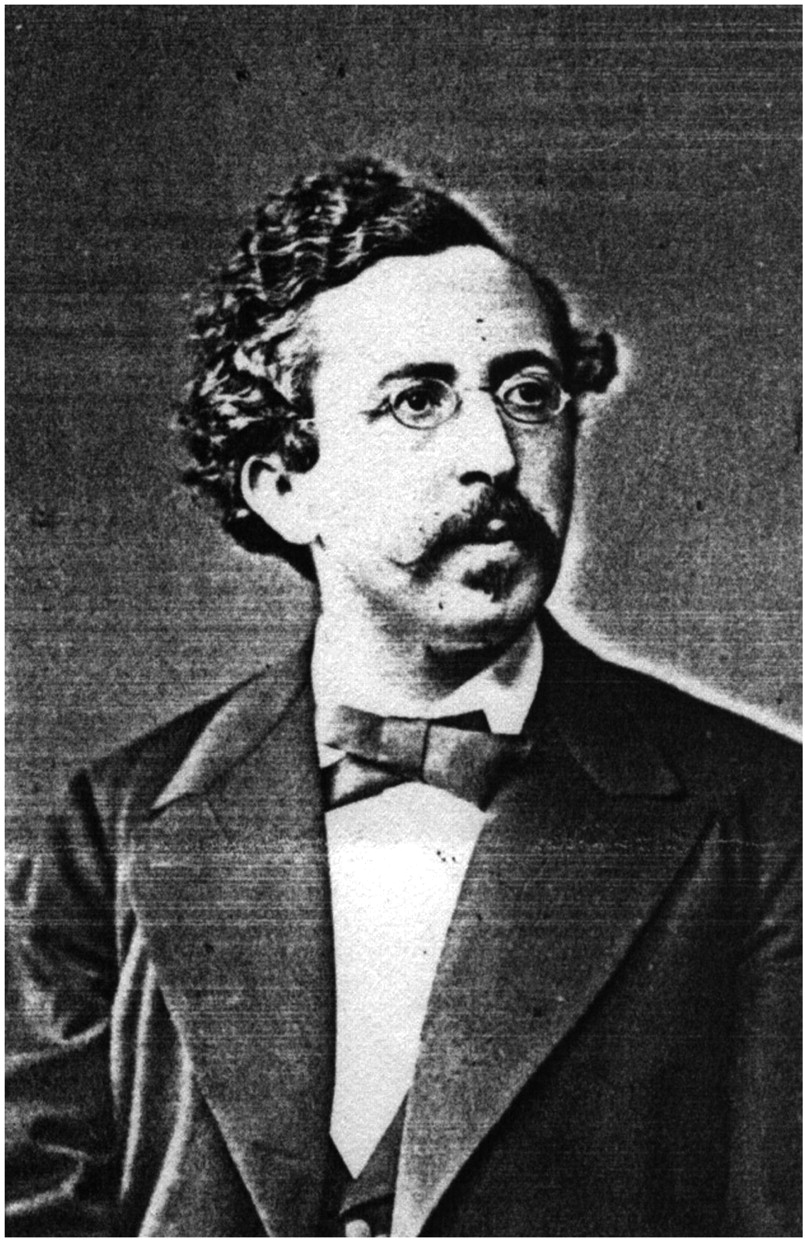 PhilosopherModern European1842 – 1918
Hermann Cohen
Hermann Cohen was a German Jewish philosopher, one of the founders of the Marburg school of neo-Kantianism, and he is often held to be "probably the most important Jewish philosopher of the nineteenth century".
- ◆Principle of the infinitesimal method
Read the full pageHermann Cohen (; German: [ˈkoːən]; 4 July 1842 – 4 April 1918) was a German Jewish philosopher, one of the founders of the Marburg school of neo-Kantianism, and he is often held to be "probably the most important Jewish philosopher of the nineteenth century".
Cohen was born on 4 July 1842, in Coswig, in Anhalt-Bernburg. He began to study philosophy early on, and soon became known as a profound Kant scholar. He was educated at the Gymnasium at Dessau, at the Jewish Theological Seminary of Breslau, and at the universities of Breslau, Berlin, and Halle. In 1873, he became Privatdozent in the philosophical faculty of the University of Marburg; the habilitation thesis with which he obtained the venia legendi being Die systematischen Begriffe in Kant's vorkritischen Schriften nach ihrem Verhältniss zum kritischen Idealismus. Cohen was elected professor extraordinarius at Marburg in 1875 and professor ordinarius the following year.
- 2
 PhilosopherModern European1843 – 1896
Richard Avenarius
Richard Heinrich Ludwig Avenarius was a German-Swiss philosopher, born in Paris. He formulated the radical positivist doctrine of "empirical criticism" or empirio-criticism.
- ◆Empirio-criticism
- ◆Britannica Online Encyclopedia
Read the full pageRichard Heinrich Ludwig Avenarius (born Richard Habermann; 19 November 1843 – 18 August 1896) was a German-Swiss philosopher, born in Paris. He formulated the radical positivist doctrine of "empirical criticism" or empirio-criticism.
Avenarius attended the Nicolaischule in Leipzig and studied at the University of Zurich, Berlin, and the University of Leipzig. At the University of Leipzig, he received the Doctor of Philosophy in 1868 with his thesis on Baruch Spinoza and his pantheism, obtained the habilitation in 1876, and taught there as Privatdozent. One year later, he became a professor at the University of Zurich. He died in Zurich in 1896.
- 3
 PhilosopherModern European1843 – 1931
Harald Høffding
Harald Høffding was a Danish philosopher and theologian.
Read the full pageHarald Høffding (11 March 1843 – 2 July 1931) was a Danish philosopher and theologian.
Born Høffding was born in Copenhagen, the son of businessman Niels Frederik Høffding and Martha Høffding (née Jhellerup). The family lived at the corner of Gammeltorv and Nørregade. Høffding became a schoolmaster, and ultimately in 1883 a professor at the University of Copenhagen. He was strongly influenced by Søren Kierkegaard in his early development, but later became a positivist, retaining and combining with it the spirit and method of practical psychology and the critical school. The physicist Niels Bohr studied philosophy from and became a friend of Høffding. The philosopher and author Ágúst H. Bjarnason was a student of Høffding.
- 4
 PhilosopherModern European1843 – 1930
Moritz Pasch
Moritz Pasch was a German mathematician of Jewish ancestry specializing in the foundations of geometry. He completed his Ph.D. at the University of Breslau at only 22 years of age.
Read the full pageMoritz Pasch (8 November 1843, Breslau, Prussia (now Wrocław, Poland) – 20 September 1930, Bad Homburg, Germany) was a German mathematician of Jewish ancestry specializing in the foundations of geometry. He completed his Ph.D. at the University of Breslau at only 22 years of age. He taught at the University of Giessen, where he is known to have supervised 30 doctorates.
Vorlesungen über neuere Geometrie, Leipzig 1882; 2nd edition. 1926.
- 5
 PhilosopherModern European1843 – 1925
James Ward
James Ward was an English psychologist and philosopher. He was a Cambridge Apostle.
- ◆Panpsychism
Read the full pageJames Ward (27 January 1843 – 4 March 1925) was an English psychologist and philosopher. He was a Cambridge Apostle.
Ward was born in Kingston upon Hull, the eldest of nine children. His father was an unsuccessful merchant. Ward was educated at the Liverpool Institute and Mostyn House, but his formal schooling ended when his father became bankrupt.
- 6
 PhilosopherModern European1844 – 1906
Ludwig Boltzmann
Ludwig Eduard Boltzmann was an Austrian mathematician and theoretical physicist. His greatest achievements were the development of statistical mechanics and the statistical explanation of the second law of thermodynamics.
- ◆Boltzmann distribution
- ◆Boltzmann equation
- ◆H-theorem
- ◆Boltzmann's entropy formula
- ◆equipartition theorem
- ◆canonical ensemble
Read the full pageLudwig Eduard Boltzmann ( BAWLTS-mahn or BOHLTS-muhn; German: [ˈluːtvɪç ˈeːduaʁt ˈbɔltsman]; 20 February 1844 – 5 September 1906) was an Austrian mathematician and theoretical physicist. His greatest achievements were the development of statistical mechanics and the statistical explanation of the second law of thermodynamics. In 1877, he provided the current definition of entropy, S=kBlnΩ, where Ω is the number of microstates whose energy equals the system's energy, interpreted as a measure of the statistical disorder of a system. Max Planck named the constant kB the Boltzmann constant.
Statistical mechanics is one of the pillars of modern physics. It describes how macroscopic observations (such as temperature and pressure) are related to microscopic parameters that fluctuate around an average. It connects thermodynamic quantities (such as heat capacity) to microscopic behavior, whereas, in classical thermodynamics, the only available option would be to measure and tabulate such quantities for various materials.
- 7
 PhilosopherModern European1844 – 1879
Bernadette Soubirous
Bernadette Soubirous, SCN, also known as Bernadette of Lourdes (religious name Marie-Bernarde), was a miller's daughter from Lourdes (Lorda in Occitan), in the department of Hautes-Pyrénées in France, and is best known for experiencing apparitions of a "young lady" who asked for a chapel to be built at the nearby cave-
Read the full pageBernadette Soubirous, SCN (; French: [bɛʁnadɛt subiʁu]; Occitan: Bernadeta Sobirós [beɾnaˈðetɔ suβiˈɾus]; 7 January 1844 – 16 April 1879), also known as Bernadette of Lourdes (religious name Marie-Bernarde), was a miller's daughter from Lourdes (Lorda in Occitan), in the department of Hautes-Pyrénées in France, and is best known for experiencing apparitions of a "young lady" who asked for a chapel to be built at the nearby cave-grotto. These apparitions occurred between 11 February and 16 July 1858, and the young lady who appeared to her identified herself as the "Immaculate Conception".
After a canonical investigation, Soubirous's reports were eventually declared "worthy of belief" on 18 February 1862, and the Marian apparition became known as Our Lady of Lourdes. In 1866, Soubirous joined the Sisters of Charity of Nevers at their convent in Nevers where she spent the last years of her life. Her body is said by the Catholic Church to remain internally incorrupt. The grotto where the apparitions occurred became a major pilgrimage site and Marian shrine known as the Sanctuary of Our Lady of Lourdes, attracting around five million pilgrims of all denominations each year.
- 8
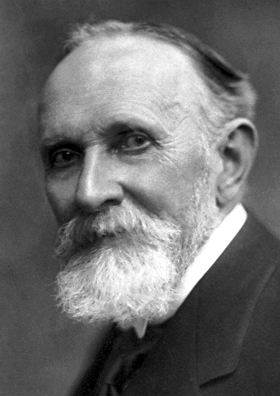 PhilosopherModern European1845 – 1924
Carl Spitteler
Carl Friedrich Georg Spitteler was a Swiss poet who was awarded the Nobel Prize for Literature in 1919 "in special appreciation of his epic Olympian Spring". His work includes both pessimistic and heroic poems.
Read the full pageCarl Friedrich Georg Spitteler (24 April 1845 – 29 December 1924) was a Swiss poet who was awarded the Nobel Prize for Literature in 1919 "in special appreciation of his epic Olympian Spring". His work includes both pessimistic and heroic poems.
Spitteler was born in Liestal. His father was an official of the government, being Federal Secretary of the Treasury from 1849 to 1856. Young Spitteler attended the gymnasium at Basel, having among his teachers philologist Wilhelm Wackernagel and historian Jacob Burckhardt. From 1863 he studied law at the University of Zurich. In 1865–1870 he studied theology in the same institution, at Heidelberg and Basel, though when a position as pastor was offered him, he felt that he must decline it. He had begun to realize his mission as an epic poet and therefore refused to work in the field for which he had prepared himself.
- 9
 PhilosopherModern European1845 – 1879
William Kingdon Clifford
William Kingdon Clifford was a British mathematician and philosopher. Building on the work of Hermann Grassmann, he introduced what is now termed geometric algebra.
- ◆Clifford algebra
- ◆Clifford's circle theorems
- ◆Clifford's theorem
- ◆Clifford torus
- ◆Clifford–Klein form
- ◆Clifford parallel
Read the full pageWilliam Kingdon Clifford (4 May 1845 – 3 March 1879) was a British mathematician and philosopher. Building on the work of Hermann Grassmann, he introduced what is now termed geometric algebra. This is a special case of what later became known as the Clifford algebra, which was named in his honour. The operations of geometric algebra have the effect of mirroring, rotating, translating, and mapping the geometric objects that are being modelled to new positions. Clifford algebras in general and geometric algebra in particular have been of ever increasing importance to mathematical physics, geometry, and computing. Clifford was the first to suggest that gravitation might be a manifestation of an underlying geometry. In his philosophical writings he coined the expression mind-stuff.
Born in Exeter, William Clifford was educated at Doctor Templeton's Academy on Bedford Circus and showed great promise at school. He went on to King's College London (at age 15) and Trinity College, Cambridge, where he was elected fellow in 1868, after being Second Wrangler in 1867 and second Smith's prizeman. In 1870, he was part of an expedition to Italy to observe the solar eclipse of 22 December 1870. During that voyage he survived a shipwreck along the Sicilian coast.
- 10
 PhilosopherModern European1845 – 1921
Émile Boutroux
Étienne Émile Marie Boutroux was a French philosopher of science and a historian of philosophy. He was a firm opponent of materialism in science.
- ◆contingent
- ◆Frederick Charles Copleston
- ◆A History of Philosophy
Read the full pageÉtienne Émile Marie Boutroux (; French: [butʁu]; 28 July 1845 – 22 November 1921) was a French philosopher of science and a historian of philosophy. He was a firm opponent of materialism in science. He was a spiritualist philosopher who defended the idea that religion and science are compatible at a time when the power of science was rising inexorably. His work is overshadowed in the English-speaking world by that of the more celebrated Henri Bergson. He was elected membership of the Académie des Sciences Morales et Politiques in 1898 and in 1912 to the Académie française.
Émile Boutroux was born on 28 July 1845, at Montrouge near Paris. He attended the lycée Napoléon (now lycée Henri IV), and graduated in 1865 to the École Normale Supérieure. He then continued his education at Heidelberg University between 1869 and 1870 where he was taught by Hermann von Helmholtz and encountered German philosophy. In 1874, he defended two doctoral theses: one, "De Veritatibus aeternis apud Cartesium" ("On Eternal Truths According to Descartes"), under the supervision of Félix Ravaisson; and the other, "De la contingence des lois de la nature" ("The Contingency of the Laws of Nature"), under Jules Lachelier.
- 11
 PhilosopherModern European1845 – 1919
Paul Deussen
Paul Jakob Deussen was a German Indologist and professor of philosophy at University of Kiel. Strongly influenced by Arthur Schopenhauer, Deussen was a friend of Friedrich Nietzsche and Swami Vivekananda.
Read the full pagePaul Jakob Deussen (German: [ˈpaʊl ˈjaːkɔp ˈdɔʏsn̩]; 7 January 1845 – 6 July 1919) was a German Indologist and professor of philosophy at University of Kiel. Strongly influenced by Arthur Schopenhauer, Deussen was a friend of Friedrich Nietzsche and Swami Vivekananda. In 1911, he founded the Schopenhauer Society (Schopenhauer-Gesellschaft). Professor Deussen was the first editor, in 1912, of the scholarly journal Schopenhauer Yearbook (Schopenhauer-Jahrbuch).
Deussen, who Sanskritised his name to "Deva-Sena" as a mark of his admiration for the language, is one of the distinguished roll of Europeans who — often with lyrical admiration — participated in the scholarly Western discovery of Sanskrit and Hinduism that took place in British India itself, Germany, France and England.
- 12
 PhilosopherModern European1846 – 1924
F. H. Bradley
Francis Herbert Bradley was a British idealist philosopher. His most important work was Appearance and Reality.
- ◆Bradley's regress
- ◆epistemic coherentism
Read the full pageFrancis Herbert Bradley (30 January 1846 – 18 September 1924) was a British idealist philosopher. His most important work was Appearance and Reality (1893).
Bradley was born in Clapham, Surrey, England (now part of the Greater London area). He was the child of Charles Bradley, an evangelical Anglican preacher, and Emma Linton, Charles's second wife. Literary scholar A. C. Bradley was his brother. Educated at Cheltenham College and Marlborough College, he read, as a teenager, some of Immanuel Kant's Critique of Pure Reason. In 1865, he entered University College, Oxford. In 1870, he was elected to a fellowship at Oxford's Merton College where he remained until his death in 1924. Bradley is buried in Holywell Cemetery in Oxford.