Modern European thinkers, 19th century: Wundt to Hartmann
- 1
 PhilosopherModern European1832 – 1920
Wilhelm Wundt
Wilhelm Maximilian Wundt was a German physiologist, philosopher, professor, and one of the fathers of modern psychology. Wundt, who distinguished psychology as a science from philosophy and biology, was the first person to call himself a psychologist.
- ◆Experimental psychology
- ◆Cultural psychology
- ◆Apperception
Read the full pageWilhelm Maximilian Wundt (; German: [vʊnt]; 16 August 1832 – 31 August 1920) was a German physiologist, philosopher, professor, and one of the fathers of modern psychology. Wundt, who distinguished psychology as a science from philosophy and biology, was the first person to call himself a psychologist.
He is widely regarded as the "father of experimental psychology". In 1879, at the University of Leipzig, Wundt founded the first formal laboratory for psychological research. This marked psychology as an independent field of study.
- 2
 PhilosopherModern European1833 – 1921
Eugen Dühring
Karl Eugen Dühring was a German philosopher, economist, and socialist. Despite becoming blind in early adulthood, he was a prolific and popular lecturer at the University of Berlin.
- ◆antisemitism
Read the full pageKarl Eugen Dühring (12 January 1833 – 21 September 1921) was a German philosopher, economist, and socialist. Despite becoming blind in early adulthood, he was a prolific and popular lecturer at the University of Berlin. His "philosophy of the actual" was a comprehensive, materialist system that challenged German idealism, classical economics, and organized religion. He also made significant contributions to economics, law, and the natural sciences.
In the 1870s, Dühring's ideas gained significant influence within the burgeoning German Social Democratic movement, prompting Friedrich Engels to write his major polemic Anti-Dühring, which became a foundational work of Marxism. Dühring's academic career ended in 1877 with a controversial dismissal from the university following his accusations of plagiarism against Hermann von Helmholtz. The affair caused a public outcry and a student protest movement, with Dühring cast as a martyr for free thought.
- 3
 PhilosopherModern European1834 – 1923
John Venn
John Venn, FRS, FSA was an English mathematician, logician and philosopher noted for introducing Venn diagrams, which are used in logic, set theory, probability, statistics, and computer science. In 1866, Venn published The Logic of Chance, a groundbreaking book which espoused the frequency theory of probability, argui
- ◆Frequentist probability
- ◆Reference class problem
- ◆Venn diagram
Read the full pageJohn Venn, FRS, FSA (4 August 1834 – 4 April 1923) was an English mathematician, logician and philosopher noted for introducing Venn diagrams, which are used in logic, set theory, probability, statistics, and computer science. In 1866, Venn published The Logic of Chance, a groundbreaking book which espoused the frequency theory of probability, arguing that probability should be determined by how often something is forecast to occur as opposed to "educated" assumptions. Venn then further developed George Boole's theories in the 1881 work Symbolic Logic, where he highlighted what would become known as Venn diagrams.
John Venn was born on 4 August 1834 in Kingston upon Hull, Yorkshire, to Martha Sykes and Rev. Henry Venn, who was the rector of the parish of Drypool. His mother died when he was three years old. Venn was descended from a long line of church evangelicals, including his grandfather John Venn. Venn was brought up in a very strict atmosphere at home. His father Henry had played a significant part in the Evangelical movement and he was also the secretary of the Society for Missions to Africa and the East, establishing eight bishoprics overseas. His grandfather was pastor to William Wilberforce of the abolitionist movement, in Clapham.
- 4
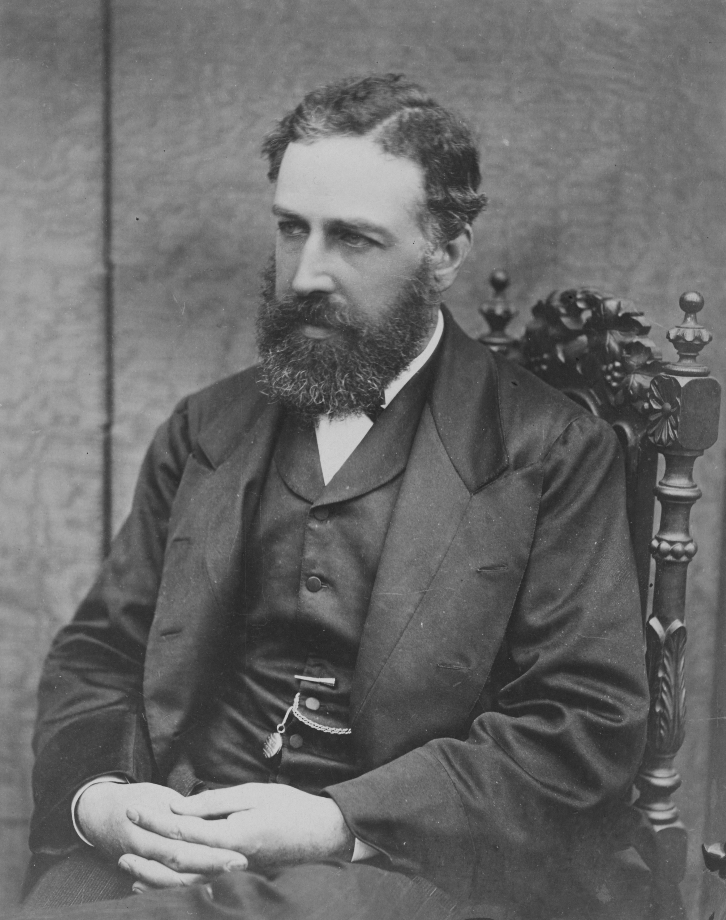 PhilosopherModern European1835 – 1882
William Stanley Jevons
William Stanley Jevons was an English economist and logician. Irving Fisher described Jevons's book The Theory of Political Economy as the start of the mathematical method in economics.
- ◆Marginal utility theory
- ◆Jevons paradox
Read the full pageWilliam Stanley Jevons (; 1 September 1835 – 13 August 1882) was an English economist and logician.
Irving Fisher described Jevons's book The Theory of Political Economy (1871) as the start of the mathematical method in economics. It made the case that economics, as a science concerned with quantities, is necessarily mathematical. In so doing, it expounded upon the "final" (marginal) utility theory of value. Jevons's work, along with similar discoveries made by Carl Menger in Vienna (1871) and by Léon Walras in Switzerland (1874), marked the opening of a new period in the history of economic thought. Jevons' contribution to the marginal revolution in economics in the late 19th century established his reputation as a leading political economist and logician of the time.
- 5
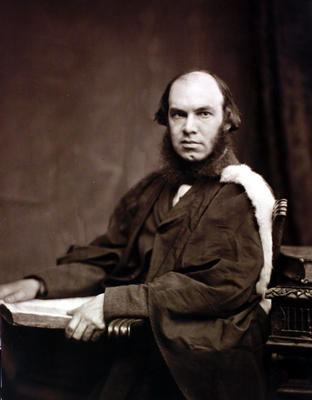 PhilosopherModern European1835 – 1908
Edward Caird
Edward Caird was a Scottish philosopher. He was a holder of LLD, DCL, and DLitt.
- ◆evolutionary theory
Read the full pageEdward Caird (; 23 March 1835 – 1 November 1908) was a Scottish philosopher. He was a holder of LLD, DCL, and DLitt.
The younger brother of the theologian John Caird, he was the son of engineer John Caird, the proprietor of Caird & Company, born at Greenock in Renfrewshire, and educated at Greenock Academy, the University of Glasgow, and Balliol College, Oxford (B.A. 1863). He was a Fellow and Tutor of Merton College, Oxford from 1864 to 1866.
- 6PhilosopherModern European1835 – 1897
Paul Yorck von Wartenburg
Graf (Count) Hans Ludwig David Paul Yorck von Wartenburg was a German lawyer, writer, and philosopher.
Read the full pageGraf (Count) Hans Ludwig David Paul Yorck von Wartenburg (1 April 1835 – 12 September 1897) was a German lawyer, writer, and philosopher.
Paul Yorck was born in Berlin. He was descended from the Prussian general Ludwig Yorck von Wartenburg. His father Hans David Ludwig (1805-1865) and his mother Bertha von Brause (1809-1845) were both related to Prussian military families. They lived in Klein Öls Castle, now part of the Oława district in Poland. His nephew was the jurist Peter Yorck von Wartenburg, who opposed Hitler.
- 7
 PhilosopherModern European1836 – 1861
Nikolay Dobrolyubov
Nikolay Alexandrovich Dobrolyubov was a Russian poet, literary critic, journalist, and prominent figure of the Russian revolutionary movement. He was a literary hero to both Karl Marx and Lenin.
Read the full pageNikolay Alexandrovich Dobrolyubov was a Russian poet, literary critic, journalist, and prominent figure of the Russian revolutionary movement. He was a literary hero to both Karl Marx and Lenin.
Dobrolyubov was born in Nizhny Novgorod, where his father was a poor priest.
- ◆Social liberalism
Read the full pageThomas Hill Green (7 April 1836 – 26 March 1882), known as T. H. Green, was an English philosopher, political radical and temperance reformer, and a member of the British idealism movement. Like all the British idealists, Green was influenced by the metaphysical historicism of G. W. F. Hegel. He was one of the thinkers behind the philosophy of social liberalism.
Green was born on 7 April 1836 at Birkin, in the West Riding of Yorkshire, England, where his father was rector. On his paternal side, he was descended from Oliver Cromwell. His education was conducted entirely at home until, at the age of 14, he entered Rugby, where he remained for five years.
- 9
 PhilosopherModern European1837 – 1907
Ilia Chavchavadze
Tavadi (Prince) Ilia Chavchavadze was a Georgian journalist, publisher, writer and poet who spearheaded the revival of Georgian nationalism during the second half of the 19th century in the period of Tsarist rule. To this day, he has been called Georgia's "most universally revered hero" and the "Father of the Nation" o
Read the full pageTavadi (Prince) Ilia Chavchavadze (Georgian: ილია ჭავჭავაძე; 8 November [O.S. 27 October] 1837 – 12 September 1907) was a Georgian journalist, publisher, writer and poet who spearheaded the revival of Georgian nationalism during the second half of the 19th century in the period of Tsarist rule. To this day, he has been called Georgia's "most universally revered hero" and the "Father of the Nation" of the modern Georgia.
He was a leader of contemporary youth intellectual movement named "Tergdaleulebi" which spread modern and European liberal ideals in Georgia. Chavchavadze founded two modern newspapers: Sakartvelos Moambe and Iveria.
- 10
 PhilosopherModern European1838 – 1900
Henry Sidgwick
Henry Sidgwick was an English utilitarian philosopher and economist and is best known in philosophy for his utilitarian treatise The Methods of Ethics. His work in economics has also had a lasting influence.
- ◆Average and total utilitarianism
- ◆ethical hedonism
- ◆ethical intuitionism
- ◆paradox of hedonism
Read the full pageHenry Sidgwick (; 31 May 1838 – 28 August 1900) was an English utilitarian philosopher and economist and is best known in philosophy for his utilitarian treatise The Methods of Ethics. His work in economics has also had a lasting influence.
He was the Knightbridge Professor of Moral Philosophy at the University of Cambridge from 1883 until his death. He was one of the founders and first president of the Society for Psychical Research and a member of the Metaphysical Society and promoted the higher education of women.
- 11
 PhilosopherModern European1842 – 1921
Peter Kropotkin
Pyotr Alexeyevich Kropotkin was a Russian anarchist political philosopher and geographer known as a proponent of anarchist communism. Born into an aristocratic land-owning family, Kropotkin attended the Page Corps and later served as an officer in Siberia, where he participated in several geological expeditions.
- ◆anarcho-communism
- ◆Mutual aid
- ◆wage labor
Read the full pagePyotr Alexeyevich Kropotkin (9 December [O.S. 27 November] 1842 – 8 February 1921) was a Russian anarchist political philosopher and geographer known as a proponent of anarchist communism.
Born into an aristocratic land-owning family, Kropotkin attended the Page Corps and later served as an officer in Siberia, where he participated in several geological expeditions. He was imprisoned for his activism in 1874 and managed to escape two years later. He spent the next 41 years in exile in Switzerland, France (where he was imprisoned for almost four years), and England. While in exile, he gave lectures and published widely on anarchism and geography. Kropotkin returned to Russia after the Russian Revolution in 1917, but he was disappointed by the Bolshevik state.
- 12
 PhilosopherModern European1842 – 1906
Eduard von Hartmann
Karl Robert Eduard von Hartmann was a German philosopher, independent scholar, and writer. He was the author of the influential Philosophy of the Unconscious.
- ◆the unconscious
- ◆reason
- ◆will
- ◆Pessimistic
- ◆best of all possible worlds
Read the full pageKarl Robert Eduard von Hartmann (23 February 1842 – 5 June 1906) was a German philosopher, independent scholar, and writer. He was the author of the influential Philosophy of the Unconscious (1869). Von Hartmann's notable ideas include the theory of the unconscious and a pessimistic interpretation of the "best of all possible worlds" concept in metaphysics.
Von Hartmann was born in Berlin, the son of Prussian Major General Robert von Hartmann, and was educated with the intention of him pursuing a military career. In 1858 he entered the Guards Artillery Regiment of the Prussian Army and attended the United Artillery and Engineering School. He achieved the rank of first lieutenant but took leave from the army in 1865 due to a chronic knee problem.
